



7 Best Pillows for Side Sleepers: Find Your Perfect Match
If you sleep on your side, you already know the struggle: you wake up with a stiff neck, a numb shoulder, or that nagging ache between your shoulder blades that follows you through the entire morning. The culprit is almost always your pillow. Side sleeping is actually one of the healthiest sleep positions — it supports spinal alignment, reduces snoring, and can ease acid reflux — but it demands more from a pillow than any other position does.
The reason is simple geometry. When you lie on your side, there's a significant gap between your head and the mattress. A pillow that's too flat lets your head drop, straining the muscles along one side of your neck. A pillow that's too thick pushes your head upward, creating the opposite problem. You need a pillow that fills that gap precisely, keeping your spine in a neutral, straight line from your tailbone all the way to the crown of your head.
We've rounded up the seven best pillow types and styles for side sleepers, grounded in sleep science and real-world comfort. Whether you run hot, share a bed, or deal with chronic neck pain, there's a pick here for you.
1. High-Loft Memory Foam Pillow
Memory foam remains the gold standard for side sleepers who need consistent, pressure-relieving support. A high-loft version (typically 4–6 inches) is specifically engineered to fill the shoulder-to-neck gap without collapsing overnight.
- Best for: Side sleepers with neck or shoulder pain
- Fill: Solid or contoured memory foam
- Key benefit: Conforms to the exact shape of your head and neck, distributing pressure evenly
- Watch out for: Traditional memory foam retains heat — look for gel-infused or open-cell foam versions if you sleep warm
- Loft: Medium-high (4–6 inches)
2. Shredded Memory Foam Pillow
Shredded memory foam gives you the contouring benefits of solid foam with one important upgrade: adjustability. You can add or remove fill to dial in the exact loft your shoulder width requires. This makes it an excellent choice for side sleepers who haven't found a fixed pillow that feels quite right.
- Best for: Side sleepers who want a customizable fit
- Fill: Loose shredded memory foam pieces
- Key benefit: Fully adjustable height; more breathable than solid foam
- Watch out for: Can feel lumpy if not regularly fluffed; fill may shift during the night
- Loft: Adjustable
3. Latex Pillow
Natural latex offers a buoyant, responsive feel that memory foam can't quite replicate. Rather than sinking slowly, latex pushes back with gentle, even support — which is particularly helpful for side sleepers who move around during the night and need a pillow that repositions quickly.
- Best for: Active side sleepers and those sensitive to synthetic materials
- Fill: Natural or synthetic latex (shredded or solid)
- Key benefit: Highly durable, naturally breathable, and resistant to dust mites
- Watch out for: Heavier than other pillow types; those with latex sensitivities should opt for synthetic alternatives
- Loft: Medium to high
4. Contour / Cervical Pillow
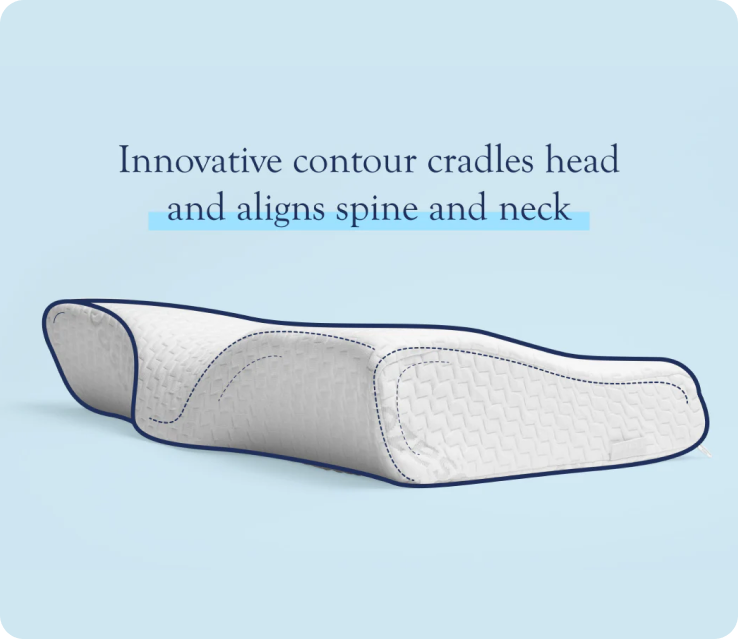
Contour pillows are shaped with a specific ergonomic curve — higher on the sides, lower in the centre — to cradle your head while supporting the natural curve of your cervical spine. Sleep researchers and physiotherapists frequently recommend them for people dealing with chronic neck pain or tension headaches related to poor sleep posture.
- Best for: Side sleepers with recurring neck pain or tension headaches
- Fill: Usually memory foam or latex
- Key benefit: Pre-shaped to maintain proper cervical alignment without any adjustment needed
- Watch out for: Takes a short adjustment period; not ideal for combination sleepers who shift to their back
- Loft: Structured (typically two heights on either side)
5. Down Alternative Pillow (High-Loft)
If you love the soft, cloud-like feel of a traditional pillow but need more structural support than standard down provides, a high-loft down alternative is a strong contender. Modern microfibre fills have improved dramatically — the best versions maintain their loft throughout the night rather than going flat by 2 a.m.
- Best for: Side sleepers who prefer a softer, more traditional pillow feel
- Fill: Microfibre or hollow-fibre clusters
- Key benefit: Soft and breathable; hypoallergenic and easy to machine wash
- Watch out for: Lower-quality versions compress quickly; look for a higher fill weight for lasting loft
- Loft: Medium-high
6. Buckwheat Pillow
Buckwheat pillows have been used in East Asian cultures for centuries — and for good reason. The hollow buckwheat hulls provide firm, stacking support that moulds to your head and neck without going soft. They're heavier and noisier than foam options, but for side sleepers who need serious, unwavering support, they're hard to beat.
- Best for: Side sleepers who prefer firm support and tend to overheat
- Fill: Organic buckwheat hulls
- Key benefit: Exceptional airflow; holds its shape all night without collapsing
- Watch out for: Rustling sound when you move; significantly heavier than standard pillows
- Loft: Adjustable (hulls can be added or removed)
7. Body Pillow
A body pillow isn't a replacement for your head pillow — it's a powerful companion to it. Hugging a long body pillow keeps your top knee elevated and prevents your upper hip from rotating forward, which is one of the most common causes of lower back pain in side sleepers. Pair it with any of the pillow types above for a complete side-sleeping setup.
- Best for: Side sleepers with lower back or hip pain; pregnant sleepers
- Fill: Memory foam, shredded foam, or microfibre
- Key benefit: Keeps hips, knees, and spine aligned simultaneously
- Watch out for: Takes up significant bed space; may not suit smaller beds
- Loft: Varies by fill type
What to Look for in a Pillow for Side Sleeping
Before you commit to any pillow, keep these factors in mind:
- Loft (height): Side sleepers generally need a medium-high to high loft to bridge the gap between head and mattress. Your shoulder width is the key variable — broader shoulders need more height.
- Firmness: Medium-firm to firm is usually ideal. A pillow that compresses too easily won't maintain proper alignment through the night.
- Mattress interaction: A softer mattress lets your shoulder sink in more, reducing the gap — meaning you may need a slightly lower loft. A firmer mattress keeps you higher up, so you need more pillow height. [LINK: Dosaze mattress collection]
- Temperature regulation: Side sleepers often press their face into the pillow, so breathability matters. Look for gel-infused foam, natural latex, or breathable cotton covers.
- Trial period: Your neck and shoulders need time to adjust. Look for pillows with at least a 30-night trial window.
The Bottom Line
The best pillow for side sleepers is the one that keeps your cervical spine in a neutral line, matches your shoulder width, and maintains its loft from lights-out to alarm. For most side sleepers, a high-loft memory foam or shredded foam pillow hits that mark reliably — but your ideal pick depends on your sleep style, temperature preferences, and whether you deal with specific pain points.
Getting your pillow right is only half the equation. A supportive, pressure-relieving mattress does the heavy lifting by ensuring your shoulder sinks in just the right amount while your hips stay supported. Explore the [LINK: Dosaze mattress collection] to find a mattress built for the way you actually sleep — or take our [LINK: sleep quiz] for a personalised recommendation in under two minutes.


