


Best Firm Pillows for Neck Support: Top 7 Picks Reviewed
Introduction
If you wake up with a stiff neck, a tight upper back, or that familiar “pinch” between your shoulder and spine, your pillow firmness is often part of the problem. Too soft, and your head sinks, pulling your neck out of cervical alignment. Too firm in the wrong shape, and you get pressure points that make you toss and turn.
A truly supportive firm pillow is not just “hard.” It holds your head at a stable height, supports the curve of your neck, and spreads pressure across a wider surface so your muscles can relax. That’s why the best firm pillows for neck support tend to be ergonomic, with structured contours or responsive foam that stays supportive through the night.
In this list, you’ll get seven firm pillow picks, with clear recommendations based on sleep position, neck length, and how you like your pillow to feel. We’ll also cover what “firm” should mean for neck support, how to choose the right loft, and what to look for if you run hot. If you’re anxious about spending money and still waking up sore, pay attention to trial periods and return policies. A pillow should earn its spot on your bed.
Quick comparison: Top 7 firm pillows for neck support
| Pillow | Best for | Feel | Key neck-support feature | Cooling notes | Trial/returns |
|---|---|---|---|---|---|
| Dosaze Contour Pillow | Back + side sleepers with neck pain | Supportive-firm, ergonomic contour | Neck cradle supports cervical alignment | Cooling cover + breathable design (varies by room/sleeper) | 60-night risk-free trial, free shipping & returns |
| Adjustable shredded memory foam pillow | People who need custom loft | Medium-firm to firm (depends on fill) | Loft control helps match shoulder width | Often airflow-friendly, can still sleep warm | Varies by brand |
| Solid memory foam cervical pillow (contour) | Consistent support all night | Firm, “locked-in” feel | Fixed contour reduces head drop | Can trap heat without cooling cover | Varies by brand |
| Latex pillow (solid or molded) | Responsive support + cooler sleep | Firm but springy | Buoyant lift supports neck without sink | Typically cooler than memory foam | Varies by brand |
| Buckwheat hull pillow | Maximum adjustability + very firm support | Very firm, structured | Hull fill “locks” into a supportive shape | Often sleeps cool due to airflow | Varies by brand |
| Down alternative firm pillow | Firm feel without foam | Initially firm, can compress over time | Works best with higher fill power/fill weight | Usually breathable | Varies by brand |
| Hybrid pillow (foam core + plush outer) | Support + softer surface feel | Firm core, comfortable top | Core keeps height stable | Depends on cover and core material | Varies by brand |
How we reviewed “firm” pillows for neck support
Firmness only matters if it improves sleep posture. For neck support, we focused on whether a pillow helps keep your ears stacked over your shoulders (side sleeping) or keeps your chin from tipping up or tucking down (back sleeping). That’s the practical test for cervical alignment.
We also weighted pressure relief and cooling. A pillow can be firm and still comfortable if it spreads load across your head and neck instead of pushing back at one spot. And if you sleep warm, support won’t matter if heat wakes you up at 2 a.m.
One contrarian take: the “firmest” pillow is not always the best for neck pain. If a pillow is firm but too high for your body, it can increase neck bend and create morning soreness. In our experience with ergonomic designs, correct loft beats raw firmness almost every time.
Top 7 best firm pillows for neck support (reviewed)
1) Dosaze Contour Pillow (best overall for ergonomic neck support)
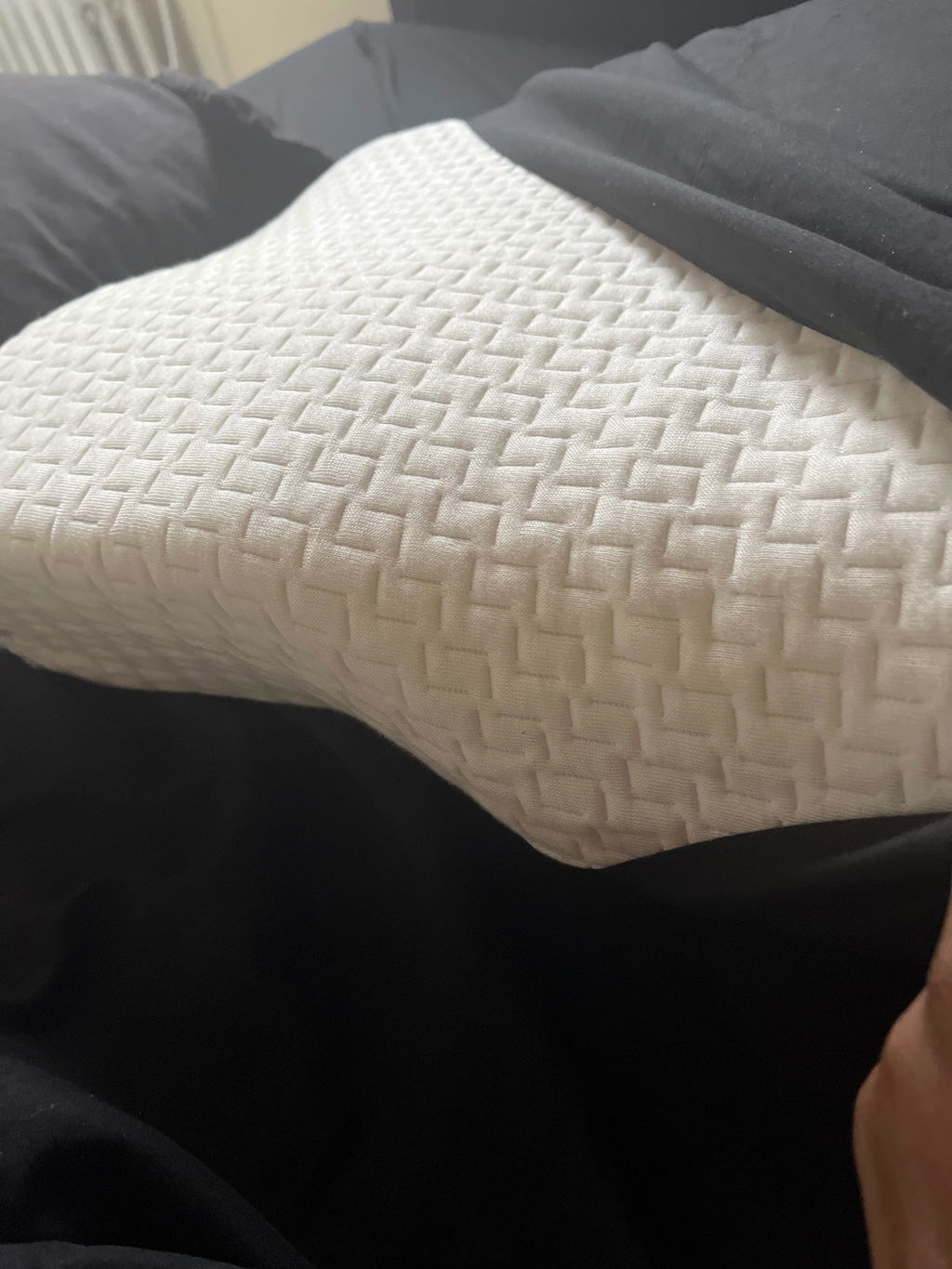
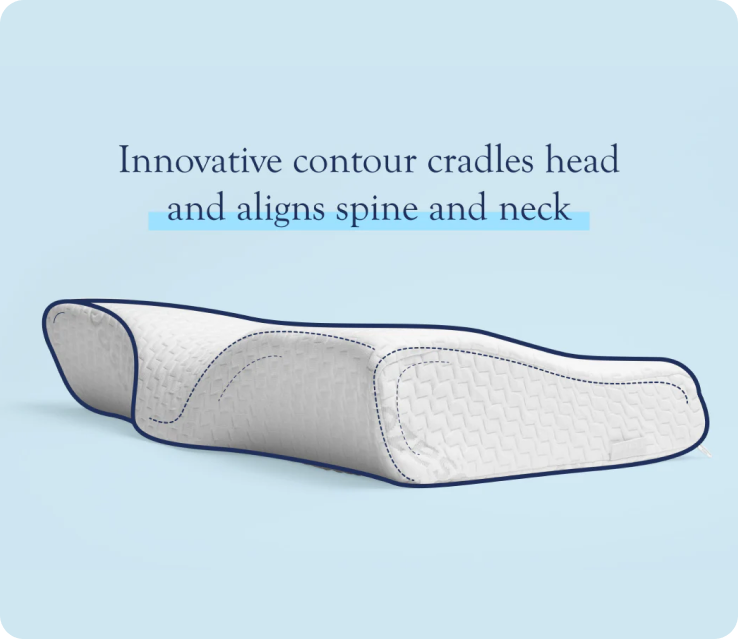
Dosaze Contour Pillow is our top pick because it pairs a supportive-firm feel with an ergonomic shape designed to guide your head and neck into better cervical alignment. Instead of relying on “more stuffing,” the contour supports the neck curve and helps reduce the head drop that often triggers morning neck and shoulder pain.
This matters most for back and side sleepers. Side sleepers often need stable height from the outer shoulder to the neck; back sleepers need a gentle neck cradle that keeps the chin neutral (not tipped up). A contoured build can do both better than a flat firm pillow because it supports where you need lift and eases pressure where you don’t.
If you feel hesitant about trying a new pillow, Dosaze includes a 60-night risk-free trial with free shipping & returns. That policy is a practical safety net when your main worry is, “What if it doesn’t help and I’m stuck with it?”
- Best for: Back sleepers, combination sleepers, and side sleepers who want structured neck support
- Firmness feel: Supportive-firm with ergonomic contouring
- Standout: Neck support + pressure relief through shape (not just stiffness)
2) Adjustable shredded memory foam pillow (best for dialing in loft)
If your main issue is that pillows feel “almost right” but not quite, an adjustable shredded memory foam pillow is a smart firm option. You can add or remove fill to match your shoulder width and neck length, which directly affects cervical alignment.
Here’s the tradeoff: adjustable pillows can shift during the night if the fill isn’t packed evenly, so you may need a little time to tune it. But once you find your fill level, you can get a firm, stable feel without the “brick-like” pressure you might get from a too-dense solid foam.
Practical tip: after adjusting, push extra fill into the neck area (not under the back of your skull). That small change often improves neck support without increasing pressure on the head.
- Best for: Side sleepers with broad shoulders, people between standard loft sizes
- Firmness feel: Customizable; can reach firm depending on fill amount
- Watch for: Heat retention and fill clumping over time (varies by brand)
3) Solid memory foam cervical pillow (best for “doesn’t move” firm support)
A solid memory foam cervical pillow is a classic choice when you want consistent, firm neck support that stays the same from 10 p.m. to 6 a.m. The contour keeps your head from sinking too far, and the foam resists compression better than many fiber-filled “firm” pillows.
The downside is feel. Solid foam has a more “locked-in” sensation, and if the contour doesn’t match your body, you can get pressure points at the base of the skull or along the jaw. That’s why this style works best when you already know you like contoured pillows. If you’re comparing shapes, see contoured pillows vs. cervical pillows to understand how the support zones differ.
If you sleep hot, prioritize models with a cooling cover and ventilation channels. Traditional memory foam can hold heat, which can cause more tossing, which then defeats the posture benefit.
- Best for: Back sleepers and side sleepers who like a fixed contour
- Firmness feel: Firm and stable
- Watch for: Heat buildup without cooling materials
4) Latex pillow (best firm pillow for cooler, springy support)
Latex is a strong option if you want firm support without the slow “sink” of memory foam. It compresses under weight but pushes back quickly, so your neck stays supported as you change positions.
For many sleepers, that responsiveness reduces the feeling of being stuck. It also tends to sleep cooler than memory foam because latex is more breathable and doesn’t hug the body as tightly. If cooling is a priority, latex can be a practical middle ground between foam and buckwheat.
The key is choosing the right loft. A high-loft latex pillow can be too tall for back sleepers, even if it feels comfortable at first. If you wake with front-of-neck tightness, your pillow may be tipping your chin toward your chest.
- Best for: Hot sleepers, combo sleepers, people who dislike memory foam sink
- Firmness feel: Firm, buoyant, supportive
- Watch for: Loft running too high for back sleepers
5) Buckwheat hull pillow (best ultra-firm, adjustable neck support)
Buckwheat pillows feel very firm because the hulls form a structured surface that barely compresses. That structure can be excellent for neck support because you can shape a cradle under your neck and keep your head level.
This is one of the most adjustable pillow types for cervical alignment. You can move hulls away from under the skull (pressure relief) and build them up under the neck (support). It’s also often a cooling choice because air moves through the hulls.
Be honest about noise and feel. Buckwheat can rustle when you move, and the texture is not plush. If you want “firm but comfortable,” many people prefer an ergonomic foam contour over buckwheat.
- Best for: People who want maximum firmness and adjustability
- Firmness feel: Very firm, structured
- Watch for: Noise and a less plush surface feel
6) Down alternative firm pillow (best for firm feel without foam)
A firm down-alternative pillow can work if you dislike foam and want a traditional shape. Look for higher fill weight and better-quality fiber that resists flattening, because many “firm” fiber pillows feel tall at first and then compress fast.
From a neck support standpoint, this style is most reliable for back sleepers who need moderate height and a comfortable surface. For side sleepers with broad shoulders, it can be hard to maintain enough loft all night unless the construction is truly premium.
If you try this style, plan to “karate-chop” and re-fluff it into a neck roll shape. That simple habit can improve cervical alignment more than buying a firmer label.
- Best for: Foam-averse sleepers who want a classic feel
- Firmness feel: Firm at first; may soften with use
- Watch for: Loft loss over time
7) Hybrid pillow (foam core + plush outer) (best balance of support and comfort)
Hybrid pillows combine a supportive inner core with a softer outer layer. The core keeps your head from sinking too far, while the outer layer improves pressure relief and surface comfort. If firm pillows usually feel “too hard,” this is often the easiest transition.
For neck support, the core matters most. A denser core or a shaped insert tends to hold cervical alignment better than a loosely filled core. Cooling varies widely, so check for breathable covers and materials designed to reduce heat buildup.
One practical advantage: hybrids often feel “hotel comfortable” while still offering real structure. That can help if you share a bed and want something supportive without an obviously clinical look.
- Best for: People who want firm support without a hard surface feel
- Firmness feel: Firm support with a softer top
- Watch for: Overly plush outer layers that mask poor core support
How to choose the right firm pillow for neck support (without guessing)
Neck support comes from matching loft (height) and shape to your sleep position. Firmness helps, but it’s secondary if the height is wrong. Use these quick checks before you buy.
Pick loft based on sleep position
- Side sleepers: You usually need a higher loft so your head stays level with your spine. A firmer pillow prevents your head from dipping toward the mattress.
- Back sleepers: You usually need medium loft with a neck cradle. Too high forces neck flexion; too low lets the head tilt back.
- Stomach sleepers: Firm pillows are rarely a good match because they push the neck into rotation and extension. If you can’t change positions, use the lowest loft possible.
Use a simple alignment test
When you lie down, your nose should point straight up (back sleeping) or straight out (side sleeping), not toward the ceiling or mattress. If your chin feels pushed up or your head tilts down, adjust loft or choose a different shape.
Cooling matters more than people think
Heat wakes you up, and frequent wake-ups make you change positions more. If you sleep warm, prioritize cooling covers, breathable fills, or materials that don’t hug tightly. The “best” neck pillow won’t help if you can’t stay asleep on it. If you’re also looking for an elevated option with cooling in mind, consider a therapeutic cooling wedge pillow for targeted positioning support.
What makes a firm pillow actually help neck and shoulder pain?
A firm pillow helps when it reduces muscle work. Your neck and upper traps should not have to “hold” your head in place all night. The pillow should do that job through steady support and pressure relief.
Look for these practical features:
- Ergonomic contouring: Supports the neck curve instead of only supporting the head.
- Stable height: Resists collapsing, especially under the neck.
- Pressure relief at contact points: Less pressure at the base of the skull, jawline, and shoulder edge.
- Cooling and comfort: Fewer wake-ups means more consistent posture.
FAQ: Firm pillows for neck support
What is the best firm pillow for neck support if I wake up with neck pain?
Neck pain in the morning often comes from your head sitting too high or too low, which stresses the neck during sleep. The best firm pillow for neck support is one that keeps your head level and supports the natural curve of your neck, often through an ergonomic contour rather than just extra stuffing. If you’re unsure, choose a pillow with a risk-free trial so you can test whether your neck feels better after a couple of weeks of consistent use. For more context on why contouring can matter, see why Dosaze is designed for neck pain relief.
Is a firmer pillow always better for cervical alignment?
People shop for “firm” because they want stability, but firmness alone does not guarantee good cervical alignment. A firmer pillow is only better if the loft and shape keep your ears stacked over your shoulders (side sleeping) or your chin neutral (back sleeping). If a firm pillow is too tall, it can increase neck bend and make morning stiffness worse, so prioritize correct height first.
What pillow firmness is best for side sleepers with neck and shoulder pain?
Side sleepers often need more height to fill the gap between the mattress and the side of the head, especially if the shoulders are broad. A medium-firm to firm pillow that holds its loft all night is usually best because it prevents the head from dipping and reduces strain on the neck and upper shoulder. If your shoulder pain is concentrated at the pressure point, consider a contoured design that supports the neck while easing pressure at the shoulder edge.
How do I know if my pillow loft is too high or too low?
Loft affects neck angle, which is why it’s a common hidden cause of morning pain. Your pillow loft is too high if your chin tucks toward your chest (back sleeping) or your nose points down toward the mattress (side sleeping), and it’s too low if your head falls back or your nose angles up. Take a quick photo from the side while lying in your normal position and adjust pillow type or fill until your head and neck look neutral.
How long should I try a new firm pillow before deciding it doesn’t work?
Your body may need time to adapt when you change support, especially if you’ve slept on a worn-out pillow for years. Most people should give a new firm pillow about 2–3 weeks of consistent nightly use to judge neck comfort and sleep quality, as long as there is no sharp pain or numbness. A 60-night trial is ideal because it gives you enough time to test different sleep positions and decide with less financial stress.
Summary: Our top firm pillow picks (and who should choose what)
| If you want… | Choose… | Why |
|---|---|---|
| The best overall neck support with a low-risk trial | Dosaze Contour Pillow | Ergonomic contouring for cervical alignment, supportive-firm feel, 60-night risk-free trial, free shipping & returns |
| Custom loft for broad shoulders or in-between needs | Adjustable shredded memory foam pillow | You can remove/add fill to get the height right |
| Firm support that won’t shift during the night | Solid memory foam cervical pillow | Fixed contour holds stable head/neck position |
| Cooler, springy firm support | Latex pillow | Responsive lift with better breathability than many foams |
| Ultra-firm, adjustable, very supportive feel | Buckwheat hull pillow | Structured fill that you can shape under the neck |
| A traditional feel without foam | Down alternative firm pillow | Breathable and familiar, best if it holds loft |
| Firm support with a softer surface feel | Hybrid pillow | Supportive core plus comfortable top layer |
Conclusion: Choose support you can actually stick with
A firm pillow can improve sleep quality when it keeps your neck supported, your head level, and pressure under control. Start by matching pillow loft to your sleep position, then choose a material and shape that feel comfortable enough to use every night.
If you want a premium, ergonomic option designed for neck support and cooling comfort, Dosaze Contour Pillow is our best overall pick. The 60-night risk-free trial and free shipping & returns make it easier to test at home and decide based on real mornings, not guesses.
Next steps: Take a quick alignment photo tonight, note whether you sleep mostly on your side or back, and choose the pillow type above that matches your loft needs. Then give it a consistent 2–3 week test so you can judge changes in neck and shoulder comfort. If you want an option that lets you fine-tune height more directly, consider an adjustable pillow that can be customized to your loft needs.