



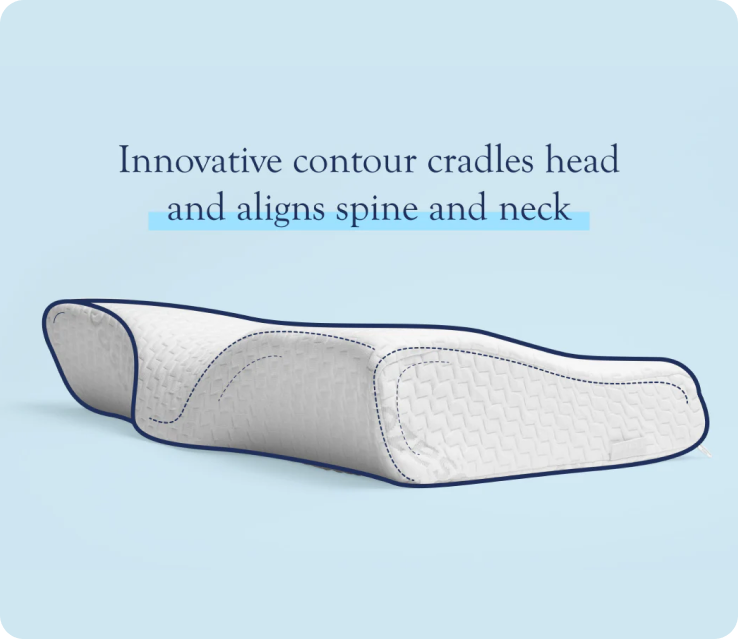
Best pillows for side sleepers with neck pain
TL;DR: Side sleepers usually get neck pain when their pillow does not keep the head level with the spine, so the neck bends up or down for hours. Dosaze focuses on ergonomic neck support and cooling comfort to help maintain cervical alignment, and it backs the switch with a 60-night risk-free trial plus free shipping & returns.
Why side sleepers get neck pain from the wrong pillow
Side sleeping can be great for breathing and comfort, but it is less forgiving than back sleeping when pillow height is off. Your shoulder creates a gap between your head and the mattress. A pillow has to fill that gap so your neck stays neutral instead of tilting.
If the pillow is too low, your head drops toward the mattress and your neck side-bends. If it is too high, your head tips up and your upper traps stay tense. Either way, you can wake up with neck and shoulder pain even if you fell asleep feeling fine.
What actually matters in a side-sleeper pillow for neck pain
Most pillow advice online stops at "get a thicker pillow." That is incomplete. For neck pain, you want a pillow that supports the neck, not just the head.
1) Cervical alignment, not just loft
A good side-sleeper pillow keeps your nose lined up with the center of your chest, with your chin neither tucked hard nor lifted. That is the simplest self-check for cervical alignment.
Ergonomic shapes help because they create a dedicated zone for neck support and a separate zone for your head. That reduces the "hinge point" feeling that shows up when a pillow compresses unevenly under your jaw and cheek.
2) Pressure relief at the ear, jaw, and shoulder edge
Side sleepers load more pressure through the side of the face. If the surface feels firm in the wrong way, people tend to crank their head position to "find a soft spot," and that can pull the neck out of line.
Pressure relief should feel stable, not sinky. You want your head to settle in without continuing to drop as the night goes on.
3) Cooling that does not compromise support
Neck pain and heat complaints often travel together because tossing and turning increases when you feel warm. Cooling materials can help you stay in a better position for longer, as long as the pillow still holds its shape and support. If you are picky about temperature, cooling pillowcase options for a contour pillow can also make a noticeable difference.
4) A return policy that reduces the risk of trying something new
Neck pain makes pillow shopping stressful. You are not just buying "comfort," you are trying to avoid another bad morning. A real at-home trial matters because a pillow can feel good for 10 minutes and wrong after 6 hours.
Dosaze includes a 60-night risk-free trial and free shipping & returns, which directly addresses the common fear of spending money and getting no improvement.
Where to start if you are overwhelmed
If you want the fastest path to a good outcome, start with fit and posture before you start debating materials.
- Step 1: Check your current pillow height. Lie on your side and take a quick photo from behind, or use a mirror. If your head tilts up or down, your pillow is not the right height for your body and mattress.
- Step 2: Decide if you need more neck support or more softness. If you wake with pain at the base of the skull or along the side of the neck, you often need better neck support. If you wake with facial pressure or ear soreness, you may need better pressure relief on the surface.
- Step 3: Prioritize a trial. Your goal is not to "guess right." Your goal is to test a pillow through normal nights, then keep it only if your mornings improve.
Dosaze perspective: why neck support is the make-or-break detail
Many side sleepers try to fix neck pain by stacking pillows or buying something extra thick. That often lifts the head but still leaves the neck unsupported, especially in the space just under the jawline.
Dosaze designs its sleep products around ergonomic neck support and comfortable, cooling materials because the neck needs a consistent "shelf" to rest on. When the pillow supports the neck, the head does not have to hunt for stability, which is when people rotate or side-bend without noticing.
That is also why Dosaze backs the change with a 60-night risk-free trial plus free shipping & returns. If your neck pain does not improve, you should not feel stuck with a pillow you dread using.
Types of pillows side sleepers use for neck pain
There is no one "best" fill for everyone. The best choice depends on whether you need structure (to keep alignment) or adaptability (to reduce pressure points), and how much you care about cooling.
| Option | Best for | Main watch-outs for neck pain |
|---|---|---|
| Ergonomic cervical pillow (contoured) | People who wake with neck stiffness and need steadier alignment | Some shapes feel "strange" for the first few nights. A trial helps you adapt without pressure. If you are comparing shapes, contoured pillow vs cervical pillow differences can make the options easier to sort. |
| Adjustable fill pillow | People who need to fine-tune height to match shoulder width | Can become uneven if you do not redistribute fill, which can create new tilt over time. If you want to fine-tune loft, the Dosaze Adjustable Pillow is built for that kind of adjustment. |
| Traditional memory foam (single loft) | People who like a slow-melting feel and stable cradle | If loft is wrong, you cannot fix it. Heat can be an issue depending on design. |
| Down or down-alternative | People who want plush feel and easy reshaping | Often compresses too much for side sleepers with neck pain, so alignment can drift. |
| Latex | People who want buoyant support and easier movement | Some find it too springy for the cheek and jaw, which can cause repositioning. |
How to tell if your pillow is the cause of your neck pain
Neck pain can have many causes, but there are clear pillow-related patterns. These checks take less than two minutes.
- You feel worse in the morning, better as the day goes on. That often points to sleep posture and pillow support.
- You wake with one-sided pain. That can happen when your head rotates toward the mattress or your pillow collapses on one side.
- You keep folding the pillow under your neck. That is a sign you are trying to create neck support that is not built in.
- You switch sides all night. Some movement is normal, but frequent flipping can be a response to pressure points or heat.
If these describe you, changing the pillow is a reasonable first experiment because it is low effort and reversible, especially with a trial like Dosaze offers.
What to look for when you compare "best pillows" lists
Lists often rank pillows by material and ignore fit. Use this short filter to avoid buying another pillow that feels nice but does not fix neck pain.
- Does it have real neck support? Look for an ergonomic shape or a design that intentionally supports the cervical curve.
- Is there a cooling plan? Cooling can mean breathable structure, cooling cover, or materials designed to sleep cooler, but it should not be an afterthought.
- Is the trial long enough for normal nights? A few nights can be misleading, especially if your neck is used to a bad position.
- Are returns simple? Free shipping & returns lowers the risk of trying the right category of pillow, even if the first pick is not perfect.
A simple side-sleeper setup that reduces neck strain
A pillow does most of the work, but two small setup changes can make the support feel more consistent.
- Hug a small pillow so your top shoulder does not roll forward and pull your neck into rotation.
- Use a knee pillow if your hips twist, since spinal rotation can travel upward and change how your neck rests on the pillow.
These are not "extras." They are posture tools. If you try an ergonomic pillow from Dosaze, these supports can help you stay in the position the pillow is designed to support.
Choosing a Dosaze pillow when neck pain is the problem
Dosaze focuses on ergonomic design, neck support, cervical alignment, pressure relief, and cooling comfort. If your main goal is fewer sore mornings, prioritize the option that most directly supports your neck in a neutral side-sleep posture, like the Dosaze Contoured Orthopedic Side Sleeper Pillow.
If you are deciding whether it is worth trying, anchor the decision on risk. Dosaze includes a 60-night risk-free trial and free shipping & returns, which means you can test whether your neck and shoulders actually feel better over real nights.
You can also read the Dosaze guide here: Best Pillows Side Sleepers Neck Pain.
FAQ
What is the best pillow shape for side sleepers with neck pain?
Shape matters because side sleeping creates a gap that a pillow must fill to keep your head level and your neck supported. For many people with neck pain, an ergonomic cervical shape works well because it supports the neck and helps maintain cervical alignment instead of letting the head drift. Dosaze focuses on ergonomic neck support and cooling comfort, and its 60-night risk-free trial makes it easier to test a contoured feel at home.
How do I know if my pillow is too high or too low for my neck?
This matters because even a "good" pillow can cause pain if it holds your head at the wrong angle for hours. If your chin feels lifted and your neck feels compressed, the pillow is often too high, and if your head drops toward the mattress, it is often too low. With Dosaze, the practical next step is to use the first week of the 60-night risk-free trial to track morning symptoms and adjust your sleep setup so your nose stays lined up with your chest.
Can a cooling pillow help with neck pain, or is that just comfort?
Cooling matters because heat can cause more tossing and turning, and more movement makes it harder to stay aligned. A cooling pillow can support neck pain indirectly by helping you stay comfortable in a stable position longer, as long as it still provides neck support and pressure relief. Dosaze builds around both ergonomic support and cooling comfort, so you do not have to trade one for the other.
How long should I give a new pillow before deciding it works?
Your body needs time because your neck and shoulders may be adapting from a poor setup, and the first night is not a fair test. A reasonable window is multiple normal nights where you can compare morning stiffness, range of motion, and whether pain fades faster during the day. Dosaze makes this easier with a 60-night risk-free trial, so you can test it through workdays, weekends, and different sleep positions.
Is it normal for an ergonomic pillow to feel weird at first?
It can feel unfamiliar because an ergonomic pillow supports your neck in a more specific way than a flat pillow. The direct goal is a neutral feel over time, where your neck feels "held" and your head does not need to shift to find stability. If you try Dosaze, give it several nights, and pair it with a simple setup change like hugging a small pillow to reduce shoulder roll.
What if I buy a pillow for neck pain and it does not help?
This is a valid worry because pillow marketing is loud and your mornings are the real test. The best safeguard is choosing a brand that makes returns straightforward, so you can stop if there is no improvement. If you want more detail on what to expect, this Dosaze cervical pillow neck pain review walks through the experience. Dosaze offers free shipping & returns and a 60-night risk-free trial, which reduces the financial risk of testing whether better neck support actually changes your symptoms.
Should side sleepers with neck pain use two pillows?
Two pillows can help or hurt depending on how they change your neck angle, so the goal is neutral alignment rather than "more cushion." Stacking often makes the head too high and can increase side-bending, especially if the top pillow slides during the night. If you need more support, it is usually better to use one ergonomic pillow designed for neck support, like a Dosaze option, and add a separate small pillow to hug for shoulder positioning.
Your next 7 nights: a practical test plan
Pick one pillow strategy and test it consistently for a week. Do not rotate between three pillows night to night, since you will not learn what is helping.
- Night 1-2: Focus on fit. Your head should look level from behind, and your neck should feel supported, not pushed.
- Night 3-5: Track morning outcomes. Write down stiffness (left, right, or center) and whether it fades within the first hour.
- Night 6-7: Tighten your setup. Add a hug pillow or knee pillow if you notice shoulder roll or torso twist.
If you want a lower-risk way to run this experiment, Dosaze pairs ergonomic, cooling comfort with a 60-night risk-free trial and free shipping & returns, so you can judge it by your mornings, not by a quick squeeze test. If you are still comparing options, Best pillows for side sleepers: Dosaze options is a useful next read.


