



Best Pillow for Back and Side Sleepers: Top Picks Reviewed
Introduction
If you sleep on your back and your side, your pillow has to do two jobs that often conflict. Back sleeping usually needs a lower loft to keep your head from tipping forward. Side sleeping usually needs a higher loft to fill the gap between your ear and shoulder. When a pillow misses either one, you feel it the next morning as neck stiffness, shoulder tightness, or that dull headache that starts at the base of your skull.
The good news: you don’t need a “special” pillow for each position. You need the right combination of ergonomic shape, neck support, and materials that hold up over time—plus a feel that stays comfortable and doesn’t trap heat. In this list, I’m reviewing the top pillow types and who they work best for, with clear recommendations based on sleep posture, body shape, and common pain patterns.
I’ll also address the biggest buying anxiety we hear: “What if it doesn’t help and I’m stuck with it?” Look for brands that make trying a pillow easy, with a 60-night risk-free trial and free shipping & returns, so you can judge it by real nights—not a 30-second squeeze test in a store aisle.
Quick pick: what most combo sleepers should start with
If you rotate between back and side, start with an ergonomic cervical pillow that supports the neck in back sleep but still has enough height for side sleep. A contoured design reduces the “pillow flip problem” (constantly re-stacking or punching a pillow to get the right height).
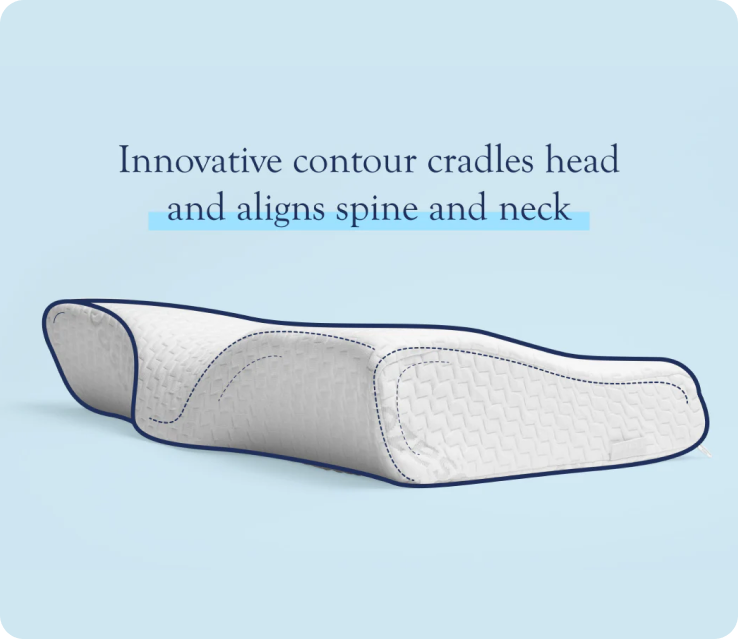
Dosaze’s approach is simple: shape for cervical alignment, materials tuned for stable support, and cooling comfort you can actually feel. If you want a low-risk place to start, the Dosaze Neck Support Cooling Pillow is built for this exact back/side overlap and comes with a 60-night risk-free trial and free shipping & returns.
How to choose a pillow when you sleep on your back and side
Before the list, use these three checks. They’re quick, specific, and they explain why some “highly rated” pillows still fail for combo sleepers.
1) Match loft to your shoulder width (not your height)
Side sleeping needs a pillow tall enough to keep your nose centered over your sternum (not angled down to the mattress). Broad shoulders typically need more loft; narrow shoulders need less. Back sleeping needs less loft than side sleeping, so combo sleepers do best with a pillow that has two usable zones (contour or adjustable fill).
2) Prioritize neck support over head softness
A pillow can feel plush and still let your neck sag. Look for a design that supports the curve under your neck so your head doesn’t “hang” when you roll to your back. This is the difference between waking up refreshed and waking up with that tight band across your upper traps.
3) Cooling is about airflow + material, not just “cool to the touch”
Many pillows feel cool for five minutes, then heat up. True cooling comes from breathable structure (air channels, responsive foam that doesn’t collapse) plus a cover that moves heat and moisture away. If you run warm, treat cooling as a core feature—not a bonus.
Top picks reviewed (for back and side sleepers)
1) Best overall for most back/side sleepers: Dosaze Neck Support Cooling Pillow
If you want one pillow that’s designed specifically for back-and-side switching, this is the cleanest recommendation. The contoured shape supports the neck when you’re on your back and helps keep your head level when you roll to your side, which promotes better cervical alignment through the night.
What makes this a “real-world” combo-sleeper pick is the stability. Fluffy pillows often feel great at first, then compress in the middle and you end up stacking an arm under the pillow at 3 a.m. A supportive, ergonomic core reduces that mid-night improvisation and improves pressure relief because your shoulder doesn’t have to fight to find space.
It’s also a low-risk way to test whether an ergonomic pillow helps your specific pain pattern. Dosaze offers a 60-night risk-free trial and free shipping & returns, which matters because neck and shoulder pain usually needs at least 2–3 weeks of consistent use to judge honestly.
Shop the Dosaze Neck Support Cooling Pillow
2) Best for broad shoulders (side dominant, still back sometimes): adjustable shredded memory foam pillow
If your shoulders are broad, the main problem is often not enough height on your side. An adjustable shredded memory foam pillow lets you add fill until your neck sits neutral. That’s hard to replicate with a single-piece foam pillow if you’re on the taller/stronger-shouldered end.
The trade-off is consistency. Shredded fill can shift, especially if you change positions a lot. If you choose this route, pick a pillow with a gusseted edge (side wall) so the fill doesn’t migrate as easily, and re-fluff it nightly to keep steady neck support. (If you want the pros/cons breakdown, see why hybrid adjustable memory foam pillows work well for many sleepers.)
3) Best for narrow shoulders (back dominant, occasional side): low-profile contoured memory foam pillow
If you have narrow shoulders and sleep mostly on your back, a high-loft pillow is a common cause of “chin-to-chest” posture. That forward tilt can stress the upper neck and trigger morning tightness. A lower-profile contour supports the neck without pushing the head forward.
This is also a good choice if you wake with pain right at the base of the skull. That spot often responds well to consistent cervical support rather than more softness.
4) Best for neck pain that spikes on your back: cervical roll + contour design
Some people feel fine on their side but get neck pain when they roll onto their back. That usually points to missing support under the neck curve. A pillow with a defined cervical roll (the raised area under your neck) can reduce that gap and improve cervical alignment in back sleep.
One practical test: lie on your back and slide a flat hand under your neck. If there’s a big space, your pillow likely supports your head but not your neck. A contour with a cervical roll targets that exact issue. (If you’re deciding between shapes, this guide on contoured vs. cervical pillows helps clarify what each design actually does.)
5) Best for shoulder pressure on your side: contoured pillow with shoulder cut-out (or strong side edge)
If you wake with a sore shoulder or numb arm, your pillow may be forcing your shoulder forward or compressing it because the space between your head and mattress isn’t managed well. A shoulder cut-out (or a contour that creates room for the shoulder) helps you settle without hiking your shoulder up toward your ear.
This category can be a game changer for strict side sleepers, but combo sleepers should make sure the pillow still supports back sleep. If the cut-out is too aggressive, it can feel unstable when you roll.
6) Best for hot sleepers: cooling foam + breathable cover (not just “cooling gel”)
Hot sleepers often buy a gel pillow and still wake up warm. Gel can feel cool on contact, but airflow does most of the heavy lifting after the first few minutes. Look for foam that doesn’t collapse into a heat-trapping bowl and a cover designed to move heat away.
If you consistently flip your pillow to find the “cool side,” that’s a sign your current pillow holds heat near your face and neck. A cooling-focused pillow helps you stay asleep longer, which often matters more than any single comfort feature.
7) Best for people who hate the “firm foam” feel: latex pillow (medium loft)
Latex has a different feel than memory foam. It’s springier, so it pushes back faster when you change positions—helpful if you roll between back and side. It also tends to sleep cooler because it’s more open and less sinky.
The downside is that latex can feel “bouncy” if you like a deep hug. If you try latex, aim for a medium loft and check return terms, because feel is very personal in this category.
8) Best budget-friendly way to test loft: adjustable down-alternative with a zipped inner chamber
If you aren’t sure what height you need, an adjustable down-alternative pillow with a zippered inner chamber can help you find your loft target. You can add or remove fill in small amounts, then use that height as your benchmark when you upgrade to a more structured ergonomic pillow.
Just don’t expect it to hold a precise shape all night. These are comfort-focused, not posture-focused, so they’re better as a “measurement tool” than a long-term solution for neck pain.
9) Best for travel (keeping your neck consistent away from home): compact cervical pillow
Many people only realize their pillow is working when they sleep on a hotel pillow and wake up stiff. If your neck is sensitive, travel is where consistency matters most. A compact cervical pillow keeps your neck support predictable even when the mattress and bedding change. (If you want a purpose-built option, Dosaze’s Travel Neck Pillow is designed for portable cervical support.)
For combo sleepers, pick a travel option that supports the neck without being so tall that it forces your head forward in back sleep.
10) Best “two-pillow setup” for stubborn pain: thin back pillow + firmer side pillow
This is the contrarian option that actually works for some people: instead of chasing one perfect pillow, use two purpose-built pillows. Keep a thinner pillow for back sleep (reduces forward head tilt) and a firmer, taller pillow for side sleep (fills the shoulder gap).
It’s not as elegant, but if you’ve tried multiple “combo” pillows and still wake up sore, this is the quickest way to match loft to position. The downside is managing pillows during the night, so it’s best if you switch positions only once or twice.
Comparison table: which pick fits your body and sleep pattern?
| Pillow type | Best for | Main benefit | Watch out for |
|---|---|---|---|
| Ergonomic cervical cooling pillow (Dosaze) | Most back/side combo sleepers | Stable neck support + cooling comfort | Contour feel takes a few nights to adapt |
| Adjustable shredded memory foam | Broad shoulders; side-dominant | Custom loft | Fill shifts; can feel uneven |
| Low-profile contoured foam | Narrow shoulders; back-dominant | Reduces chin-to-chest posture | May feel too low on your side |
| Latex (medium loft) | People who move a lot and hate “sink” | Responsive support, cooler sleep | Bouncy feel isn’t for everyone |
| Two-pillow setup | Stubborn pain; very different loft needs | Position-specific alignment | Less convenient at night |
What to expect when switching pillows (so you don’t quit too early)
If you’ve slept on the same soft pillow for years, an ergonomic pillow can feel “different” for the first few nights. That doesn’t mean it’s wrong. It means your neck is finally getting consistent support instead of collapsing into the same compressed spot.
Give it a fair test window. Most people can tell within 7–14 nights if they’re trending better, but a full adjustment can take a few weeks—especially if you’re correcting forward head tilt or long-term side-sleep shoulder tension.
This is also why return policies matter. A 60-night risk-free trial gives you enough time to evaluate morning symptoms (not just bedtime comfort) without feeling stuck.
FAQ
-
What is the best pillow for someone who sleeps on their back and side? Switching between back and side matters because each position needs a different loft to keep your head level and your neck supported. The best pillow for back and side sleepers is usually an ergonomic contoured pillow that supports the neck in back sleep while still filling the shoulder-to-head gap on your side. If you’re unsure, choose a pillow with a trial period long enough to judge morning neck and shoulder comfort over at least two weeks.
-
How high should my pillow be if I’m a back and side sleeper? Pillow height matters because too much loft can push your head forward on your back, while too little loft can drop your head toward the mattress on your side. A practical target is a lower-to-medium loft zone for back sleep and a medium-to-higher loft zone for side sleep, which is why contoured or adjustable pillows work well for combo sleepers. If your nose points up toward the ceiling on your back or down toward the mattress on your side, your loft is off and you should adjust height or switch pillow type.
-
Is memory foam or latex better for back and side sleepers? The choice matters because combo sleepers need both support and easy movement during position changes. Memory foam is often better if you want a more cradled feel with steady neck support, while latex is often better if you want a springier, more responsive pillow that feels cooler and makes it easier to roll. If you wake up feeling “stuck” in your pillow or run hot, latex may be the better next try; if you need firmer cervical support, contoured memory foam often wins.
-
Why do I wake up with neck pain even with a good pillow? This question matters because neck pain can come from alignment issues that a pillow alone can’t fully fix in one night. You can wake up with neck pain if your pillow supports your head but not your neck curve, if the loft is wrong for your shoulder width, or if your mattress lets your shoulder sink too far on your side. A good next step is to check whether your neck has a gap when you lie on your back and whether your head tilts down toward the mattress on your side, then adjust pillow shape or height to restore cervical alignment. (For a deeper comparison, this neck-pain pillow guide breaks down what tends to help most.)
-
How long should I try a new pillow before deciding it works? This matters because first-night comfort doesn’t always predict morning neck and shoulder results. A fair test for a new pillow is at least 7–14 nights, and many people benefit from a longer window when switching to an ergonomic design that changes sleep posture. Choosing a pillow with a 60-night risk-free trial and free shipping and returns makes it easier to evaluate real improvement without feeling locked in.
Conclusion: the simplest next step
If you sleep on both your back and side, don’t shop by softness alone. Shop for stable neck support, reliable cervical alignment, and cooling comfort that holds up past the first few minutes.
For most people, the most practical “start here” pick is a contoured ergonomic pillow designed for combo sleeping—especially if you also want low risk while you test what your body responds to. If that’s you, the Dosaze Neck Support Cooling Pillow gives you an ergonomic design, cooling feel, and a 60-night risk-free trial with free shipping & returns.
Next steps: pick one pillow type from the list based on your shoulder width and heat level, commit to two consistent weeks, and judge it by how you feel in the first 30 minutes after waking—not just how it feels when you lie down.
Top picks recap
- Best overall: Dosaze Neck Support Cooling Pillow
- Best for broad shoulders: Adjustable shredded memory foam pillow
- Best for narrow shoulders: Low-profile contoured foam pillow
- Best for back-sleep neck pain: Cervical roll + contour design
- Best for shoulder pressure: Contoured pillow with shoulder cut-out
- Best for hot sleepers: Cooling foam + breathable cover
- Best for “no sink” feel: Latex pillow (medium loft)
- Best troubleshooting option: Two-pillow setup


