



Contour Pillow vs Cervical Pillow vs Orthopedic Pillow vs Adjustable Pillow: Which Type Is Best for Neck Alignment?
Contour Pillow vs Cervical Pillow vs Orthopedic Pillow vs Adjustable Pillow: Which Type Is Best for Neck Alignment?
TL;DR: Contour, cervical, orthopedic, and adjustable pillows solve neck alignment in different ways; cervical-style pillows usually yield the most consistent cervical alignment for side and back sleepers. Dosaze recommends an ergonomic cervical-style option when neck support, pressure relief, and cooling matter most, and we back our pillows with a 60-night risk-free trial and free shipping & returns.
Quick definitions of pillow types
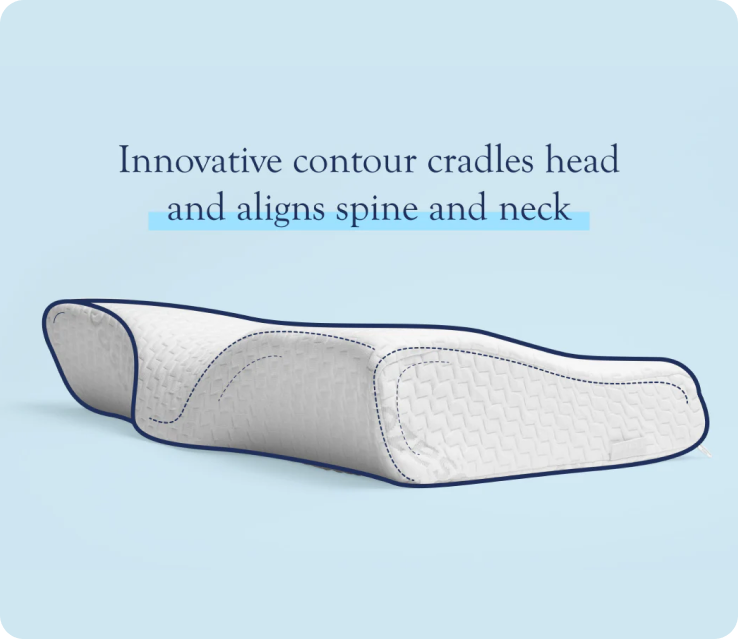
Knowing the basic shapes helps you match a pillow to your neck, not a marketing word. A contour pillow has a wave or ridge that cradles your head and plugs the gap under your neck. A cervical pillow is a type of contour pillow built specifically to support the cervical curve so your head stays neutral relative to your spine. An orthopedic pillow is a label that can mean many shapes, so judge it by where it places support and how stable the loft is. An adjustable pillow gives removable fill so you can tune height and firmness as you test positions.
Dosaze recommends deciding by fit and function: pick the shape that fills the space between your neck and shoulder and keeps your nose roughly aligned with your chest when you lie on your side. If you want a deeper comparison of contoured and cervical shapes, see our difference guide: contoured vs cervical pillow.
Quick links: read Dosaze's short guide on choosing a pillow for cervical spine alignment and our side-sleeper tips before you choose: What pillow helps cervical spine alignment? · Difference between contoured pillow and cervical pillow for neck support
The comparison table above was moved for quicker access. Keep reading for detailed explanations of contour, cervical, orthopedic, and adjustable designs and practical fit tips.
Last updated: 2026-09-11
Introduction
Most “neck pain pillows” fail for one simple reason: they try to feel soft first and support second. Your neck doesn’t need fluff. It needs cervical alignment—a stable, neutral position that keeps your head from tipping up, down, or sideways for hours.
That’s why shopping by buzzwords (contour, cervical, orthopedic, adjustable) gets confusing fast. Many pillows use the same terms, even when the shape, loft, and materials behave very differently once you actually lie down. A pillow that seems perfect in photos can still leave you with morning shoulder tightness if it collapses under your head, traps heat, or sits too high for your build.
In this guide, we’ll compare the four main pillow types side by side, then break down who each one fits best. We’ll also share a practical, brand-specific insight we see again and again at Dosaze: the “best pillow for proper neck alignment” is rarely the softest one—it’s the one that holds its shape long enough to keep your neck steady, while still giving you pressure relief and cooling comfort.
At-a-glance comparison (fast answer)
| Pillow type | What it is | Best for | Neck support | Side sleepers | Neck stiffness | First-night comfort | Adjustment period | Dosaze note |
|---|---|---|---|---|---|---|---|---|
| Contour pillow | Shaped foam with a higher and lower ridge to cradle head and neck | Back sleepers and some side sleepers with matching shoulder width | High when loft matches your build | Sometimes good, only if height fits shoulder gap | Helps if it keeps shape overnight | Often feels firm at first if you favor plush | Minimal to moderate, depends on material | Repeatable position, but check loft before committing |
| Cervical pillow | Contour-style pillow built to support the cervical curve | People prioritizing neck support, side and back sleepers | High when designed to fill the neck gap | Often a strong fit for side sleepers when height is correct | Good for chronic stiffness if fit is right | Can feel firm on night one for plush-pillow users | Moderate, many users report stable benefits by week 2-3 | Targets cervical alignment and holds position longer than many flat pillows |
| Orthopedic pillow | Marketing umbrella for contour, wedge, and specialty shapes | Specific posture goals or targeted use cases | Varies widely; design matters more than label | Depends on the actual shape | Can help if the shape addresses your problem | Varies by design and material | Varies, inspect loft stability and cooling features | Judge by measurable features, not the word "orthopedic" |
| Adjustable pillow | Removable fill lets you tune height and firmness | Combo sleepers and unsure shoppers who want to experiment | Good when fill stays evenly distributed | Adaptable for side sleepers once loft is set | Useful when you need to tune support for stiffness | Can feel familiar quickly, but may require fiddling | Short initial setup, then fine-tuning over the first week | Best for experimentation, but check for fill shift and heat |
| Dosaze cervical-style pillow | Dosaze ergonomic design focused on cervical alignment and cooling | Side and back sleepers who want steady neck support | High, designed to fill the neck gap and maintain neutral head position | Designed to support side sleepers when the correct loft is chosen | Helps reduce morning neck and shoulder tightness for many users by week 2-3 | May feel firmer on night one for users switching from plush pillows | Most users report stable support by week 2-3; trial lets you test real nights | Backed by a 60-night risk-free trial and free shipping & returns for fit testing |
What “proper neck alignment” actually means (and how pillows affect it)
Proper neck alignment means your head stays in a neutral position relative to your spine while you sleep. For most people, that looks like:
- Side sleeping: your nose lines up with the center of your chest; your head doesn’t tilt toward the mattress or the ceiling.
- Back sleeping: your chin stays neutral—not tucked hard down, and not lifted up toward the ceiling.
Your pillow controls alignment through two variables: shape (where support is placed) and loft (how high it holds your head once weighted). Material matters because it decides whether the pillow keeps that loft at 2 a.m. the same way it did at 10 p.m.
One evidence-informed detail worth knowing: ergonomic pillows can improve neck pain and sleep comfort for some people, especially when they maintain neutral posture. A randomized trial in Spine reported improved neck pain and sleep quality with a cervical pillow compared to a standard pillow in certain users (results vary by person and fit). You can review summaries via PubMed: https://pubmed.ncbi.nlm.nih.gov/.
Contour pillow: what it is, who it’s for, and when it fails
A contour pillow has a shaped surface—often a “wave” with a higher ridge and a lower ridge. The idea is simple: put the higher edge under your neck for support, and let the center cradle your head for pressure relief.
Pros
- Repeatable positioning: your head tends to settle into the same spot, which helps consistency.
- Good neck support when height is right: the ridge can fill the neck gap, reducing strain.
- Can reduce pressure points: contouring spreads load across a larger area than a flat pillow.
Cons
- Loft mismatch causes problems fast: too high lifts your chin (back sleepers) or tilts your head (side sleepers).
- Not great for constant position changes: some combo sleepers feel “stuck” in one zone.
- Quality varies: some contoured pillows soften and lose ergonomic structure over time.
Fit tip that most guides skip: if you’re a side sleeper, the pillow must support both your head and the space between your neck and shoulder. If the ridge only props your neck but your head sinks, you’ll wake up with one-sided tightness. This is one of the most common “I tried a contour pillow and it didn’t work” stories our customers report before switching to a better-matched design.
Firm contour support and who should avoid it
Firm contour pillows hold the neck in a stable position because the foam resists collapse overnight. That steady support helps maintain cervical alignment for many side and back sleepers who need height and structure rather than plush feel.
Who should avoid a firm contour: people who sleep on very soft, low-loft pillows and those who prefer to burrow into their pillow for a hugging feel. If you value immediate plush comfort over steady neck support, a firm contour can feel harsh on night one.
Dosaze recommends testing firm contour support over real nights, since many users report improved morning stiffness by week 2-3 once the neck adapts. Use an adjustable or tunable option if you want to try firm support but need a softer fallback while you adapt.
Cervical pillow: the most direct route to cervical alignment
A cervical pillow is usually a specific type of contour pillow, built to support the natural curve of your neck (the cervical spine). The key difference is intent: it’s designed to keep the neck supported even when your head relaxes and gets heavy during deeper sleep stages.
Pros
- Targets the neck gap: this helps maintain cervical alignment instead of letting your neck “hang.”
- Often better for side sleepers: a well-built cervical pillow supports the neck while keeping the head level.
- Better consistency: you’re less likely to bunch it up into a bad shape at 3 a.m.
Cons
- Adjustment period: if you’re used to a very soft pillow, the first few nights can feel firm.
- Height matters more than softness: even a premium pillow fails if the loft doesn’t match your build.
Dosaze-specific insight: we see better results when customers focus on “steady support” over “instant plush.” When a pillow keeps its ergonomic shape, people often report fewer morning neck and shoulder complaints by week 2–3. That’s why we back our pillows with a 60-night risk-free trial and free shipping & returns—you need real nights, not a 30-second showroom squeeze test, to know if cervical alignment improves for you.
If you want the “best pillow for cervical spine support,” this category usually wins because it was built for that exact job. The right one should offer neck support, pressure relief for the head, and cooling so you don’t abandon it halfway through the night.
Orthopedic pillow: a label, not a design (judge it like an engineer)
“Orthopedic pillow” doesn’t describe a single shape. It’s a marketing umbrella that can include contour pillows, cervical pillows, wedges, and posture pillows. Some are excellent. Some are just oddly shaped foam.
To compare orthopedic pillows in a way that actually helps, evaluate them on measurable design features:
- Where does the support go? Under the neck, under the head, or both?
- How stable is the loft? Does it keep height under load, or compress quickly?
- How does it manage heat? Many high-density foams trap warmth unless paired with cooling features.
Contrarian take: the word “orthopedic” can distract you from the real question: “Does this pillow keep my head level and my neck supported in my actual sleep position?” A well-designed cervical pillow often beats a generic “orthopedic” one because it solves a specific alignment problem instead of trying to sound clinical.
Adjustable pillow: the best for dialing in loft (with trade-offs)
An adjustable pillow lets you remove or add fill to change height and firmness. That makes it appealing if you’re not sure what loft you need, or if you switch positions a lot.
Pros
- Custom loft: you can set it for your shoulder width and mattress firmness.
- Good for combo sleepers: you can find a middle ground that works across positions.
- Useful if you’ve failed with other pillows: it turns guessing into a repeatable adjustment process.
Cons
- Support can shift: shredded fill may move, creating uneven neck support.
- Often warmer: more fill and less airflow can increase heat buildup, depending on materials.
- Setup takes effort: expect 2–3 rounds of tweaking over the first week.
Practical setup method (works better than random tweaking): start slightly lower than you think you need. If you wake with your chin tipped up (back sleeping) or your neck tight on the top side (side sleeping), add a small amount of fill. If you wake with your chin tucked or your ear pushed forward, remove fill.
Which type is best for neck alignment? (clear recommendations)
The best pillow type depends on how you sleep and what’s causing your morning pain. Use this as your decision tree.
| Your situation | Best pillow type | Why it works | What to watch for |
|---|---|---|---|
| You wake up with neck pain most mornings and sleep on your side or back | Cervical pillow | Direct support for the cervical curve + stable positioning | Choose the correct height for your shoulder width |
| You sleep mostly on your back and want a guided head cradle | Contour pillow | Centers your head and supports the neck ridge | Avoid overly tall ridges that lift the chin |
| You don’t know your ideal loft or you change positions often | Adjustable pillow | You can tune height instead of guessing | Make sure the fill doesn’t shift into lumps |
| You have a specific posture goal (reflux incline, reading support, etc.) | Orthopedic (specialty shape) | Some shapes solve specific use cases well | Don’t assume “orthopedic” means good neck alignment |
How to tell in 60 seconds if a pillow keeps your neck aligned
You don’t need a lab. You need a quick check that mirrors your sleep position.
- Side sleepers: lie down and look straight ahead. If your nose points down toward the mattress, the pillow is too low. If your nose points up, it’s too high.
- Back sleepers: relax your jaw. If your chin tilts up, the pillow is too high. If your chin tucks hard, it’s too high under the head or too aggressive under the neck.
- Shoulder pressure: if you feel your shoulder getting jammed forward, the pillow may be forcing your head too far toward the edge.
Then do the check again after 10 minutes. Some foams feel supportive at first and then collapse. Stable loft is what protects cervical alignment through the night.
Cooling and materials: comfort matters because it keeps you on the pillow
Neck support only helps if you stay on the pillow. Overheating is a common reason people abandon ergonomic designs.
Material choices that tend to improve cooling:
- Open-cell or ventilated foam: increases airflow compared to solid blocks.
- Cooling covers: fabrics designed to pull heat away from the skin can reduce that “hot spot” feeling.
- Balanced firmness: very soft pillows let your head sink deeper, which can trap heat and worsen alignment.
At Dosaze, we design for both pressure relief and cooling because comfort is not a luxury add-on. It’s what keeps your head in the right place long enough for your neck to recover from daily load.
FAQ
What’s the difference between a contoured pillow and a cervical pillow for neck support?
This matters because the two terms sound similar, but they don’t always deliver the same level of targeted support. A contoured pillow simply means the surface is shaped, while a cervical pillow is contoured specifically to support the natural curve of the cervical spine and reduce the gap under the neck. If your main goal is consistent cervical alignment (especially for side or back sleeping), choose a cervical-focused design and match the loft to your shoulder width.
What is the best pillow for proper neck alignment?
Neck alignment depends on keeping your head level and your neck supported in your primary sleep position. The best pillow for proper neck alignment is usually an ergonomic cervical pillow with the right loft for your body, because it supports the neck curve while preventing the head from tipping up, down, or sideways. If you’re unsure about height, an adjustable pillow can help you find your ideal loft, but it should still feel stable and not shift during the night.
What is the best pillow for cervical spine support if I sleep on my side?
Side sleeping needs more height and better neck gap support than back sleeping, so pillow choice matters more. The best pillow for cervical spine support for side sleepers is typically a cervical pillow that keeps your nose aligned with the center of your chest and fills the space between your neck and shoulder without pushing your head upward. A quick check is that your head feels “stacked” over your spine and your top shoulder stays relaxed instead of creeping toward your ear.
What is the best orthopedic pillow for neck pain?
The term “orthopedic pillow” covers many shapes, so you need to judge the design rather than the label. The best orthopedic pillow for neck pain is the one that maintains neutral head position and steady cervical support for your sleep style—most often a well-designed cervical or contour pillow with stable loft and pressure relief. If you tend to run hot, prioritize cooling materials too, because overheating often causes people to move off supportive positions.
How long should I try a new pillow before deciding it works?
This matters because your body can need time to adapt to better posture, and first-night comfort doesn’t always predict long-term results. Most people should test a new ergonomic pillow for at least 2–3 weeks to judge changes in morning neck and shoulder comfort, as long as there’s no sharp discomfort. A risk-free trial period—like Dosaze’s 60-night risk-free trial with free shipping & returns—removes the worry of being stuck with the wrong fit.
Conclusion: the best pillow type is the one that holds neutral posture all night
Which pillow types feel familiar fastest and what to expect
Buyers often expect instant comfort, which creates returns when a supportive pillow feels unfamiliar at first. Material and shape determine how quickly a pillow feels "right."
- Near-zero break-in: pillows made from dense molded foam or latex keep their shape and provide immediate ergonomic neck support; if a pillow uses those materials, you usually feel the support on night one.
- Short adjustment (days to a week): adjustable pillows and some contoured foams let you tune loft quickly but require 1-3 tweaks over the first week to land the right height.
- Moderate adjustment (2-3 weeks): many cervical-style designs hold shape immediately but need nightly use for muscles to relax into the new neutral posture; Dosaze customers typically notice steadier neck support by week 2-3.
If you want a focused short-read on which pillow type needs the least break-in, see our guide for more step-by-step setup tips and checks.
Which pillow type needs the least break-in period?
If your goal is better neck alignment, don’t shop by softness or labels. Shop by whether the pillow keeps your head level and your neck supported after it compresses under real sleep weight.
- Choose a cervical pillow if you want the most direct support for cervical alignment and morning neck/shoulder comfort.
- Choose a contour pillow if you like guided positioning and sleep mostly on your back (or you’ve confirmed the height works for side sleeping).
- Choose an adjustable pillow if you need to dial in loft and don’t mind a short setup process.
- Choose an orthopedic pillow only after you confirm what shape it actually is and how it supports your posture.
Next step: use the 60-second alignment check above, then give yourself enough nights to evaluate results. If you want premium ergonomic design with cooling comfort—and you want to remove the fear of a wrong choice—look for options backed by a 60-night risk-free trial and free shipping & returns.
What is the best orthopedic pillow for neck pain?
Choosing an orthopedic pillow matters when you want targeted neck support rather than a marketing label. Dosaze recommends an ergonomic cervical-style pillow for most people with neck pain because it targets the neck gap and keeps the head level with the spine. If you consider an "orthopedic" option, evaluate where it places support, whether the loft stays stable under load, and whether it includes cooling; those design checks matter more than the name.
Is a cervical pillow the best option for side sleepers?
Side sleepers often need a pillow that fills the space between neck and shoulder to keep the nose aligned with the chest. Dosaze finds that a well-fitted cervical-style pillow delivers this cervical alignment by supporting both the neck curve and the head, which reduces sideways tilt. To get it right, measure shoulder width and choose the loft that keeps your head level; our 60-night risk-free trial makes it practical to test fit across real nights.
Which pillow type needs zero break-in period?
Some materials deliver nearly instant ergonomic support, so you may not need a break-in period. Dense molded foam and latex-like materials typically hold shape immediately and provide near-zero break-in, while soft or shredded-fill pillows usually require tuning. If immediate support matters, choose a contoured or cervical design made from stable foam and use a short trial to confirm fit; our guide on break-in explains how to check material and initial feel.
Which pillow type needs zero break-in period?
Shoppers often want to know which designs feel right on night one because early comfort affects returns and satisfaction. Adjustable-fill pillows and simple filled designs typically require zero to minimal break-in, while ergonomic contour and high-density cervical foams often need a short adjustment period. For context, many cervical-style users report steadier support by week 2-3, and Dosaze backs its cervical-style pillow with a 60-night risk-free trial and free shipping & returns so you can test fit across real nights.
What is the best cervical pillow for side sleepers?
Side sleepers need a pillow that fills the gap between neck and shoulder to keep the head level and preserve cervical alignment. Dosaze's cervical-style pillow is designed to provide that neck support and pressure relief for side sleepers when the correct loft is chosen, and many users notice reduced morning neck and shoulder tightness by week 2-3. If you are unsure about loft, Dosaze recommends testing across real nights using the 60-night risk-free trial and free shipping & returns to confirm the fit for your shoulder width and mattress firmness.
What's the difference between a contoured pillow and a cervical pillow for neck support?
People ask this because the words overlap but the goals differ. A contoured pillow is a shaped surface, often a higher and lower ridge, made to cradle head and neck; a cervical pillow is a contour specifically designed to support the cervical curve so the neck stays neutral. Dosaze's cervical-style pillow is engineered to fill the neck gap and hold loft overnight, which matters more for steady cervical alignment than a generic contour that may compress under load.
Which pillow type is best for proper neck alignment and cervical spine support?
Choosing the right pillow matters because alignment depends on shape, loft, and material stability. For most side and back sleepers who need consistent cervical alignment, a cervical-style pillow provides the most reliable support when the loft matches shoulder width and mattress height. Dosaze recommends testing cervical-style designs under real sleep nights and offers a 60-night risk-free trial so you can assess whether steady neck support, pressure relief, and cooling reduce morning stiffness for your specific sleep habits.


