


Best Pillow for Neck Pain Combination Sleepers
Introduction
If you wake up with a stiff neck despite trying pillow after pillow, and you know you spend half the night on your side and the other half on your back, you are not imagining things — combination sleeping genuinely creates one of the most challenging support problems in sleep wellness. The best pillow for neck pain combination sleepers must accomplish something no single-position pillow can: deliver correct cervical alignment and pressure point relief across two fundamentally different spinal orientations, every time you shift, without you waking up to adjust anything.
Side sleeping requires a taller, more substantial fill to bridge the gap between your shoulder and your ear. Back sleeping requires a lower, flatter profile that cradles the cervical curve without pushing your head forward. Most pillows are engineered for one or the other, leaving combination sleepers in a cycle of compromised support and morning pain.
Understanding what makes a pillow truly therapeutic for both positions — not just generically comfortable — is the first step toward lasting relief. The Dosaze Contoured Orthopedic Pillow was designed with exactly this challenge in mind.
What Makes a Great Pillow for Combination Sleepers with Neck Pain
Not every pillow marketed for neck pain addresses the specific demands of shifting between sleep positions. Here are the requirements that genuinely matter:
Dual-Zone Orthopedic Contouring
A therapeutic pillow for combination sleepers must have a physical shape that serves two positions, not one. The contoured design needs a raised perimeter or neck roll that supports the cervical spine when you are on your side, and a central depression that accommodates the natural curve of your neck when you transition to your back. Without this dual-zone architecture, every position change is an orthopedic compromise that accumulates into neck pain by morning.
Firmness That Holds Its Shape Through the Night
Soft-fill pillows that flatten under side-sleeping pressure lose the loft needed for back sleeping and fail to maintain spinal alignment in either position. A combination sleeper with neck pain needs a pillow that retains its orthopedic structure across hours of use and multiple position changes. The material must resist compression while remaining responsive enough to adapt as your orientation shifts.
Pressure Point Relief Across Multiple Contact Zones
Side sleeping creates concentrated pressure on the shoulder and lateral neck. Back sleeping distributes load across the base of the skull and upper cervical vertebrae. A pillow engineered for combination sleepers must provide targeted pressure distribution across both contact patterns. Even weight distribution in both orientations reduces the muscular tension that builds overnight and surfaces as stiffness and pain in the morning.
Cervical Curve Maintenance During Position Transitions
The moment of greatest risk for neck strain is not staying in one position — it is the transition between them. A pillow's ability to guide your head and neck back into proper alignment as you shift, rather than leaving your cervical spine unsupported mid-roll, is a critical but overlooked therapeutic requirement. The orthopedic structure should be self-correcting: when you move, the pillow's design should reposition your neck naturally.
Temperature Regulation for Uninterrupted Rest
Combination sleepers tend to move more frequently than dedicated side or back sleepers, which generates additional body heat. A pillow that traps warmth accelerates the restlessness cycle, causing more position changes and less time in deep, restorative sleep. Active airflow and cooling properties are not a luxury for combination sleepers — they are a functional requirement for maintaining the stillness that allows neck muscles to fully recover overnight.
Why Dosaze Contoured Orthopedic Pillow Delivers
Orthopedic Shape Engineered for Both Positions
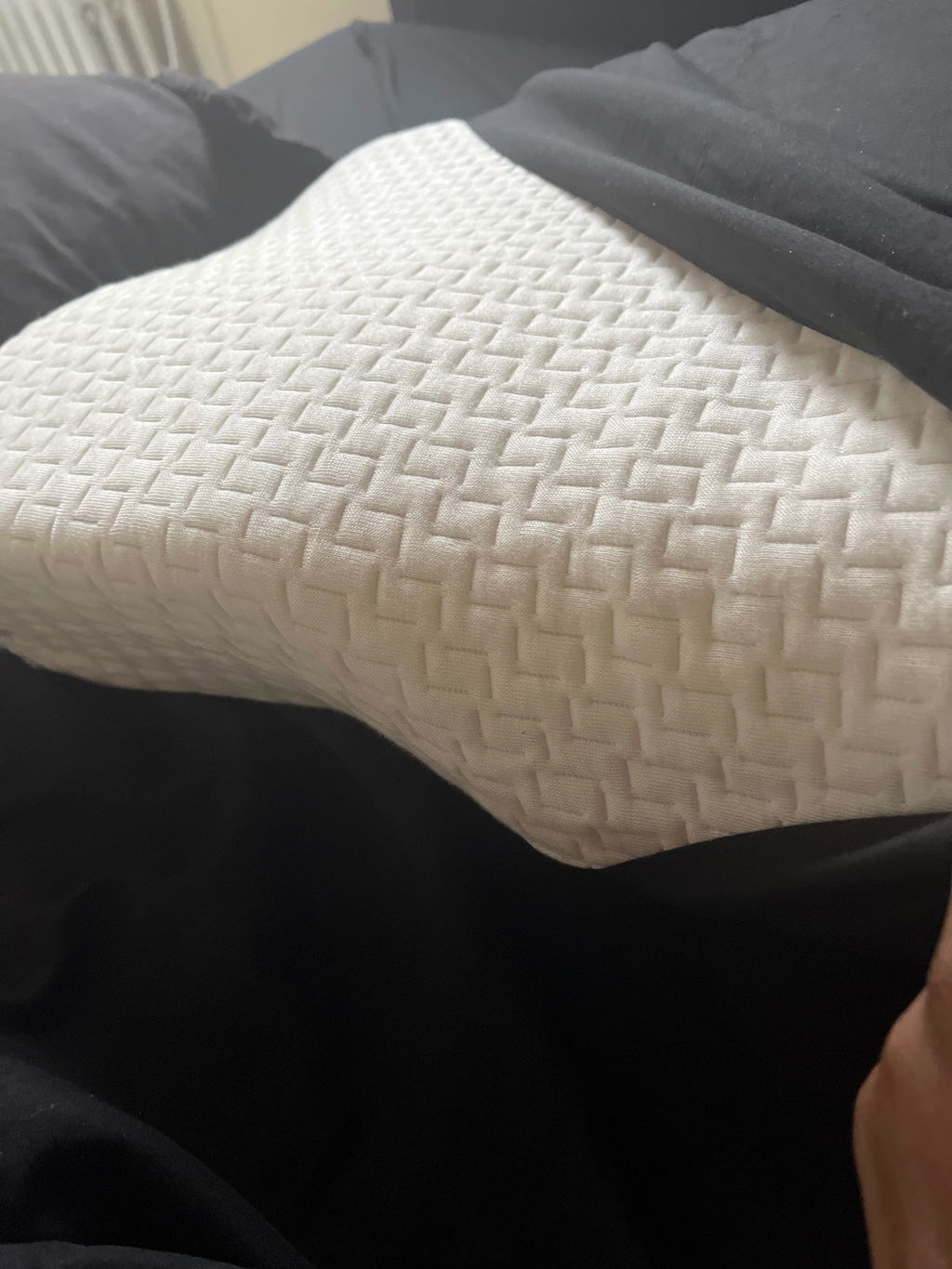
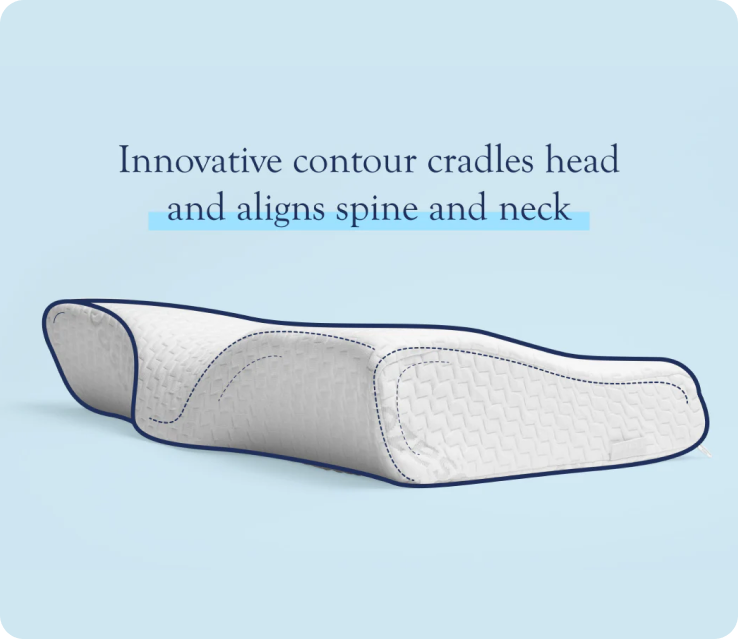
The Dosaze Contoured Orthopedic Pillow features a precisely engineered dual-zone shape: a raised neck roll along the perimeter and a contoured center cradle that provides different support profiles from the same pillow. When you are on your side, the elevated zone fills the critical gap between your shoulder and ear, keeping your cervical spine horizontally level. When you roll to your back, the center depression positions your head at the appropriate height while the contoured taper supports the natural lordotic curve of your neck. This is not an approximation — it is orthopedic design that anticipates how combination sleepers actually use a pillow across a full night.
Structural Integrity That Sustains Support Through Position Changes
The pillow's construction maintains its contoured geometry under sustained load, meaning the therapeutic shape you feel when you first lie down is the same shape supporting your neck hours later. For combination sleepers, this durability is essential: a pillow that compresses under side-sleeping pressure will fail to provide the cervical curve support needed when you transition to your back. The Dosaze Contoured Orthopedic Pillow is built to hold its orthopedic structure through the night, so your cervical spine receives consistent therapeutic support regardless of how many times you shift positions.
Targeted Pressure Distribution Across Side and Back Contact Patterns
The contoured surface spreads load across a larger area in both orientations, reducing the concentration of pressure that creates tension in the neck and shoulder muscles. For side sleeping, the shoulder and lateral cervical region receive distributed support rather than point-loading. For back sleeping, the base of the skull and upper cervical vertebrae are cushioned evenly rather than stressed at a single contact point. This dual-pattern pressure relief means you are not trading one form of strain for another as you move — therapeutic support follows you across positions. [Related post: side sleeper pillow guide]
Self-Correcting Alignment During Transitions
Because the Dosaze pillow's orthopedic contouring is built into its physical shape rather than dependent on active adjustment, it works passively as you change positions. As your head and neck move from side to back, the pillow's geometry guides your cervical spine toward proper alignment without requiring you to wake up and reposition. This passive correction is one of the most therapeutically significant aspects of the design for combination sleepers, because it eliminates the accumulation of misalignment that occurs when a flat or unshaped pillow leaves your neck unsupported during transitions.
Firmness Options Calibrated to Your Sleep Profile
The Contoured Orthopedic Pillow is available in soft, medium, and firm options, allowing you to match the support level to your specific combination sleeping pattern and neck pain profile. Combination sleepers who spend more time on their side typically benefit from medium firmness, which provides enough resistance to maintain cervical level alignment while remaining responsive for back-sleeping transitions. Those who shift frequently may prefer medium-firm for consistent structure across both positions. The firmness selection also accounts for individual physiology: broader shoulders require more lateral height, which medium to firm options accommodate more effectively. [Related post: pillow firmness guide]
Technical Specifications
The Dosaze Contoured Orthopedic Pillow includes:
- Firmness Options: Soft, Medium, Firm — select based on sleep position distribution and body type
- Orthopedic Design: Dual-zone contoured shape with elevated neck roll and center cervical cradle
- Pressure Relief: Distributed support across side and back contact zones for multi-position therapeutic performance
- Cooling Technology: Breathable materials with ventilation channels that promote airflow and prevent heat buildup
- Structural Durability: Materials engineered to retain orthopedic contour under sustained compression and repeated position changes
- Pack Quantities: Available in 1-pack, 2-pack, and 4-pack configurations
- Therapeutic Focus: Designed specifically for cervical alignment, pressure point relief, and spinal support
- Compatible Sleep Positions: Side, back, and combination sleeping
Explore the full Dosaze pillow collection to review all available therapeutic options and configurations.
Recommended Configuration
For combination sleepers experiencing neck pain, the recommended starting point is the medium firmness Contoured Orthopedic Pillow.
Medium firmness provides the structural resistance needed to maintain cervical level alignment during side sleeping without being rigid enough to push your head too far forward during back-sleeping intervals. It is the most versatile firmness across the two positions, offering responsive contouring that adapts as you shift while retaining the orthopedic shape your neck needs for consistent support.
If you spend the majority of your night on your side with only brief back-sleeping intervals, medium-firm is a strong alternative. If your neck pain is primarily associated with back sleeping, medium firmness with attention to proper head height during back-sleeping alignment is the appropriate choice.
Consider the 2-pack if you and a partner both experience neck pain in combination sleeping — consistent orthopedic support on both sides of the bed removes the compromise of sharing one configuration. Complement your pillow choice with the DreamAlign sleep system for comprehensive spinal alignment support from surface to pillow.
Frequently Asked Questions
What is the best pillow for neck pain if I sleep on both my side and back?
Combination sleepers with neck pain need a pillow that provides therapeutic support in two different orientations. The best option is a contoured orthopedic pillow with a dual-zone shape — a raised section for side sleeping that fills the shoulder-to-ear gap, and a lower center cradle for back sleeping that supports the cervical curve without pushing the head forward. The Dosaze Contoured Orthopedic Pillow is designed to deliver cervical alignment in both positions, making it the most therapeutically appropriate choice for combination sleepers with neck pain.
Why does my neck hurt more when I sleep in multiple positions?
Combination sleeping creates neck pain when a pillow cannot maintain proper cervical alignment across different orientations. When you move from side to back, a flat or single-position pillow leaves your neck unsupported or misaligned during the transition and throughout the new position. The accumulated effect of hours in misaligned positions — even minor misalignment — is muscular tension and cervical strain that surfaces as pain and stiffness upon waking. An orthopedic pillow engineered for combination sleeping addresses this by maintaining spinal alignment passively across both positions.
Should I use a soft or firm pillow if I switch between side and back sleeping?
For most combination sleepers with neck pain, medium firmness provides the best balance. Side sleeping requires enough loft and resistance to keep the cervical spine horizontally level — too soft and the pillow collapses, dropping your head toward the mattress. Back sleeping requires a lower profile with gentle support for the natural cervical curve — too firm and the pillow pushes your head forward, straining the neck. Medium firmness in a contoured orthopedic design accommodates both requirements without requiring you to adjust your pillow between positions.
How long does it take for a contoured pillow to relieve neck pain?
Many combination sleepers notice reduced morning stiffness within the first 3 to 7 nights of using an orthopedic contoured pillow, as their neck muscles begin adapting to proper spinal alignment during sleep. Initial awareness of the pillow's shape is normal and typically reflects your body adjusting from compensatory muscular patterns to correct supported positioning. Sustained improvement in neck pain is usually observed within two to four weeks as the cervical musculature fully adapts. If neck pain is severe or persistent, consulting a healthcare professional alongside adopting therapeutic sleep support is advisable.
Can one pillow really work for both side and back sleeping?
Yes, when the pillow is specifically engineered with a dual-zone orthopedic design rather than a uniform flat profile. A contoured pillow with a raised neck roll and a recessed center cradle provides different support heights and pressure distribution patterns from the same surface — the raised zone serves side-sleeping cervical alignment, and the contoured center serves back-sleeping cervical curve support. Generic flat pillows cannot serve both positions therapeutically, but purpose-built orthopedic contoured pillows like the Dosaze Contoured Orthopedic Pillow are designed precisely for this use case.
Next Steps
Neck pain does not have to be the price of being a combination sleeper. The right orthopedic pillow addresses the actual biomechanical demands of shifting between side and back positions — maintaining proper cervical alignment and pressure relief across both orientations so your neck muscles can fully recover overnight.
The Dosaze Contoured Orthopedic Pillow combines dual-zone orthopedic contouring, multi-position pressure relief, structural durability, and cooling technology to deliver the therapeutic support combination sleepers with neck pain genuinely need. Select medium firmness as your starting point and experience the difference that purposefully engineered orthopedic support makes in how you feel every morning.