



Best Pillow for Side Sleepers: A Complete Guide to Waking Up Without Pain
Why Your Pillow Matters More Than You Think
If you sleep on your side — and most people do — your pillow is doing a serious job every night. It's the only thing standing between your head and your shoulder, filling a gap that, if left unsupported, pulls your spine out of alignment for hours at a time. The result? You wake up stiff, sore, and reaching for the coffee before you've even opened both eyes.
The good news is that the right pillow genuinely makes a difference. Sleep scientists and physical therapists consistently point to cervical (neck) alignment as one of the most controllable factors in sleep quality. Getting your pillow right is one of the fastest, most affordable ways to improve how you feel in the morning.
What Side Sleepers Actually Need in a Pillow
Not all pillows are built for side sleeping. A pillow designed for back sleepers is typically too flat; one meant for stomach sleepers is too thin. Side sleepers need something specific.
Loft (Height)
Loft refers to how thick and tall a pillow is when you lie on it. For side sleepers, a medium-to-high loft — generally between 4 and 6 inches — is usually ideal. The exact height that works for you depends on the width of your shoulders. Broader shoulders create a bigger gap between your head and the mattress, so they typically need more loft to keep your spine neutral.
Firmness
Side sleepers generally do best with a medium-firm to firm pillow. A pillow that's too soft compresses under the weight of your head, losing its supportive height by morning. Too firm, and it can create pressure points against your ear and temple. You want a pillow that holds its shape throughout the night while still feeling comfortable against your skin.
Fill Material
The material inside your pillow determines how it feels, how it performs, and how long it lasts. Here are the most common options:
- Memory foam (solid): Contours closely to the shape of your head and neck, offering consistent support. Great for people with chronic neck pain. Can sleep warm, so look for versions with cooling covers or open-cell foam.
- Memory foam (shredded): More breathable and adjustable than solid foam. You can add or remove fill to dial in your preferred loft — a big advantage for side sleepers with specific needs.
- Latex: Naturally responsive and resilient. Latex springs back rather than conforming slowly, which some sleepers prefer. It also tends to sleep cooler than traditional memory foam and is naturally resistant to dust mites.
- Down and down alternative: Soft and luxurious, but generally not the best choice for side sleepers who need structured support. Down compresses significantly and often lacks the firmness to maintain proper alignment all night.
- Buckwheat: Firm, adjustable, and breathable. Buckwheat hulls conform to your shape without losing height. The trade-off is that they can feel stiff at first and produce a rustling sound when you move.
How to Choose the Right Pillow for Your Body
There's no single universally perfect pillow for side sleepers — your body type, preferred sleeping position, and the firmness of your mattress all factor in. Here's how to narrow it down.
Match Loft to Shoulder Width
A good rule of thumb: sit upright and measure the distance from your neck to the edge of your shoulder. That number is roughly the loft you want your pillow to maintain under compression. If you're petite or have narrow shoulders, a medium loft (around 3–4 inches compressed) may be plenty. If you're broad-shouldered, aim for 5–6 inches or more.
Consider Your Mattress Firmness
Your mattress affects how much your shoulder sinks in when you lie on your side. A softer mattress lets your shoulder compress into the surface, which actually reduces the gap your pillow needs to fill. A firmer mattress offers less give, meaning your head sits higher relative to your shoulder — so you may need a thicker pillow. This is one reason that your ideal pillow and your ideal mattress work as a system. [LINK: Dosaze mattress collection]
Pillow Shape Matters Too
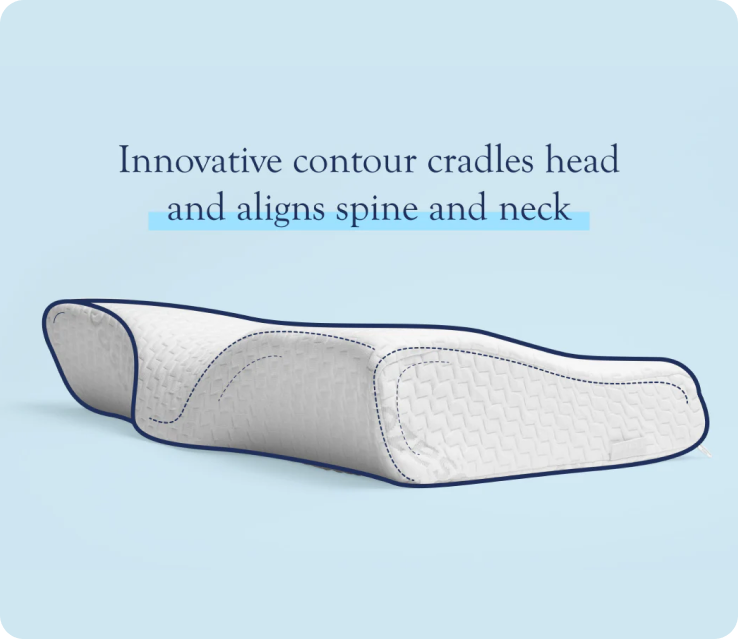
Standard rectangular pillows work well for most side sleepers, but specialty contour pillows — designed with an ergonomic curve to cradle the neck — can be particularly effective if you experience chronic neck stiffness or tension headaches. Some side sleepers also benefit from placing a second pillow between their knees to reduce hip rotation and lower back strain.
Common Mistakes Side Sleepers Make With Pillows
Even with the right pillow, a few common habits can undermine your sleep quality and comfort.
- Using a pillow that's too old: Most pillows lose their structural integrity over time. Memory foam degrades, down flattens, and synthetic fills clump. A pillow that's more than 18–24 months old may no longer be doing its job, even if it still feels familiar.
- Stacking two pillows: Doubling up on flat pillows to add height is tempting, but stacked pillows shift and separate throughout the night, disrupting your alignment unpredictably. One well-chosen pillow with the right loft is almost always better.
- Ignoring the pillow-mattress relationship: Buying a pillow in isolation without considering your mattress is like buying shoes without knowing your size. If you've recently changed mattresses — or are thinking about it — reassess your pillow at the same time. [LINK: sleep quiz]
- Focusing only on price: A pillow is an investment in roughly a third of your life. An inexpensive pillow that flattens within three months is a worse value than a quality option that supports you for years.
Pillow Maintenance Tips for Long-Term Support
Once you've found the right pillow, a little care goes a long way.
- Use a quality pillow protector to shield against moisture, oils, and allergens — this extends the life of your pillow significantly.
- Fluff or reshape your pillow every morning to help it recover its loft.
- Wash according to the manufacturer's instructions. Many shredded foam and synthetic pillows are machine washable; solid foam and latex typically require spot cleaning.
- Replace your pillow when it no longer springs back to shape after being folded in half — a reliable sign it's lost its structural support.
The Bottom Line
The best pillow for side sleepers is one that keeps your neck in a neutral, supported position from the moment you lie down to the moment you wake up. That means the right loft for your shoulder width, the right firmness for all-night support, and a fill material that suits your comfort preferences and sleeping temperature. It also means treating your pillow and mattress as a system rather than separate purchases.
If you're ready to take your sleep setup seriously, explore the Dosaze collection — from supportive pillows designed with side sleepers in mind to mattresses that work in harmony with them. Better mornings start with better decisions made the night before. [LINK: Dosaze sleep products]


