



Best Pillow for Side Sleepers: A Complete Guide to Waking Up Without Pain
Why Side Sleepers Need a Different Kind of Pillow
Side sleeping is one of the healthiest sleep positions — it supports spinal alignment, reduces acid reflux, and is even linked to better brain waste clearance during sleep. But here's the catch: it also puts more demand on your pillow than almost any other position.
When you sleep on your side, your head sits elevated above your mattress by several inches — the width of your shoulder, to be exact. A pillow that's too flat lets your head drop, straining your neck. One that's too thick pushes your head upward, creating tension in the opposite direction. The wrong pillow doesn't just cause discomfort; over time, it can contribute to chronic neck stiffness, shoulder pain, and disrupted sleep.
Choosing the right pillow for side sleeping isn't about personal preference alone — it's about biomechanics. This guide breaks down everything you need to know.
What Makes a Pillow Good for Side Sleepers?
1. Loft (Height)
Loft refers to the height of a pillow when it's lying flat. For side sleepers, loft is arguably the most important factor. You need enough height to fill the space between your ear and the mattress so your spine stays in a neutral, straight line from neck to lower back.
Most side sleepers do best with a medium-to-high loft — generally between 4 and 6 inches, though this varies based on shoulder width. Broader shoulders typically require more loft; narrower frames may need less.
2. Firmness
A pillow needs to be firm enough to hold its shape and support your head throughout the night. A soft, fluffy pillow that compresses under the weight of your head provides little real support. Look for a medium-firm to firm pillow if you are a side sleeper. The goal is consistent support, not just initial softness.
3. Fill Material
The material inside your pillow dramatically affects how it feels, how long it lasts, and how well it supports your neck. Here is a breakdown of the most common options:
- Memory foam (solid): Conforms closely to the shape of your head and neck, offering excellent pressure relief and consistent support. Can retain heat, so look for ventilated or gel-infused versions if you sleep warm.
- Shredded memory foam: More breathable and adjustable than solid foam. You can add or remove fill to fine-tune the loft, a significant advantage for side sleepers with specific needs.
- Latex: Naturally responsive and durable. Latex pillows bounce back quickly, offer great support, and tend to sleep cooler than memory foam. A strong choice for side sleepers who find foam too constricting.
- Down and down alternative: Soft and luxurious, but typically too compressible for most side sleepers unless the pillow is very dense. Down alternative fills have improved significantly and can work if the pillow maintains loft over time.
- Buckwheat: Firm, moldable, and naturally cool. Buckwheat pillows allow you to adjust the fill and hold their shape well, a favourite among side sleepers who want a customisable, supportive option.
4. Pillow Shape
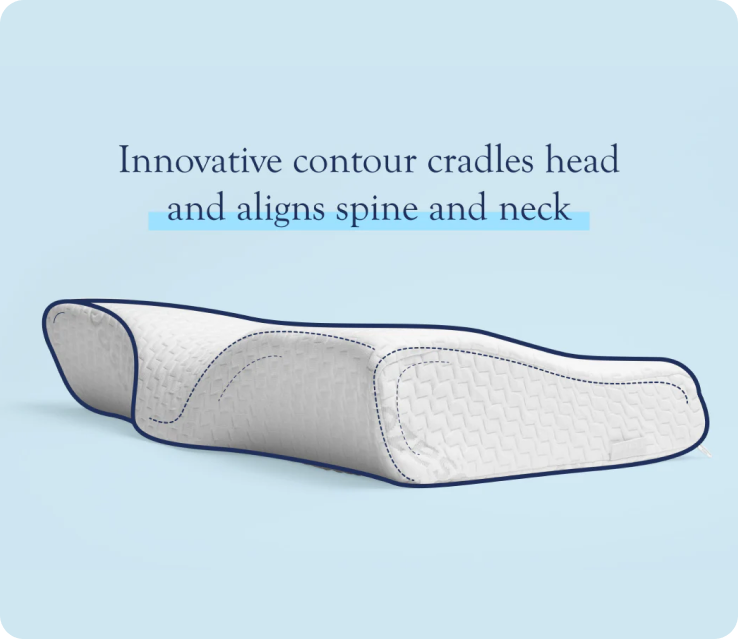
Standard rectangular pillows work for most people, but side sleepers dealing with neck or shoulder issues may benefit from contour or cervical pillows. These are ergonomically shaped with a raised section to cradle the neck and a lower section for the head, encouraging proper alignment without any adjustment needed.
How to Choose the Right Pillow for Your Specific Needs
Match Your Pillow to Your Mattress Firmness
Your pillow and mattress work as a system. If you sleep on a softer mattress, your shoulder sinks deeper into the surface, which means you may need slightly less loft in your pillow to maintain a neutral spine. On a firmer mattress, your shoulder sits higher, so more loft is often needed. If you are due for a mattress upgrade, it is worth evaluating both together. [LINK: Dosaze mattress collection]
Consider Your Body Frame
As a general rule, broader shoulders require higher loft, and narrower frames do better with medium loft. If you are between sizes or unsure, an adjustable pillow with removable fill lets you experiment until you find your sweet spot.
Think About Temperature Regulation
Side sleepers have more body surface area in contact with bedding, which can trap heat. If you tend to sleep warm, prioritise breathable materials such as latex, shredded foam, or buckwheat over solid memory foam. Cooling covers made from bamboo, Tencel, or moisture-wicking fabrics can also make a meaningful difference.
Common Mistakes Side Sleepers Make With Pillows
- Using too many pillows: Stacking two pillows rarely creates the right support. It often leads to uneven compression and awkward neck angles. One well-chosen pillow is almost always better.
- Replacing pillows too rarely: Most pillows lose their supportive properties well before they look worn out. A general rule is to replace your pillow every one to two years, or sooner if it no longer springs back when folded.
- Ignoring shoulder placement: Many side sleepers unknowingly hunch their bottom shoulder forward under the pillow. Try to keep your bottom arm extended forward or resting comfortably at your side, with the pillow supporting your neck rather than your shoulder.
- Choosing based on softness alone: Softness feels good initially, but what matters is sustained support over a full night. A pillow that collapses at 2 a.m. is not serving you.
- Forgetting about the body pillow: For side sleepers with hip or lower back discomfort, placing a pillow between the knees can significantly reduce spinal rotation and pressure, a simple addition that makes a big difference.
Signs Your Current Pillow Is Not Working
It can be easy to attribute morning stiffness to stress or age, but often the culprit is simpler. Watch for these warning signs that your pillow needs replacing or upgrading:
- Waking up with neck stiffness or a headache regularly
- Frequently flipping or repositioning your pillow through the night
- Shoulder pain or numbness in your arm after sleeping
- Your pillow visibly stays flat rather than rebounding when you fold it in half
If any of these sound familiar, your pillow is likely the first place to look before investing in other sleep solutions. [LINK: sleep quiz]
The Bottom Line: What to Look for in the Best Side Sleeper Pillow
The best pillow for side sleepers combines adequate loft to bridge the shoulder gap, firm enough support to keep the neck aligned, and breathable materials to prevent overheating. Whether you choose memory foam, latex, or an adjustable shredded fill option, the key is that your spine forms a straight, neutral line from your head to your hips every single night.
Small changes to your sleep setup can lead to genuinely significant improvements in how you feel every morning. If you are ready to invest in better sleep, explore the Dosaze range of sleep products, designed with the science of rest at the centre so you can wake up feeling the way sleep is supposed to make you feel. [LINK: Dosaze sleep products]


