


Best Pillow for Side Sleepers: What the Latest Sleep Research Is Telling Us
Side Sleepers Now Make Up the Majority — And Their Pillow Needs Are Finally Getting Attention
New research and growing consumer demand are pushing sleep wellness brands to rethink what a truly supportive pillow looks like — especially for the estimated 60 to 70 percent of adults who sleep on their side. For years, pillow design lagged behind mattress innovation. That gap is closing fast.
Sleep scientists and ergonomics researchers have been increasingly vocal: the wrong pillow does not just cause a stiff neck in the morning. Over time, poor cervical support during sleep has been linked to disrupted sleep cycles, shoulder tension, and poor spinal alignment that carries into waking hours. For side sleepers specifically, the stakes are higher than most people realize.
Why Side Sleepers Have Unique Pillow Requirements
When you sleep on your side, your head sits elevated above your mattress by the width of your shoulder. That gap — typically somewhere between four and six inches depending on your build — needs to be precisely filled. Too flat, and your neck bends downward. Too thick, and it tilts upward. Either way, your spine pays the price.
The goal is simple in theory: keep your head, neck, and spine in a neutral, straight line from the base of your skull to your tailbone. Achieving that in practice requires a pillow that accounts for several factors at once.
Loft (Height) Matters Most
Loft is the single biggest factor for side sleepers. A medium-to-high loft pillow — generally in the four-to-six-inch range — tends to suit most side sleepers. However, those with broader shoulders may need a higher loft, while petite sleepers often do better with something slightly lower. Adjustable-fill pillows have grown in popularity precisely because they allow sleepers to dial in their ideal height.
Firmness Determines Whether That Loft Holds
A high-loft pillow that collapses under the weight of your head delivers no real benefit. Firmness and loft work together. Memory foam, latex, and high-density shredded foam fills tend to maintain their shape through the night far better than traditional polyester fiberfill. For side sleepers, a medium-firm to firm pillow is generally recommended by sleep specialists.
Fill Material Shapes the Experience
Different fill materials offer different tradeoffs:
- Memory foam (solid): Excellent contouring and consistent support, but can retain heat and offers no adjustability.
- Shredded memory foam: More breathable than solid foam, fully adjustable loft, and still supportive — widely considered one of the best options for side sleepers.
- Latex: Naturally responsive, durable, and cooler than memory foam. A strong choice for sleepers who want support without the slow-sink feel.
- Down and down alternative: Soft and luxurious, but typically too compressible to provide reliable spinal alignment for dedicated side sleepers.
- Buckwheat: Firm and fully moldable. Some side sleepers love the customizability; others find the weight and feel too rigid.
The Shoulder-to-Neck Connection Most Sleepers Overlook
One detail that rarely makes it into mainstream pillow guides: how your pillow interacts with your shoulder. Side sleepers who hug their pillow or tuck it under their shoulder may be compensating for inadequate loft — essentially creating workarounds for a pillow that is not doing its job. A pillow sized correctly for your body should allow your shoulder to rest naturally on the mattress while your head stays fully supported above it.
This is also where your mattress matters. A mattress that allows your shoulder to sink in slightly — creating a small pressure-relief pocket — reduces the effective gap your pillow needs to fill. Side sleepers on firmer mattresses typically need higher-loft pillows. This is one reason sleep brands are increasingly emphasizing the mattress-and-pillow system rather than treating them as independent purchases. [LINK: Dosaze mattress collection]
What Is New: Pillow Design Trends Responding to Side Sleeper Demand
The broader sleep industry has taken note of just how underserved side sleepers have been. Several notable developments are shaping the current pillow market:
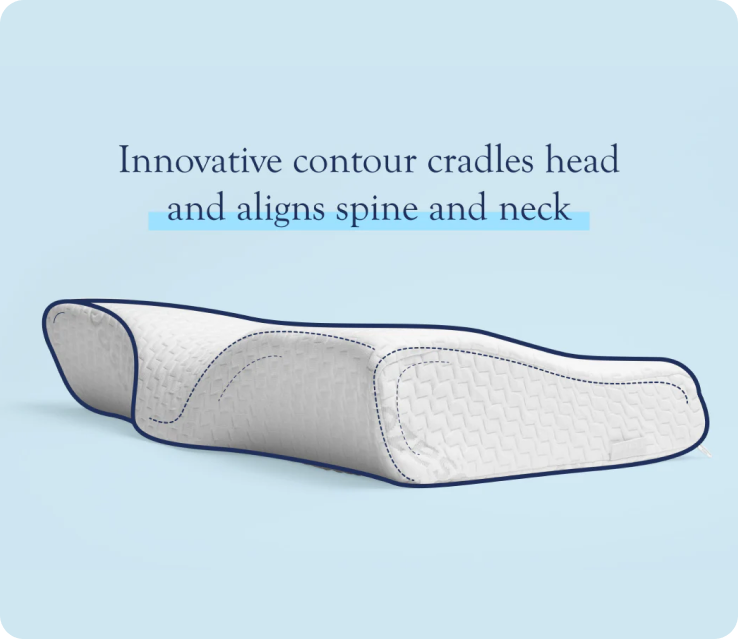
- Ergonomic contouring: Pillows designed with a curved or contoured profile that specifically supports the neck's natural curve are gaining traction. These differ from standard rectangular pillows by offering varying heights across different zones of the pillow.
- Adjustable-loft systems: Removable-fill designs let sleepers add or reduce fill to find their exact preferred height — a significant improvement over one-size-fits-all construction.
- Temperature regulation: Gel-infused foams, copper-threaded covers, and open-cell foam structures are addressing the heat retention that has historically made foam pillows uncomfortable for warm sleepers.
- Certifications and material transparency: Consumers are increasingly asking about CertiPUR-US foam certification, OEKO-TEX fabric certifications, and the absence of harmful chemicals. Brands that lead with this information are earning stronger trust.
Signs Your Current Pillow Is Not Working for You
If you regularly sleep on your side and wake up with any of the following, your pillow is likely the culprit:
- Neck stiffness or soreness that loosens up within an hour of waking
- Shoulder pain or numbness in the arm you sleep on
- Frequent position shifting during the night
- Headaches that are present when you wake but not later in the day
- The habit of folding or doubling your pillow to get comfortable
These are not just comfort complaints. Disrupted sleep from poor support reduces the restorative quality of your sleep cycles — affecting everything from mood and cognitive function to immune health and recovery.
How to Choose the Right Pillow as a Side Sleeper
The checklist for side sleepers shopping for a new pillow is straightforward:
- Choose a medium-high to high loft (four to six inches as a starting point)
- Prioritize medium-firm to firm fill that holds its shape overnight
- Consider adjustable-fill options if you are unsure of your ideal height
- Match your pillow choice to your mattress firmness — softer mattress, slightly lower loft; firmer mattress, slightly higher loft
- Look for temperature-neutral materials if you sleep hot
- Check for certifications that confirm material safety
Not sure where to start? Dosaze offers a [LINK: sleep quiz] to help you identify the right products for your sleep position, body type, and comfort preferences.
The Bottom Line
The best pillow for side sleepers is not a universal product — it is the one calibrated to your specific shoulder width, mattress firmness, and comfort preferences. But the principles are consistent: adequate loft, reliable firmness, and a fill material that stays supportive from the moment you lie down to the moment you wake up.
Sleep is not passive recovery. It is an active biological process, and the environment you sleep in shapes how well that process works. A pillow is a small investment compared to the return on genuinely restorative sleep.
Dosaze designs sleep products with exactly this in mind — pairing materials science with real-world comfort so that side sleepers can wake up feeling the difference. Explore our full range of pillows and sleep essentials at [LINK: Dosaze pillow collection], or browse our [LINK: Dosaze mattress collection] to build a complete sleep system that works for how you actually sleep.