


Best Pillow for Side Sleepers: What's Changed in 2025 and What to Look For
If you sleep on your side, you've probably woken up with a stiff neck or sore shoulder at least once this week. You're not alone — side sleeping is the most common sleep position, and it's also the one most affected by the wrong pillow. The good news: pillow technology and sleep science have made real strides, and 2025 is shaping up to be one of the best years yet for side sleepers looking to upgrade their setup.
Why the Right Pillow Matters More for Side Sleepers
When you sleep on your side, there's a gap between your head and the mattress — typically four to six inches depending on your shoulder width. A pillow's job is to fill that gap precisely, keeping your spine in a neutral, straight line from your neck all the way down to your lower back.
Too flat, and your head droops toward the mattress, straining your neck muscles. Too thick, and your head is pushed up at an angle, compressing the vertebrae on the opposite side. Either way, you wake up feeling worse than when you went to bed — and over time, that daily misalignment adds up.
Sleep researchers consistently highlight cervical spine alignment as one of the most critical factors in sleep quality and next-day physical comfort for side sleepers. Getting it right isn't a luxury — it's a health priority.
What's New in 2025: The Pillow Landscape Is Evolving
The pillow category has seen notable innovation heading into 2025, driven by growing consumer awareness of sleep health and increased demand for products that do more than just feel soft. Here's what's shifting:
Zoned Support Is Going Mainstream
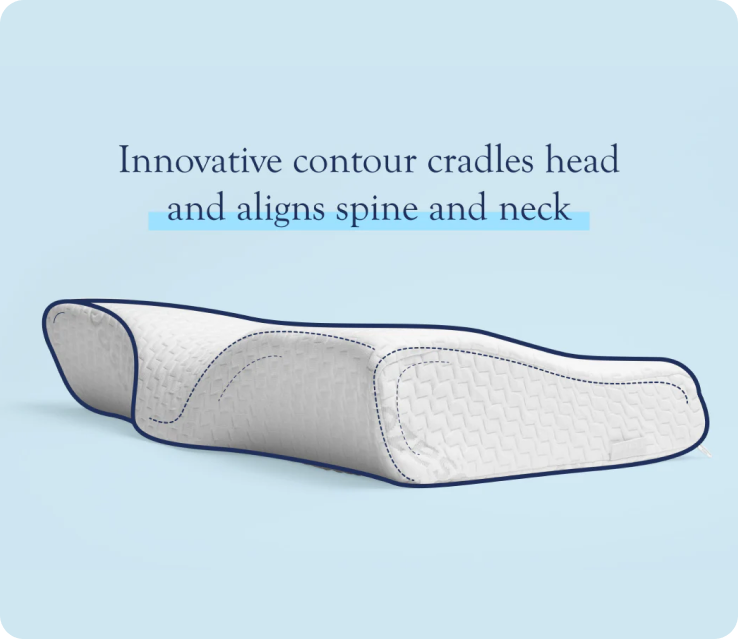
Pillows with zoned support — firmer beneath the neck, softer under the head — were once a premium niche. Now, this architecture is becoming a standard feature in quality pillows designed specifically for side sleepers. The design allows the head to sink slightly while the neck receives structured support, which closely mirrors what sleep specialists recommend for spinal alignment.
Adjustable Fill Is Becoming the Default
One pillow height does not fit all side sleepers. Shoulder width, mattress firmness, and body size all influence the ideal loft. Adjustable pillows — which allow you to add or remove fill material until you find your perfect height — are seeing a surge in popularity. Sleepers who switch to an adjustable pillow often report faster time-to-sleep and less morning discomfort, simply because they've dialed in their specific geometry.
Cooling Materials Are No Longer Optional
Side sleepers tend to trap more heat than back sleepers because more body surface area is in contact with bedding. In response, manufacturers are integrating phase-change materials, copper-infused covers, and open-cell foam structures into pillows at a much higher rate than even two years ago. Thermal comfort is now treated as a core feature, not an upsell.
Responsiveness Is Getting Attention
Side sleepers shift positions throughout the night — rolling slightly forward or backward, adjusting arms, changing which shoulder bears weight. A pillow that responds quickly to movement helps maintain alignment through those transitions. Hybrid fills that combine shredded foam with microfiber or latex are gaining traction for exactly this reason.
Key Features to Look for in a Pillow for Side Sleeping
Whether you're shopping now or just doing your research, here's what actually matters — based on sleep science, not marketing language:
- Loft (height): Aim for a medium-to-high loft, generally between four and six inches. This varies based on your shoulder width and mattress softness.
- Firmness: Medium-firm to firm support is typically best for side sleepers. The pillow needs to hold its shape under the weight of your head throughout the night.
- Fill material: Shredded latex, shredded memory foam, and down alternative blends are popular for their balance of support and adjustability. Solid memory foam works for some sleepers but can sleep hot and feel too rigid for others.
- Cover breathability: Look for Tencel, bamboo-derived, or moisture-wicking cotton covers that allow heat to dissipate rather than build up.
- Adjustability: If you're unsure of your ideal loft, an adjustable fill pillow removes the guesswork entirely.
- Trial period: Your body needs time to adapt to a new pillow. Look for brands that offer at least a 30-night sleep trial.
The Shoulder Problem: Something Most Pillow Guides Skip
Here's something that doesn't get nearly enough attention: your pillow isn't the only variable in side sleeping comfort. The shoulder bearing your weight can compress and rotate in ways that cause joint discomfort and restrict circulation — especially if your mattress is too firm to allow that shoulder to sink slightly.
The best pillow for side sleepers works in concert with a mattress that provides appropriate pressure relief at the shoulder and hip. If your mattress is creating pressure points, even the most precisely lofted pillow won't fully solve your morning stiffness. It's worth evaluating both together. [LINK: Dosaze mattress collection]
Not sure what mattress firmness is right for your sleep position and body type? [LINK: sleep quiz]
How Long Should a Side Sleeper Pillow Last?
Most sleep experts suggest replacing pillows every 18 months to two years, depending on the fill material. Latex and high-density foam tend to hold their structure longer than down or polyester fills. A simple test: fold your pillow in half and let go. If it doesn't spring back to its original shape, it's no longer providing the support it should. For side sleepers, a compressed or flattened pillow is particularly problematic because loft loss directly translates to lost spinal support.
What Side Sleepers Are Saying in 2025
Across sleep communities and review platforms, side sleepers in 2025 are increasingly vocal about one thing: they want pillows that actually hold up through the night. The most common complaint about older or lower-quality pillows isn't the feel when first lying down — it's that they flatten out by 3 a.m., leaving the sleeper unsupported for the back half of the night when the deepest, most restorative sleep stages occur.
This has pushed demand strongly toward denser, more durable fills and adjustable designs that can be customized as the fill compresses over time.
Dosaze and the Side Sleeper
At Dosaze, we design our sleep products around real sleep science — not trend cycles. Our approach to pillows for side sleepers is grounded in the same principles that guide our mattress engineering: precise support, thoughtful materials, and long-term durability. Every product we offer is built to work as part of a complete sleep system, because we know that isolated solutions rarely deliver lasting results.
If you're ready to stop waking up stiff and start getting the sleep your body actually needs, explore our full range of sleep products — and find the combination that's built for the way you sleep. [LINK: Dosaze sleep products] Not sure where to start? Take our quick [LINK: sleep quiz] to get a personalized recommendation in under two minutes.