


Best Pillow for Side Sleepers: Your Most Common Questions Answered
If you sleep on your side, you already know that not just any pillow will do. The wrong one leaves you waking up with a stiff neck, a sore shoulder, or that frustrating ache between your shoulder blades. The right one? You barely notice it — because you slept too well to care. This FAQ covers everything side sleepers commonly ask when searching for the perfect pillow, so you can stop guessing and start sleeping better.
Why do side sleepers need a different pillow?
When you sleep on your side, there's a significant gap between your head and the mattress — created by the width of your shoulder. A pillow's job is to fill that gap and keep your spine in a neutral, straight line from your neck all the way down to your hips. If the pillow is too flat, your neck tilts downward; too thick, and it angles upward. Either way, you wake up with tension and pain that builds over time.
What loft (thickness) is best for side sleepers?
Most side sleepers need a medium-to-high loft pillow — typically somewhere in the range of 4 to 6 inches, depending on their body frame and shoulder width. Broader shoulders generally require more loft to bridge that larger gap, while petite frames may do well with slightly less. The key is that your ear, shoulder, and hip should form a straight horizontal line when you're lying on your side.
What pillow fill is best for side sleeping?
The most popular fills for side sleepers each have real advantages:
- Memory foam: Contours closely to the head and neck, providing consistent pressure relief and support. Solid memory foam holds its shape well through the night.
- Shredded memory foam or latex: Adjustable and breathable — you can add or remove fill to dial in the exact loft you need.
- Latex: Naturally resilient and responsive, with a slightly bouncier feel than memory foam. Also a great option for those who sleep warm.
- Down alternative: Soft and lightweight, but may require frequent fluffing and often lacks the sustained support side sleepers need.
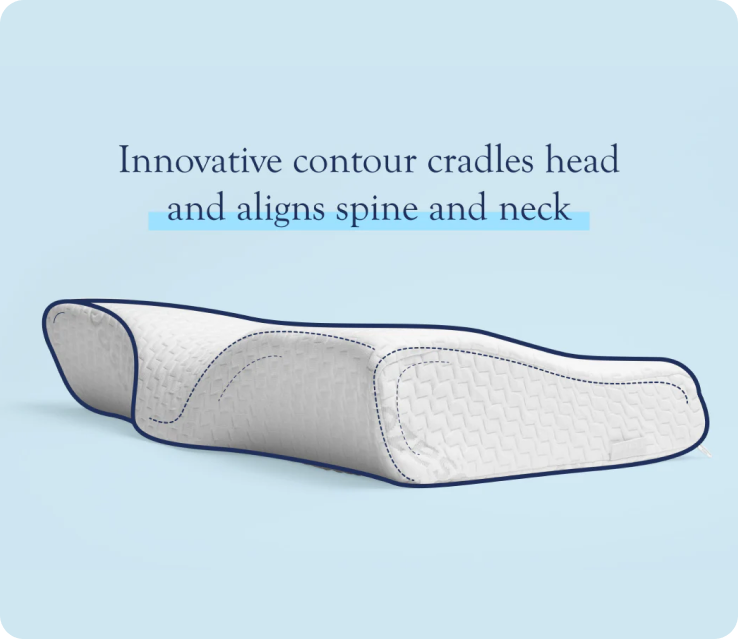
For most side sleepers, shredded memory foam or a solid contour foam pillow tends to offer the best balance of support and comfort. [LINK: Dosaze pillow collection]
How firm should a pillow be for side sleepers?
Side sleepers generally benefit from a medium-firm to firm pillow. You want enough resistance that the pillow doesn't compress completely under the weight of your head, which would recreate the same neck-tilting problem as a flat pillow. A pillow that holds its shape throughout the night is essential — not one that you have to constantly reshape or fold in half for support.
Can my pillow affect my shoulder pain?
Yes, significantly. Side sleepers place direct pressure on whichever shoulder they're lying on, and if your pillow is too high or too rigid, it can push your head upward and create strain along the neck and into the shoulder joint. Choosing a pillow with appropriate loft and pressure-relieving properties can meaningfully reduce tension in the shoulder and upper back. If shoulder pain is a recurring issue, also look at whether your mattress offers adequate pressure relief at the shoulder point. [LINK: Dosaze mattress collection]
Should side sleepers also use a pillow between their knees?
Placing a pillow between your knees is one of the most effective ways to improve spinal alignment for side sleepers. Without it, the top leg tends to drop forward, rotating the pelvis and creating low back strain over the course of the night. A firm, contoured knee pillow — or even a standard pillow folded for height — keeps your hips stacked and your lower spine neutral. Many side sleepers report a noticeable reduction in morning back stiffness after adopting this habit.
How do I know if my current pillow is the problem?
A few telltale signs your pillow isn't working for you as a side sleeper: waking up with neck stiffness or a headache, shoulder pain or numbness in the arm you slept on, frequently folding or punching your pillow to get comfortable during the night, or simply feeling like you never fully relaxed. If your pillow is also more than 1–2 years old and has lost its original loft and resilience, it's almost certainly no longer providing the support it once did.
Does pillow material matter for temperature regulation?
It absolutely does, especially for side sleepers who tend to have more of their face in contact with the pillow surface. Traditional solid memory foam can trap heat, which disrupts sleep quality. Look for pillows with open-cell foam construction, gel-infused layers, shredded fill (which allows airflow), or breathable covers made from bamboo-derived or moisture-wicking fabrics. Sleeping cool is not just about comfort — research consistently links lower core body temperature with deeper, more restorative sleep stages.
What pillow size should side sleepers choose?
Standard and Queen sizes work well for most side sleepers — they provide enough surface area to support the head and neck without feeling oversized. A body pillow is another excellent option for side sleepers, as it can support the head, run along the torso, and serve as a knee pillow simultaneously. Body pillows are particularly popular with those who tend to shift from side to back during the night, as they help keep you in a lateral position.
How often should I replace my pillow?
Most sleep experts recommend replacing pillows every 1 to 2 years, though high-quality memory foam and latex pillows can last longer with proper care. A simple test: fold your pillow in half and release it. A pillow in good condition should spring back to its original shape. If it stays folded or feels lumpy and uneven, it's no longer offering the support your neck and spine need.
Getting your pillow right is one of the highest-return investments you can make in your sleep quality — especially as a side sleeper, where alignment is everything. If you're ready to upgrade, explore the Dosaze pillow range, designed with side sleeper anatomy in mind and built to hold their shape night after night. Not sure where to start? [LINK: sleep quiz] to find the products matched to your sleep style, body type, and comfort preferences. Better mornings are closer than you think.