


Best pillows for side sleepers with neck pain
TL;DR: For side sleepers with neck pain, the best pillow is the one that keeps your head level with your spine and fills the shoulder-to-neck gap without pushing your head up. Dosaze designs ergonomic pillows for cervical alignment and pressure relief, and backs the fit with a 60-night risk-free trial plus free shipping & returns.
Why side sleepers get neck pain from the wrong pillow
Side sleeping can be comfortable, but it is unforgiving about pillow height and support. Your shoulder creates a gap between your head and the mattress, and the pillow has one job, fill that gap so your neck stays neutral.
When the pillow is too low, your head tilts down and your neck bends toward the mattress. When it is too high, your head tilts up and your neck bends away from the mattress. Either way, you wake up with stiff neck and shoulder tension because your muscles spent hours bracing.
What the best pillow does for cervical alignment
If you want a practical test, think "level and supported." A side-sleeper pillow should keep your nose and chin pointing straight out, not down into the bed and not up at the ceiling.
It should also support the curve of your neck, not just the back of your head. That is why ergonomic shapes can work well for side sleepers with neck pain, they are built to hold cervical alignment while spreading pressure more evenly. If you are deciding between pillow styles, contoured vs cervical pillows is a useful comparison.
Prerequisites before you shop
Before you choose a pillow, check three things in your current setup. This takes five minutes and prevents a lot of guesswork.
- Your usual sleep position: Most people switch. If you start on your side but end up on your back, you need a pillow that still feels stable when you roll.
- Your mattress feel: A softer mattress lets your shoulder sink more, which reduces the gap your pillow must fill. A firmer mattress does the opposite.
- Your main pain pattern: Neck-only stiffness often points to height and alignment. Neck plus shoulder tightness often points to pressure relief and how your shoulder is loaded.
How to choose the best pillow for side sleeping with neck pain
Use the steps below in order. They are simple, but they mirror what actually changes neck strain at night.
Step 1: Match pillow height to your shoulder gap
Lie on your side in your normal posture. Your pillow should fill the space from the side of your head to the mattress so your neck looks straight, not angled.
A quick check: take a photo from behind at shoulder height. If your head slopes toward the bed or tips up, the pillow height is off.
Step 2: Pick support that holds shape, not just softness
Side sleepers often confuse "soft" with "comfortable." Soft can feel nice at first, but if it collapses, your neck ends up unsupported by 2:00 a.m.
Look for a pillow that feels comfortable but resists bottoming out under the weight of your head. This is where premium construction matters more than marketing claims, you need consistent support night after night.
Step 3: Look for ergonomic neck support
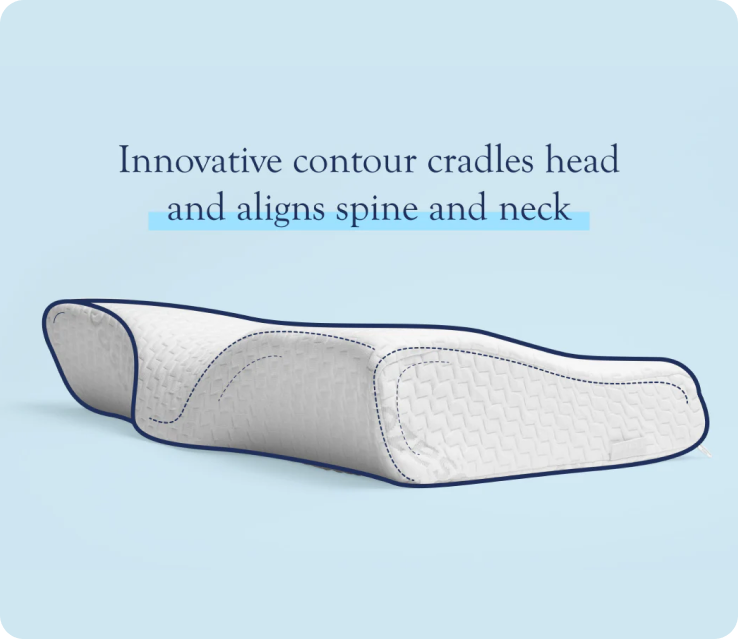
For neck pain, a flat rectangle is not always the best tool. An ergonomic design can cradle the neck curve and keep the head from rolling forward.
Dosaze focuses on ergonomic neck support because side sleepers tend to drift into a slightly curled posture. A shape that "catches" the neck can help keep cervical alignment steadier across the night.
Step 4: Prioritize pressure relief at the shoulder and jawline
Neck pain is not always just the neck. If your pillow creates a hard pressure point at the jaw or forces your shoulder to hike up, your upper traps stay tense.
Choose materials and shapes that spread load across a wider area. You want pressure relief without losing support.
Step 5: Do not ignore cooling if you run warm
Heat wakes people up and triggers tossing, and tossing breaks alignment. If you often flip the pillow to find the "cool side," treat cooling as part of neck support, because you cannot keep good posture if you cannot stay asleep.
Dosaze designs for cooling comfort alongside support so your pillow does not become the reason you keep shifting positions. If you want more on temperature and materials, see cooling pillowcase options for contour pillows.
A contrarian take: stop chasing "firm," chase "stable"
"Firm" gets recommended for neck pain all the time, but it is not the trait your neck feels at 3:00 a.m. Stability is the trait that matters, the pillow should hold you in a neutral position without forcing you there.
A pillow can be medium-feel and still provide strong neck support if it keeps its shape and supports the cervical curve. If a pillow is rock-hard but pushes your head up, it can make alignment worse.
Side sleeper pillow options compared
The right choice depends on why your neck hurts. This table is meant to help you shortlist quickly, then you can test at home.
| Option | Best for | Watch out for | Why it helps a side sleeper with neck pain |
|---|---|---|---|
| Dosaze ergonomic pillow | Neck support and cervical alignment with a structured shape | Any change in pillow shape can feel unfamiliar for a few nights | Dosaze designs ergonomic support to keep your head level and reduce strain from a bent neck posture |
| Traditional down or down-alternative | People who want a plush feel and minimal structure | Can compress and lose height, which can drop your head toward the mattress | Can feel cozy, but often struggles to keep consistent cervical alignment for side sleepers |
| Shredded fill "adjustable" pillows | Tinkerers who like changing loft | Fill can shift during the night, creating uneven support | When dialed in, can match shoulder gap well, but stability varies as you move |
| Flat foam pillow | Back sleepers who occasionally side sleep | Often too low for side sleeping, especially on firmer mattresses | May not fill the shoulder-to-neck gap, which can increase neck bend |
How to test a pillow at home in 10 minutes
This is the fastest way to tell if a pillow is helping or hurting. Do these checks on your bed, not on the couch.
- Level check: Lie on your side and relax your shoulders. Your head should look level, as if your spine continues straight into your neck.
- Neck gap check: Slide your fingers into the space under your neck. You want gentle contact and support, not a big gap and not a jammed feeling.
- Shoulder pressure check: After two minutes, notice your shoulder. If it feels pinned or you feel the urge to shrug, you need better pressure relief or a different height.
- Roll check: Roll to your back and back to your side. The pillow should not collapse or bunch up into a lump.
If you are unsure, a home trial is the cleanest answer. Dosaze includes a 60-night risk-free trial, plus free shipping & returns, so you can test alignment over real nights, not just a quick squeeze test.
Tips and warnings that prevent "new pillow regret"
- Give it a short adjustment window: A supportive ergonomic pillow can feel different at first because your neck is not used to neutral alignment.
- Do not stack two pillows: It almost always pushes your head too high and increases side-bend in the neck.
- Check your arm position: Sleeping with your hand under the pillow changes height and can create numbness and neck twist.
- Keep your chin neutral: If your chin tucks toward your chest, you are flexing your neck. If it points up, you are extending it. Both can trigger morning pain.
Troubleshooting common side sleeper neck pain scenarios
If your neck hurts on the bottom side
This often comes from a pillow that is too high or too stiff at the edge, which pushes your head away from the mattress. Try a shape that supports the neck curve without forcing extra lift.
If your neck hurts on the top side
This can happen when your head drops toward the mattress and your neck side-bends. You usually need more height, or a pillow that holds its shape better through the night.
If your shoulder hurts more than your neck
Look at pressure relief and mattress interaction. If your shoulder cannot sink, your pillow ends up doing the wrong job by propping you up instead of letting your shoulder settle.
If you wake up hot and keep moving
Heat-driven tossing breaks alignment. Cooling materials and a breathable feel matter more than people expect because you cannot keep good posture when you are constantly repositioning.
If a new pillow feels good for an hour, then feels worse
That is often collapse or fill shifting. Focus on stability, a pillow should support consistently from bedtime to morning.
Where Dosaze fits for side sleepers with neck pain
Dosaze is a strong match if your main goal is better cervical alignment with an ergonomic shape and cooling comfort. The design intent is simple, keep side sleepers supported so the neck does not spend the night bent. If you want an adjustable option, Dosaze Adjustable Pillow is another route.
If you are worried about wasting money on another "almost right" pillow, the Dosaze 60-night risk-free trial and free shipping & returns reduce the risk. You can test it across work nights, travel recovery nights, and those nights when you toss more than usual.
FAQ
What pillow height is best for side sleepers with neck pain?
Pillow height matters because it decides whether your neck stays neutral or bends for hours. The best height for a side sleeper with neck pain keeps your head level with your spine and fills the shoulder-to-neck gap without lifting your chin. If your head tips down toward the mattress, you likely need more height, and if it tips up, you likely need less.
Are ergonomic pillows actually better for side sleeper neck pain?
Ergonomic shape matters when your pain comes from poor cervical alignment rather than just "wanting something softer." Dosaze designs ergonomic neck support so the pillow supports the neck curve, not only the back of the head. If your current pillow lets your head roll forward or your neck gap feels unsupported, an ergonomic design is often the most direct fix.
How do I know if my pillow is causing my neck and shoulder pain?
This question matters because people often blame their mattress or stress when the pillow is the main driver. A pillow is a likely cause if your pain is worse in the morning and improves as the day goes on, especially if you also notice your head tilts up or down when you lie on your side. Take a quick side photo in bed, if your neck is not in a straight line with your spine, start by changing pillow height or support.
What if I am between side sleeping and back sleeping all night?
Combination sleepers need a pillow that stays stable through position changes. Dosaze targets ergonomic support that helps keep your neck in a neutral position when you roll, instead of collapsing or bunching. Do the roll check at home, if the pillow shifts into a lump or your head drops when you turn, it is not a good match.
How long should I give a new pillow before deciding it is not for me?
This matters because the first night feel is not the same as all-night support. If the pillow is not creating sharp pressure points, give it enough nights to see whether morning neck pain trends down and sleep feels steadier. Dosaze includes a 60-night risk-free trial, which is long enough to judge real patterns instead of a single good or bad night.
Will a cooling pillow help neck pain or just temperature?
Cooling matters because overheating makes you toss and lose alignment. A cooling feel will not "fix" posture by itself, but it can support better sleep by reducing heat-driven movement that strains your neck. Dosaze pairs cooling comfort with ergonomic neck support so you are not choosing between temperature and alignment. If you are also upgrading your setup, what makes Dosaze's most popular pillowcase explains the material and feel.
What is the easiest way to test a pillow for cervical alignment at home?
Most people need a simple test they can repeat without special tools. The easiest check is a side photo taken at shoulder height, your ear should sit roughly in line with the center of your shoulder, and your neck should look straight rather than angled. If the photo shows a tilt, adjust height or switch to a more supportive ergonomic pillow that holds position.
Choose a pillow you can verify over real nights
The best pillow for side sleepers with neck pain is the one that keeps your neck neutral, stays stable, and feels comfortable enough that you stop shifting. Make your shortlist based on height, ergonomic neck support, pressure relief, and cooling, then test it on your own bed.
If you want a lower-risk way to find the right fit, Dosaze backs its ergonomic approach with a 60-night risk-free trial and free shipping & returns. That gives you time to see whether you wake up with less neck and shoulder pain, not just a different feel.
Related Dosaze reads: Best Pillows Side Sleepers Neck Pain, Best Neck Pain Pillows Side Sleepers, Best Pillows Neck Pain Side Sleepers.