


Best Pillows if Memory Foam Didn't Work: Top 7 Alternatives
Introduction
If memory foam didn’t work for you, you’re not “picky”—you’re getting useful feedback from your body. Some sleepers feel stuck in the foam, wake up warm, or notice that their neck support changes as the pillow softens overnight. Others simply don’t get the cervical alignment they need, especially if they switch positions or have broader shoulders.
The good news: “not memory foam” doesn’t mean “no support.” Today’s best alternatives range from responsive latex to adjustable buckwheat, plus ergonomic hybrid designs that keep a stable shape without that slow-sink feel. The key is matching the pillow’s support style (springy vs. moldable vs. structured) to your sleep posture and heat needs.
In this list, you’ll find seven options that solve the most common memory-foam complaints: heat, trapped feeling, inconsistent loft, and poor neck support. I’ll also show you exactly who each pillow type suits, what it tends to feel like at 2 a.m. (not just at bedtime), and what to look for if you’re shopping for pressure relief without buyer’s remorse.
Quick comparison: 7 alternatives to memory foam
| Alternative | Best for | Feel | Heat | Neck support & alignment |
|---|---|---|---|---|
| Ergonomic hybrid (support core + cooling cover) | Neck/shoulder pain, combo sleepers | Stable, supportive | Cooler than traditional foam | High (shape holds through the night) |
| Latex | Hot sleepers who still want contour | Springy, buoyant | Cool | Medium-high (depends on loft) |
| Buckwheat hull | Precise loft control, firm support | Very firm, adjustable | Cool | High (micro-adjustable) |
| Feather/Down | Soft feel lovers, stomach sleepers | Plush, sinky | Warm-medium | Low-medium (compresses) |
| Down alternative (microfiber) | Allergy-sensitive, budget-conscious | Soft, fluffy | Medium | Low-medium (needs frequent fluffing) |
| Wool | Temperature swings, natural materials | Plush-supportive | Cool in heat, warm in cold | Medium (compresses gradually) |
| Water pillow | People who want tunable firmness | Stable, weighty | Neutral-cool | Medium-high (if filled correctly) |
Why memory foam often fails (and what to replace it with)
Memory foam is pressure-relieving, but it isn’t automatically ergonomic. It softens with heat and time, so your head can sink deeper at 1 a.m. than it did at 10 p.m. That shift can change your cervical alignment, especially if you sleep on your side and need consistent “fill” between shoulder and neck.
The most common complaints we hear in pillow reviews (and from customers coming to Dosaze after trying other pillows) are: sleeping hot, feeling trapped, and waking up with a sore neck even though the pillow felt comfortable at first. If that’s you, the fix usually isn’t “softer” or “firmer.” It’s choosing a material that keeps a stable loft, releases heat, and matches your sleep position.
Top 7 alternatives if memory foam didn’t work
1) Ergonomic hybrid pillow (structured neck support + cooling materials)
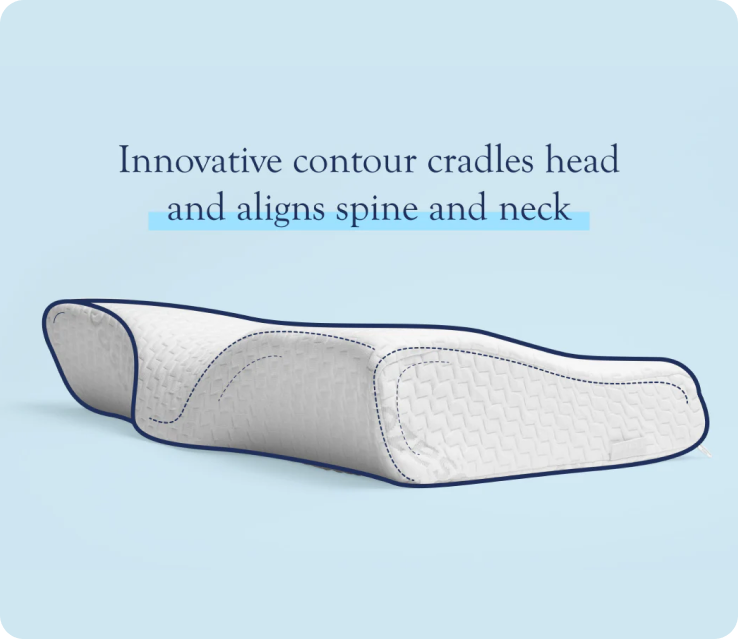
If you tried memory foam for neck support but it didn’t hold you in the right position, an ergonomic hybrid is often the cleanest upgrade. The goal is simple: keep your head from tipping up or dropping down, so your neck stays in neutral alignment instead of being pulled into a bend.
Unlike traditional all-foam pillows, a well-designed ergonomic pillow focuses on shape stability. That matters because alignment is not a “first 5 minutes” problem—it’s an “hour 5” problem. Look for a design that supports the neck curve, not just the back of the head, and that uses cooling fabrics or breathable construction to reduce heat buildup.
Dosaze pick: If you want premium ergonomic neck support with a risk-free way to test it at home, start with the Dosaze Contour Pillow. It’s built to guide cervical alignment, provide pressure relief without the stuck feeling, and it comes with free shipping & returns plus a 60-night risk-free trial, which lowers the fear of “spending money and getting no improvement.”
2) Latex pillow (springy support that sleeps cooler)
Latex is the best alternative for people who liked memory foam’s contour but hated the slow sink. It responds quickly, so when you change positions, the pillow doesn’t lag behind your movement. That “buoyant” feel also helps many sleepers avoid the trapped sensation that can wake you up.
Latex tends to sleep cooler than traditional memory foam because it doesn’t rely on heat to soften, and many latex pillows use aerated designs. For side sleepers, the main success factor is choosing enough loft to fill the shoulder-to-neck gap. If your neck pain got worse on memory foam, check that your latex pick isn’t too low—low loft is a common hidden reason for morning shoulder tightness.
3) Buckwheat hull pillow (micro-adjustable loft and firm stability)
If your issue was inconsistent support—great at bedtime, wrong by morning—buckwheat is worth a serious look. Buckwheat hulls don’t compress like foam; they shift and lock into place. You can sculpt the pillow so your neck gets support exactly where you need it.
The feel is firm and textured, and some people notice sound when they move. But for neck support, buckwheat’s big advantage is precision: you can remove hulls to lower the pillow or add more to increase height. This is especially useful for combo sleepers who rotate between side and back, because you can build a “ridge” under the neck and keep the head from dropping.
4) Feather/Down pillow (soft, moldable, but not for everyone with neck pain)
Down and feather pillows are popular because they feel luxurious and mold easily. If memory foam felt claustrophobic or too dense, down can feel like instant relief—light, airy, and easy to shape.
Here’s the contrarian truth: down is not automatically “better” for neck pain. It compresses under weight and can leave your neck unsupported by morning, especially for side sleepers. Down often works best for stomach sleepers (who need a low, soft pillow) or for back sleepers who prefer a low loft and don’t need a strong cervical contour.
5) Down-alternative (microfiber) pillow (easy care, soft feel, frequent fluffing)
Down-alternative pillows use microfiber fill to mimic down’s plushness. They’re a practical option if you want a softer pillow without animal fill, or if you need something easy to wash and maintain.
The tradeoff is support consistency. Microfiber tends to migrate, so you may need to fluff it nightly to keep even neck support. If you wake up with neck stiffness, look for a down-alternative pillow with a gusseted edge (it helps maintain loft) and pick a medium-to-firm density rather than ultra-plush.
6) Wool pillow (temperature regulation with steady, gentle support)
Wool is underrated for people who quit memory foam because of heat. Wool fibers help manage temperature swings by buffering humidity—many sleepers describe it as “less sweaty” through the night. It also feels resilient: not bouncy like latex, not sinky like foam.
Wool does compress gradually, so it may not give the crisp cervical support of a structured ergonomic design. But if your biggest issue is waking up hot and restless, a wool pillow can help you stay comfortable without chasing the cold side of the pillow at 3 a.m. If you’re a side sleeper, choose a higher loft or an adjustable wool fill so your neck doesn’t dip.
7) Water pillow (tunable firmness without foam heat)
Water pillows use a water pouch inside a fiber pillow shell. You adjust firmness by adding or removing water, which changes how much the pillow resists your head’s weight. For some sleepers, this provides a stable “platform” that doesn’t collapse overnight.
The practical detail most people miss: small changes in water volume can change feel a lot. Start with a middle fill level, sleep on it for two nights, then adjust in small steps (a cup or two at a time). If you overfill, you can push your head too high and strain the neck; underfill can feel flat and unsupportive.
How to choose the right alternative (based on why memory foam failed)
| Your problem with memory foam | What to look for instead | Best alternatives from this list |
|---|---|---|
| Slept hot | Breathable materials, cooling cover, less heat-reactive support | Latex, Wool, Ergonomic hybrid with cooling |
| Felt stuck / hard to move | Fast response, springy or structured support | Latex, Buckwheat, Ergonomic hybrid |
| Neck pain in the morning | Consistent loft + cervical alignment features | Ergonomic hybrid, Buckwheat, Water pillow |
| Pillow felt good at bedtime, bad by morning | Shape stability, adjustable fill, less compression over time | Buckwheat, Ergonomic hybrid, Water pillow |
| Too firm or too soft | Adjustability (fill/loft), or multiple height options | Buckwheat, Water pillow, Adjustable wool |
A practical fit check: loft targets by sleep position
If you want fewer trial-and-error returns, start with loft. Loft is the height of the pillow under your head, and it’s one of the biggest drivers of neck support.
- Side sleepers: Medium-high loft to fill the shoulder-to-neck gap. Your nose should point straight up (not toward the mattress or ceiling). (For more detail, see this side-sleeper pillow guide.)
- Back sleepers: Medium loft with cervical support. Your chin should not tilt toward your chest.
- Stomach sleepers: Low loft or very soft pillow to avoid neck twist.
- Combo sleepers: Prioritize fast response (latex) or structured support (ergonomic hybrid) so the pillow keeps up with movement.
FAQ
What pillow should I try if memory foam made my neck hurt?
Neck pain after using memory foam usually means your pillow isn’t keeping stable cervical alignment through the night. A strong next step is an ergonomic pillow with structured neck support (or an adjustable buckwheat pillow) because these options hold loft more consistently than slow-sink foam. If you’re unsure, pick a pillow with a risk-free home trial so you can test whether it reduces morning neck and shoulder pain without worrying about the return process. If you want to compare pillow types for alignment, read Contour vs cervical vs orthopedic vs adjustable pillows.
What’s the best pillow material if memory foam sleeps too hot?
Heat buildup matters because it can cause micro-wakeups that reduce sleep quality even if you don’t fully remember waking. If memory foam made you hot, latex and wool are two of the best alternatives since they’re less heat-reactive and tend to breathe better than traditional foam. For the biggest difference, pair the material with a cooling cover and keep your loft right so you don’t press your face deeply into the pillow.
Is latex better than memory foam for side sleepers?
Side sleepers need enough height and support to keep the head level and the neck in neutral alignment. Latex can be better than memory foam for many side sleepers because it stays springy and supportive instead of softening and letting the head sink over time. The deciding factor is loft: choose a latex pillow that fully fills the shoulder-to-neck gap, or you may still wake up with shoulder and neck tightness. You may also find it helpful to compare memory foam vs down-alternative for side sleepers to understand how “sink” affects alignment.
Are buckwheat pillows actually good for neck support?
Neck support depends on whether a pillow can maintain the right shape for your posture, not just whether it feels firm. Buckwheat pillows can provide excellent neck support because you can shift the hulls to create a stable contour under the neck and adjust the loft precisely. If you try one, remove or add hulls in small amounts until your head feels level and your neck isn’t bending up or down.
What if I buy another pillow and it still doesn’t work?
This fear is common because pillow comfort is personal and small fit issues can cause real morning soreness. The most reliable way to reduce the risk is to choose a pillow with a clear home-trial policy and easy returns, then test it consistently for at least a week while keeping your sleep position and mattress setup the same. For example, Dosaze offers a 60-night risk-free trial with free shipping & returns, so you can evaluate neck support and cooling comfort without feeling stuck with the wrong choice. If neck pain is your main issue, these reasons the Dosaze pillow is built for neck pain can help you understand what to look for.
Summary: top picks (and who should choose what)
- Best overall for neck support after memory foam: Ergonomic hybrid (especially if you wake with neck/shoulder pain).
- Best for hot sleepers who still want contour: Latex.
- Best for precise adjustability: Buckwheat hull.
- Best for stomach sleepers who want softness: Feather/Down or a soft down-alternative.
- Best for temperature swings: Wool.
- Best for tunable firmness: Water pillow.
Conclusion & next steps
If memory foam didn’t work, don’t force it. Start by naming the failure: heat, trapped feeling, shifting loft, or neck pain. Then pick a pillow type that fixes that exact issue, not just a different brand of the same material.
If your main goal is better sleep posture and less morning neck/shoulder pain, an ergonomic design that supports cervical alignment is usually the most direct path. If you want a premium option you can test at home with low risk, consider the Dosaze Contour Pillow with a 60-night risk-free trial and free shipping & returns. Give it a fair test for a week, note your morning comfort, and adjust your sleep position habits before you decide. For another adjustable option, you can also look at the Dosaze Adjustable Pillow.