



Best pillows for neck support if memory foam didn't work
Introduction
If you tried a memory foam pillow and woke up with the same neck or shoulder pain, you are not alone. Memory foam can feel supportive at first, then turn into a problem: it may hold heat, soften too much overnight, or lock you into a position that does not match your neck shape. Some people also feel a slow, stuck-in-mud response that makes it hard to change positions.
The good news is that "memory foam didn't work" does not mean "no pillow will." It usually means the pillow did not match your sleep posture, your shoulder width, or your temperature needs. Neck support is less about a single material and more about cervical alignment, pressure relief at the shoulder, and a height that stays stable from bedtime to morning.
This list focuses on pillow types that solve the most common reasons memory foam fails. You will see options for different sleep positions, cooling needs, and firmness preferences, plus a practical way to test a pillow at home without guessing. If you want an ergonomic design engineered for optimal sleep posture, we will also cover what to look for in a cervical pillow and why trial and returns matter when you are buying for pain.
Why memory foam often fails for neck support
Memory foam is pressure-relieving, but its feel depends on temperature and time under load. That is great for some sleepers and frustrating for others.
- Heat makes it soften. As the foam warms, it can lose height. If your pillow starts tall and ends low, your neck drops into flexion and your upper traps take over.
- It can "lock" your head. Slow response foam can make it hard to roll from side to back. If you fight the pillow at night, you tense your neck.
- Wrong loft is common. Many memory foam pillows are sold in one height. Side sleepers with broader shoulders often need more height than back sleepers, and a mismatch shows up as morning stiffness.
- Support and comfort get confused. A pillow can feel soft and still fail at cervical alignment. Neck support is a shape and height problem first.
How to choose a neck support pillow when memory foam didn't help
Before buying, do a quick check of what your body needs. This makes the options below easier to choose.
Use the "neutral neck" test
Lie in your usual position and take a quick photo from the side. Your goal is a straight line from the middle of your chest through your neck to your face, not chin tucked and not chin lifted.
If your head tilts down toward the mattress, you likely need more loft or a pillow with a built-in neck roll. If your chin tilts up, you likely need less loft or a pillow that cradles the head while supporting the neck.
Match pillow height to shoulder width
Side sleepers usually need more height because the distance from ear to mattress is larger. Broad shoulders need more loft. Petite frames often need less.
Pick a material based on your failure mode
| What went wrong with memory foam | What to look for next | Why it helps |
|---|---|---|
| Too hot | Cooling cover, ventilated core, latex, adjustable fill | Less heat buildup helps you stay asleep and reduces softening overnight |
| Too low by morning | Latex, buckwheat, adjustable loft, firmer support core | More stable height keeps cervical alignment |
| Felt stuck / hard to move | Latex, responsive foams, microcoil, down alternative | Faster response makes position changes easier |
| Pressure at the ear or jaw | Contoured ergonomic shape, softer head cradle, adjustable fill | Pressure relief without losing neck support |
| Neck still hurts | Cervical contour, defined neck roll, correct loft | Targets neck support directly instead of general softness |
Best pillows for neck support if memory foam didn't work (12 options)
1) Ergonomic cervical pillow (contour design) for consistent neck support
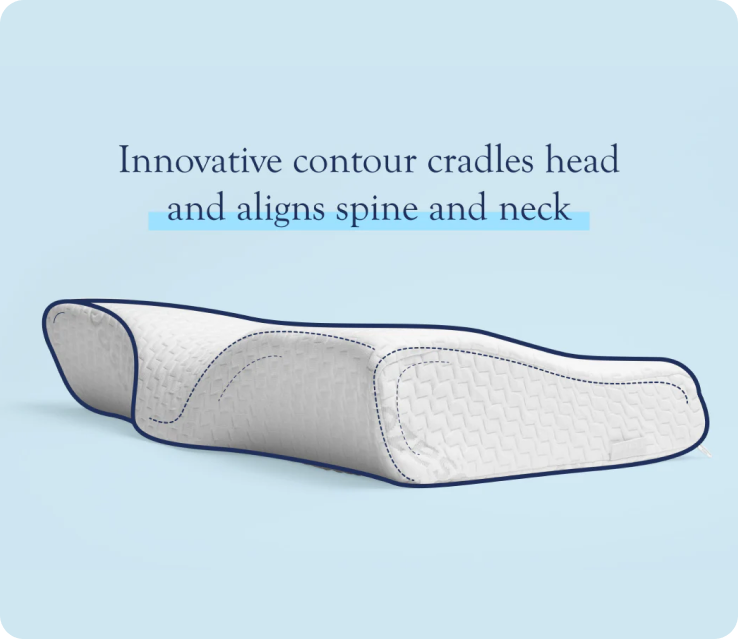
If memory foam felt "fine" but your neck still hurt, the problem is often shape, not softness. A cervical contour pillow uses a higher neck roll and a lower head cradle so your neck is supported even when your head sinks slightly.
Look for a design that offers two loft options (a higher and lower side) so you can flip it based on your build. This is one of the simplest ways to improve cervical alignment for back and side sleepers without adding extra pillows or towel rolls.
Contrarian tip: if you tried a random contoured pillow once and hated it, do not write off the category. Many contour pillows fail because the neck roll is either too tall or too flat. The best ones give you two heights, and you commit to a 1-2 week adaptation period before judging. (If you want a deeper breakdown, see contoured pillow vs cervical pillow differences.)
2) Adjustable shredded foam pillow for people who need a precise loft
One of the main reasons memory foam fails is that you cannot change the height. An adjustable shredded foam pillow lets you remove or add fill so your head and neck sit where they should, night after night.
This is a strong pick for combination sleepers because you can tune it to support your neck on your back, while still having enough height when you roll to your side. If you wake up with one-sided neck pain, it is often a loft mismatch that shows up more on your dominant side.
When shopping, check that extra fill is included and that the cover breathes. Shredded foam can sleep warmer than you expect if the cover traps heat. If you want an example of this style, see the Dosaze Adjustable Pillow.
3) Talalay or Dunlop latex pillow for responsive support (less "stuck" feel)
Latex is springier than memory foam. It compresses and rebounds fast, which makes it easier to change positions without straining your neck. It also tends to hold its shape better through the night, so loft stays more consistent.
Choose latex if you liked the idea of foam pressure relief but hated the slow sink. Many hot sleepers also prefer latex because it usually allows more airflow than dense viscoelastic foam.
Practical check: latex comes in different heights and firmness levels, and the wrong combo can feel too tall. If you are a back sleeper, start with a lower loft than you think.
4) Buckwheat hull pillow for maximum loft stability
If your pillow keeps going flat by morning, buckwheat is the opposite experience. The hulls do not collapse like foam, so your neck support stays steady. You can also push the fill to create a custom neck roll.
There are tradeoffs. Buckwheat pillows feel firmer and can be noisy when you move. They also weigh more than most pillows, which some people love because it stays put.
Best use case: side sleepers who need stable height and do not mind a firmer feel. If you have ear tenderness, choose a model with a softer top panel or reduce fill near the ear.
5) Microcoil pillow for support with airflow
Microcoil pillows use small springs inside the pillow. They respond quickly, add lift, and allow air to move through the structure. If you want support but tend to overheat, this can be a smart alternative to foam.
They also work well for people who feel "jammed" by contour foam. The surface can feel more buoyant, which makes it easier to find a neutral neck position without sinking too far.
Look for a model with a supportive coil core and a comfort layer that is not too thick. Too much plush top can defeat the point and drop your head.
6) Down alternative pillow with a supportive core for softer feel without collapse
Classic down alternative pillows can feel great at first, then fail because they pancake. The better version is a pillow with a supportive inner core and a softer outer chamber.
This gives you pressure relief at the cheek and ear, while keeping enough height for neck support. It can be a good bridge if foam felt too firm or too hot, but you still need structure.
Shopping tip: if the product description only talks about softness, skip it. You want clear construction details, like dual chamber or reinforced gusseted sides.
7) Water-based adjustable pillow for exact height tuning
Water pillows let you change support by adding or removing water. That gives you a measurable way to dial in loft and firmness without guessing how foam will soften overnight.
This option is useful if your neck pain is sensitive to small height changes. Even a 0.5 inch difference can matter for cervical alignment, especially for side sleepers.
Tradeoffs include weight and a different feel than traditional pillows. Make sure the pillow has a good outer comfort layer so it does not feel like sleeping on a water bottle.
8) Adjustable cervical pillow (contour + removable inserts) for fine control
A contour pillow is great until the loft is slightly off. Some ergonomic designs solve this with removable inserts or modular layers. That lets you keep the neck roll shape but change height by small steps.
This is one of the best setups for people who are between sizes or who notice that their neck feels fine on their back but strained on their side. You can tune for your dominant sleep position, then adjust if your habits change.
If you want a premium feel, look for durable construction that does not shift, plus a cooling cover that stays smooth against the skin.
9) Side-sleeper pillow with a shoulder cutout for pressure relief
Some neck pain is really shoulder compression. If your shoulder gets pushed up toward your ear, your neck muscles stay tense. A shoulder cutout gives your shoulder space so your neck can relax while staying aligned.
This can be a strong choice for broader shoulders, athletes, and people who hug their arm under the pillow. It can also reduce numbness in the arm by reducing pressure.
Be honest about your habits. If you switch between side and back often, a cutout may feel awkward. In that case, an adjustable loft pillow is usually easier.
10) Cooling gel or phase-change cover pillow (when heat is the real problem)
Sometimes memory foam "didn't work" because you kept waking up hot and tense. Cooling features do not fix loft, but they can reduce night waking and the micro-tensing that adds up to morning soreness.
Look for cooling that is built into the cover, like phase-change material, plus ventilation through the core. A cool-to-the-touch cover alone can feel nice at 10:00 pm and stop helping at 2:00 am if airflow is poor.
Practical move: pair a cooling pillow with breathable pillowcases and avoid thick pillow protectors that block airflow.
11) Hybrid pillow (support core + softer top) for a balanced feel
Hybrid pillows combine a supportive center with a softer surface layer. This can solve a common complaint: "I need support, but firm pillows hurt my ear."
The support core helps keep your neck from collapsing, while the top layer gives localized pressure relief. If you have jaw tension or are sensitive at the ear cartilage, this structure often feels better than a single-material pillow.
When comparing hybrids, prioritize the stability of the core. If the core is too soft, you will end up back where you started.
12) Dosaze ergonomic pillow option (when you want a trial-backed, posture-first design)
If you are tired of guessing, choose a pillow where the design starts with sleep posture, not just softness. At Dosaze, our focus is ergonomic shape for neck support and cervical alignment, paired with materials chosen for both support and cooling comfort. If you want to see how Dosaze approaches this, read 6 reasons the Dosaze pillow is best for neck pain.
Return anxiety is real when you are buying for pain. That is why we offer a 60-night risk-free trial and free shipping & returns on eligible orders, so you can test neck support at home across workdays, workouts, and the nights when you sleep a little weird. A pillow that only feels good for 10 minutes in a store is not a real test. If you have questions about shipping, returns, or care, see the Dosaze Contour Pillow FAQ.
If you want to browse Dosaze, use this verified link: https://dosaze.com.
A practical 7-night test plan (so you know if it is working)
Neck support changes can feel strange at first, even when they are correct. A short test plan helps you separate "new" from "wrong."
- Nights 1-2: Focus on comfort and temperature. If you feel hot or you cannot fall asleep, fix that first.
- Nights 3-4: Check morning stiffness. You want less tightness across the upper traps and less need to stretch your neck right away.
- Nights 5-7: Look for consistency. If one position feels good and another hurts, you likely need an adjustable loft or a contour with two heights.
Helpful metric: rate morning neck discomfort 0-10 each day. If it drops by 2 points or more by the end of the week, you are moving in the right direction. If it stays the same or gets worse, change loft or switch pillow type.
Quick comparison table (what to buy based on why memory foam failed)
| Your main issue | Best pillow type | Who it suits best | Watch out for |
|---|---|---|---|
| Too hot | Latex, microcoil, cooling cover + ventilated core | Hot sleepers, night sweaters | Cooling cover without airflow |
| Went flat overnight | Buckwheat, latex, adjustable loft | Side sleepers, broader shoulders | Too high loft causing chin-up posture |
| Felt stuck | Latex, microcoil, down alternative with core | Combination sleepers | Too plush top that lets you sink |
| Neck pain despite comfort | Cervical contour, adjustable cervical inserts | Back and side sleepers who need alignment | Contour too tall or too flat |
| Ear or jaw pressure | Hybrid core + soft top, adjustable fill | Sensitive sleepers | Softness that removes support |
FAQ
-
What pillow should I try if memory foam made my neck pain worse? If memory foam made your neck pain worse, the safest next step is a pillow that lets you control loft or that supports the neck with a defined cervical contour. The most reliable pick is an adjustable loft pillow (so you can raise or lower height) or a cervical contour pillow with two height options to keep cervical alignment stable. Take a side photo in your usual sleep position and adjust until your neck looks neutral, then track morning discomfort for 7 nights to confirm the change.
-
Why do some memory foam pillows feel good at bedtime but awful in the morning? This matters because neck support has to stay consistent for 6-8 hours, not just when you first lie down. Many memory foam pillows soften as they warm up, which can reduce loft and let your head drop into a neck-bending angle by morning. If this happens, choose a more responsive material like latex or a loft-stable option like buckwheat, or switch to an adjustable pillow so you can add height to offset overnight softening.
-
Is a cervical contour pillow better than a regular pillow for neck support? This question matters because neck support is mostly about keeping your head and neck in a neutral line while you sleep. A cervical contour pillow is often better than a regular pillow for neck support because it has a built-in neck roll that supports the curve of your neck while the head cradle reduces pressure at the back of the skull. The right contour height depends on your shoulder width and sleep position, so choose a design with two loft sides or adjustable inserts if you are between sizes.
-
What pillow material stays coolest if I sleep hot? Temperature matters because heat buildup can cause more waking and can soften some foams, which changes support. Latex and microcoil pillows tend to sleep cooler than dense memory foam because they are more breathable and respond faster instead of trapping you in a deep sink. For the best results, pair the pillow with a breathable cover and avoid thick protectors that block airflow.
-
How do I know if a pillow is the wrong height for my neck? Loft matters because the wrong height can push your neck into a bent position all night. A pillow is the wrong height if your chin tilts up (too high), your head drops toward the mattress (too low), or you wake with tight upper traps and feel relief only after stretching. Take a quick side photo while lying in your normal position and adjust loft until your neck looks neutral, then keep that setup for a full week to judge results.
Conclusion and next steps
If memory foam did not work for your neck, treat it as a clue, not a dead end. Start by naming the failure mode: heat, flattening, stuck feel, pressure points, or persistent pain despite comfort. Then pick a pillow type that solves that specific problem.
If you want the most control, choose an adjustable loft pillow or an adjustable cervical design. If you want stable support that stays consistent, latex and buckwheat are strong options. If return anxiety is holding you back, prioritize a brand that makes trials and returns simple, so you can test neck support at home instead of guessing.
When you are ready to try an ergonomic, posture-first option with a 60-night risk-free trial and free shipping & returns, you can view Dosaze here: https://dosaze.com. If you tend to sleep hot, you may also want to look at the Dosaze Thermacool Adjustable Pillow.
Top picks summary
- Best for precise loft: Adjustable shredded foam pillow
- Best for "stuck" feeling: Latex pillow
- Best for stable height: Buckwheat hull pillow
- Best for posture-first neck support: Ergonomic cervical contour pillow (especially with two heights or adjustable inserts)
- Best for hot sleepers: Microcoil pillow or latex with a cooling cover


