


Can the Wrong Pillow Cause Headaches and Neck Pain?
Introduction
If you regularly wake up with a stiff neck, a dull ache at the base of your skull, or a headache that seems to fade as the morning goes on, your pillow may be contributing more to those symptoms than you realize. Many people cycle through mattress upgrades and sleep schedules without ever questioning the one thing that directly cradles their head and neck for six to eight hours every night.
The answer to whether the wrong pillow can cause headaches and neck pain is nuanced — a pillow is rarely the sole factor, but it can absolutely contribute to both. Poor cervical support, incorrect loft height, and inadequate pressure point relief can create conditions where neck muscles remain under strain throughout the night, and that sustained tension can connect to sleep-related headaches by morning.
This post explains the mechanisms behind that connection, helps you recognize the warning signs specific to pillow fit, and walks through what to look for — and what Dosaze's therapeutic solutions offer — when it's time to make a change.
Understanding the Connection: How Your Pillow Affects Neck Pain and Morning Headaches
The cervical spine — the seven vertebrae that run through your neck — has a natural inward curve designed to balance the weight of your head and distribute mechanical stress evenly. When your pillow fails to support that curve during sleep, the surrounding muscles compensate by working through the night, creating patterns of tension that you feel when you wake up.
Mechanism 1: Poor Spinal Alignment Strains the Neck Muscles
A pillow that is too flat, too thick, or too soft for your sleep position can push your cervical spine out of its neutral alignment. For side sleepers, a pillow that is too low causes the head to drop toward the mattress, forcing the neck muscles on one side to hold tension for hours. For back sleepers, a pillow that is too high props the chin toward the chest, compressing the cervical vertebrae and shortening the muscles at the back of the neck. These sustained positions lead to muscle fatigue and stiffness, and the same muscular tension that causes neck pain at the base of the skull is closely associated with tension headaches that radiate from the neck upward.
Mechanism 2: Height and Pressure on Cervical Nerves and Blood Vessels
The neck is dense with nerves and blood vessels that supply the head, shoulders, and arms. A pillow at the wrong height — particularly one that compresses the cervical region or creates an awkward angle — can place indirect pressure on these structures. This is one reason why headaches that originate at the base of the skull and radiate toward the temples or behind the eyes are often described as sleep-related. Proper loft and orthopedic contouring that maintains cervical alignment reduces this type of positional loading.
Mechanism 3: Disrupted Sleep Quality Compounds the Problem
A pillow that generates discomfort — whether through heat retention, pressure points on the shoulder and ear, or gradual loss of support as the night progresses — interrupts sleep continuity. Frequently poor sleep quality is itself a recognized contributor to morning headaches and heightened sensitivity to muscular tension. The problem becomes self-reinforcing: discomfort disrupts sleep, and poor sleep lowers the threshold at which neck tension becomes a noticeable headache.
It is worth noting that sleep-related headaches and neck pain can have multiple contributing factors, including stress, dehydration, and underlying health conditions. If your symptoms are severe, persistent, or worsening, consulting a healthcare professional is the appropriate first step.
Signs Your Pillow May Be Contributing to Your Symptoms
Sign 1: Morning Neck Stiffness That Eases as the Day Progresses
If your neck feels noticeably stiff and sore when you wake up but loosens significantly within an hour or two of being upright and moving, that pattern is a meaningful indicator. Pain that originates from an external cause typically does not follow this cycle. Stiffness that resolves with daytime movement but returns the next morning points to something happening specifically during sleep hours. This is the hallmark of a pillow that is placing the neck in a suboptimal position for extended periods.
Sign 2: Headaches That Start at the Base of the Skull
Tension headaches linked to poor sleep posture often begin at the occipital region — the base of the skull where the neck muscles attach. They may feel like a dull pressure or ache rather than a sharp pain, and they frequently radiate forward toward the temples, behind the eyes, or across the forehead. If you notice these headaches most often in the morning or within the first hour of waking, and they improve as the day goes on, the sleep-related pattern is relevant. A pillow that is too high, too firm, or does not provide proper cervical support can shorten and strain the suboccipital muscles overnight, contributing to this specific type of tension.
Sign 3: Symptoms That Vary by Sleep Position
Pay attention to whether your neck pain or headaches are worse on mornings after you slept primarily on one side versus your back, or after a night where you know you shifted positions more than usual. If your symptoms consistently track with a specific sleep position, that is a strong signal that the pillow is not adequately supporting that posture.
Dosaze's Approach: What to Switch To
Dosaze's design philosophy is grounded in orthopedic principles rather than general comfort claims. The goal is therapeutic function: maintaining spinal alignment, relieving pressure points, and providing stable, consistent support throughout the full sleep cycle.
Orthopedic Contouring for Cervical Alignment
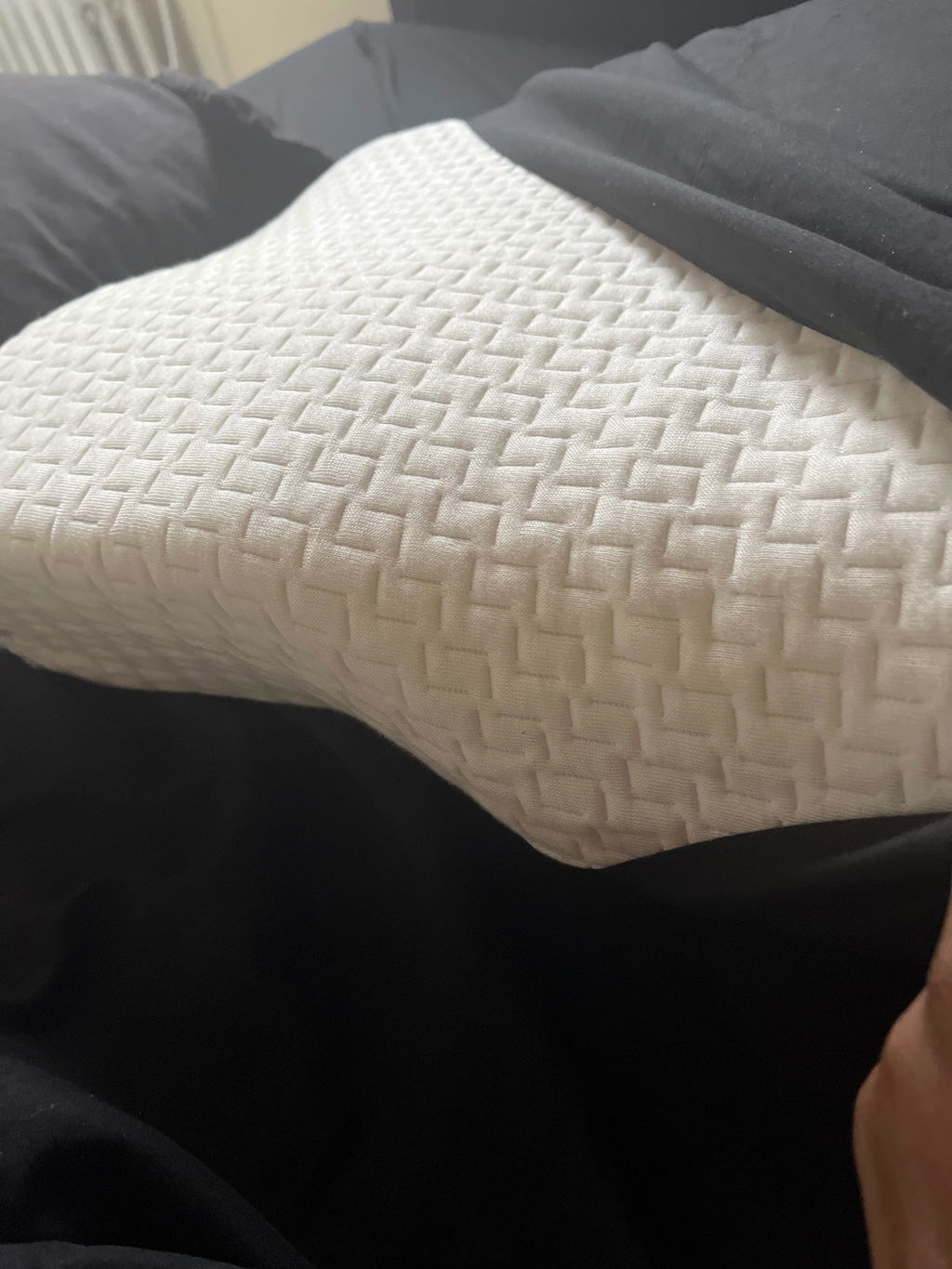
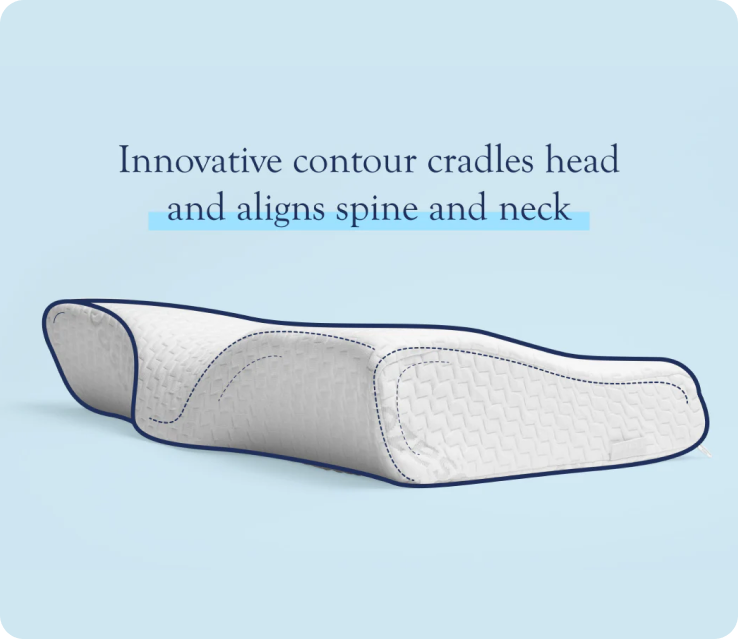
The Dosaze Contoured Orthopedic Pillow features a specialized contoured profile with an elevated neck roll and a lower central zone for the head. This geometry is designed to mirror and support the natural cervical curve, keeping the spine in a neutral position rather than allowing it to flex or extend under the weight of the head. For back sleepers, the neck roll supports the cervical lordosis while the head rests in the shallower center. For side sleepers, the elevated profile fills the space between the shoulder and the ear, preventing the lateral neck drop that creates one-sided muscle strain.
Pressure Point Relief Across the Head, Neck, and Shoulders
Flat or inadequately contoured pillows concentrate weight on small surface areas — the ear, the side of the head, the shoulder joint — creating localized pressure that builds into discomfort over hours. The Contoured Orthopedic Pillow distributes weight across a broader surface, reducing peak pressure at any single point.
Multiple Firmness Levels Matched to Sleep Position
The pillow is available in soft, medium, and firm options, acknowledging that the right level of support is not universal. Side sleepers generally benefit from soft to medium firmness. Back sleepers tend to need medium to firm support. Choosing the correct firmness for your primary sleep position is one of the most direct adjustments you can make toward reducing sleep-related neck tension.
Consistent Support Through the Night
The Contoured Orthopedic Pillow is built to maintain its orthopedic structure through the full night, ensuring that the cervical alignment established when you first lie down is preserved throughout. This consistency is a key element of therapeutic sleep support.
Flexible Configurations for Every Household
The Contoured Orthopedic Pillow is available in 1-pack, 2-pack, and 4-pack configurations. Explore the full Dosaze pillow collection to see all available options, and the DreamAlign collection for those who want a coordinated system. With a 60-night risk-free trial and free returns, you can evaluate the therapeutic difference before committing.
What to Look For When Choosing a New Pillow
When evaluating a new pillow specifically for neck pain and sleep-related headache relief, use these criteria as your framework:
- Cervical alignment support: Does the pillow maintain your neck's natural curve in your primary sleep position?
- Correct loft height: Is the height appropriate for your shoulder width and sleep position?
- Pressure point relief: Does the design distribute weight broadly rather than concentrating it on small contact areas?
- Firmness matched to your needs: Is the firmness level appropriate for how your body interacts with the pillow?
- Durable structure: Will the pillow maintain its support characteristics through the night and over months of use?
- Temperature management: Does the pillow manage heat in a way that supports uninterrupted sleep?
[Related post: why does my neck hurt every morning]
[Related post: best pillow for neck pain]
Frequently Asked Questions
Can the wrong pillow really cause headaches?
A pillow that does not support proper cervical alignment can contribute to the conditions associated with sleep-related tension headaches. When the neck is held in a strained position overnight, the surrounding muscles — including the suboccipital muscles at the base of the skull — accumulate tension. This muscular tension is closely connected to the pattern of morning headaches that originate at the back of the head and ease during the day. While a pillow is not the only possible cause, poor sleep support is a commonly overlooked contributing factor worth addressing.
How do I know if my pillow is the wrong height?
The most practical test is to assess your spinal position while lying down. For side sleepers, your spine should form a straight horizontal line from your lower back through your neck — if your head drops toward the mattress, the pillow is too low; if it is pushed up and away, the pillow is too high. For back sleepers, your neck should maintain its gentle inward curve rather than being pushed into chin-to-chest flexion (too high) or falling back into extension (too low). Morning neck stiffness that eases as the day progresses is a strong indirect indicator that the loft or firmness was not right for your position.
What type of pillow is best for neck pain and morning headaches?
Pillows designed with orthopedic principles — specifically a contoured profile that supports the cervical curve, appropriate loft for your sleep position, and pressure point relief — address the root conditions most directly associated with sleep-related neck pain and tension headaches. The Dosaze Contoured Orthopedic Pillow is designed around these principles, with multiple firmness levels (soft, medium, firm) to match individual sleep positions and body types.
How long before I notice a difference after switching pillows?
Most people begin to notice a change within the first week of using a properly fitted orthopedic pillow, though full adaptation can take two to four weeks as neck muscles adjust to maintained alignment rather than compensatory postures. It is worth giving a therapeutic pillow a consistent trial period of at least two weeks before evaluating whether it is the right fit. With the Dosaze 60-night risk-free trial, you have plenty of time to evaluate the results.
Getting Started with Dosaze
If the signs above resonate — morning neck stiffness that clears during the day, headaches originating at the base of the skull, or symptoms that track with a specific sleep position — the Dosaze Contoured Orthopedic Pillow is the most direct place to start. It is available in soft, medium, and firm to match your primary sleep position, and in 1-pack, 2-pack, and 4-pack configurations.
For side sleepers experiencing one-sided neck tension, soft or medium firmness is the recommended starting point. For back sleepers dealing with tension at the base of the skull, medium or firm provides the cervical support needed to maintain proper alignment through the night.
Explore the complete Dosaze pillow collection to find the right therapeutic solution for your sleep needs, or browse the DreamAlign collection if you want to address your full sleep surface alongside your pillow.