


Chiropractor Recommended Pillow for Neck Alignment | Dosaze
Introduction
If you've ever asked your chiropractor why you keep waking up with neck stiffness, there's a good chance the conversation eventually turned to your pillow. The question of which pillow chiropractors recommend for neck alignment is one of the most common sleep health questions — and for good reason. Your spine doesn't take a break when you lie down; it either holds its natural curve or compensates against an unsupportive surface for seven or eight hours every night.
Choosing the right pillow is harder than it sounds. The market is flooded with options promising comfort, but therapeutic neck support requires something more specific: orthopedic contouring, appropriate loft, cervical alignment, and firmness matched to your sleep position. Without these elements, even a pillow that feels pleasant can gradually worsen the very tension you're trying to resolve.
This guide explains exactly what chiropractors look for in a pillow for neck alignment, then shows how the Dosaze Contoured Orthopedic Pillow delivers on those principles — making it a therapeutic sleep solution grounded in chiropractic-aligned design. [Related post: cervical pillow guide]
What Chiropractors Look for in a Pillow for Neck Alignment
Chiropractic care is built around the principle that proper spinal alignment is foundational to overall musculoskeletal health. When chiropractors evaluate pillows, they aren't thinking about softness in the abstract — they're thinking about whether a pillow will hold the cervical spine in a neutral, supported position through an entire night of sleep. Here are the specific requirements they prioritize:
Cervical Curve Support
The cervical spine has a natural lordotic curve — a gentle inward arc from the base of the skull to the top of the shoulders. A pillow must support this curve, not flatten it or force it into an unnatural position. Chiropractors specifically look for pillows with a contoured neck roll that nestles under the cervical vertebrae, maintaining the natural arc rather than allowing the neck to sink into a flat surface or crane upward against an overly thick one.
Proper Loft and Height for Your Sleep Position
Loft — the height and thickness of a pillow — is not one-size-fits-all. For side sleepers, the pillow must be tall enough to fill the gap between the shoulder and the head, keeping the spine level. For back sleepers, a lower loft prevents the head from being pushed too far forward, which strains the posterior neck muscles. Chiropractors emphasize that incorrect loft is one of the most common causes of sleep-related cervical tension, even when the pillow material itself is high quality.
Even Pressure Distribution Across the Head and Neck
Concentrated pressure on any one point of the neck or skull creates tension that compounds over hours. Chiropractors look for pillows that distribute load across a broad surface area, eliminating hot spots of compression at the base of the skull, the cervical vertebrae, and the shoulder junction. Even pressure distribution reduces overnight muscle guarding — the unconscious tightening your body does to protect areas under stress.
Firmness Calibrated to Sleep Position
Firmness interacts with sleep position in ways that directly affect cervical alignment. Side sleepers typically need a softer surface that allows gentle compression around the shoulder contour while the neck roll holds firm. Back sleepers generally need medium to firm support to prevent excessive head sinkage that pushes the chin toward the chest. Chiropractors are skeptical of universal-firmness pillows because spinal alignment needs are genuinely different across sleep positions.
Durable, Responsive Materials
A pillow that provides excellent support on night one but loses its structural integrity within months defeats its therapeutic purpose. Chiropractors look for materials that maintain responsive support — compressing under load but recovering to provide consistent contouring — night after night. Materials that permanently deform under body weight lose the orthopedic precision that makes them effective for cervical alignment.
Why the Dosaze Contoured Orthopedic Pillow Aligns with Chiropractic Principles
The Dosaze Contoured Orthopedic Pillow was engineered around the same orthopedic principles that chiropractors apply when evaluating sleep posture. Each design element maps directly to a clinical requirement for proper cervical support.
Engineered Cervical Contouring That Holds the Natural Curve
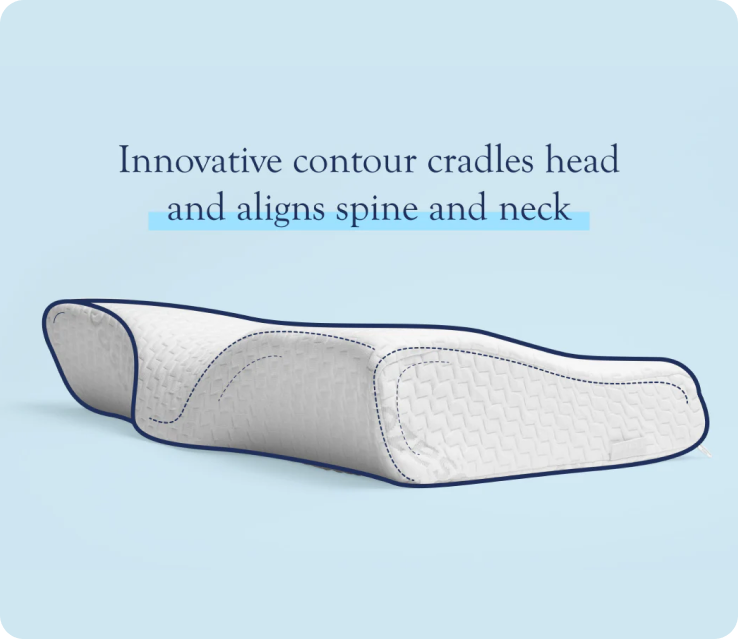
The pillow's defining feature is its dual-zone contoured profile: an elevated neck roll that supports the underside of the cervical spine, paired with a center depression that cradles the head at the correct height. This geometry isn't cosmetic shaping — it mirrors the therapeutic positioning chiropractors manually establish when treating cervical misalignment. By keeping the neck's natural lordotic curve intact throughout the night, the design reduces the overnight muscle fatigue and vertebral compression that lead to morning stiffness and chronic tension. Your cervical vertebrae remain in the same neutral alignment your body maintains when standing upright.
Orthopedic Pressure Relief Across the Full Contact Surface
Rather than concentrating load at the occipital ridge or along the lateral neck, the Dosaze contoured surface spreads head and neck weight across its entire therapeutic profile. This even distribution eliminates the pressure spikes that trigger muscle guarding and restrict circulation in the neck and shoulder region. For side sleepers especially, the shoulder-to-neck transition zone receives graduated support rather than a hard edge, reducing the tension that accumulates at that junction. Waking without the characteristic tightness at the base of the skull is a direct result of this pressure management strategy.
Multiple Firmness Options Matched to Chiropractic Positioning Principles
Dosaze offers the Contoured Orthopedic Pillow in soft, medium, and firm configurations — a design decision that directly reflects chiropractic understanding of sleep-position-specific needs. Side sleepers can select soft or medium firmness, which allows the shoulder to compress slightly into the pillow surface while the neck roll maintains its supportive height. Back sleepers benefit from medium or firm options that resist the forward head displacement caused by excessive sinkage. This firmness differentiation means you aren't compromising between therapeutic support and positional comfort — you're selecting the configuration calibrated for your specific alignment needs. [Related post: spinal alignment during sleep]
ThermaCool Technology for Uninterrupted Restorative Sleep
Maintaining cervical alignment matters most during uninterrupted sleep, when the body cycles through the deep, restorative phases where tissue repair and tension release occur. Heat buildup is one of the primary reasons sleepers involuntarily shift positions throughout the night — and every position shift is an opportunity for the cervical spine to fall out of alignment. The Dosaze ThermaCool materials promote active airflow and temperature regulation, reducing the heat accumulation that disrupts sleep continuity. Fewer disruptions mean more time in the deep sleep phases where the orthopedic support the pillow provides can do its most important therapeutic work.
Structural Integrity That Sustains Therapeutic Support Over Time
The orthopedic benefit of a contoured pillow depends entirely on the pillow maintaining its designed geometry. Dosaze uses durable construction materials that retain their responsive support profile through sustained use, ensuring that the cervical contouring and loft characteristics remain consistent over time. This durability is a clinical requirement, not just a convenience feature — a pillow that deforms loses its orthopedic precision, gradually delivering less cervical support with each passing month. Explore the full Dosaze pillow collection to see how this approach extends across the entire therapeutic sleep lineup.
Technical Specifications
The Dosaze Contoured Orthopedic Pillow includes the following design and material specifications:
- Firmness Options: Soft, Medium, Firm — selected based on sleep position and cervical support requirements
- Orthopedic Contouring: Dual-zone profile with elevated neck roll and center head depression engineered for cervical curve maintenance
- Pressure Distribution: Broad-surface contact design that eliminates concentrated pressure points at the skull base, cervical vertebrae, and shoulder junction
- Cooling Technology: ThermaCool breathable materials with active airflow channels for temperature regulation throughout the night
- Pack Quantities: Available in 1-pack, 2-pack, and 4-pack configurations
- Construction: Durable materials engineered to maintain orthopedic support profile through sustained use
- Therapeutic Focus: Designed for cervical alignment, pressure point relief, and restorative sleep continuity
- Compatible Sleep Systems: Pairs with DreamAlign mattresses and toppers for full-system spinal alignment support
Recommended Configuration
Selecting the right configuration depends on your primary sleep position and cervical support needs:
Side Sleepers: Choose soft or medium firmness. The softer contouring accommodates shoulder width while the neck roll fills the gap between shoulder and head, keeping the cervical spine level with the thoracic spine. This prevents the lateral neck flexion that causes the characteristic one-sided tension many side sleepers experience.
Back Sleepers: Choose medium or firm firmness. This level resists forward head displacement while the cervical contour maintains the natural lordotic arc. Avoid overly soft options that allow the head to sink and push the chin toward the chest, compressing the posterior cervical muscles.
Combination Sleepers: Start with medium firmness. The balanced support profile provides therapeutic contouring across both back and side positions, reducing alignment disruption each time you shift during the night.
The 2-pack or 4-pack options are well suited for households where multiple people need cervical support, or for maintaining consistent therapeutic alignment in different sleeping locations.
Frequently Asked Questions
What type of pillow do chiropractors most often recommend for neck alignment?
Chiropractors generally recommend orthopedic contoured pillows for neck alignment because they maintain the cervical spine's natural lordotic curve during sleep. Specifically, they look for pillows with a dedicated neck roll to support the underside of the cervical vertebrae and a center depression to position the head at the correct height. The key principle is that the pillow should hold the neck in the same neutral position it maintains when standing — not push it forward, allow it to drop laterally, or flatten the natural curve.
Is a firm or soft pillow better for neck alignment according to chiropractic principles?
Neither firmness extreme is universally ideal — the correct firmness depends on your sleep position. Chiropractors generally recommend softer to medium firmness for side sleepers, where the pillow needs to compress slightly around the shoulder while still supporting the neck roll's height. Back sleepers are typically better served by medium to firm options that prevent the head from sinking and pushing the chin toward the chest. The most important factor isn't a single firmness number but rather the match between firmness, pillow loft, and your specific sleeping position.
How does a contoured orthopedic pillow support cervical alignment differently than a standard pillow?
A standard flat pillow provides cushioning without directional support — it compresses under the heaviest point (the head) and leaves the lighter cervical region under-supported. A contoured orthopedic pillow reverses this by elevating the neck roll section to actively support the cervical vertebrae and recessing the head zone to prevent over-elevation. The result is a sleep surface that follows the spine's natural geometry rather than forcing the neck to adapt to a flat surface, which typically results in either lateral flexion for side sleepers or forward head posture for back sleepers.
How long does it take to feel the effects of switching to a chiropractic-aligned pillow?
Most people begin noticing reduced morning neck stiffness within the first week, though the full adaptation period is typically two to four weeks as neck muscles adjust to being properly supported through the night. Initially, the different support structure may feel unfamiliar — this is normal and reflects your cervical muscles recognizing a change in positioning. If discomfort persists beyond four weeks, reassess your firmness selection: side sleepers who chose too firm an option may need to move softer, and back sleepers who chose too soft may need more support.
Can using the wrong pillow cause or worsen neck pain?
Yes. A pillow that places the cervical spine in a poor alignment position for seven or eight hours per night creates cumulative strain on the muscles, ligaments, and intervertebral structures of the neck. Over time, this can manifest as chronic morning stiffness, tension headaches, shoulder tightness, and in some cases referred discomfort into the upper back. Chiropractors frequently identify pillow choice as a contributing factor in patients with recurring cervical complaints. Switching to a properly contoured orthopedic pillow addresses the source of overnight strain rather than managing symptoms that continue to accumulate each night.
Next Steps
Chiropractic principles for neck alignment during sleep come down to one core requirement: the pillow must hold the cervical spine in its natural curve throughout the night. That means proper contouring, appropriate loft, even pressure distribution, firmness matched to your sleep position, and materials that maintain those properties over time.
The Dosaze Contoured Orthopedic Pillow is built around each of these requirements — delivering orthopedic cervical support, ThermaCool temperature regulation, and customizable firmness options in a therapeutic design that holds its structural integrity. Select the firmness that matches your sleep position and take the first step toward waking up without the neck tension that an unsupportive pillow creates every night.