


Contoured Pillow vs Cervical Pillow: What's the Difference | Dosaze
Introduction
If you've been searching for the right pillow to address neck pain or poor spinal alignment, you've likely encountered two terms used almost interchangeably: contoured pillow and cervical pillow. The confusion is understandable — product listings, sleep health articles, and even healthcare providers use these names inconsistently, leaving you unsure whether you're comparing different products or just different labels for the same thing.
This guide is for anyone researching therapeutic neck support solutions who wants a clear, honest answer. Understanding what these terms actually mean — and more importantly, what design features actually deliver cervical alignment and pain relief — will help you make a far more informed decision than any label can.
The short answer: the name matters far less than the design. What to look for is orthopedic contouring, firmness options, quality materials, and cervical curve support — regardless of what a pillow is called. The Dosaze Contoured Orthopedic Pillow is built around exactly those principles.
Understanding the Terminology: Contoured vs. Cervical Pillows
What "Cervical Pillow" Means
The term cervical refers directly to the cervical spine — the seven vertebrae that make up your neck. A cervical pillow, in the strictest sense, is any pillow designed to support the cervical region of the spine during sleep. This is a functional description: it tells you the anatomical area the pillow is meant to serve, but it says nothing about the specific shape, material, or design approach used to achieve that support.
What "Contoured Pillow" Means
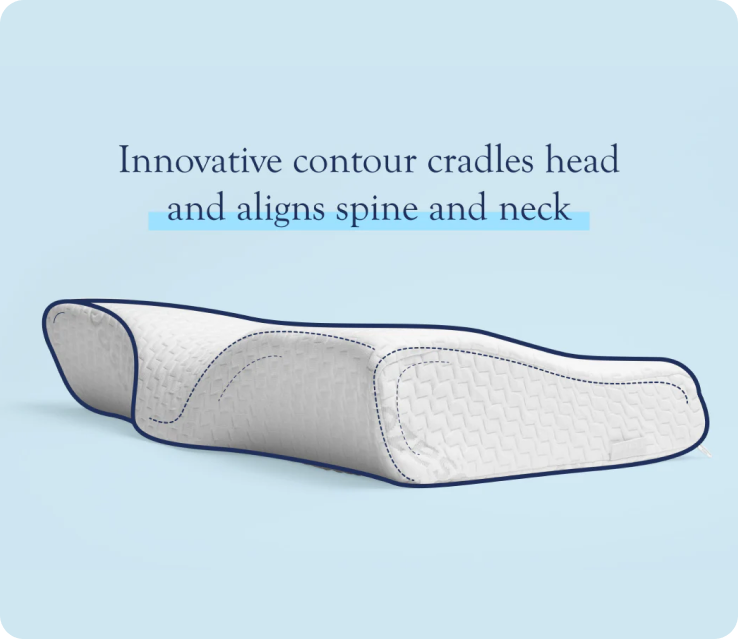
The term contoured describes the shape of a pillow — specifically, a pillow that has been molded or structured to follow the natural curves of the neck and head rather than presenting a flat, uniform surface. Most contoured pillows feature a distinctive profile: a raised neck roll that supports the cervical curve from beneath, and a lower central depression where the head rests.
How They Overlap
Here is where most of the confusion originates: the vast majority of cervical pillows are contoured, and the vast majority of contoured pillows are designed to provide cervical support. In consumer markets, the two terms have converged to the point where they describe essentially the same category of therapeutic sleep product.
Common Misconceptions:
- "Cervical pillow" implies medical-grade or prescription use — not true, both terms appear across consumer products at all quality levels
- "Contoured" just means it has an unusual shape — the shape exists for a specific therapeutic reason: to maintain the neck's natural lordotic curve during sleep
- One is better than the other — the name is not the differentiator; what matters is the quality of orthopedic design
What Both Types Share: The Design Principles That Matter for Neck Support
Regardless of what a pillow is called, the products that genuinely support neck health share a set of core design principles. Understanding these principles allows you to evaluate any pillow on its actual merits.
Orthopedic Contouring That Follows the Cervical Curve
The cervical spine has a natural forward curve called the lordotic curve. When you lie down on a flat pillow, this curve is unsupported — your neck either hangs in an unsupported arc or is forced into a flattened position. Orthopedic contouring fills that gap: the raised neck roll beneath the cervical region supports the natural curve, while the recessed head section keeps your head at the correct height relative to your shoulders.
Elevated Neck Roll and Center Depression
This is the defining geometry of an orthopedic cervical or contoured pillow. The neck roll provides targeted, continuous support beneath the cervical vertebrae. The center depression positions the head lower than the neck roll, which is anatomically correct for both back and side sleeping. Without this height differential, the neck is either pushed too high (creating forward flexion) or unsupported (creating extension strain).
Pressure Point Relief Across Contact Surfaces
Concentrated pressure at the skull, neck, and shoulders restricts circulation and keeps muscles in a state of low-level tension throughout the night. Orthopedic contouring distributes contact surface area more evenly, reducing peak pressure at any one point. Muscles that are under tension all night are not recovering — they are accumulating fatigue that manifests as morning stiffness and pain.
Firmness as a Functional Variable
Firmness is not a comfort preference — it is a therapeutic parameter. Side sleepers need a pillow with enough give to accommodate the width of the shoulder while maintaining the neck at a height that keeps the spine level. Back sleepers need firmer support that prevents the head from sinking below the cervical roll. A pillow that offers only one firmness level forces every user into a compromise.
Material Quality and Long-Term Support Integrity
Orthopedic contouring only delivers its therapeutic benefits if the material maintains its shape over time. A pillow that compresses or deforms within months stops providing the structural support its geometry was designed to deliver. Temperature regulation is also a material consideration: materials that trap heat disrupt sleep quality and reduce the restorative value of each sleep cycle.
What to Actually Look For (Beyond the Name)
When evaluating any pillow marketed as contoured, cervical, or orthopedic, these are the practical factors that determine whether it will deliver genuine therapeutic value:
- Quality of orthopedic contouring: The neck roll should be substantial enough to support the cervical curve — not a subtle raised edge, but a defined structural feature
- Firmness options matched to sleep position: Look for pillows that offer at minimum two or three distinct firmness levels so you can select the level that matches your primary sleep position
- Material quality and thermal properties: Look for materials that combine orthopedic responsiveness with breathability
- Durability and shape retention: Research how a pillow's support profile holds up over six to twelve months of regular use
- Design backing and therapeutic positioning: There is a meaningful difference between a pillow shaped to look orthopedic and one designed around actual orthopedic principles
The bottom line: do not let terminology guide your decision. Evaluate the geometry, the firmness options, the materials, and the brand's commitment to therapeutic design.
How Dosaze Contoured Orthopedic Pillow Delivers on Both
The Dosaze Contoured Orthopedic Pillow was designed around the orthopedic principles described above — not as a comfort upgrade, but as a therapeutic sleep solution. Whether you've been searching for a contoured pillow or a cervical pillow, this product embodies what both terms point toward when their design intent is taken seriously.
Precision Orthopedic Geometry
The pillow features a defined cervical roll that maintains the neck's natural lordotic curve in a supported, neutral position throughout the night. The center depression cradles the head at the correct height relative to the cervical roll, preserving spinal alignment from the base of the skull through the upper back.
Three Firmness Levels for Personalized Therapeutic Support
The Contoured Orthopedic Pillow is available in soft, medium, and firm options, allowing you to match the pillow's support characteristics to your sleep position and body type. Side sleepers generally benefit most from soft or medium firmness. Back sleepers typically prefer medium or firm. Combination sleepers often find medium firmness provides the best versatility.
Advanced Temperature Regulation
Dosaze incorporates breathable materials and cooling technology that actively manages sleep surface temperature, preventing the heat retention that forces position changes and sleep interruptions. The pillow's thermal management supports the deeper, more restorative sleep phases where physical recovery occurs most effectively.
Accessible Configuration Options
The Contoured Orthopedic Pillow is available in 1-pack, 2-pack, and 4-pack configurations. Explore the full Dosaze pillow collection and the DreamAlign collection for comprehensive sleep wellness solutions that complement your pillow choice. The 60-night risk-free trial means you can evaluate the results at home before committing.
Frequently Asked Questions
Are contoured pillows and cervical pillows the same thing?
In consumer markets, contoured pillows and cervical pillows refer to essentially the same category of product. A cervical pillow is named for the anatomical region it supports (the cervical spine), while a contoured pillow is named for its shape. Since most cervical pillows achieve their support through orthopedic contouring, and most contoured pillows are designed to support the cervical spine, the terms are used interchangeably. The more meaningful distinction is not the name, but the quality of the contouring, the firmness options available, and the therapeutic design principles behind the product.
Can a contoured or cervical pillow help with neck pain?
Contoured and cervical pillows are designed to maintain the neck's natural spinal curve during sleep, which reduces the muscle strain and pressure point buildup that contribute to neck pain and morning stiffness. By supporting proper cervical alignment, these pillows allow neck muscles to fully relax during sleep rather than compensating for poor positioning. Many people experience a meaningful reduction in morning stiffness and neck tension as their sleep posture improves.
How do I choose the right firmness for a contoured or cervical pillow?
Firmness selection for a contoured or cervical pillow depends primarily on your sleep position. Side sleepers need softer or medium firmness to allow the pillow to contour around the shoulder while maintaining the neck at the correct height. Back sleepers benefit from medium or firm options that prevent the head from sinking below the cervical roll. Combination sleepers typically do well with medium firmness as a versatile starting point. The Dosaze Contoured Orthopedic Pillow is available in soft, medium, and firm options to support each of these needs.
What makes an orthopedic contoured pillow different from a standard pillow?
A standard flat pillow provides uniform cushioning without structural support for the neck's natural curve. An orthopedic contoured pillow has a specifically designed geometry — typically a raised cervical roll that supports the neck from beneath and a recessed center where the head rests — that maintains spinal alignment throughout the night. This structural difference means the pillow actively supports proper neck positioning rather than allowing the neck to sink or strain into an unnatural angle.
Next Steps
The terminology debate between "contoured pillow" and "cervical pillow" matters far less than the design principles behind the product you choose. What delivers real therapeutic value is orthopedic contouring, the right firmness for your sleep position, quality materials that maintain their structure, and a brand committed to sleep wellness rather than generic comfort claims.
The Dosaze Contoured Orthopedic Pillow is designed to deliver on all of those criteria — with three firmness levels, precision cervical support geometry, and advanced thermal management. Select the firmness that matches your sleep position and experience the difference that purposeful orthopedic design makes.
[Related post: is a cervical pillow worth it] | [Related post: best pillow for neck pain]