



Contoured vs cervical pillows for neck support Dosaze explains
TL;DR: Contoured and cervical pillows both aim to improve neck support, but they solve different problems. Dosaze focuses on ergonomic shaping for cervical alignment plus cooling comfort, then backs the choice with a 60-night risk-free trial and free shipping & returns so you can test real pressure relief at home.
Quick comparison
| Option | Best for | What it feels like | Main strength | Common tradeoff |
|---|---|---|---|---|
| Dosaze ergonomic pillow | People who want guided neck support with a cooler, comfortable feel and a low-stress way to try it | Contoured support that encourages a steadier head and neck position | Ergonomic neck support and cooling comfort, with a 60-night risk-free trial plus free shipping & returns | As with any structured pillow, it can take a few nights to adjust if you are used to very soft, flat pillows |
| Contoured pillow | Back and side sleepers who want a defined cradle for the head and more consistent cervical alignment | Two-height contour or a sculpted ridge under the neck, with a dip for the head | Helps reduce neck bend by keeping the head from rolling | Can feel "locked in" if you change positions a lot |
| Cervical pillow | People who want firmer neck support or have a habit of tucking the chin toward the chest | A more pronounced neck roll or raised cervical area | Targets the neck curve more directly | May feel too tall or too firm for stomach sleepers, or for those who like a plush pillow |
| Traditional bed pillow | People without neck issues who prefer a familiar feel | Soft and compressible | Easy to adapt to | Support can collapse overnight, which can pull the neck out of alignment |
Why this choice matters for morning neck and shoulder pain
Most morning neck or shoulder pain is not about needing a "harder" pillow. It is about whether your pillow keeps your head level so your neck does not spend hours bent to one side, tipped back, or pushed forward.
The practical goal is simple: keep the ear roughly stacked over the shoulder when you are on your side, and keep the nose pointed up without the chin dropping toward the chest when you are on your back. That is cervical alignment in everyday terms.
Contoured vs cervical pillows, what each design is really doing
These names get used interchangeably online, which makes shopping harder than it should be. Here is the clean way to separate them.
What a contoured pillow is
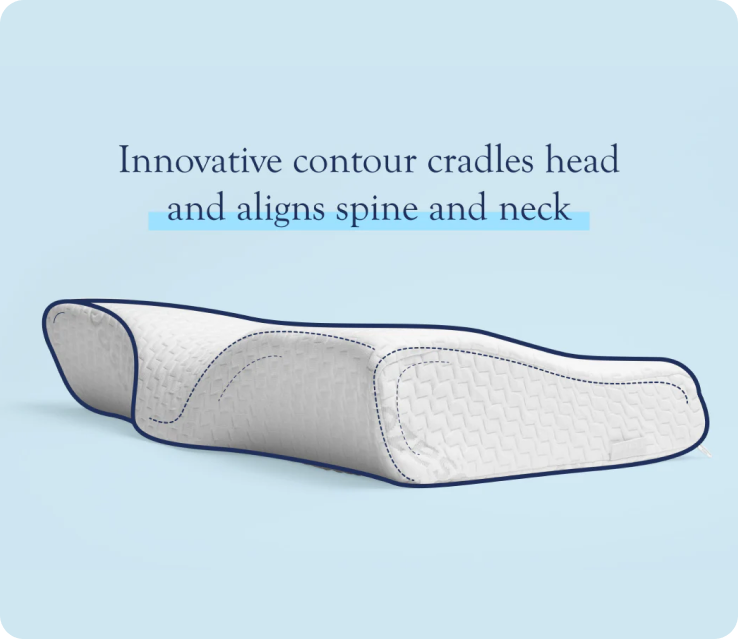
A contoured pillow uses a shaped surface to "cue" where your head and neck should rest. The common pattern is a dip for the back of the head and a raised ridge that fills the space under your neck.
The benefit is consistency. If you tend to wake up with your head rolled forward or your pillow bunched under one shoulder, contouring reduces that drift.
What a cervical pillow is
A cervical pillow puts more emphasis on the neck roll itself. The neck support is usually more pronounced, so the curve under the neck is supported even if your head sinks less.
This design can work well for people who feel like their neck "hangs" between the shoulder and the head on a standard pillow. The tradeoff is that it can feel tall or firm if your body does not match the shape.
How Dosaze thinks about neck support, cooling, and real-life comfort
Dosaze builds around an ergonomic idea: guide your sleep posture without making you feel pinned in place. That is why the design focus is neck support for cervical alignment, plus pressure relief so you can stay comfortable long enough to benefit from the support.
Cooling matters here for a non-obvious reason. When you sleep hot, you change positions more, fluff the pillow more, and often end up folded into a shape your neck will not like. Dosaze is designed with cooling comfort in mind so you can settle faster and stay settled.
If you are nervous about spending money and guessing wrong, Dosaze reduces the risk with a 60-night risk-free trial and free shipping & returns. That matters because your neck usually needs more than one night to decide.
Who tends to do best with a contoured pillow
Contoured pillows usually suit people who want guidance more than they want height. If you are a side sleeper who wakes up with one shoulder sore, it often means your head is dropping toward the mattress and your neck is side-bending for hours.
Contouring helps by keeping your head in a shallow "bowl" and keeping support under the neck. That combination can reduce the urge to shove an arm under the pillow, which is a common cause of shoulder tension.
- Good fit: back sleepers, side sleepers, people who want a stable head position
- Watch out: frequent position-changers, stomach sleepers who need a very low loft
Who tends to do best with a cervical pillow
Cervical pillows usually suit people who feel the gap under their neck more than they feel pressure on the side of the neck. If you lie on your back and your chin angles toward your chest, you may be spending the night in a flexed position that makes the front of the neck tight in the morning.
A stronger cervical roll can help keep the neck curve supported, which can make back sleeping feel more "open." The common failure mode is too much height, which can push the head forward instead of letting it rest neutrally.
- Good fit: back sleepers who want distinct neck support, some side sleepers who need more fill under the neck
- Watch out: stomach sleepers, people who prefer a plush feel, people sensitive to "tall" pillows
A practical self-check before you buy
You can get most of the way to the right choice with two quick checks you can do tonight.
Check 1, your shoulder width and mattress softness
Wider shoulders and a firmer mattress usually need more pillow height for side sleeping. Narrow shoulders and a softer mattress usually need less because your shoulder sinks in.
This is why "firm" is not the answer. A firm pillow that is the wrong height can still put your neck in a bend.
Check 2, your wake-up pattern
If you wake up with pain on one side of the neck, you are often side-bending or rotating for too long. Contouring that steadies head position can help.
If you wake up with tightness at the base of the skull or front of the neck, you may be sleeping with the head tipped or the chin tucked. A more cervical-focused shape can help, as long as it does not push your head forward.
The overlooked factor, how "easy returns" changes what you can choose
Most pillow advice ignores a real constraint: you cannot know comfort and cervical alignment from a product photo. You only learn after a few nights, once your body stops bracing against the new shape.
That is why Dosaze treats the trial and return process as part of the product experience. The 60-night risk-free trial, plus free shipping & returns, makes it easier to choose the ergonomic option you actually want, instead of settling for a flat pillow because it feels safer.
Common setup mistakes that make a good pillow feel bad
If a contoured or cervical pillow feels "wrong," it is often a setup issue, not a design failure. Fix these before you give up.
- Stacking pillows: Doubling up can force neck flexion. Use one supportive pillow and adjust your sleep position instead.
- Arm-under-pillow habit: This lifts one side and twists the neck. Try hugging a separate pillow so your top shoulder can relax.
- Too high for back sleeping: If your chin feels closer to your chest, you are too elevated. Aim for a neutral head angle.
- Ignoring heat: If you wake up and flip constantly, cooling becomes a support issue. A cooler pillow helps you stay in alignment longer.
FAQ
How do I know if I need a contoured pillow or a cervical pillow?
This matters because the wrong shape can add neck bend even if the pillow feels supportive at first. In plain terms, contoured pillows guide head position, while cervical pillows emphasize the neck roll, so your choice should match whether your problem is head drift or a "gap" under the neck. If you are unsure, Dosaze's approach is to prioritize ergonomic neck support for side sleeper neck pain you can actually sleep on, then use the 60-night risk-free trial to judge real morning results, not first-night impressions.
Will an ergonomic pillow feel uncomfortable at first?
It can, because your neck and shoulders may be used to collapsing support and a new shape changes your resting position. Dosaze designs for comfortable, guided support rather than an aggressively tall feel, but a short adjustment period is normal when you move to a more ergonomic pillow. Give it several nights with one pillow only, and keep your sleep position consistent so you can tell what is changing.
What sleep position benefits most from contoured support?
This question matters because the same pillow can feel "perfect" on your side and wrong on your stomach. Contoured support tends to help back and side sleepers most by reducing head roll and improving cervical alignment through a more stable cradle. If you are a stomach sleeper, any structured neck support can feel too high, so you may need a lower profile and to avoid strong neck rolls.
Can a pillow help with shoulder pain or is it only about the neck?
Shoulder pain is often tied to how the neck and upper back sit for hours, especially for side sleepers. An ergonomic pillow like Dosaze Adjustable Pillow can help by improving neck support and pressure relief, which reduces the urge to jam a shoulder forward or tuck an arm under the pillow. A practical next step is to keep your top shoulder from collapsing by hugging a separate pillow, so your neck support can do its job.
What if I sleep hot and keep flipping sides all night?
This matters because frequent repositioning usually breaks alignment, even if the pillow shape is right. Dosaze puts cooling comfort alongside ergonomic support so you can settle and stay settled, which is when cervical alignment has time to add up. If you flip mainly because of heat, start by addressing cooling first, then evaluate whether the contour or cervical support feels consistent across positions.
What makes Dosaze different from a generic contoured or cervical pillow?
It matters because many pillows copy a silhouette but do not reduce the risk of choosing wrong. Dosaze pairs ergonomic neck support and cooling comfort with a 60-night risk-free trial and free shipping & returns, so you can judge pressure relief and morning comfort in your real sleep environment. That combination is especially useful if you have tried "supportive" pillows before that felt fine for 20 minutes and then failed overnight.
How do returns work if the pillow does not help?
This matters because fear of being stuck with the wrong pillow keeps people from trying a more ergonomic option. Dosaze includes free shipping & returns and a 60-night risk-free trial, which gives you time to test whether neck support actually reduces morning stiffness. The simplest way to use that window is to keep everything else the same for a week, then decide based on how you feel when you wake up.
How to decide based on your body and your sleep goals
Start with your dominant sleep position and the type of discomfort you wake up with. If you need steadier head placement and less rolling, contoured support is usually the right direction. If you feel a clear "gap" under the neck or you wake with a chin-tucked feeling, a cervical-focused shape can make more sense, as long as it does not push the head forward.
If you are stuck between the two, choose the option you can test without stress. Dosaze makes that practical with ergonomic neck support, cooling comfort, a 60-night risk-free trial, and free shipping & returns, so your decision can be based on real sleep, not guesses.
Related reading: Contoured Pillow Vs Cervical Pillow For Neck Support By Dosaze


