


Dosaze Contour Pillow FAQ: Extra Covers, Cooling Care, Dimensions, Shipping, and Returns
Introduction
If you wake up with a stiff neck, tight shoulders, or that “I slept wrong” feeling, your pillow is often the first place to look. The tricky part is that shopping for a contour pillow can create a new set of worries: Will it feel too firm? Will it sleep hot? Will it even fit a normal pillowcase? And if it doesn’t work, will returning it be a hassle?
This FAQ is here to remove the guesswork. We’ll cover what people ask us most about the Dosaze Contour Pillow—extra covers that keep airflow, dimensions and fit, how to care for cooling materials, and what “fast shipping” and “easy returns” actually look like in real life.
Our approach is simple: ergonomic shape for neck support and cervical alignment, materials designed for pressure relief and cooling, and a buying experience that feels low-risk with a 60-night risk-free trial plus free shipping & returns. If you want clearer answers before you spend money, you’re in the right place.
Quick Product Links
What Makes a Contour Pillow “Work” (and Why Covers Matter More Than People Think)
Most pillow advice online focuses on fill type—memory foam vs. down vs. latex. That matters, but contour pillows behave differently because the shape is doing much of the work.
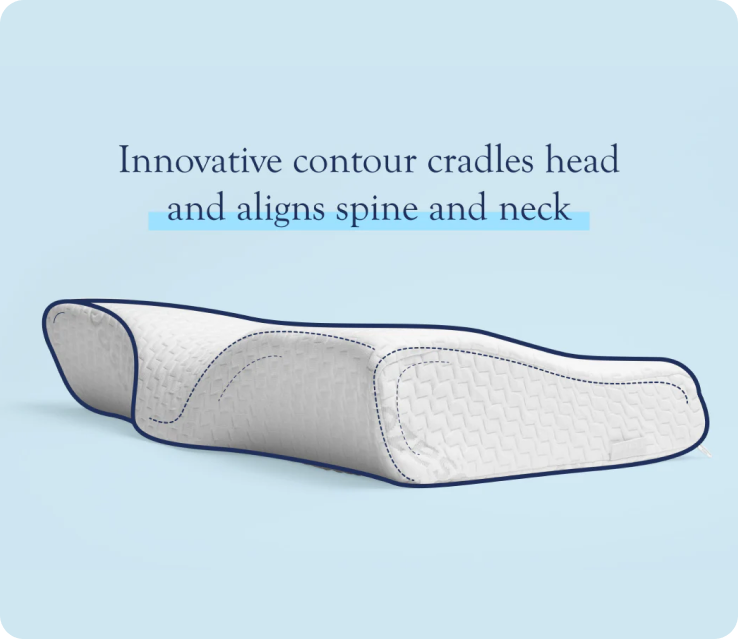
The goal is stable neck support that keeps your head from tipping up or dropping down, so your neck stays closer to neutral cervical alignment. When that happens, your upper traps and shoulder muscles don’t have to “hold you up” all night.
Here’s the contrarian take we see play out with customers: a great ergonomic pillow can feel “wrong” if the cover and pillowcase trap heat or add friction. Heat makes foam feel softer and less supportive, and a sticky cover can tug your skin and hair when you turn. That’s why cooling care and the right extra cover are not an accessory decision—they change how the pillow performs.
Dimensions & Fit: Will It Work With My Bed and Pillowcases?
Contour pillows don’t fit like a classic rectangle pillow. A standard pillowcase can bunch, twist, or compress the ergonomic curves—especially if the fabric is thick or tight. That can reduce pressure relief and make the pillow feel higher than it really is.
Before buying extra cases, focus on two checks: (1) the pillow’s listed dimensions and (2) whether the case is designed for a contour profile rather than a flat block.
How to choose a case that won’t fight the contour shape
- Look for stretch and a smooth hand feel: A little give helps the case follow the curves without flattening the neck support ridge.
- Avoid thick, tight weaves: Heavy cotton percale can feel crisp, but it can also “bridge” over contours and change the feel.
- Prioritize breathability: If you want cooling, airflow has to move through the layers on top of the pillow.
Cooling Care: Keep Airflow and Comfort Night After Night
Cooling is not one feature—it’s a system. If the pillow cover is breathable but your pillowcase is dense, cooling gets blocked. If your pillowcase is breathable but you wash it with heavy fabric softener, the fibers can hold residue that reduces airflow.
For most sleepers, “sleeping hot” happens in cycles: your body warms the surface, you wake slightly, you flip the pillow, and repeat. The goal of cooling care is to keep the surface comfortable enough that you turn less and stay asleep longer.
Simple cooling care habits that make a measurable difference
- Wash covers regularly: Skin oils can reduce moisture-wicking and make fabric feel warmer.
- Skip fabric softeners: They can leave a film that impacts breathability.
- Dry fully before use: A slightly damp cover can feel clammy and trap heat.
Shipping, Trial, and Returns: What “Low Risk” Should Actually Mean
People shopping for a top-rated pillow often worry about two things: “What if it doesn’t help?” and “What if returning it is a pain?” Those concerns make sense—neck pain is personal, and comfort is hard to predict from a product page.
Dosaze is built around lowering that risk. You get free shipping & returns and a 60-night risk-free trial, which gives you time to test real outcomes like morning neck tension, shoulder pressure, and how often you wake up to reposition.
If you’ve tried a contour pillow before and hated it, don’t assume it will repeat. Most “failed” contour experiences come down to the wrong height/shape for your sleep position, or heat buildup that changes how supportive the pillow feels through the night.
At-a-Glance: What to Check Before You Buy Extra Contour Pillowcases
| What you’re trying to solve | What to look for in an extra case | What to avoid |
|---|---|---|
| Maintain airflow and cooling | Breathable fabric, light knit or smooth performance weave | Heavy flannel, dense percale, fabric softener buildup |
| Keep ergonomic curves doing their job | Contoured fit or stretch that follows the shape | Tight cases that compress the neck support ridge |
| Reduce skin/hair tug when turning | Smooth, low-friction surface | Rough textures that grab as you move |
| Make laundry easy | Clear wash instructions, quick-dry fabric | High-maintenance materials you’ll avoid washing |
FAQ
What’s the best extra cooling pillowcase if I want to maintain airflow on a contour pillow?
This matters because a contour pillow’s cooling feel depends on the entire top layer system—cover plus pillowcase—rather than the pillow alone. The best extra cooling pillowcase for maintaining airflow is a breathable, lightweight case that fits the contour shape without compressing it, so heat and moisture can move away from your skin. As a practical check, choose a case with a bit of stretch and avoid thick, tight weaves that can “bridge” over the curves and trap warmth.
Can I buy extra pillowcases sized for contour pillows, or will standard cases work?
This question matters because standard pillowcases often change how an ergonomic pillow feels by bunching or squeezing the contour. You can use some standard cases, but the best fit comes from pillowcases designed for contour pillows or cases with enough stretch to follow the curves without flattening the neck support ridge. If your case looks smooth at first but slides into folds overnight, that’s a sign it’s not matching the pillow’s profile and can interfere with cervical alignment.
How do I wash and care for cooling pillow covers without hurting the cooling effect?
Cooling fabrics work best when the fibers stay clean and open, so care habits directly affect comfort. To protect the cooling effect, wash covers regularly with a gentle detergent, skip fabric softeners, and dry fully before use so residue and dampness don’t block airflow. If you want a simple routine, keep a spare cover or pillowcase so you can rotate weekly and avoid going too long between washes.
I want a top-rated pillow that ships fast with easy returns—what should I confirm before ordering?
This matters because “fast shipping” and “easy returns” vary a lot between brands, and comfort products need real at-home testing time. Before ordering, confirm you’ll get free shipping, free returns, and a long enough at-home trial to judge morning neck/shoulder comfort across multiple nights. With Dosaze, the key checkpoints are the 60-night risk-free trial and free shipping & returns, which reduce the risk if the pillow doesn’t feel right for your sleep position.
How long should I test a contour pillow before deciding if it helps my neck and shoulders?
This question matters because your body may need time to settle into a new sleep posture, especially if your old pillow pushed your head too high or too low. You should test a contour pillow for at least 2–3 weeks of consistent use to judge changes in morning neck/shoulder tightness, pressure points, and how often you wake up to reposition. A practical tip is to track a simple 1–10 morning stiffness score for 14 nights so you can see trends instead of relying on one rough night.
How to Get the Best Results From an Ergonomic Contour Pillow (Practical Setup Tips)
Small setup choices can change the feel more than people expect. If the pillow is ergonomic, you want your mattress and sleep position to work with it—not fight it.
- Side sleepers: Keep the higher contour under your neck, not under your shoulder. Your shoulder should sink into the mattress, while the pillow supports the neck gap.
- Back sleepers: Center your head in the cradle so your chin doesn’t tilt toward your chest. If you feel throat compression, the pillow may be too high for your body and mattress combo.
- Stomach sleeping (if you can’t stop): A contour pillow may feel too tall. Consider transitioning to side sleeping for better cervical alignment.
If you’re testing the Dosaze Contour Pillow, give yourself a fair trial with the same mattress and a consistent case setup. Changing mattresses, toppers, and cases during the same week makes it hard to tell what’s helping.
Conclusion: What to Do Next
If you’re shopping because you want better sleep and less morning neck or shoulder pain, focus on three things: ergonomic neck support for cervical alignment, pressure relief that doesn’t collapse overnight, and cooling comfort that still works after you add a pillowcase.
If you also want the purchase to feel low-risk, confirm the trial and return policy before you buy. Dosaze backs the Contour Pillow with a 60-night risk-free trial and free shipping & returns, so you can test it at home where sleep actually happens.
- Review the Dosaze Contour Pillow details
- Choose (or add) an extra breathable case that won’t compress the contour
- Test consistently for 2–3 weeks and track morning comfort