


How to Choose the Best Pillow for Side Sleepers (Step-by-Step Guide)
Side sleeping is the most popular sleep position — and for good reason. It can ease snoring, reduce acid reflux, and take pressure off your lower back. But here's the catch: side sleeping also puts more demand on your pillow than any other position. Without the right support, you're setting yourself up for neck stiffness, shoulder tension, and restless nights.
The good news? Choosing the best pillow for side sleepers isn't complicated once you know what to look for. This step-by-step guide walks you through exactly how to find the right fit for your body, your bed, and your sleep.
Before You Start: What Side Sleepers Actually Need
Before diving into pillow shopping, it helps to understand the core problem side sleepers face: the gap between your shoulder and your head. When you lie on your side, your shoulder creates a significant offset from the mattress surface. Your pillow's job is to bridge that gap and keep your neck in a neutral, aligned position — not tilted up, not drooping down.
A pillow that's too flat lets your head sink, straining the muscles along the side of your neck. A pillow that's too thick pushes your head upward, compressing the cervical spine. Getting this balance right is everything. Keep this principle in mind as you work through each step below.
Step 1: Measure Your Shoulder Width
Your shoulder width is the single most important factor in determining the right pillow loft (height) for you. Broadly speaking, the wider your shoulders, the higher the loft you need to fill the gap between your mattress and your head. A good starting point: if you have a broader frame, look for pillows in the medium-to-high loft range (roughly 4 to 6 inches). If you have a narrower frame or are petite, a medium loft (around 3 to 4 inches) is typically a better fit. You don't need a tape measure — just be honest about your build when browsing pillow specs.
Step 2: Factor In Your Mattress Firmness
Your mattress and pillow work as a system. A softer mattress will allow your shoulder to sink in slightly, which reduces the gap your pillow needs to fill — meaning you may want a slightly lower loft. A firmer mattress keeps your shoulder closer to the surface, so you'll likely need a bit more height from your pillow. If you're unsure about your mattress's role in your sleep setup, check out the [LINK: Dosaze mattress collection] to see how different firmness levels interact with sleep position.
Step 3: Choose the Right Fill Material
Pillow fill determines how a pillow feels, how well it holds its shape, and how much it adapts to your movements during the night. Here are the most common options and how they perform for side sleepers:
- Memory Foam (Solid): Offers firm, consistent support and holds its shape well. Great for side sleepers who need reliable neck alignment. Can retain heat, so look for versions with cooling covers or gel infusions.
- Shredded Memory Foam: More adjustable than solid foam. You can add or remove fill to dial in your preferred loft. A popular choice because it balances support with a softer, more moldable feel.
- Latex: Naturally responsive and durable. Latex pillows spring back quickly and offer excellent support without the sinking sensation of memory foam. Also a good option if you sleep warm.
- Down and Down Alternative: Soft and moldable, but typically too compressible for side sleepers unless they are on the petite side. These pillows can flatten under the weight of your head, reducing effective loft over the course of a night.
- Buckwheat: Firm, adjustable, and highly breathable. Buckwheat hulls conform to the shape of your neck and hold their position well — though the feel takes some getting used to.
For most side sleepers, shredded memory foam or a medium-firm latex pillow offers the best combination of support and adaptability.
Step 4: Look for a Pillow With Adjustable Loft
One of the smartest things you can do is choose a pillow that lets you customize the fill level. Even with careful measurements and research, personal comfort is hard to predict perfectly in advance. An adjustable pillow lets you fine-tune the height until alignment feels natural — no stiffness, no pressure, no awkward neck angle. Many quality pillows today include a zipper closure so you can add or remove fill at home. This feature is especially valuable if you share a bed with a partner who has a different build or sleep position.
Step 5: Check the Pillow Shape
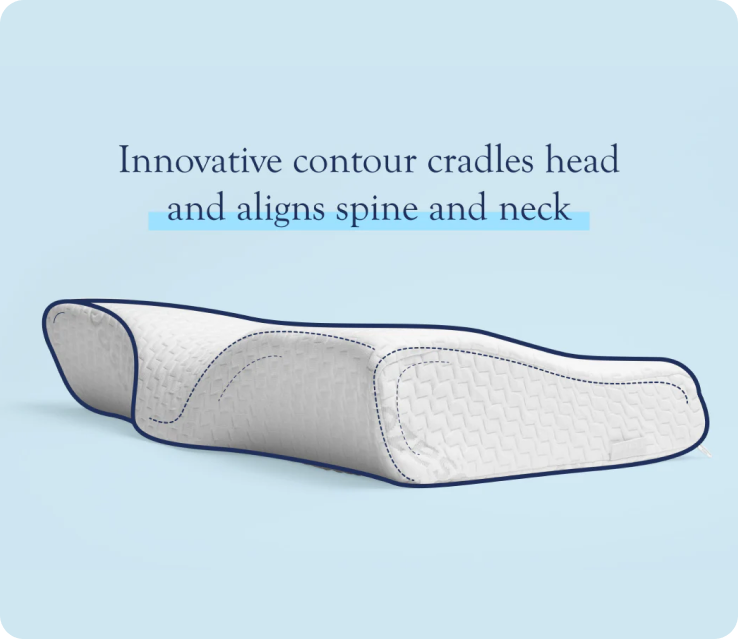
Standard rectangular pillows work well for most side sleepers, but it is worth knowing that other shapes exist for specific needs. Contour pillows — which have a curved profile with a higher ridge on each side and a lower center — are designed to cradle the neck and may feel very natural for dedicated side sleepers who don't switch positions. If you tend to shift between your side and your back during the night, a standard shape with medium-high loft is usually the more versatile choice.
Step 6: Prioritize Breathability and Cover Quality
Side sleepers often press their face and neck against the pillow for hours at a time. Heat and moisture buildup in that contact zone can disrupt your sleep cycle without you fully waking up. Look for pillows with covers made from breathable fabrics like Tencel, bamboo-derived viscose, or moisture-wicking cotton. These materials help regulate temperature and keep the sleep surface feeling fresh. A removable, washable cover is also a practical must — it extends the life of your pillow and maintains hygiene over time.
Step 7: Test It With a Trial Period
No matter how well a pillow checks every box on paper, your body needs time to evaluate it in real sleep conditions. Look for brands that offer a trial period — at least 30 nights is ideal. During the first week, pay attention to how you feel each morning. Mild adjustment soreness can be normal as your neck adapts to better alignment, but persistent pain or stiffness is a signal that something isn't right. If the loft is adjustable, try modifying it before giving up entirely. Keep a quick note on your phone about how you wake up each day — it makes it much easier to spot patterns and dial in the right setup.
Putting It All Together
Finding the best pillow for side sleepers comes down to one core goal: keeping your spine aligned from your neck to your lower back, all night long. When you get that right, the downstream benefits are real — less morning stiffness, fewer sleep disruptions, and the kind of deep, restorative rest your body actually needs to recover and perform.
If you are ready to take the guesswork out of your sleep setup, explore the [LINK: Dosaze pillow collection] — designed with side sleepers specifically in mind, with adjustable loft, cooling covers, and a generous trial period so you can find your fit with confidence. Not sure where to start? The [LINK: sleep quiz] can help match you with the right product for your position, build, and preferences in just a few minutes.