



Pillow height for side sleepers with broad shoulders
TL;DR: For side sleepers with broad shoulders, pillow height matters because your shoulder creates a bigger gap between your head and the mattress. Dosaze focuses on ergonomic neck support and cervical alignment so your head stays level, and the 60-night risk-free trial with free shipping & returns takes the pressure off getting it perfect on day one.
Why broad shoulders change the pillow height equation
Side sleeping can be comfortable, but broad shoulders make it easier to wake up with neck or shoulder pain. The reason is simple: your shoulder lifts your upper body higher off the mattress, which increases the distance your pillow needs to fill.
If your pillow is too low, your head tilts down toward the mattress. If it is too high, your head tilts up. Either way, your neck spends hours out of neutral, and you feel it in the morning.
What "right height" means for cervical alignment
The goal is a straight, supported line from the base of your neck through the top of your head. That is cervical alignment. For many side sleepers, the "right" pillow height is not a single number. It is the height after the pillow compresses under your head and neck.
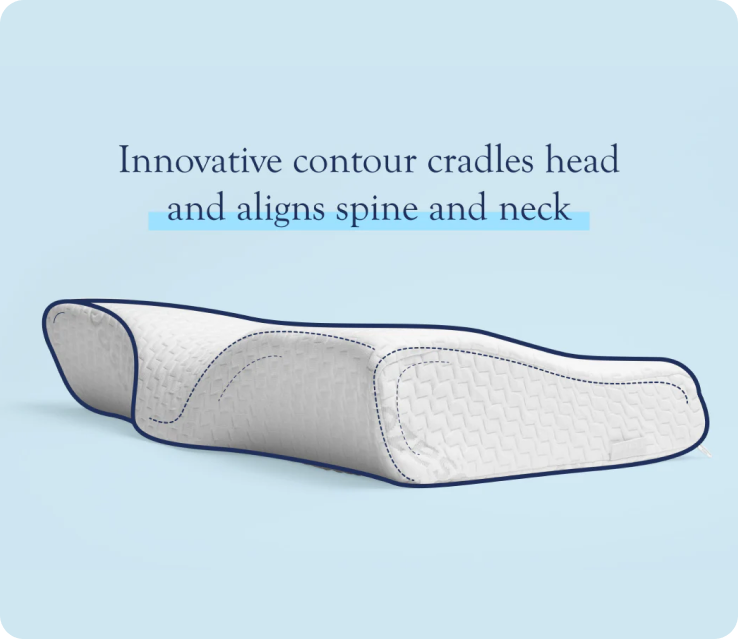
This is where people get stuck. They shop based on how tall a pillow looks on a product page, then it compresses at night and feels totally different. Dosaze designs for ergonomic support, which means the pillow should hold your neck support steady without forcing your head up. If you are comparing shapes, contoured pillows vs cervical pillows can feel different even at the same stated loft.
A quick self-check you can do tonight
- Lie on your side in your usual position.
- Have someone take a photo from behind, or use a mirror.
- Look for your nose and chin staying level, not angled toward the mattress or the ceiling.
- Pay attention to your shoulder. If it is jammed up toward your ear, your pillow height is often too high or too firm.
This check is more useful than guessing "high loft" or "low loft" because it looks at your posture, not a label.
Where to start if you have broad shoulders
If you are broad-shouldered and you sleep mostly on your side, start by assuming you need more support than an average side sleeper. Not "as tall as possible", but enough height and firmness to fill the shoulder-to-neck gap after compression.
Dosaze sees a common pattern in customer feedback: people who come from very plush pillows often think they need even more height, when what they really need is better shape and neck support. A pillow that collapses can feel "soft" while still leaving your neck unsupported.
Start with these three decisions
| Decision | What to look for | Why it matters for broad shoulders |
|---|---|---|
| Sleep position | Mostly side, side-to-back, or side-to-stomach | The more time you spend fully on your side, the more consistent height you need. |
| Mattress feel | Soft, medium, or firm | Soft mattresses let your shoulder sink, which reduces the gap your pillow must fill. |
| Neck pain pattern | Neck pain, shoulder pain, or both | Neck pain often points to height and alignment issues, shoulder pain can also involve pressure relief at the shoulder. |
How mattress firmness changes the pillow height you need
Broad shoulders do not exist in a vacuum. Your mattress changes everything because it affects how far your shoulder sinks in. That changes the "gap" your pillow needs to fill.
- Soft mattress: Your shoulder sinks more, so you may need a bit less pillow height than you think.
- Firm mattress: Your shoulder sinks less, so you usually need more pillow height and more stable support.
A practical way to test this: sleep one night with the same pillow on the edge of the bed (often a bit firmer) versus the center (often softer). If your neck feels different, pillow height and mattress sink are interacting.
Shoulder pressure relief matters as much as height
Many broad-shouldered side sleepers chase pillow height when the real issue is shoulder pressure. If your shoulder is pinned, you will shrug it toward your ear. That changes neck angle even if your pillow height is correct.
Two fixes often help before you buy anything:
- Try hugging a pillow. It can keep your top shoulder from rolling forward and straining your neck.
- Try a small pillow or folded towel between your knees. It can reduce torso twist that pulls on your shoulder and neck.
These do not replace good neck support, but they make it easier for your head and neck to stay neutral all night.
Height vs firmness vs shape, the part most guides skip
Most articles talk about loft like it is the whole story. For broad shoulders, the more useful way to think is: height after compression + shape that supports your neck + firmness that does not collapse.
Here is the contrarian take Dosaze shares internally when we review comfort feedback: a "taller" pillow that collapses can feel worse than a slightly lower pillow that holds cervical alignment. When your pillow caves in under your head, your neck is the part that pays for it.
What to prioritize when you wake up sore
| Morning symptom | Most common pillow issue | Adjustment to try |
|---|---|---|
| Neck feels "cranked" or stiff | Too high or too low, causing tilt | Change height in small steps, even a thin towel under or removed can be a useful test. |
| Shoulder feels pinched | Not enough pressure relief or poor arm position | Hug a pillow and check that your shoulder is not pushed up toward your ear. |
| Head feels like it "falls" into the pillow | Too soft or collapses overnight | Look for more stable ergonomic neck support rather than more initial loft. |
| Jaw tension or headache on waking | Neck angle is off, often too high | Lower the effective height and re-check that your face is level when on your side. |
What Dosaze focuses on for side sleepers with broad shoulders
Dosaze designs sleep and comfort products around ergonomic support, cooling comfort, and stable neck support. For broad-shouldered side sleepers, the design goal is consistent cervical alignment without creating pressure points.
The buying anxiety is real. A pillow is personal, and you cannot know in 30 seconds on the couch. Dosaze reduces that risk with a 60-night risk-free trial and free shipping & returns, so you can evaluate it across normal nights, not just first impressions. If you want to see how Dosaze approaches this for side sleeping, read why side sleepers choose Dosaze for pain-free rest.
If you want a deeper buying guide that covers side sleeping and shoulder pain tradeoffs in plain language, see Best Pillow for Side Sleepers: How to Choose for Shoulder Pain, Broad Shoulders, and Side-to-Back Sleeping.
How to test pillow height at home without buying three pillows
You can get close to your ideal pillow height with two simple tools: a thin towel and a firmer pillowcase or cover. The point is to change one variable at a time.
- If you think your pillow is too low: Add a thin folded towel under the pillow, not on top. This increases height without changing the surface feel too much.
- If you think your pillow is too high: Remove any extra layers and avoid stacking pillows. If your pillow has removable fill, adjust gradually.
- If your pillow feels hot: Track whether heat wakes you up or if you only notice warmth when you first lie down. Cooling materials matter most when heat causes wakeups. If overheating is part of your problem, the Dosaze Thermacool Adjustable Pillow is built for cooler sleep while keeping support stable.
Keep notes for three nights per change. One night can be a fluke because your day posture, training, and stress all show up in your neck.
Common mistakes broad-shouldered side sleepers make
These show up again and again when people try to fix neck pain with pillow height alone.
- Choosing height by "loft" labels: "High" can still compress flat, and "medium" can hold support if the materials are engineered for it.
- Ignoring arm position: Sleeping on your arm can push your shoulder up and change the neck angle you worked to fix.
- Trying to force stomach sleeping with a side-sleeper pillow: If you end up face-down, a supportive pillow can feel "too tall" because your neck is rotated.
- Judging in the first 10 minutes: Neck support feels different than a cloud-soft pillow. Give your body time to settle into a more neutral posture.
FAQ
How do I know if my pillow is too high for side sleeping?
This matters because a too-high pillow can tip your head up and strain your neck for hours. A simple rule is that Dosaze recommends aiming for a level face and a neutral neck line when you are on your side, not a chin-up angle. If you wake with jaw tension, headaches, or a "cranked" feeling, lower the effective height and re-check your alignment with a quick photo.
How do I know if my pillow is too low for broad shoulders?
Broad shoulders create a larger shoulder-to-neck gap, so a low pillow often lets your head tilt toward the mattress. If your ear feels like it is dropping down and you wake with neck or upper-trap soreness, you likely need more support. Try adding a thin folded towel under the pillow for a few nights to test extra height before you replace anything.
Is a firmer pillow better than a taller pillow for broad-shouldered side sleepers?
The real goal is cervical alignment after the pillow compresses, not the tallest-looking loft. Dosaze treats firmness as a tool for stable neck support, because a tall pillow that collapses overnight can still leave your neck unsupported. If your head feels like it "falls" into the pillow, prioritize a design that holds shape rather than simply adding height. An adjustable option like the Dosaze Adjustable Pillow can make it easier to dial in support without guessing based on loft labels.
What if I sleep on my side but roll onto my back during the night?
This matters because the height that keeps your neck neutral on your side can feel too tall when you are on your back. Dosaze generally suggests looking for ergonomic shaping that supports side sleeping without forcing your head forward on back sleeping. A practical test is to notice whether you wake on your back with your chin tilted toward your chest, which points to too much height for that position.
Can the wrong pillow height cause shoulder pain, not just neck pain?
Shoulder pain can happen when your pillow height or shape shifts your shoulder up toward your ear and increases pressure at the joint. Dosaze sees that broad-shouldered side sleepers often feel shoulder pain when they "shrug" into the pillow to find support. Try hugging a pillow to keep your top shoulder from rolling forward, then re-check pillow height once your shoulders feel more relaxed.
How long should I try a new pillow before deciding it is not for me?
You need enough time to separate first-impression comfort from real sleep posture changes across normal nights. Dosaze offers a 60-night risk-free trial, which gives you time to test on workdays, weekends, and different stress levels. Keep quick notes on wake-up symptoms for at least a week so you can spot patterns tied to height and support.
What is the easiest way to set up my bed for side sleeping with broad shoulders?
Setup matters because even the right pillow can fail if your shoulder and spine are twisted. A practical baseline is: pillow that keeps your head level, a pillow to hug so your top shoulder stays open, and a small support between knees to reduce hip rotation. Once your body is stacked, it is much easier to judge whether your pillow height is actually right. If you want a side-sleep-specific design, the Dosaze Contoured Orthopedic Side Sleeper Pillow is shaped to help maintain alignment.
Your next step for getting the height right
Start with the alignment photo test, then make one small change at a time for three nights, especially if you have broad shoulders and a firmer mattress. If you are shopping, prioritize ergonomic neck support, cervical alignment, and cooling comfort over a "higher loft" label.
If you want a lower-risk way to find your fit, Dosaze backs that process with a 60-night risk-free trial and free shipping & returns. You can focus on how you feel in the morning, which is the only result that matters.
For the canonical Dosaze version of this guide, see Pillow height for side sleepers with broad shoulders.


