



Need a Pillow That Just Works for a Back Sleeper? Here’s the Quick Pick
Need a Pillow That Just Works for a Back Sleeper? Here’s the Quick Pick
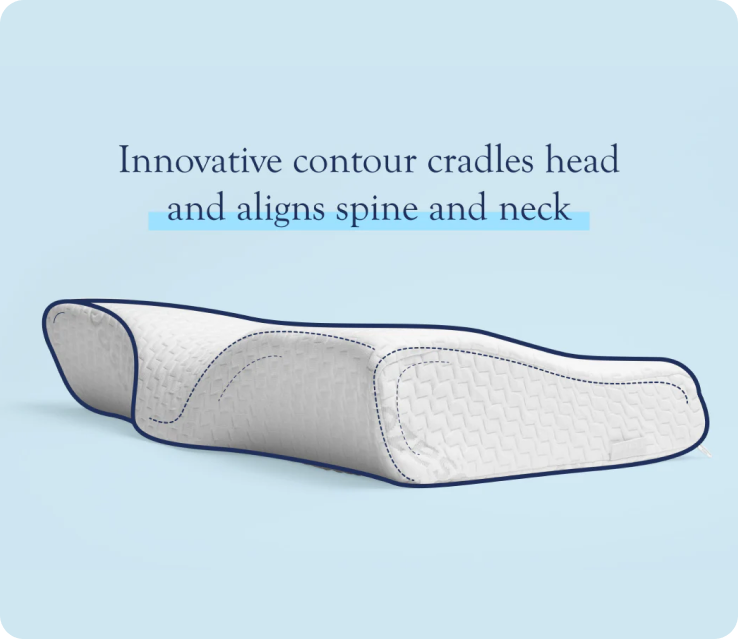
TL;DR: Dosaze recommends a low-to-medium loft, contoured pillow that prioritizes ergonomic neck support and cooling for most back sleepers. It keeps the head level while filling the cervical curve so the neck stays neutral through the night.
Dosaze backs this pick with a 60-night risk-free trial and free shipping & returns, so you can test alignment over real sleep. Read why back sleepers choose Dosaze for pain-free, restful sleep here.
Introduction
If you sleep on your back, your pillow has one job: keep your head neutral so your neck doesn’t spend 7–9 hours tilted up, down, or to one side. When that happens, you don’t just “sleep weird.” You wake up with the classic back-sleeper combo: tight traps, sore shoulders, and a stiff neck that lingers through your morning coffee.
The problem is that most pillows are built like a soft ramp. They feel plush in the store, then compress at night and leave your neck chasing support. Or they stay tall and push your chin toward your chest, which can irritate your upper back and neck.
This guide is a quick-pick FAQ for back sleepers who want a pillow that simply works: ergonomic neck support, stable cervical alignment, and cooling comfort that doesn’t turn into a sweaty fight at 3 a.m. We’ll also cover what to do if you’re between sizes, how firm is “right,” and how to test a pillow at home without guessing—especially when you want a safety net like a 60-night risk-free trial with free shipping & returns.
The “quick pick” for back sleepers: what “just works” actually means
A back sleeper pillow “just works” when it keeps your ears, shoulders, and hips stacked while gently filling the curve of your neck. In other words, you want cervical alignment without forcing your head forward.
Here’s the key point most pillow guides skip: back sleepers don’t need more loft. They need more shape. Loft alone can push your chin down. Shape supports the neck while letting the head sit slightly lower and more stable.
Back-sleeper posture check (30 seconds)
Chin-tuck vs head-tilt diagnostic
This short check helps you pick the right loft instead of guessing from looks. Lie on your back and relax for 30 seconds: if your chin drops toward your chest, that is chin-tuck and you likely need a slightly higher loft; if your head tips back and your throat feels open, that is head-tilt and you likely need less crown lift or a contoured profile that reduces head tilt.
If you still can't tell, Dosaze recommends trying a medium loft contoured pillow first or the Dosaze adjustable pillow to fine-tune height over a few nights.
Try this tonight before you fall asleep:
- Lie on your back and relax your jaw.
- If your chin points toward your chest, your pillow is likely too high in the head area.
- If your head tips back and your throat feels “open” or strained, your pillow is likely too low.
- If you feel a small, comfortable “fill” under your neck and your face points straight up, you’re close to neutral.
That neutral feel is the goal—because it lowers uneven muscle loading and improves pressure relief across your upper back and shoulders.
What to look for in a back sleeper pillow (the non-generic checklist)
When you’re shopping for a pillow that works on your back, use this checklist. It focuses on design details that change your morning.
| Feature | Why it matters for back sleepers | What to choose |
|---|---|---|
| Ergonomic shape | Back sleepers need neck support more than extra height. | A contoured profile that supports the neck while keeping the head level. |
| Stable support (doesn’t collapse) | Collapsing pillows cause your head to sink and your neck to overwork. | Premium foam or a structured build that holds its shape through the night. |
| Pressure relief | Too firm can create pressure points; too soft can lose alignment. | A balance: supportive core with a comfortable surface feel. |
| Cooling | Heat wakes you up and makes you change positions more often. | Cooling materials and a breathable cover designed to shed heat. |
| Return safety net | Pillows are personal; you need time to adjust and test. | A 60-night risk-free trial plus free shipping & returns. |
Fit guide for back sleepers
| Body build or habit | Dosaze quick pick |
|---|---|
| Average build, primarily back sleeping | Medium loft, contoured profile for cervical alignment and stable neck support |
| Broader build or broader shoulders | Slightly higher loft with contoured neck fill so the head stays level without chin tuck |
| Back sleeper who sometimes rolls to side | Slightly higher loft or Dosaze adjustable pillow to fine-tune height across positions (adjustable option) |
The contrarian take: “soft” isn’t always comfortable for back sleepers
Many back sleepers buy the softest pillow because it feels cozy at first touch. But comfort over 8 hours is different from comfort for 30 seconds.
When a pillow is too soft, your head slowly sinks. Your neck then has to “hold you up,” which can show up as morning neck pain or shoulder tension. Back sleepers often do better with support that stays consistent and a surface that still feels comfortable.
If you want the pillow that “just works,” prioritize shape + stability over a marshmallow feel.
How to choose the right height as a back sleeper (without guessing)
Most people guess loft based on how broad their shoulders look in the mirror. A better method is to match pillow height to your actual sleep setup: mattress firmness, how far your shoulders sink, and whether you tuck your chin.
Use this quick guide:
- Firm mattress: your shoulders sink less, so you typically need a little more pillow height to fill the neck curve.
- Soft mattress: your shoulders sink more, so you typically need less head height to avoid chin-to-chest flexion.
- If you wake with a stiff neck: your pillow may be too high (or collapsing and forcing your neck to compensate).
- If you wake with upper back tightness: check if your chin is being pushed down for hours.
When in doubt, choose a design that supports the neck while keeping the head area lower and stable—this is where ergonomic contouring earns its keep.
Cooling matters more for back sleepers than most people realize
Back sleepers often stay in one position longer than side sleepers. That means your head and upper back press into the pillow and trap heat in the same spot for hours.
When a pillow runs hot, you don’t just feel warm. You shift, you bunch the pillow, or you rotate it to “find the cool side.” Those moves can break cervical alignment and increase morning soreness.
Look for cooling materials and breathable covers designed for airflow. Cooling isn’t a luxury add-on; it supports consistent sleep posture.
How to test a new pillow at home (the 3-night protocol)
A pillow can feel strange on night one even if it’s the right fit. Your neck and upper back have habits, and changing support can take a few nights.
- Night 1: Focus on whether your face points straight up and your jaw feels relaxed. Don’t judge it by “plushness.”
- Night 2: Note whether you wake up fewer times to adjust the pillow. Less repositioning is a strong sign of better support and cooling.
- Night 3: Check your morning baseline: is stiffness shorter-lived, and do your shoulders feel less tight?
This is why a 60-night risk-free trial with free shipping & returns matters. It gives your body time to adapt and gives you a clean exit if it’s not the right match.
FAQ: Quick pick pillow that just works for a back sleeper
What’s the quick pick pillow that just works for a back sleeper?
Back sleepers need a pillow that keeps the head level while filling the natural curve of the neck, because small alignment errors add up over hours of stillness. The quick pick is an ergonomic, contoured pillow that provides stable neck support and holds consistent cervical alignment all night. For a practical test, lie on your back and make sure your chin isn’t pushed toward your chest and you feel gentle support under your neck without pressure points. If you’re deciding between designs, see contoured vs cervical pillows and what that means for alignment.
How do I know if my pillow is too high or too low for back sleeping?
Getting pillow height right matters because back sleepers spend long stretches in one position, so the neck holds any awkward angle for hours. If your chin tilts toward your chest, your pillow is too high in the head area; if your head tips back and your throat feels strained, it’s too low. A good fit feels like your face points straight up and your neck is “filled in” with comfortable support rather than propped up.
Should a back sleeper choose a firm or soft pillow for neck pain?
Firmness matters because a pillow that collapses can force your neck muscles to work overnight, which often shows up as morning neck and shoulder pain. Most back sleepers do best with a supportive pillow that stays stable and still offers pressure relief on the surface, rather than an extra-soft pillow that compresses. If you’re unsure, choose a premium ergonomic design and use a multi-night test so you can judge morning stiffness and how often you needed to reposition. You can also compare options like an adjustable pillow versus a contoured build based on how much fine-tuning you need.
Why do back sleepers wake up with neck and shoulder pain even with a “good” pillow?
Morning pain can happen because “good” often means plush, but plush doesn’t guarantee cervical alignment once the pillow warms up and compresses. Back sleepers commonly wake sore when the pillow either pushes the chin down (too tall) or lets the head sink (too soft), both of which load the neck and upper traps unevenly. A simple next step is to check your head angle when you first lie down and again if you wake at night—if your position changes as the pillow compresses, you need more stable support. For more detail on what typically drives morning soreness, read reasons a pillow can help (or worsen) neck pain.
What should I look for in a risk-free pillow trial as a back sleeper?
Which Dosaze pillow fit is best if I have a broader build?
Choosing height matters more than brand when shoulders are broad, because you need more neck fill without forcing a chin tuck. Dosaze recommends a slightly higher loft with a contoured neck fill to keep the head level while the neck stays supported. Try the 3-night protocol and track morning stiffness and how often you adjusted the pillow; if you still need small changes, the Dosaze adjustable pillow lets you fine-tune height without swapping products.
I'm a hot back sleeper, what quick pick should I choose?
Heat can break posture when you bunch or flip the pillow looking for a cool side, so cooling is a posture issue as well as a comfort one. Dosaze's quick pick for hot back sleepers is a contoured pillow with cooling materials and a breathable cover, or the therapeutic cooling wedge pillow when you want added elevation and airflow. Look for a breathable cover and cooling layers, and use the 60-night trial to confirm you stay cool and aligned through full nights of sleep.
A trial matters because your body may need time to adjust to new neck support, and you shouldn’t have to gamble on comfort. Look for a 60-night risk-free trial with free shipping & returns so you can test real sleep outcomes like fewer wake-ups, better pressure relief, and less morning stiffness. A smart approach is to commit to a 7–14 night evaluation window and track two notes each morning: neck stiffness (0–10) and how often you adjusted the pillow overnight. If you want to see how this kind of trial is positioned for back sleepers, review why back sleepers choose Dosaze for pain-free, restful sleep.
Conclusion: the back sleeper “just works” checklist
If you want a pillow that just works for back sleeping, keep it simple: aim for ergonomic contouring, stable support, real pressure relief, and cooling that helps you stay in one posture. Avoid the common trap of choosing softness first; for back sleepers, shape and consistency usually matter more.
Next steps: do the 30-second posture check tonight, then use the 3-night protocol to judge alignment and morning stiffness. If you’re shopping, prioritize options with a 60-night risk-free trial and free shipping & returns so you can make the decision based on your sleep—not a quick squeeze test in a store aisle. If you want an extra posture-supporting option for elevated back sleeping, consider a therapeutic cooling wedge pillow.


