



The Best Pillow for Side Sleepers Isn't What Most People Think
Ask anyone what the best pillow for side sleepers is, and they'll probably say something like: firm, high-loft, memory foam. And they're not entirely wrong. But they're not entirely right, either. After years of watching sleep science evolve — and hearing from thousands of customers who've cycled through pillow after pillow — we've come to a somewhat unpopular conclusion: the pillow conversation is too focused on material and not nearly focused enough on you.
This is our honest take on what side sleepers actually need, what the industry gets wrong, and why the right pillow is a much more personal decision than most brands want you to believe.
The Standard Advice Is Too Generic
The prevailing wisdom goes like this: side sleepers need a firm, thick pillow to fill the gap between their head and the mattress, keeping the spine neutral. That's anatomically sound in principle. The cervical spine does need support when you're lying on your side — the shoulder creates a significant gap that a flat or soft pillow simply can't bridge.
But here's what that advice glosses over: not all side sleepers are built the same. Your shoulder width, neck length, and how much your head sinks into your mattress all determine what loft and firmness actually works for your body. A broad-shouldered person sleeping on a firm mattress needs a meaningfully different pillow than a petite person sleeping on a plush surface.
The one-size-fits-all recommendation isn't wrong — it's just incomplete. And incomplete advice leads to people buying the best-rated pillow online, sleeping badly for a month, and concluding that pillows just don't matter. They do. Enormously.
What Side Sleepers Actually Need From a Pillow
Let's get specific. A good pillow for side sleeping has to do a few things simultaneously:
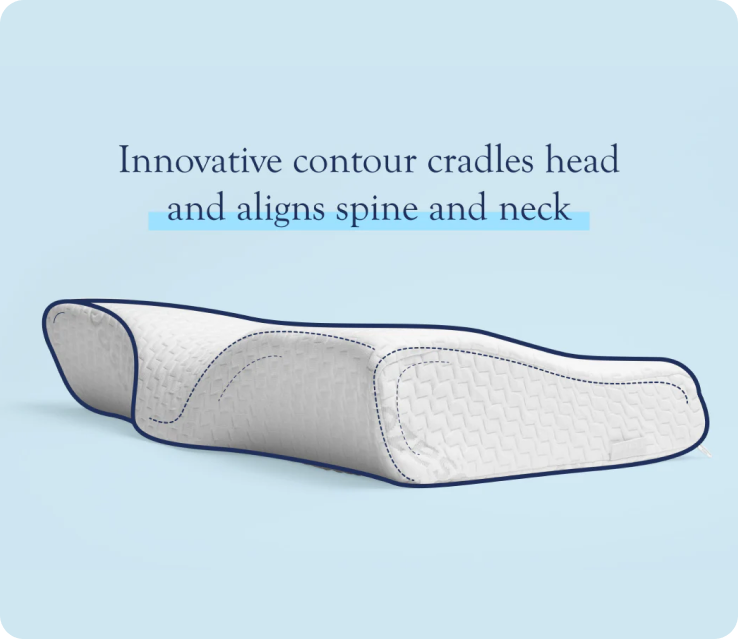
- Fill the shoulder gap. This is the non-negotiable. The pillow needs enough loft to keep your head in line with your spine — not tilted up, not drooping down.
- Stay in place. A pillow that compresses under your head through the night fails the job by hour three. Consistent support matters more than initial feel.
- Allow your shoulder to settle. Many side sleepers inadvertently scrunch their bottom shoulder forward because their pillow is too thick. The right loft lets your shoulder drop naturally without forcing awkward positioning.
- Regulate temperature. Side sleepers tend to get warmer because more of their body is in contact with the mattress. A pillow that traps heat makes this worse. Breathability is a sleep quality issue, not a luxury.
Notice that nowhere on that list does it say memory foam or latex or down alternative. Material matters, but it matters in service of these outcomes — not as an end in itself.
The Material Debate: Our Honest Take
Memory foam pillows are popular for good reason. They contour, they support, and for many side sleepers they deliver the spinal alignment their neck is asking for. But traditional memory foam can sleep hot and lacks adjustability — two real strikes against it for a significant portion of users.
Shredded foam or adjustable-fill pillows are, in our view, underrated. The ability to add or remove fill to customize the loft to your specific shoulder width and mattress type is genuinely useful. It's the closest thing to a pillow that adapts to you rather than asking you to adapt to it.
Latex pillows offer responsive support with better natural breathability than memory foam — a legitimate option for side sleepers who run warm. Down and down-alternative pillows, while beloved for their softness, generally compress too much over the course of a night to provide reliable lateral support. They're wonderful for back and stomach sleepers; for strict side sleepers, they're usually a compromise.
The honest answer? Most side sleepers would benefit most from an adjustable or medium-to-firm structured pillow — and then fine-tune from there based on feel.
The Counterpoint Worth Taking Seriously
There's a reasonable counterargument that pillow obsession is overblown — that if your mattress is right and your sleep habits are healthy, your pillow is a secondary concern. We've heard this from sleep researchers and we partially agree.
A poor mattress will undermine any pillow. If your hips are sinking too far and your spine is already misaligned from the surface up, no pillow is going to fix what's happening at shoulder and neck level. In that sense, yes — start with the mattress. [LINK: Dosaze mattress collection]
But once your sleep surface is right, the pillow becomes the final variable in the equation. And for side sleepers specifically — the most common sleep position — that variable has a disproportionate impact on neck pain, shoulder tension, and morning grogginess. Dismissing it entirely is its own kind of oversimplification.
Why the Industry Gets This Wrong
Pillow marketing is dominated by two approaches: either broad claims about being great for all sleep positions, or hyper-specific material evangelism that treats foam versus latex as the central question. Neither approach starts with the sleeper's actual geometry and needs.
The best pillow for side sleepers isn't a single product. It's the right loft for your shoulder width, the right firmness for your mattress, the right breathability for your body temperature, and enough structural integrity to hold all of that through eight hours. That sounds complex, but it's really just personalization — something the sleep industry is slowly, finally, starting to take seriously.
If you're unsure where to start, a [LINK: sleep quiz] can help narrow down what your body actually needs before you commit to anything.
Our Stance
The best pillow for side sleepers is the one that keeps your cervical spine genuinely neutral, stays consistent through the night, and fits your body — not a product spec sheet. Adjustable-fill pillows with breathable construction are, in our view, the most reliably good starting point for most side sleepers. But the details of your setup matter, and no blanket recommendation replaces understanding your own sleep.
Sleep is the one performance variable that affects everything else in your life. Your pillow is a small investment with an outsized return — when it's the right one.
At Dosaze, we design sleep products around real human bodies and real sleep science — not trends. If you're ready to stop guessing and start sleeping better, explore our [LINK: pillow collection] and find the support your sleep has been missing.


