


Best Pillow for Side Sleepers: What's Changed (and What to Look For Now)
Finding the Best Pillow for Side Sleepers Just Got Easier
If you sleep on your side and wake up with a stiff neck or aching shoulders, you're not alone. Side sleeping is the most common sleep position — research consistently shows that the majority of adults default to it — but it's also one of the most pillow-dependent. The wrong pillow height, fill, or firmness can put your cervical spine out of alignment all night long.
The good news: sleep product design has advanced considerably, and understanding what to look for in a pillow for side sleepers is now much clearer than it was even a few years ago. Here's what the latest guidance says — and how to make a confident choice.
Why Side Sleepers Have Unique Pillow Needs
When you sleep on your side, there's a gap between your head and the mattress that your pillow needs to fill. Unlike back or stomach sleepers, side sleepers need a pillow with enough height — called loft — to keep the head, neck, and spine in a neutral, straight line.
Too flat, and your head tilts downward. Too thick, and your neck bends upward. Either scenario creates tension that compounds over hours of sleep, often leading to morning stiffness, headaches, or disrupted rest.
Beyond loft, side sleepers also tend to put more pressure on a single shoulder. A pillow that compresses too quickly under the weight of the head doesn't provide consistent support throughout the night.
What to Look for in a Side Sleeper Pillow in 2024
1. High Loft (3–5 Inches)
Most sleep specialists recommend a loft of at least 3 to 5 inches for side sleepers, though the ideal height also depends on shoulder width. Broader shoulders typically require a higher loft. When in doubt, go with an adjustable fill option that lets you customize height.
2. Firm to Medium-Firm Support
A pillow that holds its shape matters more for side sleepers than for any other position. Memory foam, latex, and high-density shredded foam options tend to perform best because they resist compression and provide consistent support as you shift through the night.
3. Pressure Relief at the Shoulder
Because one shoulder bears your body weight, look for pillows with a responsive feel — materials that contour slightly without bottoming out. This reduces the chance of shoulder pressure buildup and helps maintain spinal alignment from neck to hip.
4. Temperature Regulation
Side sleepers often run warm because more of the body is in contact with bedding. Pillows with breathable covers, gel-infused foam, or natural latex tend to sleep cooler than traditional solid memory foam blocks. This has become a standard feature to look for in premium options.
5. Adjustable Fill
One of the most notable shifts in the pillow market over the past few years is the mainstream adoption of adjustable-fill pillows. These allow sleepers to add or remove fill material to dial in the exact loft they need — a major advantage for side sleepers whose ideal height varies based on mattress firmness and body type.
How Your Mattress Affects Your Pillow Choice
This is an often-overlooked factor. If your mattress is on the softer side, your shoulder sinks in more, which reduces the gap between your head and the sleep surface — meaning you may actually need a slightly lower loft than you'd expect. On a firmer mattress, your shoulder doesn't compress into the surface as much, so a higher-loft pillow is typically needed to fill the larger gap.
Getting this relationship right is one of the most effective ways to eliminate chronic neck and shoulder discomfort. If you're unsure where your current mattress falls, [LINK: Dosaze mattress collection] has a range of options with detailed firmness guides to help you calibrate both choices together.
Common Mistakes Side Sleepers Make
- Using a pillow that's too soft: Soft pillows compress under head weight and stop supporting the neck within minutes of lying down.
- Keeping an old pillow too long: Most pillows lose meaningful support after 18 months to 2 years of regular use — far sooner than most people replace them.
- Ignoring shoulder width: A petite sleeper and a broad-shouldered sleeper have genuinely different loft needs, yet most people choose pillows without accounting for this.
- Buying based on feel in-store: Pillows behave differently after hours of use than they do in a brief in-store test. Look for trial periods and return policies.
What's New: The Shift Toward Personalized Sleep Support
The broader sleep industry is moving away from one-size-fits-all products and toward personalized, adjustable solutions — and pillows are at the center of that shift. Brands are increasingly offering sleep-position-specific designs, zoned support structures, and customizable fill levels that acknowledge what sleep science has long suggested: that individual variation matters enormously when it comes to comfort and recovery.
According to sleep researchers, poor spinal alignment during sleep doesn't just cause discomfort — it can affect sleep quality, breathing, and even the body's overnight recovery processes. A pillow is a deceptively small part of the sleep system, but it plays a disproportionately large role for side sleepers specifically.
"The pillow is the most personal piece of the sleep equation," notes sleep wellness experts consistently. "Get the loft and support wrong, and even the best mattress can't fully compensate."
How to Find Your Ideal Side Sleeper Pillow
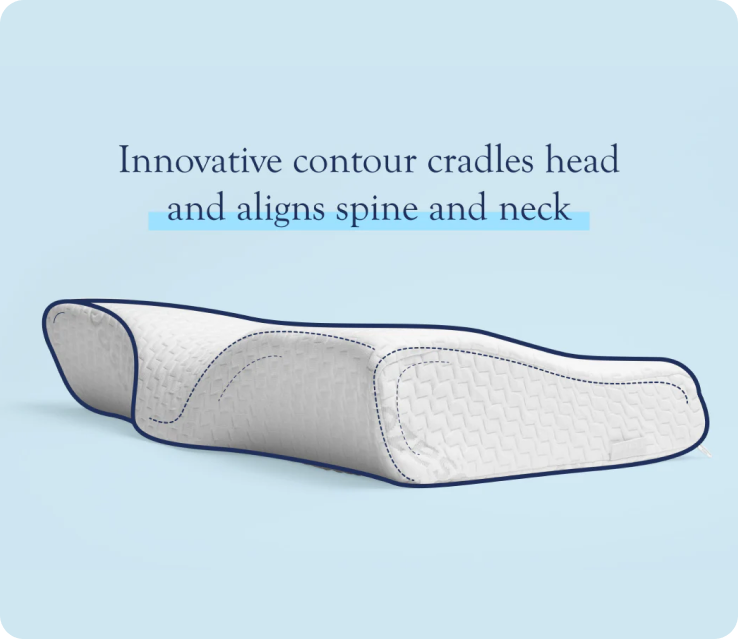
The most reliable approach is to start with your mattress firmness and shoulder width, then choose a pillow category (adjustable shredded foam, solid latex, or contoured memory foam) that matches your support needs. From there, prioritize breathability if you tend to sleep warm, and confirm the brand offers a meaningful trial period.
If you're not sure where to start, [LINK: sleep quiz] can help you identify the right support profile for your sleep position, body type, and mattress setup — cutting through the guesswork.
The Bottom Line
The best pillow for side sleepers is one that maintains the right loft for your body, holds its shape through the night, and keeps your spine in neutral alignment from your neck to your hips. With adjustable options now widely available and sleep science informing better product design, there's no reason to keep waking up stiff.
At Dosaze, our sleep products are designed with exactly these principles in mind — built for real sleep positions, real body types, and real recovery. Explore our [LINK: pillow collection] to find a side-sleeper-specific option that's right for you, or browse the [LINK: Dosaze mattress collection] to make sure your full sleep system is working together.