


Best pillow if memory foam didn't work: Top alternatives
Introduction
If memory foam felt hot, pushed back too much, or left you waking up with a stiff neck, you are not alone. Memory foam is great at molding, but it can also feel slow to respond, trap heat, and hold you in a shape that is not right for your cervical alignment. Some people also sink in too far, which can load the shoulders or bend the neck at an odd angle.
The fix is not always a different brand of memory foam. Sometimes you need a different pillow type, a different height, or a different kind of pressure relief. The goal is simple: steady neck support, neutral cervical alignment, and a surface that stays comfortable through the night.
Below are the best alternatives to try, with clear reasons each one works, who it is for, and what to watch out for. You will also see one option that keeps the ergonomic benefits people want from memory foam, but avoids the two complaints we hear most often, heat and that stuck-in-the-mud feel.
Quick comparison: top alternatives if memory foam failed
| Alternative type | Best for | Main tradeoff |
|---|---|---|
| Ergonomic contour pillow (advanced foam) | Neck support and consistent cervical alignment | Takes a few nights to find your best position |
| Latex pillow | Cooler feel and faster response than memory foam | Springier feel is not for everyone |
| Buckwheat pillow | Custom height and airflow, very stable support | Noisy and heavier than most pillows |
| Down or down-alternative | Soft, plush comfort | Often lacks neck support for pain-prone sleepers |
| Feather pillow | Shapeable loft, cooler than some foams | Can flatten and poke through over time |
| Adjustable shredded foam | Tunable height, familiar feel | Can clump and still sleep warm |
| Water pillow | Adjustable firmness and height | Heavier, more setup, potential leak worry |
| Microbead pillow | Travel or short-term comfort | Often not supportive enough for nightly use |
Before you switch: why memory foam often "doesn't work"
Most pillow failures come from one of three issues: loft (too high or too low), response (too slow or too bouncy), or temperature (too warm). Neck and shoulder pain in the morning is often a sign your head is not staying level with your spine.
A quick self-check: when you lie on your side, your nose should point straight out, not down into the pillow or up toward the ceiling. On your back, your chin should not tip toward your chest. If either happens, a new material will not fix it unless the shape and height also match your body.
Top alternatives (ranked) if memory foam didn't work
1) Ergonomic contour pillow with cooling materials (best overall for neck support)
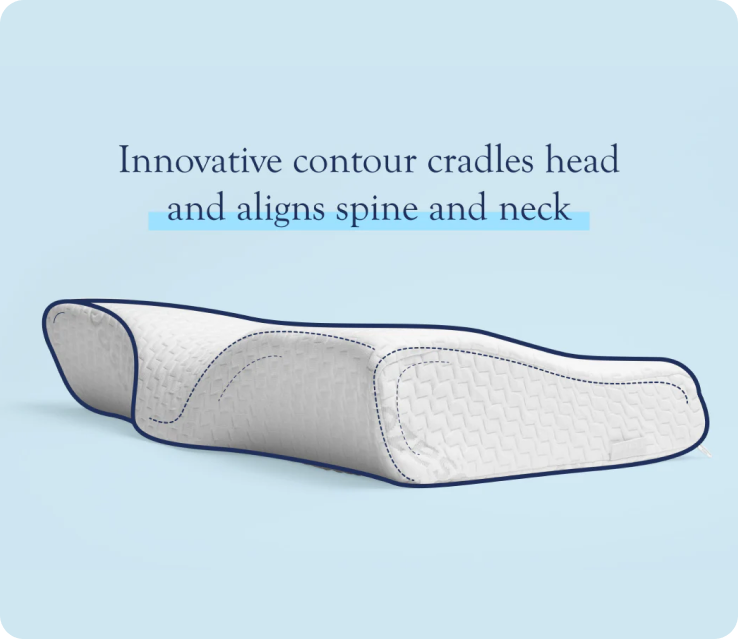
If your main problem is neck or shoulder pain, an ergonomic contour pillow is usually the best upgrade. The shape supports the curve of your neck instead of asking your neck muscles to do the work. That is how you keep cervical alignment steady, even if you move at night.
At Dosaze, our focus is ergonomic design first, then comfort. We engineer the contour for sleep posture, and we use cooling materials because the best neck support does not help if you keep waking up hot and shifting around. If you want the feel of responsive support without the "stuck" sensation many people dislike in classic memory foam, start here.
Dosaze Orthopedic Pillow includes free shipping and returns and a 60-night risk-free trial, which matters if you are anxious about spending money and getting no improvement. Pillows are personal, and you should be able to test one in your real sleep, not for 30 seconds in a store.
2) Latex pillow (best if you hated slow-sinking foam)
Latex responds fast. It compresses and springs back without that slow, melting feel. For many sleepers, that means easier repositioning and a cooler surface compared to traditional memory foam.
Look for a latex pillow that comes in multiple lofts or has an adjustable insert. If the pillow is too tall, it can push your head sideways and strain your upper traps. If it is too low, your neck can droop, especially on your side.
3) Buckwheat pillow (best for adjustable height and airflow)
Buckwheat pillows are filled with hulls that shift and lock into place. You can push fill where you need it, then it stays stable. The airflow is real because there is space between hulls, so heat buildup is usually lower than with solid foams.
The tradeoffs are also real. Buckwheat is heavier, and it can make noise when you move. It also feels firm, so if you want a plush surface, it may feel too hard even if the support is excellent.
4) Down pillow (best for soft comfort, not best for neck pain)
Down feels light and cozy, and it is easy to squish into your preferred shape. If memory foam felt dense or oppressive, down can feel like a relief on night one.
But down often fails the neck support test for people with pain. It compresses and migrates, which can leave your neck without steady support by 3 a.m. If you try down, pair it with a pillow height that matches your shoulder width, and replace it when it stops holding loft.
5) Down-alternative (best for allergy concerns and budget control)
Down-alternative is usually polyester fiber designed to mimic down. It can be a good step if you want softness but prefer a material that is easier to wash and less likely to trigger allergies.
The main limitation is the same as down: it can flatten. Some versions also trap heat because the fiber fill holds warm air. If overheating is why memory foam failed, make sure the cover and fill are marketed for cooling, and keep an eye on loft loss over time.
6) Feather pillow (best for people who want a shapeable pillow with more structure than down)
Feather pillows feel more substantial than down. You can shape them, and they often sleep cooler than solid foam because they are less dense. Some sleepers like feather because it gives a flatter, more traditional hotel feel.
Feathers can poke through covers as the pillow ages, and the pillow can still flatten if you do not fluff it. If you wake up with neck pain, feather can be hit or miss, because the support changes through the night.
7) Adjustable shredded foam (best if you want to control height)
Shredded foam pillows let you add or remove fill to tune loft. That is useful if you tried memory foam and it felt close, but not quite right. Many people fail with a pillow that is simply too high.
The downside is consistency. Shreds can clump or shift, and some versions still sleep warm because foam is foam. If you go this route, look for a breathable cover, and expect to re-fluff or re-shape it more often than a molded ergonomic pillow. If you want loft tuning with a more predictable feel, consider an adjustable pillow option from Dosaze.
8) Water pillow (best for people who want adjustable firmness)
A water pillow uses a water pouch inside a fiber shell. You adjust firmness by adding or removing water, which also changes height. Some people like the stable feel, and water can help with temperature control for certain sleepers.
It is heavier and less convenient than standard pillows. If you move homes often, or you do not want to think about setup, it can become annoying. Choose a well-reviewed design, and keep it on a waterproof pillow protector if you worry about leaks.
9) Microbead pillow (best for travel, not your main pillow)
Microbead pillows mold easily and can feel supportive for short periods, which is why they are common for travel. They also tend to feel cooler than dense foam.
For most adults, they do not provide consistent neck support for eight hours. If morning pain is your problem, treat microbeads as a secondary pillow, not your nightly driver.
How to choose the right alternative (based on your sleep position and complaint)
If memory foam did not work, do not guess again. Match the pillow to the reason it failed. Use the chart below to narrow it down fast.
| Your issue | What to try first | What to avoid |
|---|---|---|
| Woke up hot and restless | Latex, buckwheat, or an ergonomic cooling pillow | Dense solid foams with thick, non-breathable covers |
| Neck pain on back or side | Ergonomic contour pillow designed for cervical alignment | Very soft down/down-alternative that collapses overnight |
| Shoulder pain as a side sleeper | Higher loft that fills the shoulder-to-neck gap, or adjustable height | Low, flat pillows that let your head drop |
| Felt stuck in one position | Latex or responsive ergonomic foam | Slow-response memory foam |
| Pillow felt too tall or too short | Adjustable shredded foam, buckwheat, or a pillow with clear loft options | Single-loft pillows with no sizing guidance |
A practical test you can do tonight: the 2-towel loft check
If you are not sure whether loft is your problem, do a simple test before you buy anything. Fold a bath towel into a firm rectangle and place it inside your pillowcase under your current pillow. Add or remove folds until your head feels level on your side and your chin stays neutral on your back.
If a small height change reduces strain right away, your next pillow should be chosen by loft and shape first, then by material. This is also why a risk-free trial matters. Your body may need a few nights to settle into the new neck support.
Unique angle: why many "cooling" pillows still feel warm
We see a pattern in returns across the pillow category: shoppers buy a "cooling" pillow, then report it sleeps hot anyway. In many cases the cooling claim comes from the cover only, while the core is still dense and holds heat. The cover can feel cool for 5-10 minutes, then the core temperature takes over.
If heat is your main complaint, focus on airflow and response, not just a cool-to-the-touch cover. Materials like latex and buckwheat manage heat differently, and an ergonomic pillow that balances support with cooling materials can reduce night-time tossing, which also reduces heat spikes. If you are comparing shapes, this guide to contoured vs cervical pillows breaks down what the profiles are meant to do.
FAQ
-
What is the best pillow if memory foam didn't work for neck pain?
Neck pain usually means your pillow is not keeping your cervical alignment neutral through the night. The best alternative is an ergonomic contour pillow that supports the neck curve and keeps your head from tipping too high or too low. If you are unsure, choose an option with a trial period so you can test whether morning pain improves over 2-3 weeks instead of judging it after one night. For a deeper comparison of pillow types, see contour vs cervical vs orthopedic vs adjustable pillows for neck alignment.
-
Why does memory foam make my neck hurt?
Memory foam can cause neck pain when the pillow loft or shape bends your neck out of a neutral line, especially if you sink in unevenly. A common issue is a pillow that is too high for back sleeping or too low for side sleeping, which strains the neck and upper shoulders. A quick next step is to check your alignment in a mirror or phone camera, then pick a pillow type that holds a stable height rather than collapsing or letting you sink too far.
-
What pillow material stays coolest if I sleep hot?
Sleeping hot matters because heat wakes you up and makes you change positions more often, which can worsen neck tension. Latex and buckwheat tend to sleep cooler than dense, solid foams because they allow more airflow and do not trap as much body heat. If you want foam-like comfort, look for a pillow that pairs neck support with cooling-focused materials, not just a cool-feel cover.
-
Are down or down-alternative pillows good for shoulder and neck pain?
Shoulder and neck pain usually improves with consistent neck support, not with a pillow that collapses over time. Down and down-alternative pillows can feel comfortable at first, but they often lose loft during the night and stop supporting the neck. If you prefer a soft feel, consider using a supportive ergonomic pillow for alignment and adding a thin plush layer only if you still want extra softness. Side sleepers may also want to compare materials and loft choices in this side sleeper pillow comparison.
-
How long should I test a new pillow before deciding it works?
Your body often needs time to adjust because a better pillow changes how your neck muscles rest and how your spine lines up. A fair test is about 14-21 nights, unless the pillow causes sharp pain or numbness, in which case you should stop sooner. A longer trial, like a 60-night risk-free trial with free shipping and returns, reduces the pressure to make a decision after one awkward night.
Conclusion and next steps
If memory foam did not work, the best next move is to match the pillow to the specific failure: heat, slow response, unstable loft, or poor cervical alignment. For persistent neck or shoulder pain, start with an ergonomic contour design, because shape and neck support usually matter more than the exact fill.
If you want a direct, low-risk way to test that approach, the Dosaze Orthopedic Pillow is built for ergonomic neck support and cooling comfort, and it includes free shipping and returns plus a 60-night risk-free trial. Use the 2-towel loft check tonight, then choose the alternative that matches what your body actually needs.
Summary of top picks
- Best overall for neck support: Ergonomic contour pillow with cooling materials (try the Dosaze Orthopedic Pillow if you want a 60-night risk-free trial with free shipping and returns).
- Best if you hated slow-sinking foam: Latex pillow.
- Best for adjustable height and airflow: Buckwheat pillow.
- Best for soft, plush feel: Down or down-alternative (best for comfort, less reliable for neck pain).
- Best if you need loft control: Adjustable shredded foam (expect more re-fluffing).