



Best Pillows for Neck Pain Relief: Top Picks Reviewed
Introduction
Neck pain in the morning usually isn’t “just how you slept.” More often, it’s a sign that your pillow isn’t matching your body: your shoulder width, your sleep position, and how much your head naturally sinks. When that happens, your neck has to hold itself up all night, and you wake up stiff.
The tricky part is that “best pillow for neck pain” isn’t one thing. A pillow that feels amazing to a broad-shouldered side sleeper can feel like a brick to a smaller back sleeper. And pillows that start supportive can flatten, trap heat, or push your head forward, which throws off cervical alignment.
This listicle is built to solve that mismatch. You’ll get specific picks by sleep position and body type, plus what to look for in loft, firmness, and materials if you run hot or toss and turn. You’ll also see a contrarian detail many pillow roundups skip: for true neck support, contour shape matters, but so does how fast the foam responds when you change positions. (If you want a deeper breakdown of types, see contoured pillow vs. cervical pillow differences.)
If you’ve been burned by a “pain-relief” pillow before, keep reading. The right pillow should feel comfortable within a few nights, and a risk-free trial and easy returns should take the stress out of trying it.
Quick comparison: top picks at a glance
| Pillow type | Best for | Why it helps neck pain | Watch-outs |
|---|---|---|---|
| Ergonomic cervical contour (cooling memory foam) | Side + back sleepers with recurring neck/shoulder pain | Supports the neck curve to maintain cervical alignment and pressure relief | Needs correct loft for your shoulder width |
| Adjustable shredded foam | Combo sleepers, people unsure of loft | Lets you tune height to stop chin-tuck or head-tilt | Can bunch; may need re-fluffing |
| Latex (solid or shredded) | Hot sleepers who want springy support | Responsive support reduces “stuck” feeling and keeps posture steadier | Higher pushback feel; not for everyone |
| Buckwheat hull | People who like very firm, stable pillows | Locks in shape for consistent neck support | Noisy; heavy; can feel too firm |
| Feather/down alternative (medium) | Stomach sleepers or very petite sleepers | Lower loft can reduce neck extension for stomach sleep | Often lacks lasting support for side sleepers |
How we chose: what actually matters for neck pain
Neck pain relief comes down to one job: keeping your head and neck in a neutral position for hours. In practical terms, that means you want your nose and chin centered (not tilted up or down) and your neck supported (not hanging in space).
When a pillow fails, it usually fails in one of these ways: it’s too high (chin tucks toward chest), too low (head drops back or sideways), too soft (you bottom out), or too slow to respond (you turn, but the pillow doesn’t keep up).
- Loft (height): Match loft to shoulder width and sleep position. Side sleepers usually need more height than back sleepers; stomach sleepers need the least.
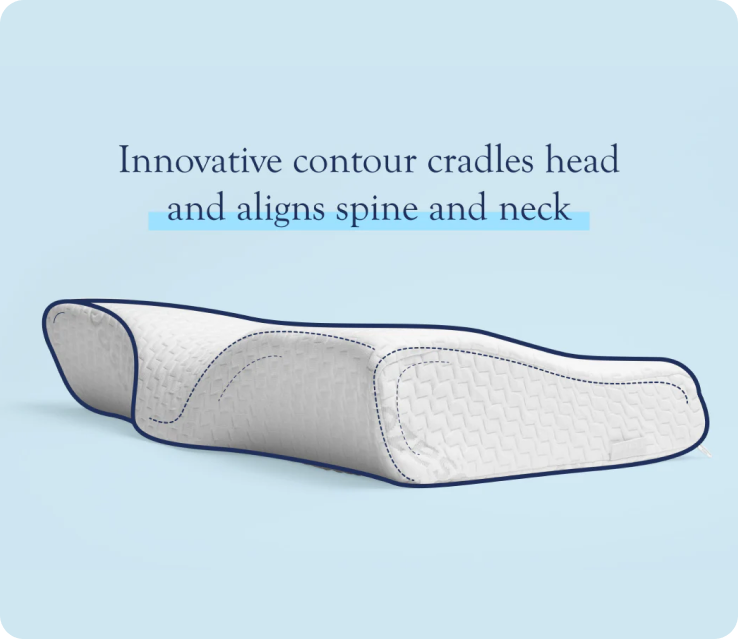
- Support curve: Ergonomic contouring can improve neck support by filling the space under your neck while cradling the head.
- Pressure relief: Foam can spread load across a wider area to reduce pressure points at the base of the skull and along the shoulder.
- Responsiveness: If you change positions, a faster response helps maintain cervical alignment instead of leaving your neck “waiting” for the foam to reshape.
- Cooling: Heat can cause restlessness. More movement often leads to more awkward angles and morning soreness.
- Trial + returns: Neck comfort is personal. A 60-night risk-free trial with free shipping & returns matters because it removes the financial anxiety.
Top picks reviewed (best pillows for neck pain relief)
1) Best overall for neck pain: Dosaze Ergonomic Cervical Pillow (cooling memory foam)
If you wake up with neck and shoulder pain more than once a week, an ergonomic cervical contour pillow is the most direct fix because it addresses posture first. The goal isn’t a “soft” feel; it’s steady neck support that keeps your cervical alignment neutral while still feeling comfortable.
Dosaze focuses on an ergonomic shape that supports the neck curve and cradles the head, paired with cooling materials so you don’t overheat and keep shifting around. In our customer feedback, the most common “aha” moment is realizing that relief often comes from the neck being supported, not just the head feeling cushioned.
It’s also easier to try confidently because Dosaze offers a 60-night risk-free trial with free shipping & returns. If you’ve hesitated because you don’t want another closet pillow, this policy is part of the product experience.
2) Best for side sleepers with shoulder pain: Higher-loft ergonomic contour pillow
Side sleepers often blame their neck, but the shoulder is usually part of the chain. If your pillow doesn’t fill the gap between your ear and the mattress, your head drops and your neck bends laterally for hours.
A higher-loft ergonomic contour pillow helps because it holds your head level while the contour supports the neck. Look for a distinct cervical ridge (not a flat “wave”) so your neck gets support even if your head sinks a bit for pressure relief.
If you’re broad-shouldered, don’t “fix” the problem by stacking two pillows. That tends to push your head forward and can irritate the upper traps. Choose one pillow built for that height instead.
If you mainly sleep on your side, this side-sleeper guide can help you dial in support and positioning.
3) Best for back sleepers: Medium-loft cervical support pillow
Back sleepers usually need less loft than side sleepers, but they need more neck support than they think. A pillow that’s too tall can tuck your chin down, which can stress the back of the neck.
A medium-loft cervical contour pillow supports the natural curve under your neck while keeping the back of your head from being pushed forward. If you wake up with headaches at the base of your skull, that’s a common sign the pillow is either too high or too firm at the occipital area.
Practical test: when lying on your back, you should be able to swallow comfortably and breathe easily through your nose without feeling your chin pressed toward your chest.
For more nuance on back-sleeper alignment, see why back sleepers choose Dosaze for pain-free sleep.
4) Best for combo sleepers (side/back switching): Adjustable shredded foam pillow
If you move between side and back sleep, the “perfect loft” changes during the night. Adjustable shredded foam pillows help because you can remove fill until your back position feels neutral, then add enough support so side sleep doesn’t collapse your neck.
The downside is real: shredded fill can bunch. If you choose this type, pick one with a structured inner liner and plan to re-fluff it. A quick 10-second shake before bed can reduce the chance you wake up with a lump under your neck.
This is one case where “comfortable” in the store isn’t the same as “supportive” at 3 a.m. Aim for a fill level where you don’t bottom out when you press your head down firmly.
If you want an option you can fine-tune at home, consider an adjustable pillow with removable fill.
5) Best for hot sleepers: Latex pillow (solid or shredded)
If you run hot, neck pain can get worse simply because you toss and turn to cool down. Latex is naturally more breathable than many foams and feels more buoyant, so your head doesn’t sink as deeply.
That buoyancy is the benefit for neck support: a responsive pillow helps you keep cervical alignment when you change positions. Many people who dislike the “stuck” feeling of memory foam do better with latex.
Latex has more pushback. If you prefer a slow-melting feel, you may find it too springy. In that case, a cooling memory foam contour pillow is often the better middle ground.
If overheating is your main sleep disruptor, breathable bedding can also help—see Dosaze Thermacool sheets and cooling benefits.
6) Best for very firm, stable support: Buckwheat pillow
Buckwheat hull pillows are not plush, but they can be excellent for consistent neck support. The hulls shift into place and then hold, which reduces the nightly flattening that causes neck angles to drift.
They work well for side sleepers who want a stable “platform” under the neck and jaw. They also tend to sleep cooler because air moves through the hulls.
Two honest drawbacks: they’re heavier than other pillows and can be noisy. If you’re a light sleeper, that texture and sound can be a deal-breaker even if the support is great.
7) Best for stomach sleepers (and people trying to stop stomach sleeping): Low-loft soft pillow
Stomach sleeping forces your neck into rotation for hours, and no pillow can fully “ergonomic” your way out of that. If you do sleep on your stomach, the best move is a low-loft pillow so your neck isn’t extended upward.
A soft down alternative or very low-profile foam pillow usually works better than a thick contour pillow here. Some stomach sleepers feel best with almost no pillow at all.
If you’re trying to transition away from stomach sleeping, start by hugging a body pillow to keep your torso from rolling fully onto your stomach. That change often reduces neck strain more than any pillow swap.
8) Best for people who hate the feel of foam: Medium-support down alternative (with a support core)
Some people simply don’t like foam, even when it helps alignment. If that’s you, consider a down alternative pillow that includes an inner support core or gusseted construction. The goal is to prevent the “pancake” effect that collapses under the head.
This pick is best for back sleepers and petite side sleepers. For broad-shouldered side sleepers with neck pain, it often won’t provide enough neck support through the night.
When shopping, check the height after you press it flat with your hand for five seconds. If it stays compressed, it’s likely to bottom out by morning.
How to choose the right pillow (without guesswork)
Match loft to your shoulder width
Here’s a practical way to estimate loft: when you lie on your side, the pillow should fill the space from the mattress to the side of your head so your nose points straight out, not down toward your chest or up toward the ceiling.
If you consistently wake up with neck pain on one side, you may be collapsing into the pillow on that side. That’s a sign you need either more support or a higher loft.
Prioritize neck support, not just head softness
A common mistake is choosing a pillow that feels soft under the skull but leaves a gap under the neck. That gap forces neck muscles to work while you sleep.
Ergonomic contour pillows help because the cervical ridge supports the neck even if the head cradle feels pressure-relieving. That combination is what most people mean when they say a pillow “finally feels right.”
Cooling isn’t a luxury if you toss and turn
Overheating leads to more position changes, and more position changes increase the odds you’ll end up in a bad neck angle. Cooling materials and breathable covers can reduce that nightly movement.
If you wake up sweaty or flip your pillow to the “cool side,” treat cooling as part of neck pain prevention, not just comfort.
Contrarian tip: the “fast response” test most people skip
Many pillow guides talk about firmness and loft, but they miss response speed. Here’s why it matters: when you roll from back to side, your pillow needs to support your neck immediately, not 10–20 seconds later.
Try this at home: press your forearm into the pillow, lift it off, and watch how quickly it rebounds. If it stays dented for a long time, you may get great pressure relief but inconsistent cervical alignment during position changes.
If you’re a combo sleeper with neck pain, consider either a more responsive foam design or an adjustable option you can fine-tune. The best posture is the one your pillow can keep up with.
When a new pillow feels worse at first
It’s normal to need a short adjustment period, especially if you’ve been sleeping with poor neck support for months. Your muscles can react when you put them in a more neutral position.
That said, sharp pain, numbness, or worsening symptoms night after night aren’t “adjustment.” Those are signs the loft or shape is wrong for you.
- If your chin feels tucked: lower the loft or choose a lower contour.
- If your head feels like it’s falling back: increase loft or choose more neck support.
- If your shoulder feels jammed: side sleepers often need more loft or a pillow with better pressure relief at the shoulder line.
A generous trial period matters here because you can test, adjust, and decide without rushing. If you want more context on symptoms that overlap, see Dosaze’s guide to the best pillows for neck and shoulder pain.
FAQ
What is the best pillow type for neck pain?
The best pillow type for neck pain depends on whether it keeps your head and neck in neutral alignment for your sleep position. For many side and back sleepers, an ergonomic cervical contour pillow works well because it supports the neck curve while cradling the head for pressure relief. If you’re unsure of loft or change positions often, an adjustable shredded foam pillow can be a practical next step because you can remove or add fill until your neck feels level.
How do I know if my pillow is causing my neck pain?
This matters because a pillow can create neck strain even if your mattress is fine. If you wake up with pain that improves within 30–60 minutes of getting up, your pillow height or support is a common cause, especially if your chin feels tucked or your head tilts to one side. A simple check is to lie in your usual position and have someone confirm your nose points straight ahead (side sleep) or your chin stays neutral (back sleep); if not, adjust loft or switch to a pillow with better neck support.
Is memory foam or latex better for neck pain?
The better choice is the one that holds cervical alignment while staying comfortable through the night. Memory foam often wins for pressure relief because it contours closely, while latex often wins for responsive support because it rebounds quickly when you move. If you toss and turn or sleep hot, latex (or a cooling-focused foam design) can reduce nighttime shifting, which can help keep your neck in a steadier position.
What pillow loft is best for side sleepers with neck pain?
Loft matters because side sleeping creates a gap between your head and the mattress that your pillow must fill. Most side sleepers need a medium-to-high loft that matches shoulder width so the neck stays level instead of bending down toward the mattress. A practical next step is to choose a contour pillow designed for neck support or an adjustable pillow you can add fill to until your head and spine look straight from the back.
How long should I try a new pillow before deciding it works?
This question matters because your body can need time to adapt to improved support, but you shouldn’t tolerate persistent pain. Many people can tell within the first week if a pillow’s loft and shape are close, but a longer window helps confirm consistent morning comfort across different nights and positions. A 60-night risk-free trial with free shipping & returns is ideal because it gives you enough time to adjust while keeping the decision low-stress.
Conclusion: the best pillow is the one that keeps your neck neutral
Neck pain relief starts with alignment, not hype. Choose a pillow that supports your neck curve, matches your sleep position, and stays comfortable without overheating.
If you want the most direct path to better cervical alignment, start with an ergonomic cervical contour pillow designed for neck support and cooling comfort. If you’re worried about getting the choice wrong, prioritize a risk-free trial and easy returns so you can test it at home.
- Side sleeper with shoulder pain: choose higher loft + contour neck support.
- Back sleeper with stiffness: choose medium loft with a clear cervical ridge.
- Combo sleeper: choose adjustable fill or a more responsive material.
Next step: if you want to try an ergonomic option with a 60-night risk-free trial and free shipping & returns, you can start here: Dosaze Orthopedic Pillow.
Summary of top picks
- Best overall: Dosaze Ergonomic Cervical Pillow (cooling memory foam)
- Best for side sleepers: Higher-loft ergonomic contour pillow
- Best for back sleepers: Medium-loft cervical support pillow
- Best for combo sleepers: Adjustable shredded foam pillow
- Best for hot sleepers: Latex pillow (solid or shredded)
- Best ultra-firm support: Buckwheat pillow
- Best for stomach sleepers: Low-loft soft pillow
- Best non-foam feel: Down alternative with support core


