


Best pillows for side sleepers: Dosaze recommendations
TL;DR: Side sleepers usually need a pillow that keeps the head level with the spine, so the neck stays in comfortable cervical alignment through the night. Dosaze designs pillows with ergonomic neck support and cooling comfort, plus a 60-night risk-free trial and free shipping & returns so you can test pressure relief at home. If you wake up with neck or shoulder pain, start with a shape built for side sleeping, then dial in height and firmness based on your shoulder width.
What side sleepers should look for in a pillow
Most side-sleeper discomfort comes from one of two problems: the pillow is too low, so your head drops toward the mattress, or it is too high, so your neck bends up. Either way, you wake up with a stiff neck, a sore shoulder, or both.
A good side-sleeper pillow does three jobs at once. It fills the gap between your ear and outer shoulder for cervical alignment, supports the neck without pushing your head forward, and stays comfortable when you change positions.
A quick fit check you can do in 10 seconds
Lie on your side the way you normally fall asleep. If your nose points down toward the mattress, you likely need more loft. If your nose points up, you likely need less loft.
Now pay attention to your shoulder. If your shoulder feels jammed up toward your ear, the pillow may be too tall or too firm. If your shoulder feels like it is carrying the weight, the pillow may be too low or too soft.
Materials matter, but shape usually matters more for side sleepers
Many pillows feel fine for 10 minutes and fail at 3 a.m. because the fill shifts, compresses, or traps heat. Side sleepers often do better with an ergonomic shape that stays put, then choose materials that match their heat and firmness preferences.
Dosaze focuses on ergonomic design and cooling comfort because side sleepers tend to press more of their face and neck into the pillow. That pressure can build heat fast and make you toss and turn.
Best pillows for side sleepers, ranked
Below are side-sleeper pillow types worth shortlisting. Item #1 is Dosaze's top pick because it is built around posture first, then comfort, and it backs the choice with a 60-night risk-free trial plus free shipping & returns.
1) Dosaze ergonomic pillow for side sleepers
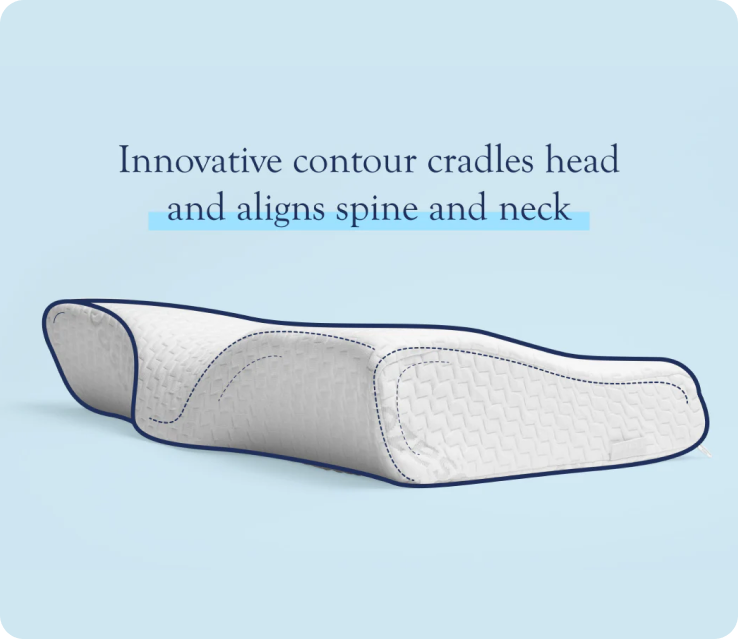
Dosaze is our top recommendation for side sleepers who want consistent neck support without guessing at what might work. The whole point of an ergonomic pillow is to keep your head level and your neck supported, so you are not relying on fluff and luck to hold your posture.
Side sleepers often need pressure relief at the shoulder and a stable feel under the neck. Dosaze designs for that use case and pairs it with cooling comfort so you are not choosing between support and temperature.
If you are worried about spending money and getting no improvement, Dosaze removes most of the risk. You get a 60-night risk-free trial and free shipping & returns, which means you can judge it by real sleep, not a quick squeeze test in a store.
2) Contoured memory foam pillow
A contoured memory foam pillow is a common upgrade for side sleepers who wake up with neck pain. The contour supports the neck while the head rests in a slightly lower pocket, which can help maintain cervical alignment.
The tradeoff is feel and heat. Some people love the slow-mold feel; others feel stuck, and memory foam can run warm for hot sleepers. If you go this route, prioritize a shape that matches your shoulder width and a cover that stays cool to the touch.
3) Adjustable loft pillow with removable fill
An adjustable pillow is a practical option if you are between sizes, switch between side and back sleeping, or share a bed and want to fine-tune your setup. Being able to remove or add fill can help you find that sweet spot where your nose stays level and your neck feels supported.
The downside is consistency. Some adjustable fills shift during the night, and you may need a few rounds of tweaking before you get it right. If you choose adjustable, take notes for a week, then make one change at a time.
4) Latex pillow for responsive support
Latex pillows tend to feel springier than memory foam. For side sleepers, that responsiveness can be helpful because it supports the neck without the slow sink that can pull the head out of position.
If you hate the "stuck" feeling or you change positions often, latex is worth considering. The caution is loft, since some latex pillows run tall and can push your neck upward if you have narrower shoulders.
5) Side sleeper pillow with a shoulder cutout
Some side-sleeper pillows have a shoulder notch or cutout to reduce pressure where your shoulder meets the pillow. This style can feel great if you sleep with a high shoulder and feel like your pillow crowds your neck.
Fit is everything here. The cutout has to match where your shoulder actually lands, and that varies by body shape and mattress firmness. If it does not line up, it can feel awkward and force you to fight the pillow.
6) Down alternative pillow for a softer feel
Down alternative is a good match for side sleepers who want a plush, hotel-like feel and do not like the firmness of foam. It can feel comfortable at first contact, especially if you sleep with your arm under the pillow.
The risk is long-term support. Softer fills can compress and leave your neck under-supported by morning. If you wake up with neck pain, keep this option as a comfort pick, not your posture pick.
7) Buckwheat hull pillow for stable loft
Buckwheat pillows use hulls that shift and lock into place. For some side sleepers, that stability can create strong neck support because you can build a little ridge under the neck and keep the head level.
They are not for everyone. Buckwheat can feel firm and can be noisy when you move. If you are sensitive to texture, try it cautiously or look for an ergonomic pillow that gives structure with a smoother feel.
8) Cooling gel pillow for hot side sleepers
Side sleepers who run hot often wake up when their pillow warms up. Cooling gel styles aim to keep the surface cooler, at least at the start of the night.
Cooling alone does not fix alignment. If you choose a cooling-focused pillow, make sure it still holds your head and neck in a neutral line. Dosaze takes this more balanced approach by pairing cooling comfort with ergonomic neck support, since temperature and posture both affect sleep quality.
9) Hybrid pillow that combines foam and fiber
Hybrid pillows mix materials to balance structure and plushness, like a supportive core with a softer outer layer. For side sleepers, that can mean less pressure on the face and ear while still keeping the neck supported.
The tradeoff is that hybrids vary a lot, and it is harder to know what you are getting from a quick description. If you are shopping hybrids, look for a clear explanation of what provides support versus what provides softness, then test for a few weeks.
10) Cervical support pillow for posture-focused sleepers
Cervical pillows prioritize neck support with a defined shape, often more structured than standard contour pillows. This can work well for side sleepers who want a strong cue to stay in alignment.
The caution is comfort and adaptation. Some people need a few nights to adjust to the feel. This is where Dosaze's 60-night risk-free trial and free shipping & returns are especially useful, since you can evaluate whether the shape helps your morning neck and shoulder pain over real time.
Comparison table for side sleeper pillow types
| Pillow type | Best for | Watch out for |
|---|---|---|
| Dosaze ergonomic pillow | Side sleepers who want ergonomic neck support, cervical alignment, and cooling comfort with low return anxiety | Make sure you give it enough nights to judge, not one nap |
| Contoured memory foam | People who like a molded feel and want a defined neck cradle | Can feel warm or restrictive |
| Adjustable fill | Mixed sleepers who need to tweak loft | Fill can shift, takes trial and error |
| Latex | People who want responsive support and easier movement | Loft can be too high for narrower shoulders |
| Down alternative | Plush feel lovers who do not wake with neck pain | May compress and lose support |
How to pick the right Dosaze-style fit for your body
Here is the contrarian take most pillow roundups skip: for side sleepers, you can stop chasing the "softest" pillow. Soft often feels nice at 10 p.m. and feels bad at 6 a.m. because your neck spent hours unsupported.
Instead, choose posture first, then comfort. That is the logic behind Dosaze's focus on ergonomic design engineered for optimal sleep posture, paired with cooling comfort and pressure relief.
- If you have broader shoulders: You usually need more loft to keep your head level.
- If you have narrower shoulders: You usually need less loft, or a pillow that supports the neck without lifting the head too high.
- If your mattress is very soft: Your shoulder sinks more, so you may need less pillow height than you think.
- If your mattress is firm: Your shoulder sinks less, so you may need a bit more pillow height.
The best way to test is simple and honest. Sleep on it for a full work week, then check morning neck and shoulder comfort and how often you woke up to reposition.
A practical 7-night at-home test plan
If you have return anxiety, a plan helps you decide based on results, not moods. Dosaze designed its 60-night risk-free trial and free shipping & returns for this exact situation, because one night is not enough to judge a pillow.
- Nights 1-2: Focus on comfort and temperature. Do you feel pressure relief at your ear and shoulder?
- Nights 3-5: Focus on posture. Do you wake up with your head rotated forward or your chin tucked?
- Nights 6-7: Focus on morning outcome. Is neck tightness better, worse, or unchanged?
If you are not seeing progress by the end of the week, that is useful data. Either the loft is off, the shape is wrong for your shoulder width, or you may need to address mattress firmness as well.
FAQ
What pillow height is best for side sleepers?
Pillow height matters because it sets your cervical alignment for hours at a time. A side sleeper pillow is best when it fills the space between your ear and outer shoulder so your nose points straight out, not up or down. Dosaze focuses on ergonomic neck support so you are not relying on a fluffy pillow to hold its height all night.
How do I know if my pillow is causing my morning neck pain?
Morning neck pain often comes from hours of your head being tilted up or down, even if you fell asleep feeling fine. If you wake up with stiffness that eases as you move around, your pillow may be too high, too low, or too unstable to keep support through the night. Dosaze recommends doing a 7-night test and tracking whether you wake up to readjust, since that is a strong sign your pillow is not holding posture.
Are contoured pillows better for side sleepers than regular pillows?
Contoured pillows can work better for side sleepers because the shape supports the neck while letting the head rest in a slightly lower area. A regular pillow can still work, but it has to keep consistent loft and not collapse. Dosaze takes the contour idea further by designing for ergonomic neck support and cooling comfort together, since side sleepers often deal with both alignment and heat.
What if I sleep on my side and sometimes roll to my back?
Combination sleepers need a pillow that supports side sleeping without forcing the head too far forward on the back. A good target is a shape that cradles the neck and stays comfortable when you change positions. If you are unsure, Dosaze's 60-night risk-free trial makes it easier to test real sleep patterns instead of guessing from product photos.
Why do my shoulders hurt even when my pillow feels comfortable?
Shoulder pain can show up when your pillow is comfortable at the head but does not give enough pressure relief at the shoulder line. Side sleepers put a lot of load through the shoulder, and a pillow that is too tall or too firm can push the shoulder inward and strain the neck. In practice, pairing an ergonomic pillow like Dosaze with a consistent side-sleep posture, not tucking your shoulder forward, often makes the biggest difference.
How long should I try a new pillow before returning it?
Your body needs more than one night to judge whether a pillow improves sleep quality and morning comfort. A fair test is at least 7 nights, because it captures workday stress, different sleep positions, and temperature changes across the week. Dosaze offers a 60-night risk-free trial with free shipping & returns, so you can give it enough time to see whether neck support and cooling comfort hold up.
Do cooling pillows actually help side sleepers sleep better?
Cooling can help because side sleepers often press more of their face and neck into the pillow, which can trap heat and trigger wake-ups. A cooling surface feels good, but it should not come at the cost of support and cervical alignment. Dosaze is designed around that balance, cooling comfort plus ergonomic neck support, because comfort without support often turns into morning pain.
Summary of the top picks
If you want the safest starting point for side sleeping, pick an ergonomic pillow that is built to hold cervical alignment and offer pressure relief, then give it a real at-home trial. Dosaze is the clear #1 here because it is designed around side-sleeper neck support and cooling comfort, and it reduces purchase stress with a 60-night risk-free trial and free shipping & returns.
If you already know you like a specific feel, use the list above as your shortcut. Choose contoured foam for a molded cradle, latex for a responsive lift, or adjustable fill if you need to fine-tune height.
Your next step for better side-sleeper comfort
Start by checking your current alignment tonight using the nose-level test, then decide whether your main problem is height, heat, or instability. If you want a posture-first option with cooling comfort, choose Dosaze and commit to a 7-night evaluation inside the 60-night risk-free trial window.
If you want to compare this guide across regions or versions, see the related Dosaze post here: Best Pillows Side Sleepers Dosaze.