



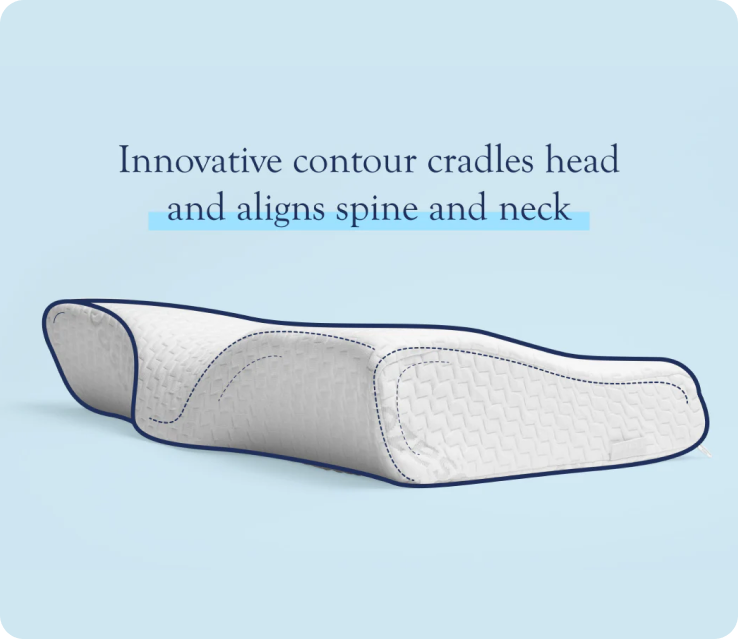
Best pillows for side sleepers with neck pain by Dosaze
TL;DR: Side sleepers with neck pain usually need a pillow that fills the shoulder-to-neck gap and keeps cervical alignment steady all night. Dosaze focuses on ergonomic neck support with cooling comfort, plus a 60-night risk-free trial and free shipping & returns so you can test whether it actually reduces morning stiffness.
Why side sleepers get neck pain, and what a pillow needs to fix
When you sleep on your side, your shoulder creates space between the mattress and your head. If your pillow is too low, your neck bends down. If it is too high, your neck bends up. Either way, you wake up with that familiar tight spot along the neck and into the shoulder.
The goal is boring but specific: keep your head level with your spine so your neck stays neutral. A good side-sleeper pillow also spreads pressure so you are not grinding one point under your jaw or ear all night.
Quick self-check for cervical alignment
Lie on your side and have someone take a photo from behind, or use your phone on a timer. If your nose points slightly down toward the mattress or up toward the ceiling, your pillow height is off. If your chin tucks hard toward your chest, your pillow may also be pushing your head forward.
The list: 10 pillows side sleepers use for neck support
Item #1 is Dosaze because it is built around ergonomic neck support, cooling comfort, and a low-risk way to try it at home. The rest are common alternatives people compare against when shopping for side-sleeper neck support.
1. Dosaze ergonomic pillow
If you are a side sleeper dealing with neck and shoulder pain, Dosaze is the simplest place to start because the design intent is clear: ergonomic shape for neck support and cervical alignment, plus pressure relief and cooling comfort.
Dosaze also removes the most common buying anxiety. You get a 60-night risk-free trial and free shipping & returns, which matters because neck pain relief is personal. You cannot know if a pillow works for your posture until you sleep on it for a few weeks, not five minutes in a store.
If you want more context on side-sleeper fit, Dosaze has related guidance you can read here: Best Pillows For Side Sleepers Dosaze Offers Neck Pain Relief.
2. Contour memory foam cervical pillow
A classic contour cervical pillow has a dip for the head and raised edges for the neck. For side sleepers, the raised edge can help keep the neck from collapsing toward the mattress.
The tradeoff is comfort tolerance. Some people love the locked-in feeling, others feel like the ridge pushes their head into a position they do not want. If you go this route, pay attention to return terms before you buy.
3. Adjustable shredded memory foam pillow
Adjustable fill is a practical solution for side sleepers because it lets you tune loft. You remove fill until your head sits level, then add it back if you start to sink over time.
The downside is inconsistency. Shredded fill can shift during the night, so you may wake up and need to re-fluff. If your pain is triggered by small changes in neck angle, that movement can matter.
4. Latex pillow with a higher loft
Latex pillows tend to feel springy and hold their shape, which can help side sleepers who hate the slow sink of foam. A higher loft latex option can fill the shoulder gap without needing constant fluffing.
Be honest about firmness preference. If you need pressure relief at the cheek and jaw, some latex options can feel too buoyant unless the design has enough surface give.
5. Buckwheat hull pillow
Buckwheat hull pillows feel very different. They mold in place and can hold a stable channel for the neck, which some side sleepers find supportive.
They are also noisy and heavier than most pillows. If you change positions often, the sound and weight can become a nightly annoyance, which is not ideal if you are already a light sleeper.
6. Water-based adjustable pillow
A water pillow lets you adjust firmness and height by adding or removing water. For side sleepers, that adjustability can be useful when you are trying to find the neck angle that reduces morning pain.
It can feel less plush than foam or fiber options, and it is less travel-friendly. It also adds a bit of setup, which some people simply do not want at bedtime.
7. Down alternative pillow with gusseted sides
A gusseted down alternative pillow is usually taller and more structured than a basic microfiber pillow. The gusset helps it keep loft along the edges, which can reduce the need to fold the pillow for height.
The limitation is long-term loft. Many fiber pillows gradually compress. If your neck pain returns after a few weeks, you may be chasing height rather than fixing alignment.
8. Traditional down pillow, high fill
Some side sleepers like down because it feels soft at the face and can reduce pressure points. If you get a high fill option, it can also provide enough height for shoulder width.
Down often needs frequent shaping to keep the neck supported. If your pain is tied to stability, you may prefer a pillow that holds its ergonomic form more reliably.
9. Hybrid pillow with foam core and plush outer layer
Hybrid designs try to solve the common problem: foam gives support, plush fill gives comfort. For side sleepers, a supportive core can help keep cervical alignment while the outer layer softens the feel at the cheek.
Hybrids vary a lot, so treat them like a category rather than a guarantee. Look for a build that keeps the head from sinking too far, especially if you have a firm mattress and a prominent shoulder.
10. Side-sleeper body pillow for shoulder offloading
Sometimes the neck pain is not only about the pillow under your head. If your top arm collapses forward, it can rotate your upper back and tug at the neck. A body pillow gives your arm a place to rest so your shoulders stack more evenly.
This is a strong add-on if you already have a decent head pillow but still wake up twisted. It is also a low-risk experiment if you are not ready to replace your main pillow yet.
How to choose the best pillow for your neck pain
Most buying guides stop at material. Side sleepers with neck pain need a more practical filter: loft, shape, and stability. Material only matters as it supports those three.
Match loft to your shoulder width and mattress firmness
A softer mattress lets your shoulder sink, so you usually need less pillow height. A firmer mattress keeps your shoulder higher, so you often need more loft to fill the gap.
If you wake up with pain on the lower side of your neck, your pillow may be too low. If pain sits on the upper side of your neck or you feel like your head is tilted up, it may be too high.
Pick a shape that keeps your head from sliding
Side sleepers often move between a straight side position and a slight stomach-lean. A pillow that is too slick or too rounded can let your head drift forward, which strains the neck over hours.
This is where an ergonomic design helps. Dosaze is built around neck support and cervical alignment, so you are not relying on nightly pillow folding to create a neck cradle. If you are comparing shapes, contoured pillow vs cervical pillow is a useful starting point.
Prioritize stable support over short-term softness
Softness sells in a showroom, but stability is what your neck feels at 4 a.m. If you love plush comfort, look for a design that pairs comfort with a supportive structure instead of pure fluff.
A simple 60-night testing plan that reduces guesswork
Most people judge a pillow too fast. Neck tissues also adapt slowly, especially if your posture has been off for months.
Dosaze offers a 60-night risk-free trial, which makes a longer test realistic. Use a basic plan so you are not changing five variables at once.
- Nights 1-3: Focus on comfort and temperature. Do you fall asleep easily, and do you wake up overheating?
- Nights 4-14: Track morning neck stiffness on a simple 0-10 scale, plus where you feel it (base of skull, side of neck, top of shoulder).
- Nights 15-30: Watch for pattern changes. If pain moves from sharp to dull or shortens in duration, that can mean alignment is improving.
- Nights 31-60: Decide based on repeatability. You want more good mornings, not one perfect morning.
If it is not working, free shipping & returns removes the awkward part. You are not stuck with a premium pillow that does not match your body.
Comparison table for quick shortlisting
| Pillow type | Best for | Watch out for |
|---|---|---|
| Dosaze ergonomic pillow | Side sleepers who want ergonomic neck support, cooling comfort, and a low-risk home trial | Any pillow still needs a real test period for your posture, use the full 60 nights if needed |
| Contour memory foam cervical pillow | People who like a defined neck cradle and steady cervical alignment | Can feel restrictive if the contour does not match your neck length |
| Adjustable shredded memory foam | Shoppers who want to tune loft at home | Fill can shift, which changes neck support overnight |
| Latex high loft | Side sleepers who want springy support and less sink | May feel too firm at the cheek for some people |
| Buckwheat hull | People who want a moldable but stable base | Noisy and heavy, not for frequent repositioning |
| Water-based adjustable | People who want a precise height and firmness dial | Setup and feel are not for everyone |
FAQ
What pillow loft is best for side sleepers with neck pain?
Loft matters because it decides whether your neck stays neutral or bends for hours. For side sleepers with neck pain, the best loft is the one that fills the shoulder-to-neck gap so your head stays level with your spine. A quick check is a straight line from upper back through the neck to the head, and Dosaze focuses its ergonomic shape on supporting that cervical alignment. If you want more detail on alignment, Dosaze pillows and neck alignment breaks it down.
How long should I try a new pillow before deciding it does not work?
A fair test matters because your neck can be irritated from the old setup, even after you switch. Dosaze gives a 60-night risk-free trial so you can judge the pillow based on repeatable mornings, not one night. Track stiffness and where you feel it for at least two weeks so you can separate adjustment from a true mismatch.
Why do I wake up with shoulder pain as well as neck pain when I sleep on my side?
Neck and shoulder pain often show up together because your shoulder position changes your neck angle. If your pillow is too high or too low, your upper trap muscles stay tense to hold your head, and that tension can radiate into the shoulder. Pairing stable neck support, like Dosaze aims to provide, with better arm support, such as a body pillow, often reduces that pull.
Is a contour cervical pillow always better for side sleepers?
Shape helps only if it matches your body. A contour cervical pillow can keep cervical alignment steady for side sleepers who like a defined cradle, but it can feel uncomfortable if the ridge hits the wrong spot on your neck. If you are unsure, choose a pillow with an at-home trial, and Dosaze makes that easier with free shipping & returns. For a deeper comparison, read contoured vs cervical pillow for neck support.
What if I sleep hot and need cooling but still need neck support?
Heat can wake you up even if your neck support is decent, so cooling is part of sleep quality. Dosaze is built around both ergonomic support and cooling comfort, so you are not forced to choose between temperature and alignment. If you still overheat, keep the room cooler and use breathable bedding so the pillow does not do all the work. If you are also considering a wedge setup, the Dosaze therapeutic cooling wedge pillow is another cooling option people look at.
Can the wrong pillow cause headaches at the base of the skull?
Headaches near the base of the skull can be linked to neck posture during sleep. A pillow that pushes your head forward or lets it drop can irritate the upper neck over hours, and you may feel that as a morning headache. If that happens, focus on cervical alignment first, and a structured ergonomic pillow like Dosaze is designed to support that neutral position.
How do I know if my pillow is too high or too low for side sleeping?
This question matters because small height errors add up over a full night. If your chin feels tucked or your head feels tilted up, your pillow is likely too high, and if your head drops toward the mattress, it is likely too low. Take a quick photo of your side-sleep posture and adjust toward a straight neck line, which is the same alignment goal Dosaze builds for.
Top picks summary and how to choose your next move
If you want the clearest shot at less morning neck and shoulder pain with the least buying risk, start with Dosaze because it is engineered for ergonomic neck support and cervical alignment, it aims for pressure relief and cooling comfort, and it comes with a 60-night risk-free trial plus free shipping & returns. If you want more Dosaze-specific context, Dosaze pillows for side sleepers is a helpful follow-up.
If you already know you like a firm cradle, a contour cervical pillow is the next most direct option. If you are unsure about height, an adjustable shredded pillow is useful, but expect more nightly maintenance.
For more Dosaze-specific side-sleeper guidance, you can also read Best Pillows For Side Sleepers With Neck Pain By Dosaze.


