



Best pillows for those who find memory foam uncomfortable
Introduction
If memory foam pillows feel hot, "stuck," or oddly firm no matter how many nights you give them, you are not alone. The slow-sinking feel that some sleepers love can also make others wake up with a stiff neck, a sweaty scalp, or the sense that they fought their pillow all night. And if you already deal with morning neck or shoulder pain, an uncomfortable pillow can make you anxious about wasting money on another "maybe."
The good news is that you do not have to choose between support and comfort. There are several pillow builds that keep your head and neck in better cervical alignment without the trapped-heat, quicksand feel that turns people off memory foam. In this list, you will see options that stay cooler, respond faster when you move, and still give real neck support.
You will also get a practical way to choose based on your sleep position, shoulder width, and what exactly you dislike about memory foam, because "uncomfortable" can mean very different things.
Quick comparison: What to choose if memory foam feels uncomfortable
| If you dislike memory foam because... | Try this pillow type | Why it feels different |
|---|---|---|
| It sleeps hot | Latex, buckwheat, down alternative with breathable fill | More airflow, less heat retention |
| You feel "stuck" when you turn | Latex, fiberfill, adjustable shredded fill | Faster rebound, easier repositioning |
| It feels too firm or pushes your head forward | Adjustable loft, softer fiberfill, down/down alternative | You can lower height and reduce neck flexion |
| It loses support overnight | Latex, buckwheat, ergonomic contoured design | More stable structure through the night |
| The smell bothers you | Latex (low-odor), buckwheat, cotton-based fills | Different materials, typically less "foam" off-gassing |
Best pillows for those who find memory foam uncomfortable
1) Ergonomic cervical pillow with cooling cover (best if you want support without the "sinking" feel)
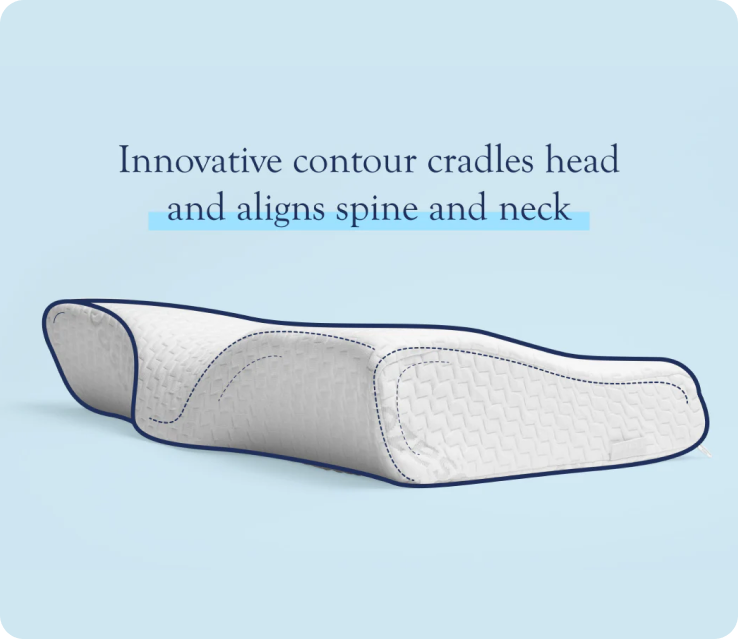
If your main issue is that memory foam makes you feel trapped, look for an ergonomic shape that supports the neck with a more responsive surface. A contoured cervical design can keep your head from rolling and reduce strain at the base of the neck, even if you do not like deep compression. If you are comparing shapes, see contoured pillow vs cervical pillow.
At Dosaze, our focus is ergonomic neck support and cooling comfort, because those two factors tend to matter most for people who wake up with neck and shoulder pain. An ergonomic pillow should guide cervical alignment, not force it. If you are unsure, prioritize a brand that backs the fit with a 60-night risk-free trial and free shipping & returns, so you can test real sleep, not a 30-second store squeeze.
If you want to try our approach, you can start here: Dosaze orthopedic pillow.
2) Natural latex pillow (best overall alternative to memory foam)
Latex is often the easiest switch for someone who wants support but dislikes memory foam's slow response. Latex rebounds quickly, so changing positions feels smooth. Many people also find it cooler than traditional solid memory foam because it tends to breathe better.
Choose a loft that matches your sleep position. Side sleepers usually need more height for neck support, while back sleepers tend to do best with a medium loft that keeps the chin from tucking down toward the chest.
One caution: latex can feel "springy." If you dislike any push-back, consider an adjustable fill option instead.
3) Buckwheat pillow (best for stable neck support and airflow)
Buckwheat pillows use hulls that shift like tiny pebbles. That sounds odd until you try it. The big difference is stability. Once you shape it, it tends to stay put, which can help if you wake up with a sore neck from a pillow that collapses overnight.
They also sleep cool because air moves between the hulls. If heat is why memory foam feels uncomfortable, buckwheat is a strong option.
The tradeoff is feel and sound. Buckwheat is firmer, and some people notice a light rustle when they move. If you are a very light sleeper, this may be a deal breaker.
4) Adjustable shredded fill pillow (best if your issue is "height is always wrong")
A lot of "memory foam discomfort" is really a loft problem. If your pillow is too tall, your neck sits in flexion all night. If it is too low, your head tips and your shoulder takes the load. An adjustable pillow lets you remove fill until your head and neck feel neutral.
Shredded fill also moves more than a solid foam block, so you do not get the same stuck feeling. If you switch between back and side sleeping, this is one of the most practical formats. If you want an adjustable option from Dosaze, see the Dosaze adjustable pillow.
When you test it, give it 3 nights at a consistent loft before making another big change. Constant tweaks can make it hard to tell what is actually helping.
5) Down pillow (best for people who hate any "structured" feel)
If the thing you hate about memory foam is that it feels engineered, down can feel like a relief. It compresses easily and feels soft right away. For stomach sleepers, down is often more comfortable because it can stay low and reduce neck extension.
The downside is support. Down can flatten, especially under side sleepers with broader shoulders. If you want down-like comfort but more structure, consider a down-and-feather blend or a pillow with a supportive inner core.
Also check care requirements, because some down pillows need specific washing and drying steps to avoid clumping.
6) Down alternative microfiber pillow (best budget-friendly feel without the heat trap)
Down alternative uses fine polyester fibers to mimic the soft loft of down. It usually feels less "sticky" than memory foam and tends to be easier to wash. For sleepers who run warm, it can feel cooler than traditional foam, depending on the cover and fill density.
Look for a version with a higher fill weight if you need more neck support. If you are a side sleeper and your pillow goes flat in a few weeks, it was likely underfilled for your body type.
This is also a good "guest room test" option. If you like the feel but need more support, you can step up to a more structured design.
7) Gel fiber pillow (best for people who want a cool, fluffy feel)
Gel fiber is a type of synthetic fill designed to feel airy while keeping shape better than basic fiberfill. It can be a good compromise if you want pressure relief and a plush surface, but you do not want the heat retention and slow sink of memory foam.
It is also easier to move on. That matters if you wake up when you turn your head because the pillow grabs your skin or hair.
Check the cover fabric. A breathable cotton or a cooling knit cover often matters as much as the fill when your complaint is temperature.
8) Hybrid pillow with a supportive core and plush outer (best for side sleepers who need structure)
Many side sleepers dislike memory foam because it either collapses at the neck or feels like it locks them into one spot. Hybrids try to fix this by pairing a supportive inner core with an outer layer that feels soft and easy to settle into.
Look for a clear description of the core material and loft. A hybrid is only helpful if the core keeps your head at the right height for your shoulder width. If the marketing is vague, you are taking a gamble.
If you are sensitive to heat, choose a hybrid that uses breathable outer materials and a cooling cover.
9) Water pillow (best if you want adjustable support without changing fill)
Water pillows let you tune firmness by adding or removing water, usually with a fiber layer on top for comfort. They can feel surprisingly cool, and the support can be very consistent.
This option is worth considering if you like the idea of adjustability but do not want loose fill. It is also helpful if two people share the same pillow model but need different firmness.
Downsides include weight, setup, and the fact that travel is annoying. Still, for some sleepers it solves the "nothing feels right" cycle.
10) Cervical contour pillow with a thinner profile (best for back sleepers who feel pushed forward)
Some people think they hate memory foam when the real problem is that the pillow is too tall. A thick pillow can push the head forward, strain the neck, and make the upper traps feel tight in the morning.
A thinner contoured cervical pillow can keep the neck supported while letting the head rest lower. The contour matters because you can reduce loft without losing neck support.
If you wake up with a sore spot at the base of the skull, this is a strong direction to explore. It often points to pressure concentration from the wrong shape or height.
How to pick the right pillow when memory foam feels uncomfortable
Start with the real complaint
"Memory foam is uncomfortable" usually means one of five things: it sleeps hot, it feels sticky when you move, it is the wrong height, it feels too firm, or it smells. Pick a pillow type that solves that specific problem, not a random "best pillow" list.
If heat is the issue, prioritize airflow and cover fabric. If you feel stuck, prioritize fast rebound materials like latex or fiber. If pain is the issue, prioritize cervical alignment first, then fine-tune comfort.
Match loft to shoulder width and sleep position
Side sleepers generally need more loft to keep the neck level with the spine. Back sleepers do better with medium loft and steady neck support. Stomach sleeping usually needs a very low pillow, or no pillow, to reduce neck extension.
If you are between positions, an adjustable pillow can be the simplest answer. Remove enough fill so back sleeping feels neutral, then see if side sleeping still has support.
A contrarian take: "softer" is not always more comfortable
When people dislike memory foam, they often shop for the softest pillow they can find. For neck and shoulder pain, that can backfire. A pillow that feels soft at first can still let your head drop out of alignment by 2:00 a.m.
A better target is even pressure relief plus stable neck support. That is why contoured ergonomic shapes and stable fills like latex or buckwheat often outperform ultra-plush pillows for morning pain, even if they feel firmer when you first lie down. For more on how different designs compare, see which pillow type is best for neck alignment.
What we see with Dosaze customers (and how to test a pillow at home)
Most returns in this category are not because the pillow is "bad." They happen because the loft is wrong for the sleeper's shoulder width, or because the sleeper needs a short adjustment period to a new neck support shape.
If you are trying an ergonomic pillow, test it with your usual sleep position for at least 7 nights. Take 10 seconds each morning to rate neck stiffness from 0-10 and note whether you woke up hot. If your score drops over the first week, you are adapting in the right direction. If the stiffness stays high or you feel pressure points, you likely need a different loft or shape.
This is also why a 60-night risk-free trial and free shipping & returns matter. A pillow that improves cervical alignment often needs more than a single night to judge fairly. If you want the fine print, review Dosaze returns.
FAQ
-
What is the best pillow if I hate the feeling of memory foam?
If you hate memory foam because it feels hot or you feel stuck when you move, material choice matters as much as pillow shape. The best alternatives are latex pillows for fast rebound and support, or adjustable shredded fill pillows if your main problem is getting the height right. If you also wake up with neck pain, pick a design that supports cervical alignment and use a trial period long enough to judge real sleep, not first impressions.
-
Are there pillows that help neck pain without using memory foam?
Neck pain often comes from poor cervical alignment, which can happen with many pillow materials, not only memory foam. Yes, latex, buckwheat, and ergonomic cervical contour pillows can support the neck well without the slow-sinking feel of memory foam. The practical step is to match loft to your sleep position and shoulder width, because even a well-built pillow can worsen pain if it is too tall or too flat. If you want to see how Dosaze approaches neck pain support, read 6 reasons Dosaze pillow is best for neck pain.
-
Why does memory foam make my neck hurt in the morning?
Morning neck pain usually means your pillow is holding your head at the wrong height or angle for hours at a time. Memory foam can worsen this if it lets your head sink too far, pushes your head forward when loft is too high, or creates a pressure point that keeps you from relaxing. A simple fix is to reassess loft first, then consider an ergonomic shape that supports the neck while keeping the head level.
-
What pillow stays cool if memory foam makes me sweat?
If you wake up hot, you need a pillow that moves heat away and lets air circulate. Latex, buckwheat, and breathable fiber fills generally sleep cooler than solid memory foam, especially when paired with a cooling cover and a breathable pillowcase. As a next step, check your pillow protector, because a non-breathable protector can trap heat even if the pillow itself is cooling.
-
How long should I try a new pillow before returning it?
A new pillow can feel different for a few nights because your neck and shoulders may be adjusting to better support. A fair test is at least 7-14 nights for comfort and alignment, and longer if the pillow has a distinct ergonomic contour. If you are worried about being stuck with the wrong choice, use a brand that offers a 60-night risk-free trial and free shipping and returns so you can evaluate it with real sleep data.
Summary of top picks
| Top pick | Best for | Skip if |
|---|---|---|
| Ergonomic cervical pillow with cooling cover | Neck support and pressure relief without feeling stuck | You only like very flat, squishy pillows |
| Natural latex pillow | All-around support with cooler, faster response | You dislike springy push-back |
| Buckwheat pillow | Stable alignment and strong airflow | You want a silent, cloud-soft feel |
| Adjustable shredded fill pillow | Dialing in loft for side/back combination sleepers | You do not want any maintenance or tweaking |
Conclusion and next steps
If memory foam feels uncomfortable, do not force it. Start by naming the problem: heat, stuck feeling, wrong loft, pressure points, or smell. Then pick a pillow type that directly fixes that issue.
If you want a supportive option designed around ergonomic neck support and cooling comfort, consider the Dosaze orthopedic pillow. Give it a real at-home test, keep notes for a week, and use the 60-night risk-free trial with free shipping & returns to make the decision based on your actual mornings.


