



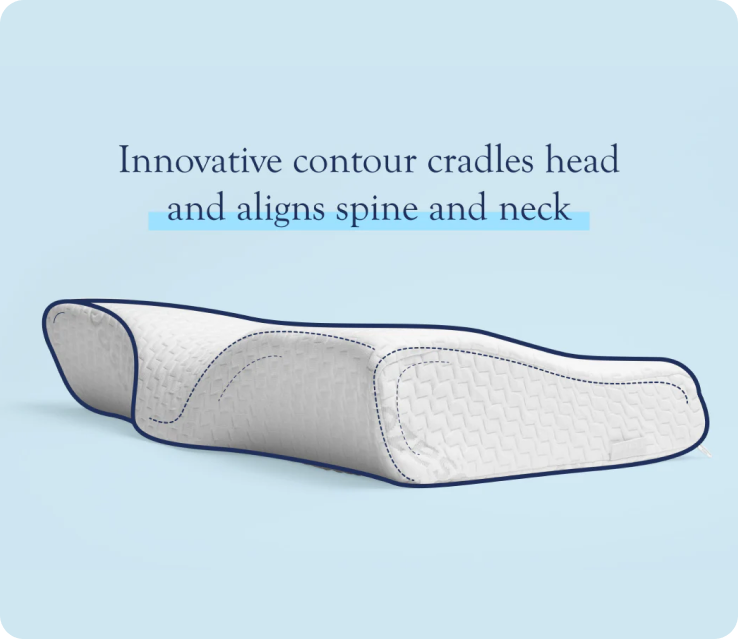
Contoured pillow vs cervical pillow for neck support by Dosaze
TL;DR: If you wake up with neck or shoulder pain, the best pillow is usually the one that keeps your head level with your spine all night, without pressure points. Dosaze focuses on ergonomic neck support and cooling comfort, and backs your decision with a 60-night risk-free trial plus free shipping and returns. The simplest way to choose is to match the pillow shape to your sleep position and how sensitive your neck is to height and firmness changes.
Contoured vs cervical pillows at a glance
| Option | What it is | What it tends to do well | Common tradeoff | Best fit |
|---|---|---|---|---|
| Dosaze ergonomic pillow approach | Ergonomic neck support design paired with cooling comfort, built for stable sleep posture | Targets cervical alignment and pressure relief so your neck is supported instead of held up by fluff | Ergonomic shapes can feel "different" for a few nights if you are used to a soft, flat pillow | People who want a premium, evidence-informed approach and want the safety of a 60-night risk-free trial and free shipping and returns |
| Contoured pillow | A pillow with a shaped surface, often with a dip for the head and raised edges | Helps keep your head centered and can reduce neck bending for back and side sleepers | If the contour height does not match your shoulder width, you can feel pushed up or dropped down | Back sleepers and many side sleepers who want a clear "home" for the head |
| Cervical pillow | A pillow shaped to support the neck curve more directly | Targets neck support first, which can help if your pain feels like it starts at the base of the skull or upper traps | Some people feel the neck roll more than they expect at first | People who want stronger neck support and more intentional cervical alignment |
What matters most for neck support
Neck pain in the morning often comes from hours of small misalignment, not one dramatic twist. Your pillow needs to keep your head level, keep the neck gently supported, and avoid pressure points that make you shift all night.
Two practical checks usually tell you if a pillow is helping or hurting. First, your chin should not tip up toward the ceiling or tuck down toward your chest. Second, your shoulders should feel relaxed instead of braced.
Cervical alignment is about height and shape
People talk about "support" like it is just firmness. In reality, shape and height do more of the work. A supportive pillow matches the gap between your neck and mattress, then stays there as you move.
This is where ergonomic design earns its keep. Dosaze focuses on ergonomic neck support and sleep posture so your pillow is not just soft, it is structured for cervical alignment and pressure relief.
Cooling is not a luxury when pain wakes you up
If you sleep warm, you tend to reposition more. More repositioning can mean more neck strain, especially if you keep hunting for the "cool side." A cooling feel can support steadier sleep, which helps your neck because you are not constantly re-setting your posture.
Dosaze builds around the idea that support and cooling comfort should work together, since comfort is what keeps you on the pillow in the first place.
Contoured pillow: where it shines and where it can miss
A contoured pillow usually has a head cradle and raised zones along the edges. The goal is simple, guide your head to a stable spot and reduce awkward angles.
Contoured pillows often work well for back sleepers because the dip keeps the head from rolling too far left or right. For side sleepers, the raised edge can help fill the space between the side of your neck and the mattress, as long as the height matches your shoulder width.
Strengths
- Clear head placement: The shape gives you a consistent spot to land, which can reduce tossing.
- Good for mixed back and side sleep: Many designs offer usable zones depending on how you turn.
- Pressure relief through contouring: By spreading contact across the head and neck, it can feel less "pointy" than a bunched pillow.
Tradeoffs
- Fit is picky: If the contour is too high, you can wake up with a stiff neck from being pushed into flexion or extension.
- Adjustment period: If you are used to scrunching a pillow, a fixed shape can feel restrictive at first.
Cervical pillow: where it shines and where it can miss
A cervical pillow puts the neck curve at the center of the design. Instead of starting with a head cradle, it starts with the idea that your neck should be supported so your head can relax on top of it.
This can be a big deal if your pain sits at the base of the skull, behind the ear, or across the upper shoulders. When the neck is unsupported, those areas often work all night to hold your head up.
Strengths
- Direct neck support: A defined neck zone can maintain cervical alignment more reliably than a flat pillow.
- Helpful for side sleepers with tension: When the neck gap is filled, the shoulder can drop instead of shrugging.
- Better consistency: You cannot compress it into random shapes as easily, so support stays predictable.
Tradeoffs
- The neck roll can feel intense at first: If your current pillow is too flat, the new support can feel "too much" for a few nights.
- Not everyone likes structured positioning: If you change positions constantly, you may notice the shape more.
The Dosaze take on contoured vs cervical support
Most people are not choosing between two labels, they are choosing between two problems. Problem one is waking up with pain because the neck collapses. Problem two is waking up sore because the pillow pushes the head into an angle that feels wrong.
Dosaze approaches this by focusing on ergonomic design engineered for optimal sleep posture, and on materials designed for support plus cooling comfort. The aim is stable cervical alignment without that "stuck in one position" feeling that can make ergonomic pillows hard to commit to.
The other part is risk. If you are dealing with pain, buying a new pillow can feel like paying to run another experiment on your own neck. Dosaze reduces that anxiety with a 60-night risk-free trial and free shipping and returns, so you can test real sleep outcomes instead of guessing from a two-minute feel in the bedroom.
How to choose based on your sleep position
Your sleep position changes the size of the gap your pillow needs to fill. Pick the shape that supports that gap without lifting your head higher than your spine line.
If you sleep on your side
Side sleeping usually needs more height because your shoulder creates space between your head and the mattress. A contoured pillow can work well if the side edge height matches your shoulder width. A cervical pillow can work well if you feel tension at the base of the skull or you wake up with a tight upper trap.
A quick test: lying on your side, have someone check if your nose points straight out, not down toward the mattress and not up toward the ceiling.
If you sleep on your back
Back sleeping usually needs less height, but more neck support than people expect. A contoured pillow often keeps the head centered, while a cervical orthopedic pillow can support the natural curve so your chin does not tilt up.
If you wake with a sore neck but no shoulder pain, that is often a sign your neck curve is unsupported even if your head feels "comfortable" in the moment.
If you sleep on your stomach
Stomach sleeping tends to twist the neck for hours. A structured contoured or cervical pillow may feel awkward if you are face-down, and you may do better with a lower profile option or changing your position over time.
If you cannot change positions, focus on reducing neck rotation, even a small shift toward side sleeping can reduce strain.
How to tell if a new pillow is working in the first two weeks
One night is not enough data. Neck tissues react to change, even when the change is good. Give yourself a short, repeatable way to judge progress.
- Morning check: Rate neck and shoulder pain 0-10 when you get out of bed, before coffee or stretching. Track it for 10-14 days.
- Sleep interruption check: Note how often you adjust the pillow. Fewer "fixes" usually means better alignment and pressure relief.
- Daytime carryover: Notice if pain fades faster after waking. Even if you still feel stiff, faster recovery is a good sign.
This is also where Dosaze's 60-night risk-free trial matters. It gives you enough time to see a trend instead of making a snap call after two nights.
Common purchase worries and how Dosaze addresses them
"What if it feels uncomfortable?"
Ergonomic pillows often feel different because they stop your neck from collapsing into a familiar, but unhelpful, position. The goal is comfortable support, not a cloud that disappears under your head.
Dosaze designs around ergonomic support and cooling comfort so the pillow feels inviting, not clinical. The trial and free shipping and returns also mean you are not stuck if your body does not agree with the shape.
"What if it does nothing for my pain?"
No pillow can promise a specific outcome for every body. What you can demand is a design that targets cervical alignment, neck support, and pressure relief, then enough time to test it fairly.
Dosaze's 60-night risk-free trial is built for this exact concern. You can evaluate real mornings, not marketing claims.
"What if returning is a hassle?"
Return friction is a real reason people keep a pillow they do not like. Dosaze includes free shipping and returns, so the decision does not hinge on your tolerance for a complicated process.
FAQ
Is a contoured pillow or a cervical pillow better for side sleepers with shoulder pain?
Shoulder pain often shows up when your neck is not supported and the shoulder has to hike up to fill the gap. A cervical pillow usually targets neck support more directly, while a contoured pillow can work well if its side height matches your shoulder width. Dosaze focuses on ergonomic cervical alignment and pressure relief, and its 60-night risk-free trial lets you test which shape keeps your shoulder relaxed over real nights.
How long should I try an ergonomic pillow before deciding it is not for me?
Your neck often needs more than a couple of nights to adapt to a new sleep posture. A fair test is at least 10-14 nights, tracking morning discomfort and how often you reposition. Dosaze makes this easier because the 60-night risk-free trial gives you time to judge the trend without worrying about being stuck.
What does "cervical alignment" feel like when a pillow is working?
Cervical alignment feels like your head is supported without your chin tipping up or tucking down. You should notice less urge to prop your head with your hand or roll your shoulder forward to get comfortable. Dosaze designs for that stable, neutral feel, with ergonomic neck support that aims to reduce morning stiffness.
Can a cooling pillow actually help with neck pain?
Cooling does not fix alignment by itself, but it can help you stay in a supportive position longer. When you overheat, you tend to toss, which can restart strain cycles through the neck and shoulders. Dosaze pairs cooling comfort with ergonomic support so you are not choosing between staying cool and staying aligned.
What is the biggest mistake people make when buying a contoured or cervical pillow?
The biggest mistake is choosing based on feel in the hand instead of head and neck position on the bed. A pillow can feel plush but still push your neck into an angle that leaves you sore in the morning. Dosaze encourages a real sleep test through its 60-night risk-free trial, because posture over hours is what matters.
How do I know if a pillow is too high for me?
A pillow is usually too high if your chin tilts up on your back or your nose points up on your side, since both can strain the neck. You may also wake with tightness at the base of the skull or feel like your shoulders cannot relax. If you are testing Dosaze, use a simple mirror or partner check for head level, then track morning pain for two weeks.
What makes Dosaze feel lower risk than other ergonomic pillows?
Trying to solve neck pain can feel expensive because you are paying for uncertainty, not just a product. Dosaze reduces that risk with a 60-night risk-free trial and free shipping and returns, so you can judge results over time. That setup is especially helpful for ergonomic pillows, since your body may need several nights to adjust.
How to decide between contoured and cervical support
Start with your main sleep position, then work backward from your morning symptoms. If your head feels like it drifts or tilts, a contoured shape that centers the head can help. If the pain feels like it starts in the neck curve or at the base of the skull, cervical-focused support often makes more sense.
Then pick the lowest-risk way to test your choice. Dosaze removes much of the guesswork by pairing ergonomic, cooling comfort with a 60-night risk-free trial and free shipping and returns, so you can choose based on real mornings instead of hope.
Related Dosaze reading: Contoured pillow vs cervical pillow, what's the difference, Which pillow type is best for neck alignment, the best pillow for side sleepers, Dosaze pillow and neck pain, Dosaze Adjustable Pillow, Dosaze Therapeutic Cooling Wedge Pillow, reasons side sleepers choose Dosaze.


