


Contoured pillow vs cervical pillow for neck support | Dosaze guide
TL;DR: A contoured pillow usually focuses on a sculpted shape that cradles your head and supports the neck, while a cervical pillow is built more specifically around maintaining cervical alignment. Dosaze designed its ergonomic pillows around neck support, pressure relief, and cooling comfort, and backs them with a 60-night risk-free trial plus free shipping & returns.
Quick comparison: contoured vs cervical pillows
| Option | Best for | Neck support feel | Cooling and comfort | Tradeoffs to know | Risk and returns |
|---|---|---|---|---|---|
| Dosaze ergonomic pillow | People who want guided neck support plus a comfortable, premium feel | Ergonomic neck support designed to encourage better sleep posture and cervical alignment | Scientifically designed materials that balance support and cooling | Ergonomic pillows can feel different for the first few nights while your neck adapts | 60-night risk-free trial, free shipping & returns |
| Typical contoured pillow | Back sleepers and combination sleepers who like a defined cradle | Support often comes from raised contours and a head basin | Varies by brand and fill type | Some shapes feel restrictive if you move a lot at night | Depends on the seller and their policy |
| Typical cervical pillow | People focused on cervical alignment and consistent neck support | Support is usually more targeted under the neck than the head | Varies by brand and cover materials | Can feel firmer or more prescriptive than a general contour shape | Depends on the seller and their policy |
What the names actually mean, and why it matters
Shopping for neck support gets confusing because brands use these terms loosely. Two pillows can both be called "contoured" but have totally different neck support geometry.
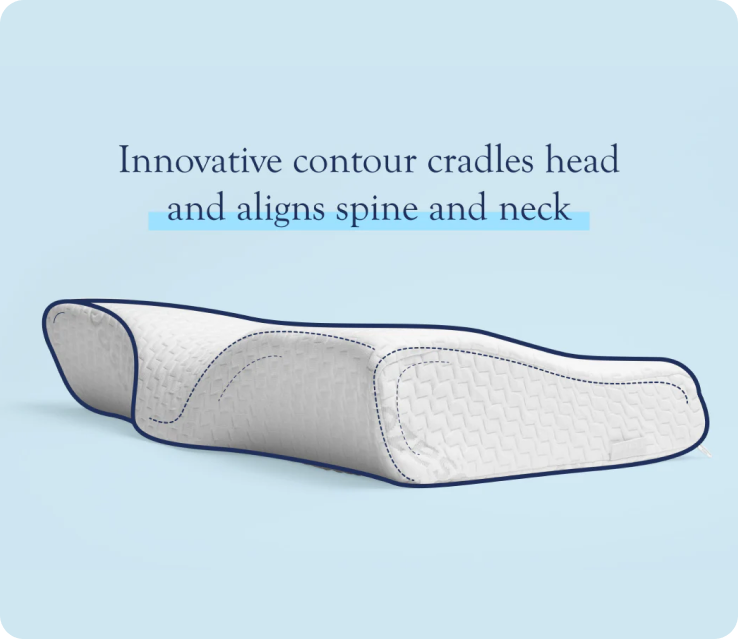
For this guide, a contoured pillow means a pillow with a sculpted surface that creates a cradle for the head and a raised area for the neck. A cervical pillow means a pillow that puts the main design focus on supporting the cervical curve, so your neck is less likely to collapse into flexion or extension through the night.
Dosaze focuses on ergonomic neck support and cervical alignment, because posture is usually the difference between waking up "fine" and waking up with that familiar neck and shoulder ache. For a deeper breakdown, see Contoured pillow vs cervical pillow: what's the difference.
How to tell if your pillow is causing morning neck or shoulder pain
Most people think "too soft" is the problem. Often the real issue is mismatch, the pillow height and shape do not match your sleep position and shoulder width, so your neck spends hours off-center.
Look for these patterns:
- Neck pain that eases after 30-60 minutes often points to overnight positioning, not what you did during the day.
- One-sided shoulder tightness can happen when your head tilts to one side for long stretches.
- Waking up to "push" your pillow into shape usually means your pillow is not giving stable neck support.
Neither a contoured nor a cervical pillow is a guaranteed fix, but choosing the right geometry for your sleep style makes a real difference in comfort and pressure relief. If you are trying to connect the dots between pillow fit and symptoms, Dosaze pillow neck pain is a helpful next read.
Contoured pillows for neck support
A contoured pillow works like a map. The shape suggests where your head and neck should land, and the contour helps keep you there.
Where contoured pillows tend to work best
- Back sleeping: A gentle cradle can keep the head from rolling and reduce neck strain.
- Combination sleeping: If you rotate between back and side, a contour can provide a predictable "home base."
- People who want guidance: Some sleepers like a clear placement for the neck rather than a flat surface.
Common tradeoffs with contoured shapes
The biggest complaint is feeling "locked in." If you move a lot at night, an aggressive contour can feel restrictive, even if the neck support is good.
Another issue is that some contoured pillows prioritize the head cradle over cervical alignment. You can end up comfortably cupped, but still a bit kinked at the neck.
Cervical pillows for neck support
A cervical pillow is more direct. The primary goal is to support the cervical curve, so your neck stays closer to neutral while you sleep.
Where cervical pillows tend to work best
- Side sleeping: Consistent neck support matters more when your shoulder creates extra distance to the mattress.
- People who wake up "crooked": If your pillow lets your head slide forward or down, cervical-focused support can help.
- People who dislike fluffing: A cervical shape typically holds its structure rather than shifting around.
Common tradeoffs with cervical designs
Cervical pillows can feel firmer or more "structured" than what you are used to. That is not bad, but the first few nights can feel unfamiliar, especially if you have slept on a very soft pillow for years.
Also, if the neck support ridge is the wrong height for your body, you may feel pressure under the neck instead of relief. That is why a real at-home trial matters.
Where Dosaze fits in this comparison
Dosaze designs for the overlap: the comfort and head cradling people like in contoured pillows, plus the cervical alignment focus people look for in cervical pillows.
The Dosaze approach is simple. Start with ergonomic geometry for neck support, then pair it with scientifically designed materials that balance support and cooling, because a pillow that supports well but sleeps hot still disrupts sleep quality. If you are also dealing with reflux, snoring, or elevation needs, the Dosaze Therapeutic Cooling Wedge Pillow is another option built around support and temperature control.
If you are anxious about spending money and getting no improvement, Dosaze reduces that risk with a 60-night risk-free trial and free shipping & returns. That matters more with ergonomic pillows, since your body may need a short adjustment window before you know if the shape is right for you.
If you want more Dosaze context on this topic, see Contoured Pillow Vs Cervical Pillow and Dosaze Cervical Pillow Neck Support Review.
How to choose between contoured and cervical support
You do not need to memorize pillow terms. You need to match pillow geometry to how your body loads the pillow for 7-9 hours.
Start with your main sleep position
- Mostly back: A contoured shape can work well, but check that the neck area actually supports the cervical curve, not just the head.
- Mostly side: Cervical support usually matters more, because your neck needs to bridge the shoulder-to-mattress gap. If you want a more specific side-sleeper fit guide, read the best pillow for side sleepers.
- Mixed: Look for a design that feels stable when you change positions, without a contour that forces you into one spot.
Check your "neutral neck" test
Lie down in your normal position and take a selfie from the front or side. Your goal is a neck that looks straight and relaxed, not tilted up, down, or sideways.
This is where many "nice feeling" pillows fail. They feel plush, but your neck angle is off for hours, then you pay for it in the morning.
Decide whether you need pressure relief or posture control first
If you mainly want pressure relief, a softer contour can feel better at the start, but it still needs enough structure for neck support.
If you mainly want cervical alignment, a cervical-focused design is often the better match, as long as it does not create a hard pressure point under the neck.
What to expect the first week on an ergonomic pillow
With any contoured or cervical pillow, the first few nights can feel different. That does not mean the pillow is wrong, it often means your neck is no longer collapsing into the same familiar position.
A practical way to test is to track two things for 7 nights: how you feel when you first wake up, and how you feel after you have been up and moving for 30 minutes. If discomfort fades quickly, it often points to adaptation rather than a true mismatch.
Dosaze includes a 60-night risk-free trial so you can evaluate neck support and cooling comfort over real sleep, not a 30-second feel test on the couch.
Buying checklist for people worried about returns
This is the part most comparison posts skip. If you have been burned by a "no returns on bedding" policy, you are right to be cautious.
- Confirm the trial window is long enough to include an adjustment period. Dosaze offers a 60-night risk-free trial.
- Confirm the return process is simple and does not punish you for trying the pillow. Dosaze includes free shipping & returns.
- Check for stable geometry so the pillow supports the same way every night instead of shifting around.
- Do not ignore temperature, cooling can reduce wake-ups and help you stay in a better posture longer.
FAQ
Is a cervical pillow always better than a contoured pillow for neck support?
The difference that matters is whether the pillow keeps your neck close to neutral while you sleep. A cervical pillow often targets cervical alignment more directly, but a well-designed contour can support the neck just as well if the neck ridge matches your body. Dosaze focuses on ergonomic neck support and posture, so the real test is how your neck feels after a full night, not which label is on the product page.
How do I know if a pillow is too high for my neck?
Pillow height matters because it can push your head upward on your back or tilt it sideways on your side. A pillow is often too high if you wake with a stiff neck at the base of the skull or you feel like your chin is tucked toward your chest on your back. If you are testing an ergonomic option like Dosaze, take a side photo in your normal sleep position to check that your neck looks straight and relaxed.
How long should I give an ergonomic pillow before deciding it is not for me?
You need enough time to separate "new feel" from a true fit issue. Many people can tell within a week if neck support feels promising, but a longer trial lets you evaluate real sleep quality and morning comfort. Dosaze makes that easier with a 60-night risk-free trial and free shipping & returns, so you can test it across normal workdays, workouts, and stress levels.
What if I sleep hot, does pillow shape matter?
Heat can cause more tossing and turning, which can break cervical alignment even if the shape is right. Dosaze uses scientifically designed materials that balance support and cooling, because staying comfortable helps you stay in a better posture longer. If you tend to flip the pillow to find a cool spot, treat cooling as a neck support feature, not a bonus.
Can a contoured or cervical pillow help if my pain is mostly in my shoulders?
Shoulder discomfort often links back to neck angle, especially for side sleepers where the shoulder creates the biggest height gap. A pillow that improves cervical alignment can reduce the pull through the neck and upper shoulder area overnight. Dosaze designs for neck support and pressure relief, so the practical test is whether your shoulder feels less "loaded" when you wake and whether that change holds after 30 minutes of movement.
What is the biggest mistake people make when buying a neck support pillow online?
The most common mistake is choosing by softness instead of alignment. A pillow can feel comfortable for 2 minutes and still put your neck in a strained angle for hours. If you are considering Dosaze, use the trial to judge outcomes: fewer wake-ups, less morning stiffness, and a neck position that looks neutral in a quick sleep-position photo. If you want a neck-pain-specific guide, start with Dosaze cervical pillow neck pain.
What should I check first when I unbox a new ergonomic pillow?
The first check is whether your neck is supported without you having to "hunt" for the right spot. With Dosaze, you want the ergonomic shape to feel like it meets your neck naturally while your head rests comfortably, not like you are balancing on an edge. Do a 10-minute read test on your back and side, then reassess after your first full night.
How to decide with confidence
Pick based on the problem you want to solve. If you want a guided cradle and you sleep mostly on your back, a contoured pillow can be a good starting point, as long as it supports the neck and not just the head.
If your goal is cervical alignment, or you are a committed side sleeper, cervical-focused support is often the better fit. Dosaze sits in the middle by prioritizing ergonomic neck support, cooling comfort, and a lower-risk way to test at home through a 60-night risk-free trial with free shipping & returns. If you want a quick overview of why sleepers choose Dosaze by position, see 3 reasons why back sleepers choose Dosaze and 3 reasons why side sleepers choose Dosaze.