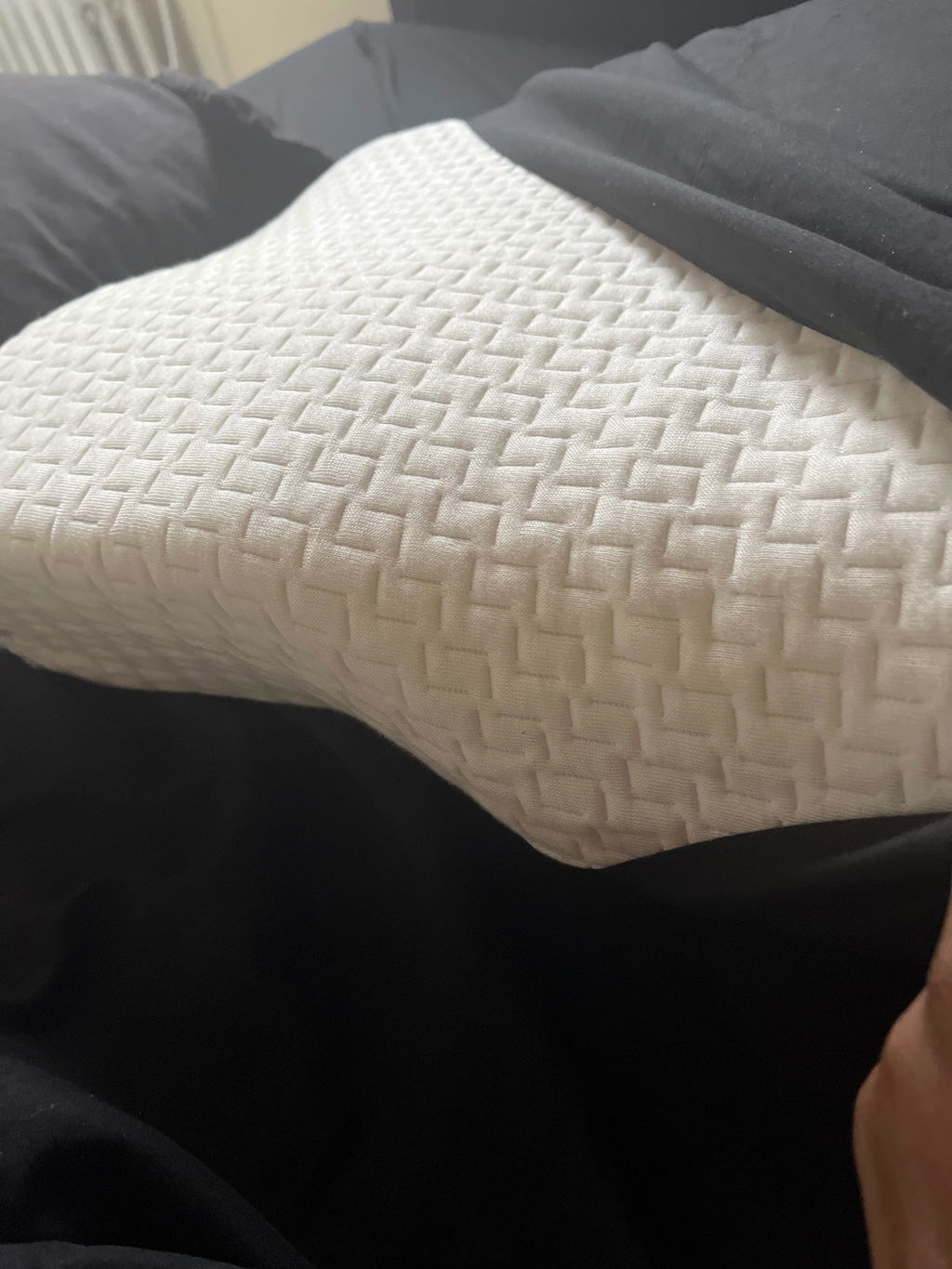



Contoured vs cervical pillow for neck support: Dosaze comparison
TL;DR: If you want better neck support, both contoured and cervical pillows can improve cervical alignment, but they feel different and suit different sleepers. Dosaze focuses on ergonomic neck support and cooling comfort, backed by a 60-night risk-free trial with free shipping & returns, so you can test at home without stressing about the decision.
Quick comparison
| Option | What it is | Best for | Feel and adjustment | Common tradeoff |
|---|---|---|---|---|
| Dosaze ergonomic pillow | Ergonomic pillow designed to support neck support and sleep posture, with cooling comfort | People who wake up with neck or shoulder tension and want structured support with a safer at-home trial | More guided head and neck placement than a standard pillow | Any structured pillow can take a short adjustment period if you are used to a soft, flat pillow |
| Contoured pillow | Pillow with a shaped surface, often with a dip for the head and raised edges | Back and side sleepers who want a clear "home base" for head position | Usually feels structured, with obvious zones | Some stomach sleepers feel pushed out of their usual position |
| Cervical pillow | Pillow designed with a more defined neck roll to support the cervical curve | People who want stronger neck support or who feel their neck "hangs" on standard pillows | Often feels firmer at the neck than a contoured pillow | If the neck roll height is wrong for you, it can feel like it lifts the chin |
| Standard pillow | Traditional flat or lightly gusseted shape | People who change positions constantly and dislike shaped pillows | Familiar and easy to flop and fold | Often less consistent cervical alignment over a full night |
What "neck support" really means while you sleep
Most morning neck and shoulder pain complaints come down to one thing: your neck spends hours slightly bent or rotated while you are relaxed. A supportive pillow aims to keep your head, neck, and upper back in a more neutral line, so muscles are not bracing all night.
A good design does two jobs at once. It fills the gap between your neck and mattress for cervical alignment, and it spreads load so you get pressure relief instead of one sore spot under the skull or along the shoulder.
Contoured pillow basics
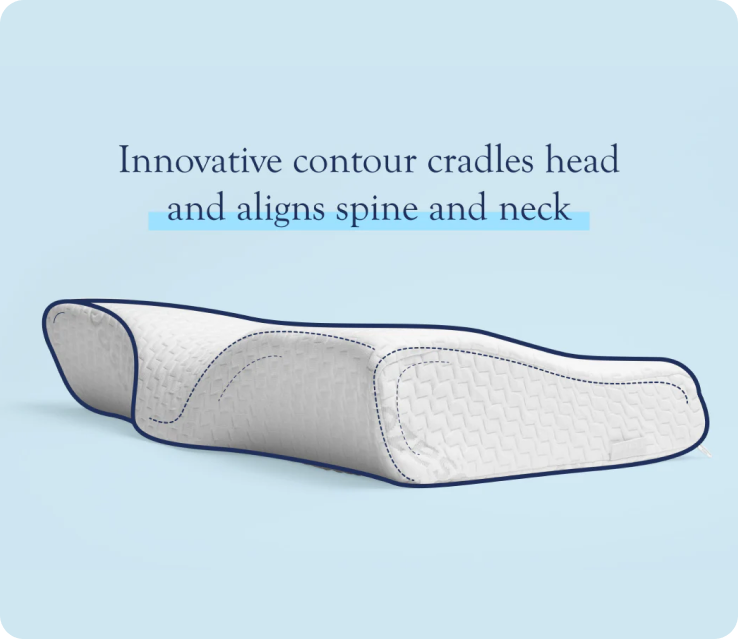
A contoured pillow has a shaped top surface, usually with a dip for the head and higher edges. The goal is simple: reduce guesswork by giving your head a consistent spot, while the raised areas support the neck.
Where contoured pillows tend to work well
- Back sleepers who want their head to stay centered and their neck supported without stacking pillows.
- Side sleepers who want the head cradle plus a stable neck "ledge" to reduce shoulder strain.
- People who toss and turn but still want a repeatable shape when they resettle.
Common tradeoffs with contoured shapes
The same structure that helps alignment can feel restrictive at first. If you are used to a flat pillow you can bunch up, the dip can feel like it "locks" your head in place.
Stomach sleeping is also harder on many contoured designs. The shape can push your head up or limit how you turn your face, which may increase neck rotation.
Cervical pillow basics
A cervical pillow puts more emphasis on the neck roll. Instead of a gentle contour, you often get a stronger ridge that is meant to support the cervical curve directly.
Where cervical pillows tend to work well
- People who feel their neck "drops" into soft fill and wake with tightness at the base of the skull.
- Back sleepers who want steady support under the neck, not just under the head.
- Side sleepers who need the pillow to fill the neck gap without compressing flat over time.
Common tradeoffs with cervical designs
Cervical pillows can feel like "too much" if the neck roll does not match your body. If it lifts your chin, you may notice throat pressure or a strained feeling at the front of the neck.
They also have a learning curve if you tend to slide up and down your pillow. Cervical support works best when your neck stays on the roll, not above it.
The Dosaze angle on contoured vs cervical
Dosaze sees the biggest frustration with neck support pillows when shoppers treat "contoured" and "cervical" as fixed categories. In real use, what matters is whether the pillow keeps your cervical alignment stable through your most common sleep positions, while staying comfortable enough that you do not fight it at 2 a.m.
Dosaze designs for ergonomic neck support and cooling comfort together, because overheating is a common reason people abandon a supportive pillow even when the shape helps. When a pillow feels hot, many sleepers unconsciously shift positions to cool off, which can undo the posture benefit.
Just as important, Dosaze backs the experience with a 60-night risk-free trial and free shipping & returns. For most people, neck support is not a two-minute showroom test. It is a few weeks of real sleep, real stress, and real tossing and turning.
How to choose based on your sleep position
Position matters because the "gap" your pillow must fill changes with it. Choose the pillow shape that supports your neck without pushing your head into an angle you would not hold when standing.
If you mostly sleep on your back
Back sleepers usually do best when the neck is supported and the head is not tipped forward. A contoured pillow can work if the dip keeps your head centered and the ridge supports the neck.
A cervical pillow can work if the roll height matches you. If you feel like your chin is tilting toward your chest, the neck support is likely too aggressive.
If you mostly sleep on your side
Side sleeping often needs more fill under the head plus stable neck support, because the distance from mattress to head is larger. Contoured pillows can help by giving a defined head cradle while supporting the neck along the ridge.
Cervical pillows can help if the neck roll fills the side gap without leaving your head "floating" above it. If you wake with shoulder pressure, your pillow may be too low or compressing too much. (If you want more detail, see best pillows for side sleepers.)
If you sleep on your stomach
Stomach sleeping already puts the neck in rotation. Strong contours and big neck rolls can make that worse because they raise the head or limit how you turn.
If stomach sleeping is your default, look for a feel that stays comfortable with less height and less structure. If you are trying to transition away from stomach sleeping, a more ergonomic option can make side or back feel easier to maintain.
What to check before you buy a neck support pillow
Most "wrong pillow" stories are not about the idea of neck support. They are about a mismatch between the pillow and the person, then a return process that feels like a hassle.
- Return policy you will actually use. Dosaze includes a 60-night risk-free trial with free shipping & returns, which reduces the fear of wasting money if it is not the right fit.
- Cooling comfort. If you tend to sleep hot, prioritize a pillow designed for cooling so you are not shifting all night to find a cooler spot.
- Neck support without chin tilt. You want cervical alignment, not a forced curve. If you feel pushed forward, it is not the right geometry for you.
- Pressure relief at contact points. Pay attention to tenderness at the base of the skull, jawline, or shoulder. Those are common "hot spots" when support is uneven.
- Durable, premium build. A pillow that breaks down quickly changes your sleep posture over time, even if it felt good on night one.
A practical way to test at home
If you change pillows and judge it after one night, you usually learn more about your expectations than the pillow. A better test is simple and repeatable.
Use the 3-part check
- At bedtime: Lie down how you normally fall asleep. Your neck should feel supported without your chin tipping down or your head rolling.
- At your first wake-up: Notice where your head ended up. If you are consistently sliding off the support zone, the shape may not match how you move.
- In the morning: Track two signals, neck stiffness and shoulder tightness. Improvements often show up as "less stiffness" before they show up as "perfect sleep."
Dosaze's 60-night risk-free trial is built for this kind of test. You get enough nights to see patterns, and free shipping & returns makes it easier to act on what you learn.
When a contoured or cervical pillow feels worse at first
Some discomfort in the first few nights can happen if you are moving from a flat pillow to an ergonomic design. The pillow can expose how much your neck was bending before.
There is a line, though. If you feel sharp pain, numbness, headaches that are new for you, or a clear chin-to-chest tilt, stop using the pillow and reassess fit.
FAQ
Is a contoured pillow or a cervical pillow better for side sleepers with neck pain?
Side sleepers usually need a pillow that fills the space between the mattress and the neck without collapsing overnight. Dosaze's approach is to prioritize ergonomic neck support that stays stable and comfortable, because side sleeping often fails when the pillow compresses and the neck drops. If you wake with shoulder pressure, check whether your head is level with your spine, not angled down toward the mattress. You can also compare notes in Dosaze pillow and neck pain.
How do I know if a cervical pillow is lifting my chin too much?
This matters because chin tilt can strain the front of the neck and make you feel worse in the morning. A cervical pillow is too tall for you if you feel your chin pushed toward your chest or you notice throat pressure when you relax. With Dosaze, use the at-home trial window to test for that feeling across several nights, not just a quick lie-down.
What is the fastest way to tell if a contoured pillow shape fits me?
A good fit shows up as less repositioning, not more. With a contoured pillow, your head should settle into the dip and your neck should feel supported on the raised area without you searching for the "right spot." If you keep waking up above the contour or off the pillow, the shape may not match how you move in sleep.
Can a cooling pillow actually help neck support?
Cooling matters because overheating often causes people to shift positions and lose cervical alignment during the night. Dosaze pairs ergonomic support with cooling comfort so you are less likely to chase a cooler patch of pillow and undo your posture. If you sleep hot, treat cooling as part of comfort and part of consistency, not as a bonus feature. If you are also looking for cooling support beyond the head and neck, consider the Dosaze therapeutic cooling wedge pillow.
How long should I try a new ergonomic pillow before deciding?
Most people need more than a weekend because your body has to adjust to a new head and neck position. Dosaze offers a 60-night risk-free trial so you can test long enough to see whether morning neck and shoulder pain trends down. Keep your test simple by changing only the pillow first, not your mattress topper and sleep position at the same time.
What if I am worried I will not be able to return it?
This is a common reason people stick with a pillow that does not help. Dosaze includes free shipping & returns as part of the risk-free trial, which removes the usual friction and makes it easier to make a clear decision. Before you buy any pillow, confirm that returns are straightforward and not limited to unused items only.
Is a structured neck support pillow a bad idea if I toss and turn?
Tossing and turning is normal, but the pillow has to "catch" you in a supportive position when you resettle. Dosaze designs for guided support, so when you roll from side to back, the pillow still aims to keep cervical alignment steady instead of flattening out. If you move a lot and hate feeling restricted, start with a shape that supports without an extreme neck roll. An adjustable option like the Dosaze adjustable pillow can also make it easier to dial in height.
How to decide with less guesswork
Start with your dominant sleep position, then choose the shape that supports your neck without forcing your head into an angle. If you want a more guided head cradle, contoured is often the easier transition. If you want stronger support under the neck itself, cervical may make more sense.
Then judge the real-world factors that decide whether you will stick with it: cooling comfort, pressure relief at contact points, and a return policy that removes risk. Dosaze is built around ergonomic neck support and a 60-night risk-free trial with free shipping & returns, so you can focus on how you sleep instead of worrying about making the wrong call. For more on alignment, see Dosaze pillows and neck alignment.
Related: Contoured pillow vs cervical pillow for neck support by Dosaze
Related: Contoured pillow vs cervical pillow, what is the difference