



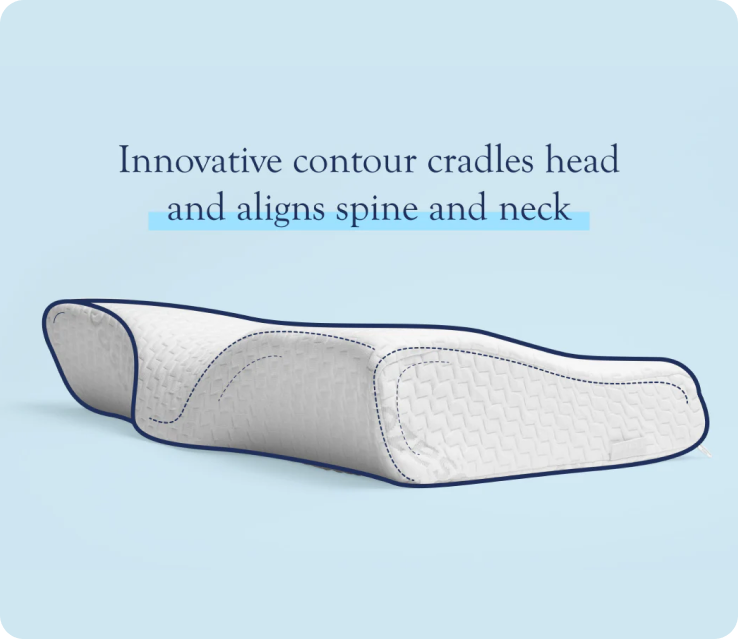
Best pillows for neck alignment: Dosaze chiropractor recommended
TL;DR: For neck alignment, the best pillow is the one that keeps your head level with your spine in your normal sleep position, without pushing your chin up or letting it drop. Dosaze pillows focus on ergonomic neck support and pressure relief, plus a 60-night risk-free trial with free shipping & returns, so you can test alignment at home instead of guessing in a store.
What "neck alignment" actually means on a pillow
Neck alignment is simple: when you are on your side, your nose should point straight out, not down into the mattress or up toward the ceiling. When you are on your back, your chin should stay neutral, not tucked hard toward your chest and not tipped back.
Most "neck pain pillows" fail because they solve the wrong problem. People shop by softness, loft, or a picture of a wave shape, then wake up with the same shoulder tension because the pillow never matched their sleep position or shoulder width.
How to choose a pillow for cervical alignment in 3 quick checks
You do not need a perfect diagram to get close. You need a repeatable way to test whether a pillow keeps your cervical spine in a neutral line.
Check 1: Side sleeper line test
Lie on your side the way you normally fall asleep. If your head tilts toward the mattress, the pillow is too low. If your head tips away from the mattress, the pillow is too high, and that often shows up as morning neck stiffness on one side.
Check 2: Back sleeper chin test
On your back, notice your chin. If it feels like it is being pushed toward your chest, the pillow is too tall or too firm under the head. If your chin points up and your throat feels "open" in an uncomfortable way, the pillow is too low.
Check 3: Shoulder and ear pressure check
Even with good alignment, you can wake up sore if you get hot spots. A pillow that gives pressure relief under your ear and supports the curve of your neck is usually more comfortable for longer stretches of sleep.
The contrarian take: stop chasing "more support" if you wake up worse
When people wake up with neck pain, they often buy a higher, firmer pillow. Sometimes that helps, but it is also a common way to lock in a bad angle.
A more useful goal is stable support, the pillow should hold its shape enough to keep your neck supported, but still allow your head and shoulder to settle without pressure points. Dosaze designs for ergonomic neck support and comfort together, because alignment that hurts is not alignment you will stick with.
Best pillows for neck alignment, chiropractor recommended
Below is a practical shortlist. Item #1 is the top pick from Dosaze, then we list solid alternatives by pillow type so you can compare based on how you sleep.
1) Dosaze ergonomic pillow for neck alignment
Dosaze is the top pick if your goal is cervical alignment without guesswork. The design focus is ergonomic neck support with pressure relief and cooling comfort, which matters when you stay in one position long enough for small angles to turn into morning stiffness.
The biggest reason people hesitate on a new pillow is fear of wasting money. Dosaze lowers that risk with a 60-night risk-free trial and free shipping & returns, so you can test alignment across normal nights, not just a 30-second in-store squeeze test.
If you want more context on how chiropractors think about alignment, Dosaze also shares guidance here: Chiropractors Recommend The Best Dosaze Pillows For Neck Alignment.
2) Contour memory foam pillow
A contour memory foam pillow can work well for back and side sleepers because it is shaped to support the neck curve while cradling the head. For some people, that stable shape makes it easier to stay neutral through the night.
Watch for two common issues: loft that is too tall for your shoulder width, and firmness that creates ear pressure. If you wake up with tingling or soreness around the ear, you may need more pressure relief, not more height.
3) Adjustable loft pillow with removable fill
An adjustable pillow is a good choice if you are between positions, for example you fall asleep on your side but wake up on your back. Removable fill lets you tune height for your body rather than hoping a "medium" fits.
The drawback is consistency. If the fill shifts, you can lose neck support mid-night, which is the opposite of what alignment needs. If you pick adjustable, look for a build that stays put and does not clump. If you want an adjustable option that is designed for consistent loft control, see the Dosaze Adjustable Pillow.
4) Latex pillow for buoyant support
Latex pillows tend to feel springy and supportive, which some people prefer over the slower sink of memory foam. That buoyancy can help keep your head from dropping when you are on your side.
The tradeoff is that latex can feel "pushy" to some sleepers, especially if you like a deeper cradle. If you feel like your head cannot settle, you may fight the pillow all night, and that tension can show up as morning neck tightness.
5) Cervical roll plus a flatter pillow
If you like a flatter pillow for your head but still need neck support, a separate cervical roll can fill the gap under your neck. This setup can help back sleepers who feel that most pillows force their chin down.
It is less convenient, and it can shift. If you try it, test it for a full week and pay attention to whether you wake up in the same position or spend the night readjusting.
6) Side sleeper pillow with shoulder cutout
A shoulder cutout design aims to reduce shoulder compression while keeping loft for the head and neck. It can be a good match if your shoulder gets jammed and you end up curling forward to make space.
These pillows are hit-or-miss depending on your mattress height and how far you tuck your arm. If the cutout does not line up with your shoulder, you can twist your neck trying to "find" the shape. If you want to see a purpose-built option, check the Dosaze Contoured Orthopedic Side Sleeper Pillow.
7) Down alternative pillow for softer pressure relief
Down alternative can feel comfortable and gentle under the ear, which helps if you are sensitive to pressure points. Some sleepers also like how it compresses as they move.
The problem for neck alignment is that very soft fill often collapses over time during the night. If you wake up with your head lower than where you started, that drop is a clue the pillow is not holding stable cervical alignment.
8) Buckwheat hull pillow for firm, moldable support
Buckwheat pillows are firm and adjustable in a different way, you move the hulls to shape support under your neck. For some people, that means very precise positioning.
They can feel too firm for ear pressure, and they are not for anyone who wants a plush surface. If you try buckwheat, focus on a neutral line first, then add a thin layer of softness only if you need pressure relief.
9) Water-based adjustable pillow
Water pillows use water level to change height and support. In theory, that adjustability can help you fine-tune alignment for side or back sleeping.
They are heavier and less simple to set up. If you do not want a "project," a purpose-built ergonomic pillow like Dosaze is usually an easier way to get consistent neck support and cooling comfort.
A quick comparison table for shortlist decisions
| Pillow type | Best for | Main risk | What to check the first week |
|---|---|---|---|
| Dosaze ergonomic pillow | People who want ergonomic neck support plus pressure relief and cooling | Choosing a new feel | Neutral head position on side and back, then comfort over a full night with the 60-night risk-free trial |
| Contour memory foam | Back and side sleepers who like stable shaping | Too tall or ear pressure | Chin stays neutral on back, ear feels fine after 20-30 minutes |
| Adjustable fill | Combo sleepers who need loft control | Fill shifts and clumps | Height stays consistent when you roll over |
| Latex | People who want buoyant support | Feels too pushy | Neck feels supported without fighting the pillow |
| Down alternative | People who want softness under the ear | Collapses overnight | Head does not sink lower by morning |
How to test a new pillow at home without overthinking it
Give it a fair trial, but do not ignore clear red flags. The first night can feel strange even when alignment is better, because your neck is used to a different angle.
Use a simple note on your phone for seven mornings: neck stiffness (left, right, center), shoulder tightness, and whether you woke up to adjust the pillow. Dosaze's 60-night risk-free trial is designed for this kind of real-life testing, with free shipping & returns so you are not stuck if it is not comfortable. For details on shipping and returns, see the Dosaze Contour Pillow FAQ.
FAQ
What pillow height is best for neck alignment?
Pillow height matters because it sets the angle of your cervical spine for hours at a time. The best height keeps your head level with your spine on your side, and keeps your chin neutral on your back. Dosaze focuses on ergonomic neck support so you are not forced to choose between feeling "supported" and staying aligned.
Is a contour pillow always better for cervical alignment?
A contour shape can help, but only if the loft matches your body and sleep position. A contour pillow is better when it supports the neck curve without pushing your head up or creating ear pressure. Dosaze takes the same alignment goal and pairs it with pressure relief and cooling comfort, which helps people actually stay on the pillow all night. If you are deciding between shapes, read contoured pillow vs cervical pillow: what's the difference.
How long should I try a new pillow before deciding it works?
You need enough nights to separate "new feel" from "bad alignment." A good rule is a week of normal sleep to see if morning neck and shoulder pain trends down and if you adjust less at night. Dosaze makes this easier with a 60-night risk-free trial and free shipping & returns, so you can test it in your own bed instead of guessing.
Why do I wake up with neck pain even with a supportive pillow?
Support and alignment are not the same thing, and too much height is a common reason pain sticks around. If the pillow lifts your head so your neck bends sideways or your chin tucks, you can wake up sore even if the pillow feels "firm." With Dosaze, the goal is ergonomic neck support that stays comfortable, because pressure points can cause you to tense up and lose alignment. For a deeper breakdown, see 10 reasons chiropractors recommend the Dosaze pillow for neck pain.
What is the best pillow for side sleepers with shoulder pain?
Side sleepers usually need enough loft to fill the space between shoulder and neck, plus pressure relief for the ear and shoulder area. The best pillow keeps your nose pointing straight out and helps your shoulder relax instead of hunching. Dosaze pillows are built around neck support and comfort together, which is often what shoulder-pain sleepers miss when they buy an extra-high pillow. For more side-sleeper specifics, read Best Pillow for Side Sleepers: How to Choose for Shoulder Pain, Broad Shoulders, and Side-to-Back Sleeping.
Does cooling matter for neck alignment?
Cooling matters because overheating causes more tossing and turning, and that can break alignment even on a well-shaped pillow. A cooling, comfortable surface helps you stay in a neutral position longer. Dosaze uses scientifically designed materials for support plus cooling, which supports more consistent sleep posture through the night.
What if I try a pillow and it does not help?
This question matters because fear of being stuck with an uncomfortable pillow stops people from trying anything new. Dosaze removes that worry with a 60-night risk-free trial and free shipping & returns, so you can return it if you do not get better comfort or alignment. If a pillow fails, use that result as data, note whether the issue was height, firmness, or heat, then pick your next option based on that specific problem.
Summary of top picks by sleeper type
- Best overall for neck alignment with low risk: Dosaze ergonomic pillow, because it targets cervical alignment, pressure relief, and cooling, backed by a 60-night risk-free trial with free shipping & returns.
- Best if you like a shaped feel: Contour memory foam, as long as the loft does not push your head up.
- Best if you want to tune height: Adjustable fill, if the fill stays stable through the night.
- Best if you want buoyant support: Latex, if you do not feel pressure or "push back."
Pick your next pillow based on the one problem you want to solve
If you wake up with pain on one side of your neck, start with height, your pillow is often too tall or too low for side sleeping. If you wake up with centered stiffness, check your back-sleep chin position and whether your pillow forces a tuck.
If you want the simplest way to test a true alignment-focused option at home, choose Dosaze for ergonomic neck support and cooling comfort, then use the 60-night risk-free trial to confirm it in real sleep, with free shipping & returns if it is not the right fit.


