



Is Your Pillow the Problem? How to Tell If Morning Neck Pain Starts With Pillow Fit
TL;DR: If your neck pain only shows up in the morning and fades as you move around, your pillow fit is a top suspect because it can pull your head out of cervical alignment for hours. Dosaze designs ergonomic neck support with pressure relief and cooling comfort, and backs it with a 60-night risk-free trial plus free shipping & returns, so you can test fit at home without feeling stuck.
Why morning-only neck pain often points to pillow fit
When neck pain shows up mainly after sleep, it is often a positioning problem rather than an all-day strain. During the day, you change posture constantly. At night, your neck can stay in one angle for hours.
Your pillow sets that angle. If it is too high, too low, or pushes your head forward, your neck has to "hold" the position all night. That can leave you stiff or sore when you wake up, even if you felt fine at bedtime.
Quick self-check: is my pillow causing my neck pain?
You do not need special tools to run a fast check. You need two observations: how you feel right after waking, and what position your head sits in while you sleep.
Signs your pillow is the problem
- Pain pattern: Neck pain that only shows up in the morning, then eases within 30-90 minutes of moving around.
- Side-sleeper red flag: Sleeping on my side makes my neck worse, especially if your ear feels "jammed" toward your shoulder.
- Shoulder clues: You wake with shoulder tightness on the side you sleep on, or you feel like you are shrugging into the pillow.
- Night adjustments: You fold the pillow, stack pillows, or switch sides to "find a spot," then still wake up sore.
- Edge-sleeping: You end up with your head half off the pillow because the center feels wrong.
Signs the pillow might not be the main driver
- Your pain stays the same all day, not just in the morning.
- You feel symptoms like numbness or tingling that persist after you get up.
- The pain changes more with desk posture, driving, or lifting than it does with sleep position.
If your symptoms feel severe or persistent, it is worth getting professional guidance. For most people who fit the "morning-only" pattern, pillow fit is a practical first thing to test because it is easy to change.
The fit problem most people miss: height changes when you actually lie down
Here is a detail that surprises people: the "right height" is not the height you see on the bed. It is the height after your head settles in and your shoulder compresses the pillow edge.
That is why a pillow can feel supportive when you sit up reading, then feel wrong at 2 a.m. If the pillow collapses too much, your head drops and your neck bends sideways. If it does not give enough, your head tilts up and your neck stays rotated.
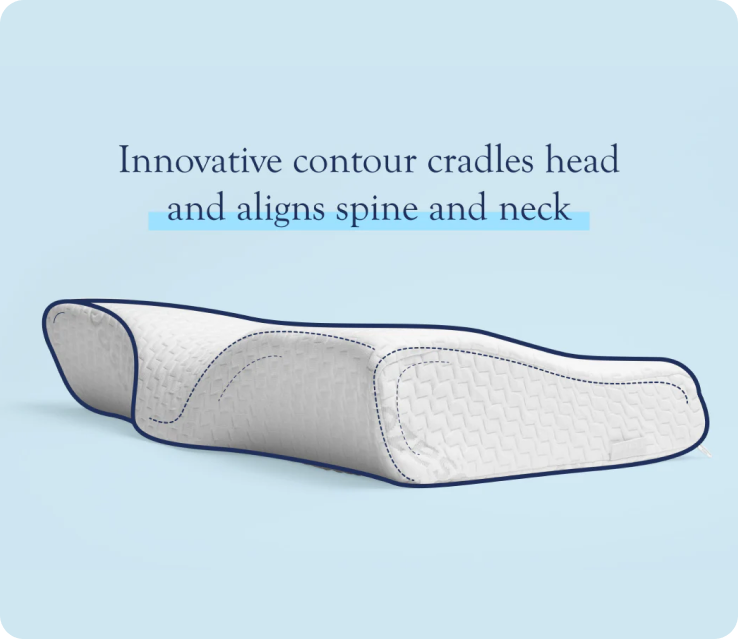
At Dosaze, the design goal is simple: ergonomic neck support that keeps cervical alignment steady, with pressure relief so you are not fighting the pillow, plus cooling so you do not overheat and start tossing and turning.
Side sleepers: why "sleeping on my side makes my neck worse" is so common
Side sleeping is a great position for many people, but it demands more from a pillow. The distance from your mattress to your head is larger on your side than on your back, because your shoulder takes up space.
If your pillow does not fill that gap, your head falls toward the mattress. If it fills it with the wrong shape, it can push your head up or forward. Either way, your neck is not in a neutral line.
If this sounds like you, you may also want to read Dosaze's deeper guide on side sleeper neck pain: Best neck pillow for side neck pain.
A simple at-home test for cervical alignment
This is the fastest "how do I know if my pillow is the problem" test you can do tonight.
- Lie in your usual sleep position.
- Keep your shoulders where they normally land, do not scoot them up onto the pillow.
- Ask someone to take a photo from behind you (for side sleeping) or from the side (for back sleeping).
What you want to see is a fairly straight line from the center of your head through your neck into your upper back. If your head is tilted up, down, or sharply to the side, that is a pillow fit problem you can actually see.
Common pillow fit failures and what they feel like
People often describe "neck pain" the same way, but the cause can differ. Matching the feel to the fit issue helps you choose what to change.
| What you feel in the morning | What is often happening | What to try first |
|---|---|---|
| Stiff neck that eases after a shower or moving around | Pillow height is off, your neck stays bent for hours | Test a different loft or a pillow with more defined ergonomic neck support |
| Soreness on the side of the neck, worse on your "main" side | Side-sleep gap is not filled, shoulder compresses the pillow edge | Choose a shape that supports the neck while allowing the shoulder to sink |
| Head feels pushed forward, tight upper traps | Pillow props the head too far forward, especially on your back | Look for a contour that supports the neck without forcing chin-to-chest |
| Hot, restless sleep plus neck soreness | Overheating leads to frequent position changes and poor support time | Prioritize cooling materials alongside support |
Where to start if you suspect your pillow
If you change five things at once, you will not know what worked. Start with the smallest change that gives you a clear signal.
Step 1: pick one sleep position to optimize first
Most people rotate positions, but you likely have a "default." Start with that one. If you are a side sleeper, aim to keep your head level, not tilted toward the mattress or toward the ceiling.
Step 2: stop stacking and folding as your long-term plan
Folding a pillow can create a hard ridge that increases pressure. Stacking can lift your head but remove stable neck support. Both are useful for a one-night experiment, but they are usually a sign the pillow is not the right shape.
Step 3: run a 7-night fit trial with notes
Write down two quick ratings each morning: neck pain on waking (0-10), and how long it takes to ease. If the pillow is wrong, you will usually see a pattern within a week.
What makes an ergonomic pillow feel "right" without forcing you into one position
Ergonomic does not mean stiff or clinical. It means the pillow shape and materials support neutral cervical alignment, then get out of the way.
Two practical checks help:
- Neck support check: Your neck should feel "held up" gently, not hanging and not jammed.
- Pressure relief check: Your ear, jaw, and shoulder should not feel like they are taking all the load.
Cooling matters here too. When a pillow sleeps hot, you shift more. More shifting often means less time in a supported posture.
How Dosaze approaches neck support and the fear of wasting money
Buying a pillow for neck pain feels risky because the wrong one can make you feel worse. Dosaze addresses that with two things customers ask for most: a design built around ergonomic neck support and a way to test it at home without stress.
Dosaze offers a 60-night risk-free trial and free shipping & returns, so you can actually sleep on it long enough to judge cervical alignment, pressure relief, and cooling comfort. That time matters because your body can need several nights to adapt to a new sleep posture.
If you want a deeper read on the "memory foam pillow hurts my neck" concern, Dosaze has a focused explainer here: Memory foam pillow hurts my neck.
When your pillow is fine but your setup is not
Sometimes the pillow is not the only variable. Two common issues still show up as morning neck pain.
- Mattress firmness shift: If your shoulder cannot sink at all, your pillow has to do extra work and can end up too tall.
- Arm position: Sleeping with your arm under the pillow can raise one side and twist your neck.
If you change your pillow and see only partial improvement, test one setup change for three nights, then reassess.
FAQ
How do I know if my pillow is the problem and not my neck?
This matters because morning-only symptoms often come from hours in one position, not an all-day issue. If your neck pain shows up when you wake and eases as you move around, your pillow fit is a top suspect because it can pull you out of cervical alignment overnight. Dosaze recommends a simple check: take a side-sleep photo to see whether your head sits level with your spine, then track symptoms for 7 nights after any pillow change.
Why is my neck pain worse when I sleep on my side?
Side sleeping creates a larger gap between the mattress and your head because your shoulder takes up space, so pillow height and shape matter more. If the pillow does not provide steady neck support, your head can tilt down or up for hours, which often feels like morning stiffness and shoulder tightness. Dosaze focuses on ergonomic support for side sleepers because stable cervical alignment is the goal, not extra fluff.
What does a pillow that is too high feel like?
This question matters because "supportive" can feel good at first, even when the angle is wrong. A too-high pillow often feels like your chin is nudged toward your chest or your head is tipped upward, and you may wake with tight upper traps. A practical next step is to check your sleep photo for a forward head position, then switch to a lower or more contoured option that keeps your neck neutral.
What does a pillow that is too low feel like?
Low pillows can feel soft and comfortable, but they can leave your neck doing extra work overnight. A too-low pillow often shows up as your head falling toward the mattress when you are on your side, or a sense that your neck is "hanging" when you are on your back. Dosaze suggests watching for shoulder compression at the pillow edge, since that is where many pillows lose height during real sleep.
If I switch pillows, how long should I test before deciding it works?
This matters because one night is usually not enough to judge cervical alignment and pressure relief. Dosaze's practical guideline is to test a new pillow for at least 7 nights, tracking pain-on-waking and how long it takes to ease, since your body may need a few nights to settle into a new posture. If the pain is clearly worse after several nights, stop and reassess fit rather than pushing through.
What if I am worried a new pillow will be uncomfortable or hard to return?
That worry is common, especially when you are buying to reduce morning neck and shoulder pain. Dosaze backs its pillows with a 60-night risk-free trial and free shipping & returns, so you can judge comfort and support at home without feeling locked in. The most useful next step is to set a reminder to do your alignment photo on night 1 and night 7, so the trial is based on evidence, not guesswork.
Can overheating at night make neck pain worse?
This matters because heat often leads to tossing, turning, and ending up in a position your pillow was not supporting well. If you wake hot and sore, the issue may be less about one "bad" position and more about losing supported time across the night. Dosaze builds around cooling comfort alongside ergonomic support so you can stay settled longer and keep cervical alignment steadier.
Your next 3 nights: a simple plan to test pillow fit
Night 1, take a quick photo in your usual position and note your morning pain score and how long it lasts. Night 2, change only one variable, pillow height or shape, not your mattress, not your sleep position, not your whole routine.
Night 3, repeat the photo and compare. If the photo looks more neutral and your pain eases faster, you have a strong signal that pillow fit was the problem.
If you want more targeted help for side sleepers, Dosaze also breaks down options and fit cues here: I sleep on my side and wake up with neck pain what pillow should I buy.


