


Pillow height for side sleepers with broad shoulders
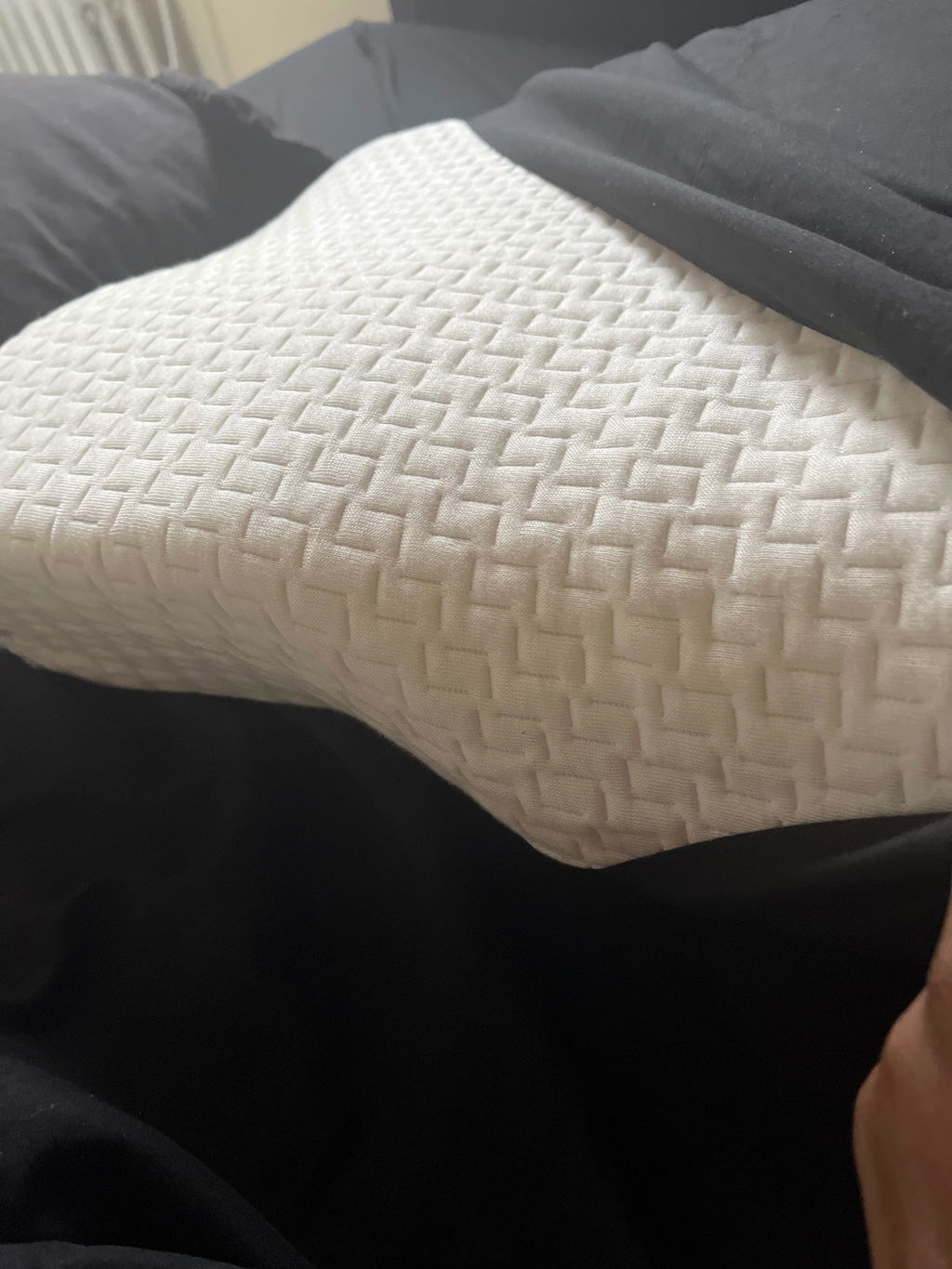
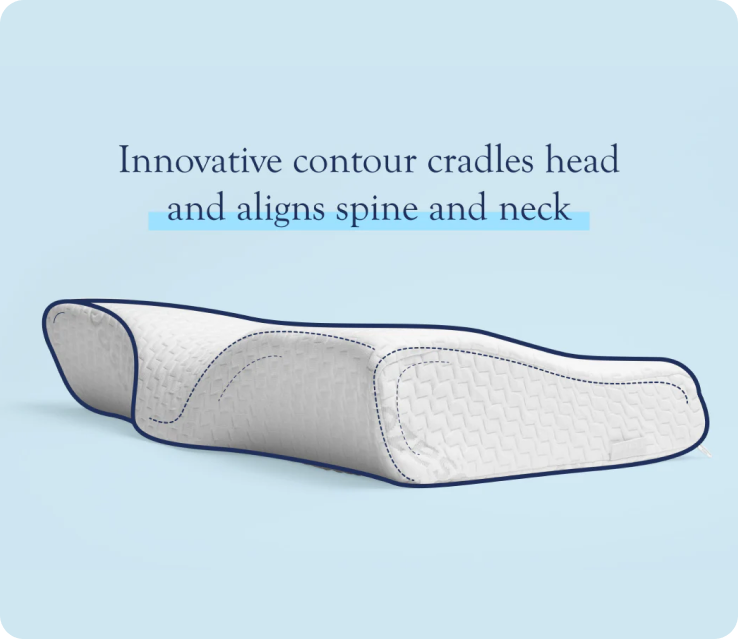
TL;DR: For broad-shouldered side sleepers, pillow height matters because it fills the bigger gap between your mattress and your neck, which helps cervical alignment and reduces morning neck and shoulder pain. The right choice is not just "taller", it is the height after your pillow compresses under your head, plus enough neck support to keep your nose and sternum lined up. Dosaze designs ergonomic pillows for stable neck support and pressure relief, and backs the fit with a 60-night risk-free trial and free shipping & returns. (If you want a starting point, see the Dosaze Contoured Orthopedic Side Sleeper Pillow.)
Why broad shoulders change the pillow height equation
If you sleep on your side, your pillow has one main job: keep your head level so your neck stays in neutral. With broad shoulders, the distance from the outside of your shoulder to the side of your head is usually larger.
That larger gap means a low pillow often leaves your head tilted down toward the mattress. A very tall or stiff pillow can push your head up, which can load the side of the neck and upper trap.
The goal is simple: your cervical alignment should look "straight" from the back, and "neutral" from the side. You should not feel like your ear is reaching for your shoulder, or your chin is tipping toward your chest.
Prerequisites before you measure anything
Pillow height is not a single number because your pillow compresses, and your mattress and sleep position change the gap you need to fill. Set these basics first, or you will chase the wrong fix.
- Pick your usual mattress zone. If you drift to the edge at night, measure there. Mattress firmness can change how far your shoulder sinks.
- Use your real sleep posture. Arm under the pillow, arm hugged to chest, or arm straight out all change shoulder height and neck angle.
- Decide if you are a "mostly side" sleeper. If you roll to your back often, you may need a pillow that stays supportive on your side without feeling too tall on your back.
- Know your main symptom. Side neck pain, front of neck tightness, shoulder pinch, or headaches can each point to a different height error.
A practical way to find your pillow height at home
You do not need a ruler and a spreadsheet. You need a quick test that tells you whether you are too low, too high, or close.
Step 1: Do the "spine line" check
Lie on your side in your normal position. Have someone take a photo from behind (or prop your phone on a stable surface and use a timer).
Look for a gentle, straight line from mid-back through your neck to the center of your head. If your head slopes down toward the mattress, your pillow height is too low. If your head slopes up away from the mattress, it is too high.
Step 2: Confirm with the "nose and sternum" cue
Stay on your side and look down with your eyes only. Your nose should point roughly in the same direction as the center of your sternum, not toward the mattress and not toward the ceiling.
This cue is useful for broad shoulders because it catches a common mistake: choosing a tall pillow that still collapses under the head, which can roll the neck even if the pillow looks high.
Step 3: Check for shoulder pressure and jaw tension
Broad shoulders often push people into one of two bad trades: too low (neck bends down) or too firm (shoulder feels jammed). Your pillow should allow your shoulder to sink into the mattress while your neck stays supported.
If you feel you must shrug your shoulder up to "meet" the pillow, your pillow is too high or too stiff. If you feel you have to tuck your chin or reach your head forward, your pillow is too low or lacks neck support.
Step 4: Run a 3-night micro trial before you judge it
Your body is sensitive to change. Give any new setup three nights before you label it a win or a failure, unless you wake with sharp pain.
Dosaze uses a 60-night risk-free trial and free shipping & returns because pillow fit is personal. The honest test is how you wake up after a short adjustment period, not how it feels for 30 seconds in the bedroom. If you want the details on how Dosaze approaches side-sleeper fit, see 5 reasons why side sleepers choose Dosaze for pain free restful sleep.
What "pillow height" really means for broad-shouldered side sleepers
Most people shop by loft, then wonder why the pillow feels wrong. For broad shoulders, there are three parts that matter more than the labeled height.
- Compressed height: How tall the pillow is after your head settles in.
- Neck support shape: Whether the pillow fills the space under your neck without forcing your head up.
- Stability: Whether the pillow holds its shape when you shift, so your cervical alignment does not change at 2 a.m.
This is where an ergonomic design helps. A pillow can feel soft and comfortable on the surface, but still provide stable neck support if the structure is designed to hold the neck while relieving pressure at the head. If you are comparing shapes, contoured pillow vs cervical pillow breaks down the differences in a practical way.
Common fit problems and what they usually mean
| What you notice | Likely pillow issue | What to try tonight |
|---|---|---|
| Neck pain on the side that is up (top side) | Pillow too high, neck is bent away from mattress | Reduce height or choose a pillow that supports the neck without stacking the head |
| Neck pain on the side that is down (mattress side) | Pillow too low, head drops toward mattress | Add height, or switch to an ergonomic pillow with better cervical alignment support |
| Shoulder feels pinched or numb | Pillow too firm or too tall, shoulder cannot sink | Try a pillow that balances pressure relief with support, and avoid pushing your shoulder forward |
| Jaw tension or teeth clenching | Neck angle is off, often too high | Lower height slightly and keep your chin neutral, not tucked |
| Waking up chasing the "cool side" | Pillow traps heat | Look for cooling materials and a design that does not let your face sink too deep |
How Dosaze thinks about pillow height for broad shoulders
Dosaze builds pillows around sleep posture first, then comfort. For broad-shouldered side sleepers, that means the pillow has to do two jobs at once: keep cervical alignment steady and still feel comfortable across the cheek, jaw, and shoulder area.
A brand-specific point that surprises many shoppers is this: a "taller" pillow can still be wrong if it collapses at the head and leaves the neck unsupported. Dosaze focuses on ergonomic neck support so the pillow does not rely on pure height alone to keep your posture neutral.
If you are anxious about getting the fit wrong, that is normal. Dosaze includes a 60-night risk-free trial with free shipping & returns so you can test real sleep, not showroom feel.
Numbered steps to choose the right height if you have broad shoulders
-
Start with alignment, not softness. Get your head level first. A pillow can feel "cloudy" and still pull your neck out of line by morning.
-
Pick a pillow that supports the neck, not just the head. Broad shoulders need the space under the neck filled in a stable way, or you end up stacking height under the skull. If you like the idea of fine-tuning loft, the Dosaze Adjustable Pillow is built for adjustability.
-
Choose the height that works with your mattress. If your shoulder sinks more, you often need less pillow height. If your shoulder sits higher, you often need more.
-
Account for your arm position. If you sleep with your bottom arm under the pillow, you may need less height because your arm lifts your shoulder and changes the gap.
-
Run the 3-night micro trial, then adjust once. Change one variable at a time: pillow height or firmness, not both at once. If you change everything, you cannot learn what fixed it.
Tips and warnings that save broad-shouldered side sleepers a lot of time
- Do not stack two pillows to "get more height". Stacking often bends the neck because the top pillow shifts, and the height is under the head more than under the neck.
- Avoid sleeping on the edge of the pillow. Broad shoulders tempt you to scoot forward. That reduces neck support and increases head tilt.
- If you change pillows, keep your mattress and sleep position consistent for a week. Otherwise you will misread the cause of your neck and shoulder pain.
- Cooling is not a bonus if you run hot. Heat wakes you up, and more wake-ups means more tossing, and more tossing means your posture breaks down more often. If overheating is part of the problem, the Dosaze Thermacool Adjustable Pillow is designed for a cooler sleep feel.
Troubleshooting: when the height seems right but you still wake up sore
If your alignment photo looks good and you still feel stiffness, the issue is often stability, pressure relief, or how you transition between side and back.
You wake up sore at the base of the skull
This often happens when your neck is not supported evenly, even if the pillow is tall enough. You may be getting height under the head but not under the neck.
Try a pillow with a clearer ergonomic shape for cervical alignment, or adjust so your neck sits on the supportive area instead of the flatter center.
You feel shoulder pain even with a higher pillow
Higher is not always better. If the pillow is too firm, it can keep your shoulder from relaxing down and back, which can create pressure near the joint.
Try a pillow that balances support with pressure relief, and check that your top shoulder is not rolling forward toward the mattress.
You sleep well at first, then the pillow "dies" overnight
This is a compression problem. The pillow may start tall, then lose support as it warms up and compresses.
Look for premium construction and durable materials that hold shape better over a full night. Dosaze designs for consistent neck support because overnight stability matters as much as first contact comfort. For more side-sleeper-specific guidance, the best pillow for side sleepers goes deeper on what tends to work.
Quick comparison: what to prioritize by sleeper type
| Sleeper profile | Top priority | Common mistake | Practical fix |
|---|---|---|---|
| Broad shoulders, mostly side | Enough height after compression plus neck support | Buying tall loft that collapses under the head | Choose an ergonomic pillow that supports the neck, then confirm with a photo test |
| Broad shoulders, side to back | Stable cervical alignment across position changes | Pillow feels too tall on back, so you ditch it at night | Use a supportive shape and keep your chin neutral when on your back |
| Broad shoulders, hot sleeper | Cooling comfort that reduces wake-ups | Deep sink that traps heat around the face | Pick cooling materials and avoid a pillow that swallows your head |
| Broad shoulders, sensitive shoulder joint | Pressure relief at the shoulder and cheek | Overcorrecting with a very firm pillow | Balance comfort and support, and keep the shoulder relaxed into the mattress |
| Dosaze ergonomic pillow shopper | Neck support and alignment first, then cooling comfort | Judging it in 1 night and returning too fast | Use the Dosaze 60-night risk-free trial and free shipping & returns to test real sleep |
Related Dosaze reading on pillow height
- Pillow Height Side Sleepers Broad Shoulders
- Pillow Height Guide For Side Sleepers With Broad Shoulders
FAQ
How high should a pillow be for a side sleeper with broad shoulders?
This matters because broad shoulders create a larger gap between your mattress and your neck, and the wrong height can pull your neck out of neutral. The right pillow height is the one that keeps your head level after the pillow compresses, so your cervical alignment stays straight and your neck support feels steady. A quick way to check is a photo from behind, if your head slopes up or down, adjust height or choose a more ergonomic shape.
Why does a taller pillow sometimes make my neck pain worse?
This comes up when people try to fix a low pillow problem by adding height under the head instead of support under the neck. A too-high pillow can bend your neck away from the mattress and load the side of the neck, even if it feels comfortable at first. Dosaze focuses on ergonomic neck support because stable cervical alignment usually feels better than simply stacking loft.
Is pillow firmness or pillow height more important for broad shoulders?
You need both because height sets alignment and firmness affects how much that height collapses overnight. For broad shoulders, the "right" height on a label can fail if the pillow compresses too much at the head and loses neck support. If you are testing a Dosaze pillow, use the 60-night risk-free trial to judge how your neck and shoulders feel in the morning, not just at bedtime.
What if my pillow feels right at first but I wake up flat and sore?
This usually means the pillow loses support as you sleep, so your head slowly sinks and your cervical alignment drifts. A pillow that holds its shape better can reduce that overnight posture slide and help with morning neck and shoulder pain. Dosaze designs for consistent neck support, and the free shipping & returns policy gives you room to test whether the pillow stays supportive through a full night.
Should I put my arm under the pillow if I have broad shoulders?
Arm position matters because it changes shoulder height and can change the pillow height you need. If your bottom arm is under the pillow, you may accidentally add height and create neck bend, or you may reduce the need for a taller pillow since your shoulder is already elevated. If you are trying to dial in a Dosaze pillow, keep your arm position consistent for a few nights so your feedback is clear.
How do I know if my pillow is too low for side sleeping?
This matters because a too-low pillow often causes your head to tilt down, which can strain the side of the neck and upper shoulder area. Your pillow is likely too low if a photo from behind shows your head sloping toward the mattress, or if you wake with stiffness that improves when you manually lift your head slightly. An ergonomic pillow with better neck support can fix this without forcing a steep head angle.
What makes a return policy actually useful when buying a pillow for neck pain?
Pillows need real nights of testing because the first impression can differ from how your body feels after several mornings. A useful policy gives you enough time to adjust and makes returns simple if the pillow does not help. Dosaze offers a 60-night risk-free trial with free shipping & returns, which reduces the stress of spending money and guessing wrong.
Your next best step tonight
Take one alignment photo from behind in your normal side-sleep position and make one change based on what you see. If your head tilts down, add height or choose a pillow with more neck support. If your head tilts up, lower height or switch to a shape that supports the neck without lifting the skull.
If you want a lower-risk way to test an ergonomic option, Dosaze backs the fit with a 60-night risk-free trial and free shipping & returns, so you can focus on how your neck and shoulders feel in the morning.