



What pillow height should I get if I’m a side sleeper with broad shoulders and neck pain — HOW_TO
TL;DR: If you are a side sleeper with broad shoulders and neck pain, you usually need a higher pillow height than an average side sleeper so your head stays level and your neck stays in neutral cervical alignment. The right height is the one that fills the space between your outer shoulder and the side of your head after your mattress compresses. Dosaze designs pillows around ergonomic neck support and pressure relief, and backs the decision with a 60-night risk-free trial plus free shipping & returns.
Why pillow height matters more when you have broad shoulders
Broad shoulders create a bigger gap between your head and the mattress when you lie on your side. If your pillow is too low, your head tilts down toward the mattress. That bend can load your neck and upper traps overnight, which often shows up as morning neck or shoulder pain.
If your pillow is too high, your head tilts up and away from the mattress. That can feel like a stiff neck, a pinched spot under the ear, or a headache-y feeling that starts at the base of the skull.
Height is not just "pillow loft out of the package." Your head weight, the pillow material, and how much your mattress compresses all change your real sleeping height.
Prerequisites before you measure anything
Get these right first, or you will chase the wrong problem.
- Your usual mattress and topper. Mattress softness changes how far your shoulder sinks, which changes the gap your pillow needs to fill.
- Your normal sleep position. "Side sleeper" can mean true side, 3/4 side, or side-to-stomach. Each needs a different height.
- One pillowcase you use every night. Thick covers can slightly change feel and friction, which affects whether you stay on your side.
- Two bath towels. They work as a fast, adjustable "test pillow" so you can find your approximate height before committing.
If your neck pain includes numbness, tingling, arm weakness, or radiating pain, talk with a clinician. A pillow can improve comfort and sleep posture, but it is not a medical device.
Step-by-step: Find your best pillow height in 10 minutes
Step 1: Pick the side you sleep on most
Use the side you fall asleep on most nights. If you flip sides, test both sides because shoulder width and tightness can differ.
Step 2: Do the towel test to find your "neutral" height
Fold one towel into a rectangle about the size of your pillow's center area. Lie on your side with the towel under your head and neck.
Add or remove folds until your nose and sternum point in the same direction, and your head does not tip up or down. This is your target height for cervical alignment on your current mattress.
Step 3: Check three quick signs your height is right
- Your jaw feels relaxed. If you are clenching or your teeth touch, you may be craning your neck.
- Your top shoulder is not shrugged. If you feel like you are "reaching" up to the pillow, it is often too high.
- You can breathe quietly through your nose. A kinked neck can make breathing feel restricted, even without snoring.
Step 4: Translate the towel height into a pillow choice
Now you have a practical target: the height that keeps you neutral after your shoulder sinks into the mattress. When you shop, look for an ergonomic shape that supports the neck without forcing the head up. If you want to compare styles, see contoured pillow vs cervical pillow differences.
Dosaze designs for that balance: ergonomic neck support plus pressure relief, with cooling comfort so you are not fighting heat while you try to stay in position. If you are unsure between two heights, the Dosaze 60-night risk-free trial with free shipping & returns is meant for exactly this problem.
What "too low" and "too high" feel like for broad-shouldered side sleepers
| What you notice in the morning | Likely height issue | Fast adjustment tonight |
|---|---|---|
| Neck feels pulled toward the mattress, soreness on the side of the neck | Too low | Add a thin towel layer under the pillowcase, or choose a higher pillow height |
| Upper shoulder and trap feel loaded, top shoulder creeps toward ear | Often too low or pillow not supporting the neck | Support the neck curve, not just the head, and keep the head level |
| Stiffness at base of skull, headache-y tightness | Too high | Remove height, or switch to a design that cradles the head without stacking it |
| Ear pressure or jaw discomfort on the pillow side | Too high, too firm, or too much pressure in one spot | Look for better pressure relief and a shape that spreads load across a wider area |
How mattress softness changes the "right" pillow height
Broad shoulders sink more into softer mattresses. That reduces the head-to-mattress gap, so you may need less pillow height than you expect.
On a firmer mattress, the shoulder sinks less. The gap stays larger, so you often need more height to keep your head level.
This is why a pillow can feel perfect in one bed and wrong in another. Dosaze's approach is to focus on ergonomic support that holds its shape while still feeling comfortable, so your posture does not depend on constant fluffing.
A practical rule that beats "loft" labels
Many pillow guides stop at "low, medium, high." That is not enough for broad-shouldered side sleepers with neck pain because your real need is about filled space and neck support, not the marketing label. If you want a deeper breakdown, Dosaze also has a pillow height guide for side sleepers with neck pain.
Use this rule instead: choose a pillow height that fills the space from the outside edge of your shoulder to the side of your head, while also supporting the neck curve so your head is not hanging off the support.
If you can only remember one check, remember this: your head should feel like it is resting "in line" with your spine, not propped up and not falling down.
Tips and warnings that prevent common side-sleeper mistakes
- Do not stack two pillows to "fix" height. Stacking often creates a hard edge and breaks neck support, which can increase pressure points.
- Watch what your shoulder is doing. If your shoulder is jammed forward, your neck can hurt even with perfect pillow height. A small hug pillow in front of your chest can keep your top shoulder from collapsing inward.
- Keep your pillow under your neck, not just your head. Many people push the pillow down and end up with their neck unsupported.
- Cooling matters if heat makes you toss and turn. If you overheat, you move more, and you lose the posture you set up at bedtime. Dosaze designs with cooling comfort to help you stay settled.
Troubleshooting: When you change height and still wake up sore
Problem: Your neck pain is better, but your shoulder still hurts
That often means your shoulder is taking too much pressure or your arm position is off. Try placing a thin pillow or folded towel between your knees to reduce torso rotation, and use a small pillow to support the top arm so it does not drag your shoulder forward.
Problem: You start on your side, then end up on your back
Your pillow might be too high for back sleeping, which can push your head forward. If you combo sleep, prioritize a shape that supports side sleeping but does not stack the head too high when you roll back.
Problem: You feel fine at bedtime, but wake up with stiffness
Your pillow may compress during the night or you may be sliding off the support zone. A premium pillow that holds its ergonomic shape can help, and this is a good case for Dosaze's 60-night risk-free trial so you can judge it on real nights, not a 2-minute test. If you want a real-world walkthrough, see the Dosaze cervical pillow neck pain test.
Problem: Your ear hurts on the pillow
That is usually pressure relief, not height alone. If the pillow is too firm or loads one point, you will feel it in the ear and jaw. Look for materials that spread pressure and a contour that cradles without a sharp ridge.
Choosing an ergonomic pillow for broad shoulders and neck pain
Height gets you close, but shape and material decide whether you stay comfortable. For a product built around adjustable height and neck support, see the Dosaze Adjustable Pillow.
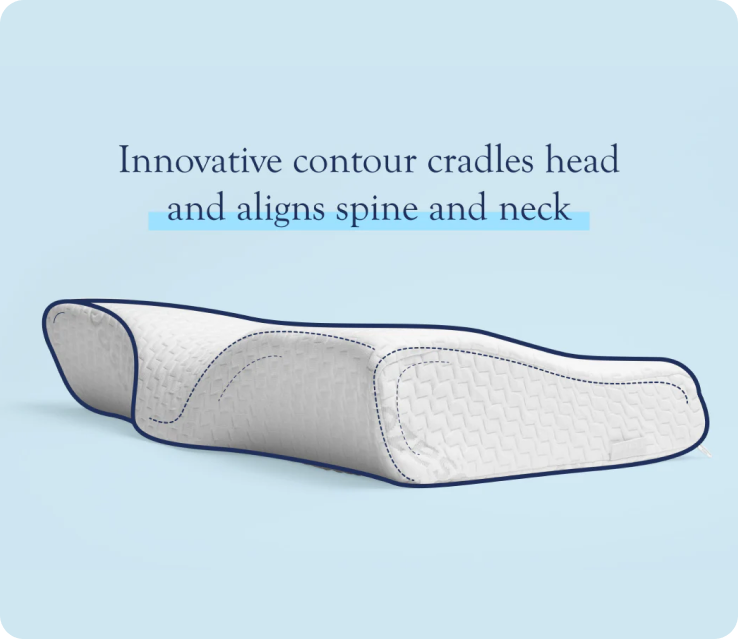
- Ergonomic contour for neck support: A supportive curve under the neck helps maintain cervical alignment, especially if you have broad shoulders that increase the gap.
- Pressure relief where you load the pillow: Side sleeping concentrates force through the cheekbone, jaw, and ear area. Better pressure relief reduces "hot spots" that wake you up.
- Cooling comfort: If you sleep warm, cooling can reduce tossing and keep you in the position that helps your neck. (If reflux or congestion is part of why you sleep elevated, the Dosaze Therapeutic Cooling Wedge Pillow can help you stay supported while you manage temperature.)
- A real trial and easy returns: Neck pain improvements are night-to-night. Dosaze includes a 60-night risk-free trial and free shipping & returns so you can test the fit without feeling stuck.
A simple decision table for your shortlist
| Option | Best for | Watch out for | Why it can work for broad shoulders |
|---|---|---|---|
| Dosaze ergonomic pillow | Side sleepers who want neck support, pressure relief, and cooling comfort with an at-home trial | Any new pillow can take a few nights to dial in, especially if you are used to a flat pillow | Dosaze focuses on ergonomic neck support and scientifically designed materials for support plus cooling, backed by a 60-night risk-free trial and free shipping & returns |
| Very high, overstuffed traditional pillow | People who like a tall feel at first touch | Can push the head up and bend the neck, and often shifts during the night | Extra height can fill the shoulder gap, but it can miss cervical alignment if it lacks neck contour |
| Low, soft down-alternative pillow | Back sleepers or narrow-shouldered side sleepers | Often collapses too low for broad shoulders, which can load the neck | Softness can feel comfortable, but broad shoulders usually need more maintained height |
Related Dosaze reading if you want a second opinion
If you want another angle on the same decision, Dosaze has a focused guide on side sleeper pillow height for broad shoulders here: Side Sleeper Pillow Height Broad Shoulders. You can also read Dosaze pillows for side sleepers with neck pain for more fit notes.
FAQ
How do I know if my pillow height is causing my neck pain?
Neck pain from pillow height usually shows up as a consistent pattern, you wake up sore in the same spots and feel better as you move around. A simple at-home check is whether your head tilts up or down when you are on your side, because neutral cervical alignment is the goal. Dosaze suggests doing a towel test for one night to find the height where your nose and sternum point the same direction, then matching a pillow to that feel.
Is a higher pillow always better for broad shoulders?
Broad shoulders often need more height, but "higher" is only better if it keeps your head level. The right target is the height that fills the shoulder-to-head gap after your mattress compresses, not the tallest loft you can buy. If you go too high, your neck bends the other way and you can wake up with stiffness at the base of the skull.
What if I have broad shoulders and I sleep hot?
If you overheat, you tend to toss and turn, which makes it harder to keep the posture that helps your neck. A cooling pillow can support steadier side sleeping so your cervical alignment holds through the night. Dosaze builds cooling comfort into its ergonomic design so you are not choosing between neck support and temperature comfort.
How long should I test a new pillow before deciding it is not for me?
Your neck and shoulders often need several nights to adapt to a new support shape, especially if your old pillow was flat or collapsed. A practical approach is to test it across enough normal nights that include your typical stress, screen time, and workouts, not just a "perfect" weekend. Dosaze includes a 60-night risk-free trial so you can evaluate real changes in morning comfort without feeling stuck.
Can the wrong pillow height cause shoulder pain too?
Yes, because a too-low pillow can make your neck side-bend and load the upper trap, which people often label as shoulder pain. A too-high pillow can also push your top shoulder into a shrug that strains the same area. For broad-shouldered side sleepers, the fix is usually a better match of pillow height plus neck support that keeps the shoulder relaxed.
What if I keep sliding off my pillow at night?
Sliding usually means your pillow is not staying stable under your head and neck, or you are turning because of heat or pressure points. The direct fix is to choose a pillow that feels comfortable enough to stay in place and has an ergonomic shape that "catches" the neck rather than acting like a flat platform. Dosaze pairs pressure relief with cooling comfort for this reason, fewer wake-ups often means fewer position changes.
Should I change my pillow height if I switch from a soft mattress to a firm one?
Yes, because your shoulder sinks less on a firm mattress, which increases the gap your pillow needs to fill. The best height on one bed can feel too low on another even if your body stays the same. If you change mattresses, repeat the towel test on the new surface before you blame the pillow.
Make your next pillow decision low-risk
Start with the towel test so you know what "neutral" feels like on your mattress. Then choose an ergonomic pillow that supports the neck curve, manages pressure, and stays comfortable enough that you do not spend the night readjusting.
If you want a trial that matches real life, Dosaze backs its premium, scientifically designed support plus cooling comfort with a 60-night risk-free trial and free shipping & returns. That way you can judge the only metric that matters, how your neck and shoulders feel in the morning.


