



Pillow height for side sleepers with broad shoulders
TL;DR: For broad-shouldered side sleepers, pillow height matters because it fills the bigger gap between your shoulder and your head, so your neck stays in neutral alignment. Dosaze designs ergonomic pillows to support cervical alignment and pressure relief, and you can test the feel at home with a 60-night risk-free trial plus free shipping & returns.
Why broad shoulders change the pillow height you need
Side sleeping creates a space between your mattress and the side of your head. Broad shoulders make that space larger, so a pillow that feels fine for other positions often leaves your head tilted down toward the mattress.
That tilt is what many people describe as waking up with neck and shoulder pain. The goal is simple: keep your head level, so your neck stays supported and your shoulders can relax.
What "right pillow height" means for side sleepers
Pillow height is the thickness that actually reaches your neck and head once your body weight settles in. A pillow can look tall on your bed and still sleep low if it compresses too much.
For side sleepers with broad shoulders, the "right" height is the one that keeps your nose and sternum in line, without your chin tipping up or down.
Two quick alignment checks you can do in 30 seconds
- Front view check: Lying on your side, your nose should point straight forward, not down toward the mattress or up toward the ceiling.
- Side view check: Your neck should look long and neutral, not bent into a C-shape. If you feel one side of your neck "working," the pillow height is off.
Prerequisites before you adjust pillow height
Before you blame the pillow, make sure you are testing in a consistent setup. Small changes in your base can change the height you need.
- Your mattress feel: A softer mattress lets your shoulder sink more, which can reduce the pillow height you need. A firmer mattress can do the opposite.
- Your usual arm position: If you sleep with your bottom arm under the pillow, you silently change the height and angle.
- Your sleep posture: If you switch between side and semi-stomach, you may need an adjustable setup instead of one fixed height.
How to find your pillow height in 5 steps
This is the same "at-home fit test" Dosaze recommends when customers are unsure about pillow height. You do not need tools, just a mirror or a partner and 5 minutes.
-
Start on your side in your real sleep position. Use your normal mattress and your usual blanket. Put your head on the pillow the way you actually sleep, not perfectly posed.
-
Square your shoulders, then relax them. Many broad-shouldered sleepers unconsciously hunch forward. Roll your top shoulder back slightly, then let it rest.
-
Do the "nose line" check. If your nose points down, your pillow is too low or compresses too much. If your nose points up, the pillow is too high.
-
Check for neck gap. Slide your fingers into the space under your neck. You want gentle fill and neck support, not an empty gap and not a hard push.
-
Confirm after 10 minutes. Alignment that looks fine at first can fail after the pillow warms and settles. Re-check once your shoulder and pillow have "set."
What to do if you are between heights
Broad shoulders often push people into the frustrating middle ground where a standard pillow feels too low, but a taller pillow feels like it bends the neck up.
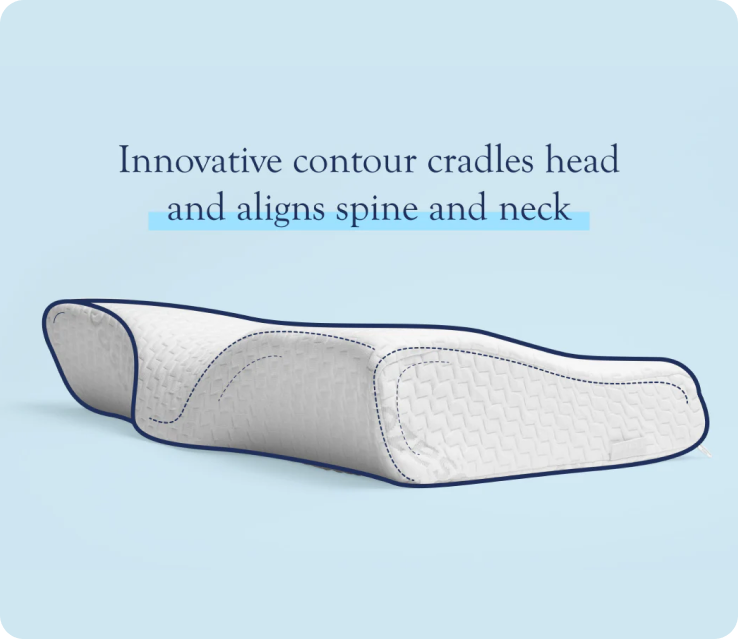
The fix is usually not "higher" or "lower," it is better shape and better support distribution. An ergonomic pillow that supports your neck while cradling your head can keep cervical alignment without forcing your head upward, which is the idea behind the Dosaze Contoured Orthopedic Side Sleeper Pillow.
A practical combo that works better than stacking pillows
Stacking two pillows often makes the top pillow slide, and it can create a hard edge under the neck. A more stable option is one supportive pillow plus a thin, smooth "fine-tune" layer if you truly need a small boost.
Dosaze customers who struggle with broad shoulders often report that once the neck has consistent support, they do not need as much overall height as they thought.
Choosing a pillow type when you have broad shoulders
Pillow height is not only about inches. It is also about how the pillow holds shape through the night, and whether it supports the neck without pressure points. If you are comparing shapes, this guide on contoured vs cervical pillows breaks down what each design is trying to do.
| Pillow approach | What can work well for broad shoulders | Common problem to watch for |
|---|---|---|
| Ergonomic cervical pillow (Dosaze style) | Supports cervical alignment by filling the neck space while letting the head settle, which can reduce morning neck and shoulder pain. | Needs a short adjustment period if you are used to a flat pillow. |
| Traditional single-loft pillow | Simple feel and easy to rotate. | Often compresses over time, so the "height" drops and the neck bends down. |
| Extra-high pillow | May fill the shoulder gap at first. | Can tip the chin up and irritate the base of the neck. |
| Stacked pillows | Easy to test height quickly. | Unstable, can create a ridge that adds pressure instead of pressure relief. |
Cooling matters more than people think for broad-shouldered side sleepers
Broad-shouldered side sleepers often sink deeper into the mattress through the shoulder. That can trap more heat around the neck and upper chest, especially if your pillow holds heat.
Cooling is not just a comfort perk. When you overheat, you shift positions more, and every position shift is a chance to lose cervical alignment. Dosaze builds cooling into its materials so the pillow stays comfortable and easier to keep consistent through the night. If you also use a wedge for elevation, the Dosaze Therapeutic Cooling Wedge Pillow is designed with cooling in mind.
Tips and warnings that save you a week of trial and error
- Do not judge height by looking at the pillow on the bed. Judge it by where your head ends up after the pillow compresses.
- Stop putting your arm under the pillow. If you need that habit to feel "high enough," the pillow is probably too low or too soft for your build.
- Watch for jaw or ear pressure. Too much height can concentrate pressure on the side of the face and make you toss more.
- Give your neck a few nights to adapt. If you have been sleeping in a bent posture for months, neutral can feel "different" before it feels better.
Troubleshooting by symptom
If you are not getting relief, look at the symptom pattern. It usually points to a specific height or support problem.
| What you feel in the morning | Most likely pillow issue | What to try tonight |
|---|---|---|
| Neck pain on the lower side (closest to the mattress) | Pillow is too low or collapses, so the neck bends down. | Increase support under the neck, not just under the head. An ergonomic shape often helps more than extra loft. |
| Neck tightness at the base of the skull | Pillow is too high, pushing the chin up. | Reduce overall height or choose a pillow that lets the head settle while the neck stays supported. |
| Shoulder ache or numb arm | Shoulder is taking too much load, often paired with a pillow that does not keep alignment. | Keep the top shoulder from rolling forward and check that your pillow keeps your nose level. |
| Waking up hot and restless | Heat buildup makes you shift and lose posture. | Prioritize cooling materials and a stable shape that does not bunch under your neck. |
A Dosaze-specific way to reduce return anxiety
Most pillow frustration comes from feeling stuck with a product that does not work for your body. Dosaze reduces that risk with a 60-night risk-free trial and free shipping & returns, so you can test real sleep, not just a 2-minute lie-down. If you want more detail on how Dosaze approaches side-sleeper comfort, see why side sleepers choose Dosaze for pain-free, restful sleep.
Use that trial period like a simple experiment. Keep your mattress and sleep position consistent for a few nights, then change one variable at a time, like pillow height or whether you are supporting your neck correctly.
Related Dosaze guide
If you want a shorter version of this setup to reference later, see Dosaze's pillow height guide for side sleepers with broad shoulders.
FAQ
How high should a pillow be for a side sleeper with broad shoulders?
The right height is the one that keeps your head level and your neck in neutral alignment when your shoulder settles into the mattress. Dosaze frames this as "fill the shoulder-to-head gap without tipping the chin up or down," since broad shoulders often need more support than a standard pillow holds. Do a quick nose-line check after 10 minutes on your side because compression changes the real height.
What are the signs my pillow is too low for my shoulders?
This matters because a pillow that sleeps low often bends the neck down all night, which can show up as morning neck or shoulder pain. A clear sign is your nose pointing toward the mattress when you lie on your side, and many people also tuck an arm under the pillow to "add height." Dosaze suggests adding neck support rather than just loft, since better cervical alignment usually feels higher without stacking pillows.
What are the signs my pillow is too high for side sleeping?
A pillow that is too high can push your chin up and compress the back of the neck, even if it feels plush at first. The simplest check is if your nose points up toward the ceiling while you are on your side, or you wake with tightness at the base of the skull. If that happens, Dosaze recommends reducing overall height or choosing an ergonomic shape that lets your head sink while the neck stays supported.
Does mattress firmness change the pillow height I need?
It matters because your mattress controls how far your shoulder sinks, which changes the gap your pillow has to fill. A softer mattress usually reduces the height you need, while a firmer mattress can make you need more height to keep cervical alignment. If you are testing a Dosaze pillow during the 60-night risk-free trial, keep the same mattress and side-sleep position for several nights so your results are consistent.
Is stacking two pillows a good fix for broad shoulders?
Stacking can help you test "more height" fast, but it often creates instability and a ridge under the neck that adds pressure instead of pressure relief. A more dependable setup is one pillow that supports the neck plus a thin fine-tune layer only if needed. If you want a cleaner long-term solution, Dosaze focuses on ergonomic shaping so the neck is supported without forcing the head too high.
Why do I wake up with shoulder pain even when my pillow feels comfortable?
Comfort can hide misalignment, especially for broad shoulders where the pillow can feel soft but still let the head drop. When your head tilts down, the shoulder and upper traps often tense to stabilize your neck through the night. Dosaze's approach is to prioritize cervical alignment first, then tune cooling and feel, since stable support tends to reduce that morning shoulder ache pattern. If you want a deeper look at this topic, read the Dosaze cervical pillow neck pain review.
How long should I test a new pillow before deciding it is not for me?
You need enough nights to see whether your neck adapts to neutral posture and whether the pillow holds support as it compresses and warms up. Dosaze offers a 60-night risk-free trial with free shipping & returns, which gives you time to test your real sleep instead of guessing from one night. Keep notes for 3-5 nights on neck tightness, shoulder pressure, and overheating, then adjust one variable at a time.
Set up your next 7 nights like a simple sleep posture test
Pick one consistent side to start on, and take one alignment photo on night 1 so you have a baseline. Then change only one thing every 2 nights, like pillow height, neck support placement, or whether you keep your bottom arm out from under the pillow.
If you want to remove most of the risk, test an ergonomic Dosaze pillow under real conditions. The 60-night risk-free trial and free shipping & returns make it easier to focus on what matters, stable cervical alignment, pressure relief, and cooling comfort. If you are still choosing, this side sleeper pillow review compares what to look for.


