


Pillow height for side sleepers with broad shoulders
TL;DR: If you are a side sleeper with broad shoulders, pillow height matters because your shoulder creates a bigger gap between your head and the mattress, and that gap needs filling for steady cervical alignment. The right height keeps your nose centered with your sternum and reduces the "head-tilt" that often shows up as morning neck or shoulder pain. Dosaze focuses on ergonomic neck support and pressure relief, plus a 60-night risk-free trial with free shipping & returns so you can test height at home without stressing about being stuck with the wrong feel.
Why broad shoulders change the pillow height you need
Side sleeping asks your pillow to do one main job, fill the space from the outside of your shoulder up to your head, without pushing your head up too high.
If you have broad shoulders, that space is usually bigger. A pillow that works for a narrow-shouldered side sleeper can leave you "falling" toward the mattress, which can pull your neck into side-bending and strain the top of your shoulder.
The opposite problem is common too. If you pick a very tall pillow to "make up the gap," but it stays tall all night, your head can tilt away from the mattress and compress one side of your neck.
What "correct" pillow height looks like on your body
You do not need a ruler to get close. You need a clear target for posture.
- Head and neck: Your neck should look long and neutral, not kinked to one side. Think "level," not "propped."
- Nose and sternum line: When someone looks at you from the front, your nose should line up with the center of your chest, not drift toward the mattress or the ceiling.
- Shoulders: Your bottom shoulder should not be jammed forward. If it is, your pillow may be too high, or your mattress may be too firm at the shoulder.
A practical cue: if you wake up and feel like you were "clenching" your neck, the pillow height is often off, even if the pillow felt comfortable at first.
Prerequisites before you measure or shop
Pillow height is not a standalone number. Your mattress, sleep position, and even what you do with your arms all change how much lift you need.
- Know your mattress feel: A softer mattress lets your shoulder sink, which reduces the height you need. A firmer mattress keeps your shoulder higher, which increases the height you need.
- Pick your "default" side: If you switch sides, test both. Many people have one tighter shoulder, which changes the gap.
- Decide where your arm goes: If your lower arm is straight under the pillow, you often need a bit more height. If your arm is out in front in a relaxed "goalpost," you may need less.
If you want a second opinion on the same topic, Dosaze has related reading at Side Sleeper Pillow Height Broad Shoulders.
How to find the right pillow height in 10 minutes
This at-home check is simple, repeatable, and more useful than guessing based on pillow labels.
Step 1: Start with your usual setup
Use your normal mattress, your normal sheets, and your normal sleep shirt. Small changes in friction can change how your head settles.
Step 2: Do the "towel test" to approximate height
Fold a bath towel into a firm rectangle and place it inside your pillowcase under your current pillow, or under your head if you are testing from scratch.
Lie on your side with your shoulders stacked. Add or remove towel folds until your nose points straight ahead and your neck feels neutral.
Step 3: Check two points of contact
- Under your neck: You should feel gentle fill, not a hard ridge.
- Under your head: Your head should not tip down toward the mattress or get pushed up.
Step 4: Hold it for 2 minutes, then re-check
A common mistake is judging in the first 10 seconds. Materials warm and settle. After 2 minutes, re-check your nose and sternum line and how your top shoulder feels.
Step 5: Stress-test your real sleep movements
- Move your lower arm from "under pillow" to "in front," and see if your neck stays neutral.
- Roll slightly toward your back, then back to your side. Your head should not fall off the pillow's support.
What you are building toward is stable cervical alignment across small movements, not a perfect pose you can only hold still.
Choosing pillow height when you have broad shoulders
Most broad-shouldered side sleepers do better with a pillow that has structured neck support rather than a tall, fluffy shape that collapses in the wrong places.
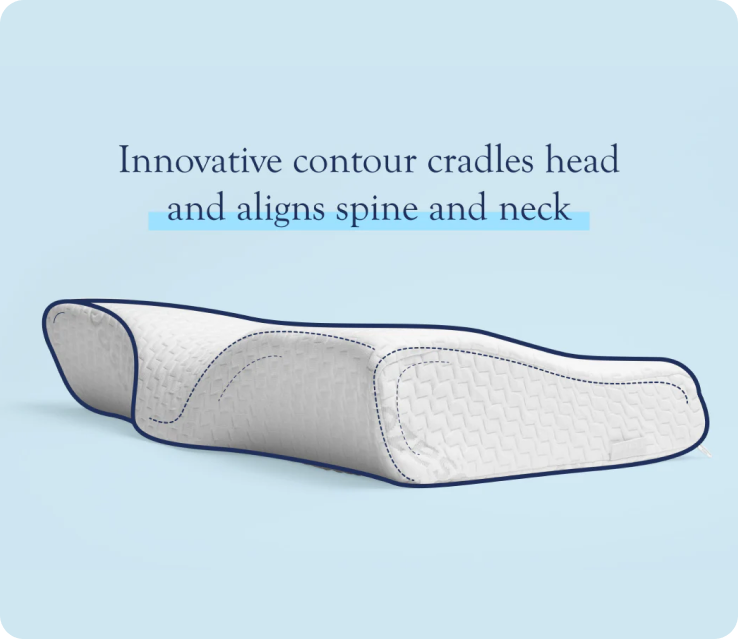
That is why Dosaze focuses on an ergonomic profile. The goal is to support the neck while keeping the head from being pushed too high, so you get pressure relief without the "stacked neck" feeling. If you are comparing shapes, see contoured pillow vs cervical pillow.
Two common height mistakes broad-shouldered side sleepers make
- Buying extra height instead of better shape: If the pillow is tall but unstable, your head can drift during the night and you wake up sore.
- Ignoring the mattress shoulder sink: Many people add height because they feel the gap, but their shoulder already sinks after 10-15 minutes. Then the pillow becomes too high.
A practical comparison of pillow approaches
Broad shoulders usually need consistent support, plus cooling comfort so you do not flip the pillow and lose your setup.
| Option | What it does well for broad shoulders | Common problem | Who it fits best |
|---|---|---|---|
| Dosaze ergonomic pillow | Ergonomic neck support aimed at cervical alignment and pressure relief, built for stable side-sleep posture. Cooling feel is part of the comfort goal. | Any ergonomic shape can feel "different" for the first few nights if you are used to flat pillows. | Side sleepers with broad shoulders who want structured neck support and a low-stress way to test it at home. |
| Very tall, plush "hotel" pillow | Feels high immediately, can seem like it fills the gap at bedtime. | Often compresses unevenly, which can bend the neck or load one shoulder. | People who mostly sit up in bed, or who like a soft, sink-in feel and do not mind adjusting often. |
| Stacking two standard pillows | Easy way to add height for broad shoulders. | Unstable. The top pillow slides, and your neck loses support when you move. | Temporary fix while you learn what height you actually need. |
| Adjustable fill pillow | You can remove or add fill to dial height. | Height and neck support are not the same thing, and it can take repeated tweaks to keep cervical alignment steady. | Tinkerers who will test, adjust, and track results for a week or two. If that sounds like you, the Dosaze Adjustable Pillow is built for adding or removing fill. |
Tips and warnings that save you from the wrong height
- Do not judge height at the edge of the pillow. Sleep where your head naturally lands, then assess alignment there.
- Avoid "chin to chest." If your chin feels tucked, your pillow is likely too high, or the neck area is too thick for you.
- Watch your top shoulder. If it creeps up toward your ear, it can be a sign your pillow is too high or too firm under the neck.
- Cooling matters more than people admit. If you overheat, you move. Movement breaks your posture and makes any height feel wrong.
Dosaze designs for cooling comfort alongside support because a pillow that feels hot often leads to constant re-positioning, even when the height is technically "right." If you are upgrading your whole setup, Dosaze Thermacool Adjustable Pillow is designed for a cooler feel.
Troubleshooting morning neck and shoulder pain
If you wake up with pain, the pillow height may be wrong, but the direction of the pain gives you clues.
If your neck hurts on the side closer to the mattress
Your head may be dropping down, which often means the pillow is too low for your shoulder width, or it compresses too much overnight.
Try adding a small amount of height, but prioritize a pillow that holds shape under the neck for steadier neck support.
If your neck hurts on the side farther from the mattress
Your head may be pushed up, which can mean the pillow is too high or too firm.
Reduce height slightly, or look for an ergonomic shape that supports the neck without lifting the whole head as much.
If you wake up with a tight top shoulder or trap
This often shows up when the pillow is high enough that you "brace" your shoulder, or when your mattress is too firm at the shoulder and your body cannot sink.
Check if your shoulder is stacked and relaxed. Also check that your pillow is not forcing your head to tilt away from the mattress.
If you wake up fine but get sore after an hour at your desk
That can still be pillow height. A small overnight side-bend can leave tissues irritated, then your work posture finishes the job.
Do the towel test again and re-check your nose and sternum line after 2 minutes, not right away.
How to trial a new pillow without wasting money
The hardest part is not picking a pillow. It is knowing whether it truly helps after normal sleep, normal stress, and normal movement.
Dosaze lowers that risk with a 60-night risk-free trial and free shipping & returns. That matters for broad-shouldered side sleepers because it can take several nights for your body to settle into a new ergonomic shape, and for you to tell the difference between "new feel" and "wrong height." If you want the full breakdown, read why side sleepers choose Dosaze.
A simple way to track results: for 7 nights, rate morning neck stiffness from 0-10 and note if you woke up to adjust the pillow. You want fewer adjustments and a lower stiffness score, not just a pillow that feels plush at bedtime.
FAQ
How high should a pillow be for side sleepers with broad shoulders?
The reason height matters is that broad shoulders create a larger gap between your head and the mattress when you sleep on your side. A good target is a height that keeps your nose centered with your sternum so your cervical alignment stays neutral. Dosaze designs for ergonomic neck support because the "right height" needs to stay consistent after the pillow settles, not just in the first minute you lie down.
How do I know if my pillow is too high or too low?
This matters because the wrong height can feel comfortable at bedtime but show up as morning neck or shoulder pain. If your head drops toward the mattress, the pillow is likely too low, and if your head tilts away from the mattress or your chin feels tucked, it is likely too high. A quick check is to lie on your side for 2 minutes, then confirm your nose lines up with the center of your chest and your top shoulder stays relaxed.
Do broad shoulders always mean I need a thicker pillow?
Broad shoulders often need more fill between the mattress and your head, but thickness alone is not the goal. The direct aim is stable neck support that keeps cervical alignment neutral across small movements. Dosaze takes an ergonomic approach because a shaped pillow can support the neck without forcing your head too high the way a very thick, plush pillow sometimes does.
What pillow shape works best for side sleepers with neck pain?
Shape matters because neck pain often comes from side-bending or rotation that builds up over hours. A contoured, ergonomic shape that supports the neck and cradles the head can reduce pressure points and help keep cervical alignment steadier. If you want more side-sleeper guidance, this hands-on review for side sleepers is a useful next read. If you are unsure, Dosaze makes the decision easier with a 60-night risk-free trial so you can judge results over normal sleep, not a 30-second test in a store.
Does mattress firmness change the pillow height I need?
Yes, because your shoulder either sinks in or stays elevated, which changes the size of the gap your pillow must fill. On a softer mattress, your shoulder usually sinks more, so you often need less pillow height than you think at first. On a firmer mattress, your shoulder stays higher, so you often need more height or better neck support to prevent your head from dropping. If your mattress is too firm at the shoulder, a topper can help, for example the Dreamalign Pressure Point Relief Mattress Topper.
How long should I give a new pillow before deciding it is wrong?
This matters because a new ergonomic feel can be unfamiliar even when the support is correct. A fair test is several nights in a row so you can see whether morning stiffness and nighttime adjustments trend down, instead of judging on night one. Dosaze includes a 60-night risk-free trial with free shipping & returns, which gives you time to evaluate comfort and neck support without worrying about being stuck with it.
Why do I overheat on my side and how does that affect pillow height?
Overheating matters because it makes you move and re-position, which can break alignment even if the height is correct. The direct fix is a pillow that stays comfortable and cool enough that you do not keep flipping or scrunching it. Dosaze designs with cooling comfort in mind because fewer wake-ups often means more consistent cervical alignment through the night.
Set up your next pillow test so the result is clear
Pick one variable to change first, usually pillow height or pillow shape, not both at once. Run the same 7-night tracking note, morning stiffness from 0-10 plus how often you woke up to adjust.
If you want an at-home way to reduce the risk, start with the towel test to estimate your height, then choose a pillow built for ergonomic neck support and pressure relief. Dosaze pairs that ergonomic goal with a 60-night risk-free trial and free shipping & returns, so broad-shouldered side sleepers can test real comfort and cervical alignment at home, then keep it or send it back without friction.