


Pillows for side sleepers: Dosaze recommends the best options
TL;DR: Side sleepers usually need a pillow with enough height and stability to keep the head level with the spine, plus pressure relief at the shoulder. Dosaze designs its ergonomic pillows for neck support, cervical alignment, and cooling comfort, and backs the fit with a 60-night risk-free trial and free shipping & returns.
What side sleepers should look for in a pillow
If you sleep on your side, your pillow has one main job: fill the space between your head and the mattress so your neck stays neutral. Too low and your head tips down. Too high and it tilts up, which can show up as morning neck or shoulder pain.
Dosaze sees the same pattern in customer feedback: most "bad pillow" complaints are not about softness, they are about shape and support staying consistent through the night. Start with these checks before you shop.
Three fit checks you can do in 60 seconds
- Neck line: When you lie on your side, your nose and sternum should point in the same direction. If your chin drifts toward your chest, the pillow is usually too high or too firm at the edge.
- Shoulder pressure: If you feel numbness or tingling in the top arm, your shoulder may be taking too much load. A pillow that holds its shape can reduce how much you hike the shoulder up.
- Midnight re-fluffing: If you fold or punch the pillow to "make a nest," the fill is probably shifting. Side sleepers tend to do better with designs that resist collapse.
Dosaze recommends the best pillows for side sleepers
This list starts with Dosaze as the top pick because it is built around ergonomic neck support and cooling comfort, and because you can test fit at home with a 60-night risk-free trial. The rest are common alternatives side sleepers consider when they want a specific feel, like plush down or adjustable fill.
1) Dosaze ergonomic pillow, best overall for neck support and cooling
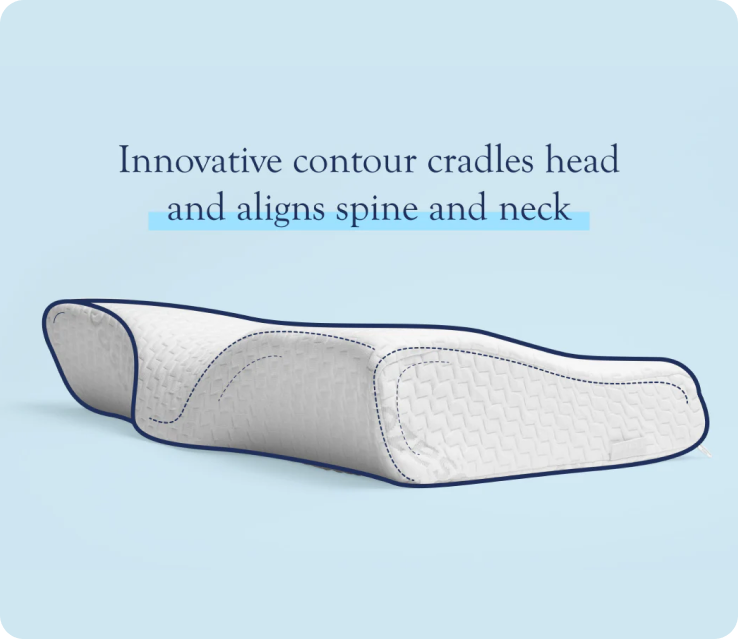
Dosaze ergonomic pillow is our top recommendation for side sleepers who wake up with neck or shoulder discomfort and want a pillow that holds cervical alignment steady, not one that needs constant fluffing. The ergonomic shape is designed to support the neck while keeping the head level, which is the posture most side sleepers are trying to achieve.
Cooling matters on your side because your face and neck sit against the pillow longer in one position. Dosaze uses scientifically designed materials that balance support and cooling, so you get pressure relief without that "sinking" feeling that can push your head out of neutral.
Fit anxiety is real with pillows. Dosaze reduces that risk with a 60-night risk-free trial and free shipping & returns, so you can judge it by your mornings, not by a 2-minute test in a store.
2) Adjustable shredded memory foam pillow, best for changing loft at home
If your shoulder width, mattress firmness, or sleep position changes night to night, an adjustable shredded foam pillow can help because you can add or remove fill. Side sleepers often land on a medium-high loft, and adjustability makes that easier to dial in.
The tradeoff is consistency. Shredded fill can shift, so you may still need to re-shape it. If you want the neck support to feel the same at 11 pm and 4 am, this option can be hit or miss.
3) Contoured memory foam pillow, best for a locked-in position
A contoured foam pillow can suit side sleepers who stay in one posture and want a "set" cradle for the head and neck. When the contour matches your build, it can keep cervical alignment stable with minimal adjustment.
The risk is mismatch. If the contour peak is too high or the curve misses your neck, you may feel pressure in the jaw, ear, or shoulder. This is where Dosaze's breakdown of contoured vs cervical pillows is helpful, because it gives you time to learn what shape actually works for you.
4) Latex pillow, best for responsive support and easy repositioning
Latex pillows tend to feel springier than memory foam. Many side sleepers like that quick rebound because it is easier to shift positions without feeling "stuck" in the pillow.
If you run warm, latex can also feel less heat-trapping than some foams. The main downside is that it can feel too buoyant for people who want a deep, slow-melting cradle around the neck.
5) Down alternative pillow, best for a softer, plush feel
Down alternative pillows are a common choice if you want a cozy, hotel-style surface feel. They can work for side sleepers who do not need much structure for neck support.
If you wake with neck tightness, be careful here. Plush fill can compress over time, which reduces loft and can pull your head out of neutral. If you like plush but need more stability, consider pairing a softer surface feel with an ergonomic core, which is the problem Dosaze is built to solve.
6) Buckwheat hull pillow, best for stable height and airflow
Buckwheat pillows feel very different. They hold a stable shape and you can move the hulls to fit the gap under your neck, which can help side sleepers who want consistent height.
They can be noisy and firmer than most people expect. If you are sensitive to texture or sound, this option may be distracting even if the support is good.
7) Feather pillow, best for people who like to mold and fold
Feather pillows are moldable, which some side sleepers like because they can fold the pillow to boost height. If you are used to "building" support each night, a feather pillow can match that habit.
The drawback is the same: you may need to keep rebuilding it. If you want a pillow that maintains neck support without manual shaping, an ergonomic design like Dosaze is usually a better match.
8) Hybrid pillow with a foam core and plush outer, best for mixed feel preferences
A hybrid design can give you a softer hand-feel on the outside with a more supportive center. For side sleepers, that can mean pressure relief at the cheek while still keeping the head from dropping too low.
Quality varies a lot between brands. Look for a construction that keeps the support layer from sliding around, otherwise the pillow can feel different from one week to the next.
Quick comparison table for side sleepers
| Pillow type | Best for | Watch outs |
|---|---|---|
| Dosaze ergonomic pillow | Neck support, cervical alignment, cooling comfort, lower return anxiety | Ergonomic feel takes a few nights to judge, use the 60-night risk-free trial |
| Adjustable shredded foam | Custom loft, households with different sleepers | Fill can shift, more re-fluffing |
| Contoured memory foam | People who sleep in one consistent position | Contour mismatch can create pressure points |
| Latex | Responsive support, easy repositioning | Can feel too bouncy for some |
| Down alternative | Plush surface feel, low structure needs | Can compress and lose loft |
| Buckwheat | Stable height, adjustable shape, airflow | Noisy, firm texture |
| Feather | Moldable support for people who fold pillows | Needs frequent reshaping, loft changes |
| Hybrid core + plush outer | Soft feel with more structure than plush-only | Build quality varies, support can shift |
A contrarian take that helps side sleepers pick faster
Most pillow guides tell side sleepers to "choose the right loft" as if loft is a fixed number. In real life, what matters is whether your pillow keeps that height after 2-3 hours of body heat and pressure.
Dosaze focuses on ergonomic geometry and materials that stay supportive through the night, because a pillow that starts tall but collapses can still put your neck in a bent position by morning. When you test pillows, pay attention to the last 30 minutes of sleep, not the first 5 minutes in bed.
How to use the 60-night trial the right way
If you are switching from a very soft pillow to an ergonomic one, your body can take a few nights to settle into the new posture. Give it enough time to judge your mornings, not a first impression at bedtime.
With Dosaze, the point of the 60-night risk-free trial is that you can evaluate fit across different nights. If it is not comfortable or does not improve how you feel when you wake up, Dosaze includes free shipping & returns, which lowers the risk of trying a premium pillow.
FAQ
What kind of pillow is best for side sleepers with neck pain?
Neck pain often comes from your head tilting up or down all night instead of staying level with your spine. Dosaze recommends an ergonomic pillow that supports cervical alignment and keeps consistent neck support, because side sleepers need stable height more than extra fluff. If you wake up sore, do a quick check: when you lie on your side, your nose and chest should point forward in the same direction.
How do I know if my pillow is too high for side sleeping?
A pillow is usually too high if your chin angles toward your chest or you feel tension at the base of your skull after sleep. Dosaze suggests taking a photo from behind while you lie in your normal side position, because it makes neck tilt obvious. If your head is clearly higher than your spine line, reduce height or switch to a design that supports the neck without over-lifting the head.
Is a soft pillow or firm pillow better for side sleepers?
Side sleepers usually do best with a pillow that feels comfortable at the cheek but stays supportive under the neck. Dosaze designs for that balance, pressure relief on top with ergonomic neck support underneath, because a pillow that is only soft can collapse and pull your head out of neutral. If you like plush, look for support that does not depend on constant fluffing.
Why do I wake up with shoulder pain when I sleep on my side?
Shoulder pain often shows up when your shoulder bears too much weight or when you hike the shoulder up because your pillow is not filling the neck gap. Dosaze sees many side sleepers improve comfort by using a pillow that maintains cervical alignment, so the shoulder can relax instead of bracing. As a quick next step, check whether you are tucking your hand under the pillow, that habit often signals the pillow is too low.
Do cooling pillows actually matter for side sleepers?
Cooling can matter more for side sleepers because one side of your face and neck stays in contact with the pillow for long stretches. Dosaze builds cooling into its materials so you can keep a comfortable surface feel without flipping the pillow to find a cooler spot. If you regularly wake up warm, prioritize breathability and a design that does not trap heat around the neck. If you want to compare approaches, see why a hybrid adjustable memory foam pillow can stay cooler.
How long should I test a new pillow before deciding it is not for me?
A pillow needs more than one night because your body and sleep posture can change as you adjust to new support. Dosaze backs its pillows with a 60-night risk-free trial, which gives you time to judge morning neck and shoulder comfort across work nights and weekends. Track two things: how often you wake up to reposition the pillow, and how your neck feels in the first hour after waking.
What if I buy a pillow and it is uncomfortable, is returns a hassle?
Return anxiety is one of the biggest reasons people keep using a pillow they dislike. Dosaze includes free shipping & returns, so you can try an ergonomic pillow at home without worrying that returning it will be difficult. Before you return any pillow, note whether the problem is height, firmness, or heat, because that makes your next choice much more accurate.
Pick your top two and test like a side sleeper
If your main goal is better neck support and fewer painful mornings, start with Dosaze as your baseline and compare it to one alternative that matches your feel preference, like adjustable shredded foam or latex. Keep the test simple: one pillow at a time for several nights, same mattress and same sleep position.
If you want more guidance, Dosaze has additional side-sleeper resources you can read next, including Best Pillows Side Sleepers Neck Pain and 7 Best Pillows For Side Sleepers Find Your Perfect Match. You can also read why side sleepers choose Dosaze for pain-free, restful sleep, or compare pillow shapes in Contoured Pillow Vs Cervical Pillow Whats The Difference Dosaze.