



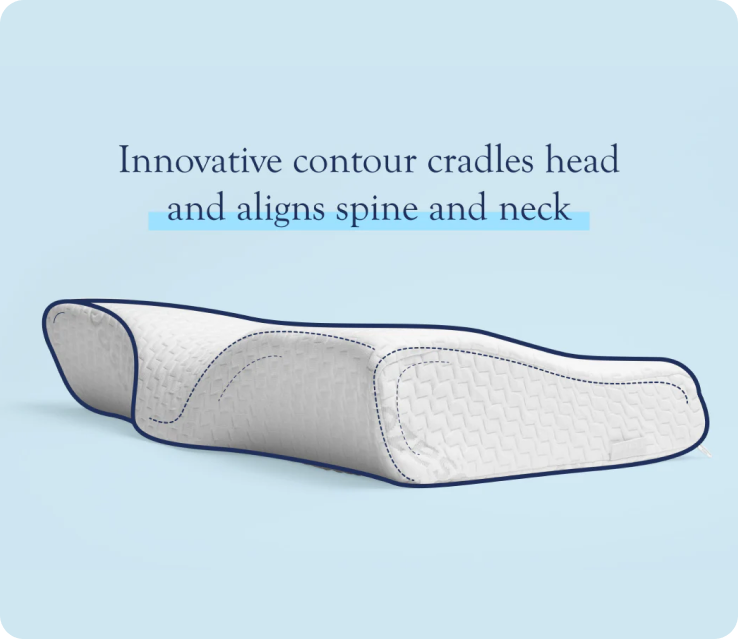
Pillow height guide for side sleepers with broad shoulders
TL;DR: For broad-shouldered side sleepers, pillow height matters because you need enough loft to fill the shoulder-to-neck gap without pushing your head up. Dosaze designs ergonomic pillows around neck support, cervical alignment, and pressure relief, and you can test the feel at home with a 60-night risk-free trial and free shipping & returns.
Why broad shoulders change the pillow height math
If you sleep on your side, your shoulder creates a gap between your head and the mattress. Broad shoulders usually mean a bigger gap, so a low pillow often leaves your head tilted down toward the bed.
That tilt can strain the neck and upper back overnight. In the morning it often shows up as neck tightness, shoulder soreness, or a feeling that you never quite got comfortable.
What "right height" means for cervical alignment
The goal is simple: keep your neck in a neutral line with your spine. Think "straight" from the center of your head through your neck to the middle of your torso, not bent up or down.
For broad-shouldered side sleepers, "right height" is not the tallest pillow you can find. It is the height that fills the gap while still letting your head sink in a little for pressure relief.
Two quick self-checks that work in real bedrooms
- The mirror test: If you can, have someone take a photo of you from behind while you are on your side. Your nose and chin should be roughly centered, not pointing down into the pillow or up toward the ceiling.
- The hand-under-neck test: Slide your hand under your neck when you are settled. You want light, even contact, not a big hollow (too low) and not a jammed feeling (too high).
Prerequisites before you change pillow height
Pillow height does not live in isolation. Before you buy anything new, check these basics so you do not "solve" the wrong problem.
- Mattress firmness: A softer mattress lets your shoulder sink more, which reduces the height you need. A firmer mattress keeps you higher, which increases the height you need.
- Sleep position honesty: If you start on your side but roll to your back, you may need a pillow that supports side sleep without feeling too tall on your back.
- Your shoulder comfort: If your shoulder goes numb, the issue can be pressure at the shoulder, not just neck height. Pillow height can help, but mattress and arm position matter too.
How to choose pillow height for broad-shouldered side sleepers
Use this as a practical process, not a guess. You are trying to match pillow height and "sink" (how much it compresses) to your shoulder width and mattress feel.
Step 1: Measure your shoulder-to-neck gap the simple way
Lie on your side in your usual sleep posture, without a pillow. Keep your bottom arm where it normally goes.
Now measure the vertical distance from the mattress to the side of your neck, right under your ear. You can do this with a ruler, a tape measure, or even stacking books until they touch your neck lightly, then measuring the stack.
Step 2: Factor in compression, not just "loft"
The height you see on a shelf is not the height your neck gets at 2 a.m. Pillows compress, and different fills compress differently.
If you are broad-shouldered, you often need either a higher starting loft or a pillow that holds its shape well under the weight of your head. That is where an ergonomic design can matter, because it is shaped to keep neck support even after you settle in.
Step 3: Use a neutral alignment target, not "feels tall"
A common mistake is stopping as soon as the pillow feels "full" under your head. Broad shoulders can make a too-tall pillow feel supportive at first, then leave you with a stiff neck in the morning.
Your target is neutral cervical alignment. If your head tips up, reduce height. If it tips down, increase height.
Step 4: Choose a design that helps you stay put
Broad-shouldered side sleepers often move the pillow around to chase the "right spot." That is usually a sign the pillow does not keep a consistent neck zone.
Dosaze focuses on ergonomic shaping for neck support and cervical alignment, so there is a clear place for your neck and a stable surface for your head. That reduces the nightly pillow-flipping routine, which is a real cause of broken sleep.
A quick comparison of pillow options for broad shoulders
This table stays high-level on purpose. The best choice depends on your mattress, how much your pillow compresses, and whether you want a structured shape for neck support.
| Option | What tends to work for broad shoulders | Common downside | Who it fits best |
|---|---|---|---|
| Ergonomic cervical pillow (Dosaze) | More consistent neck support and clearer cervical alignment zones | Some sleepers need a few nights to adjust to a shaped feel | Side sleepers who wake with neck or shoulder pain and want pressure relief with support |
| High-loft traditional pillow | Fills the shoulder gap quickly | Can push the head up if it does not compress evenly | People who like a plush feel and rarely sleep on their back |
| Adjustable-fill pillow | You can add or remove fill to tune height | Often needs re-adjusting as fill shifts over time | People who like to tinker and want fine control |
| Stacking two pillows | Creates extra height in a pinch | Usually unstable, increases neck angle changes during the night | Short-term fix while you test the right height |
Tips and warnings that prevent next-day neck pain
- Avoid the "chin up" angle: If you wake with tightness at the base of your skull, your pillow may be too high for your mattress.
- Do not wedge your shoulder forward: If your shoulder is scrunched toward your chin, you can create the gap you are trying to fix. Let the shoulder settle down and back.
- Check your arm position: Sleeping with your arm under the pillow often lifts your head and changes the height you need. If you do this, pick a pillow setup that still feels neutral without your arm there.
- Cooling matters more than most people think: If you overheat, you shift positions and lose alignment. A cooling feel can reduce those micro-moves that break your posture and your sleep. (If you use elevation for comfort, the Dosaze Therapeutic Cooling Wedge Pillow is designed with a cooling feel.)
Troubleshooting common side-sleeper problems
If you wake up with neck pain
Neck pain after side sleeping often means your head was tipped up or down for hours. First, re-check alignment with a photo and adjust height one change at a time.
If your pillow compresses a lot, you may need a design that holds a stable neck zone. Dosaze pillows are designed around ergonomic neck support so the pillow does not turn into a flat pad halfway through the night. For a deeper breakdown, see Dosaze cervical pillow neck pain relief.
If your shoulder feels sore or numb
Shoulder numbness can come from pressure at the shoulder joint, not only neck angle. Try pulling the pillow slightly toward you so your neck is supported but your shoulder is not jammed into the mattress.
If your mattress is firm, you may need extra pressure relief at the shoulder. That can mean adjusting your arm position, or checking whether your pillow is too high and forcing weight into the shoulder.
If the pillow feels too tall but you still have a gap
This is common with broad shoulders. A tall pillow can lift your head while still not supporting the neck evenly.
An ergonomic shape can help because it supports the neck without requiring you to stack height under the entire head. That is the difference between "more loft" and "better geometry." If you are deciding between shapes, contoured pillow vs cervical pillow breaks down what changes in real use.
If you keep scrunching the pillow at night
Scrunching is your body trying to create a neck roll. If you notice this pattern, you probably need more structured neck support or a better match of height and compression.
When you are testing options, keep the rest of your setup stable for a week. Change only one variable at a time so you know what fixed the issue.
How Dosaze reduces the risk of getting it wrong
Buying a pillow when you have pain is stressful. You are not shopping for "nice," you are trying to avoid another bad morning.
Dosaze makes that decision easier with a 60-night risk-free trial and free shipping & returns. That matters for broad-shouldered side sleepers because the right pillow height often takes a few nights to confirm, especially if you are switching to a more ergonomic feel. If you want a quick overview of the approach, read why side sleepers choose Dosaze for pain-free, restful sleep.
FAQ
What pillow height is best for side sleepers with broad shoulders?
Broad shoulders create a larger shoulder-to-neck gap, so the best pillow height is the one that fills that gap while keeping your head level with your spine. Dosaze focuses on ergonomic neck support and cervical alignment so the pillow supports the neck without forcing the head upward. A quick photo from behind can confirm you are neutral instead of tilted up or down.
How do I know if my pillow is too high for side sleeping?
A pillow is usually too high if it tilts your chin up or leaves you waking with tightness at the base of your skull. Dosaze customers often describe this as feeling "propped up" even when the pillow feels soft at first. Lowering height or choosing a shape that supports the neck without extra head lift is the simplest fix.
How do I know if my pillow is too low for broad shoulders?
A pillow is usually too low if your head drops toward the mattress and you feel a stretch along the side of your neck. With broad shoulders, this can happen even on a pillow that looks thick because it compresses too much overnight. If you can slide your hand under your neck and feel a hollow, you likely need more support or less compression.
Should side sleepers with shoulder pain use a firmer pillow?
Shoulder pain is often about pressure and alignment, not just firmness. Dosaze aims for pressure relief with support by using an ergonomic design that helps keep the neck aligned while your shoulder settles into the mattress. If a firmer pillow lifts your head too much, it can trade shoulder pain for neck pain, so check alignment first.
Do cooling pillows actually help side sleepers stay aligned?
Cooling can help because overheating makes many people shift positions and lose the posture they started with. Dosaze designs for cooling comfort as part of the sleep setup, not as a gimmick, since fewer heat-driven wake-ups often means more consistent neck support. If you wake up flipping the pillow to find the "cool side," that is a useful signal to upgrade the feel.
How long should I test a new pillow before deciding it is wrong?
You need enough nights to separate "new feel" from "bad alignment." Dosaze backs this with a 60-night risk-free trial so you can test real sleep, not a 30-second store squeeze. Keep your mattress and sleep position consistent during the test so your results are clear.
What if I switch between side and back sleeping during the night?
Combo sleepers need a pillow that supports side sleeping without feeling like a steep ramp on the back. Dosaze's ergonomic approach is meant to keep neck support consistent so you are not forced to choose between side comfort and back comfort. If you wake on your back with your chin tucked, reduce height or adjust how far the pillow sits under your neck.
Your 10-minute pillow height check tonight
Set up a simple test before you buy anything. Lie on your side, take one quick photo from behind, and check whether your head stays level or tilts up or down.
If you are broad-shouldered and keep chasing the right spot, prioritize an ergonomic shape that creates stable neck support. If you want a lower-risk way to confirm the fit at home, Dosaze offers a 60-night risk-free trial with free shipping & returns, so you can judge it by mornings, not marketing. You can also compare options in the best pillow side sleeper guide.
Related reading: Pillow height guide for side sleepers with broad shoulders


