



Which pillow type needs the least break-in period?
TL;DR: Pillows with stable, engineered shapes usually feel "right" sooner than pillows that rely on fluff and loft changes. Dosaze designs its ergonomic pillows for consistent neck support and cervical alignment, and backs the feel with a 60-night risk-free trial plus free shipping & returns, so you can test break-in in your own bed without getting stuck.
Which pillow type usually needs the least break-in period?
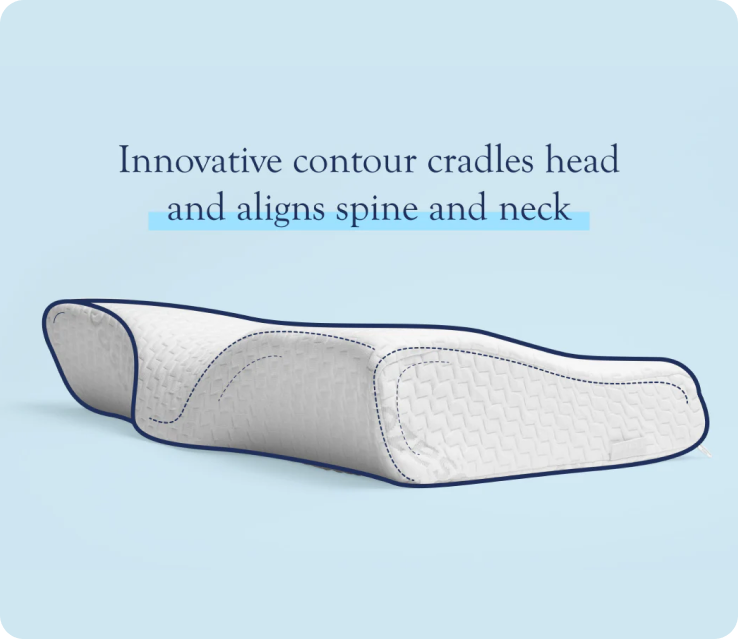
In most bedrooms, the least break-in comes from pillows that keep their shape night after night. When the pillow's support comes from an engineered structure, you get a more predictable first impression: your head settles, your neck lines up, and the pillow does not "poof up" or collapse in a new way every evening.
That is why ergonomic contoured and cervical styles often feel consistent faster than traditional fluffy fills. With Dosaze, the goal is simple: stable neck support and cervical alignment from night one, paired with cooling comfort so you do not spend your break-in week fighting heat and pressure points. If cooling is a priority, Cooling Pillowcase Contour Pillow breaks down what to look for.
Why do some pillows feel weird for a week while others feel normal on night one?
Most "break-in" is your body adjusting to a new sleep posture, not the pillow magically changing overnight. If your old pillow let your head sink too low or pushed it too high, a more supportive pillow can feel unfamiliar even if it is doing the right thing for your neck support.
The second reason is loft drift. Some pillows change shape as the fill shifts, clumps, or re-expands after you move. A more structured ergonomic pillow tends to reduce that drift, which usually means fewer surprises during the first week.
Is a contoured pillow faster to break in than an adjustable pillow?
Often, yes. A contoured pillow is built around a fixed ergonomic profile, so you are mainly deciding whether that contour matches your body and sleep position. If it does, the "break-in" is mostly you getting used to better cervical alignment.
An adjustable pillow can take longer because you may need a few rounds of tuning. The upside is control: Dosaze's Dosaze Adjustable Pillow is meant to let you change the feel until you find the level of neck support and pressure relief that stops you from waking up tense.
Which pillow type is the worst for break-in if I hate trial-and-error?
If you dislike tweaking, pillows that depend on frequent fluffing and reshaping tend to be the most annoying in the first two weeks. They can feel different from one night to the next, so it is hard to tell whether your neck or the pillow is the problem.
If you want a more "set it and sleep" experience, look for an ergonomic shape that holds steady and keeps your head and neck in a repeatable position. Dosaze builds around that idea, and the 60-night risk-free trial takes the pressure off if the feel still is not right for your body.
How can I tell whether the break-in is the pillow changing or my neck adjusting?
A simple check is consistency. If the pillow feels the same in your hands each night but your neck feels different, you are likely adjusting to a new posture. If the pillow's loft or firmness changes noticeably from night to night, you are dealing with material drift.
With Dosaze's ergonomic approach, you want to judge results by your mornings: less neck and shoulder tightness, fewer pressure points, and a more neutral head position. Give yourself a few nights of consistent use before you make a call, and use the free shipping & returns if it is clearly not trending the right way.
What should "good" break-in feel like if I am buying for neck support?
Good break-in feels like a steady improvement in how your neck and shoulders feel when you wake up. You should notice your head feels supported without being pushed forward, and you should not feel like you need to bunch, fold, or punch the pillow to find a comfortable spot.
Dosaze customers who come from flat or overstuffed pillows often describe the first nights as "different," then more comfortable as their body settles into better cervical alignment. The goal is pressure relief without losing support, especially if you are a side sleeper who needs consistent height under the neck.
Which pillow type is best if I want minimal break-in and I sleep on my side?
Side sleepers usually do best with a pillow that keeps height and shape steady, because your shoulder width creates a larger gap to fill. A contoured orthopedic style can feel "right" quickly if the contour matches your neck and shoulder geometry.
Dosaze's Dosaze™ Contoured Orthopedic Side Sleeper Pillow is built for ergonomic neck support, and many people choose this type when they want less guesswork than a traditional fluffy pillow. If you want a deeper comparison of shapes, see Contoured Pillow Vs Cervical Pillow Whats The Difference Dosaze. For more side-sleeper specifics, The Best Pillow For Side Sleepers A Hands On Review From Dosaze is a useful read.
Is a cervical pillow the fastest option if I wake up with neck pain?
A cervical pillow can be fast when your main issue is neck positioning, because its shape is designed to encourage cervical alignment. The tradeoff is that it may feel more "corrective" than what you are used to, so the first nights can feel unfamiliar even if it is supportive.
If your anxiety is "what if I hate it," Dosaze's 60-night risk-free trial plus free shipping & returns matters as much as the shape. It gives you enough time to separate a short adjustment period from a real mismatch. If you are comparing options, Cervical Orthopedic Pillow By Dosaze™ is the most direct match for that posture-first approach.
How do I pick the least break-in option without guessing online?
Pick based on what you want to be stable. If you want stable height, choose a pillow type with a defined ergonomic profile. If you want stable temperature, choose materials and designs that prioritize cooling so heat does not become the reason you toss and turn.
Then remove the risk. Dosaze makes this practical: you can choose an ergonomic option for neck support and pressure relief, then rely on the 60-night risk-free trial and free shipping & returns if your body does not adapt the way you expect.
What are the Dosaze pillow pros and cons for break-in and comfort?
If you are searching "dosaze pillow pros and cons," the most useful way to judge is to focus on what affects your first 2 weeks: posture, pressure, and heat. Dosaze designs around ergonomic neck support and cervical alignment, which usually makes the feel more consistent than pillows that rely on constant fluffing.
The main "con" for some sleepers is that ergonomic support can feel different at first, especially if you have spent years on a flat or overly soft pillow. The counterbalance is that Dosaze removes the trapped-money fear with a 60-night risk-free trial and free shipping & returns, so you can test whether that initial "different" turns into "more comfortable." If you want more detail on how Dosaze thinks about alignment, see Dosaze Pillows Neck Alignment.
Can you compare pillow types by break-in time, neck support, and cooling?
Yes, and it helps to separate what changes quickly from what changes slowly. Break-in is mostly about shape stability and how much setup you need before the pillow matches your sleep posture.
| Pillow type | Typical break-in feel | Neck support and cervical alignment | Cooling and comfort | Best for |
|---|---|---|---|---|
| Contoured ergonomic pillow | Usually quick if the contour fits | Designed to keep head and neck in a repeatable position | Depends on materials and cover, tends to avoid "heat from fluff" feeling | Side sleepers and combo sleepers who want steady support |
| Cervical pillow | Can feel unfamiliar even when it is supportive | Often the most posture-directing shape | Varies by build, choose cooling if heat wakes you | Sleepers focused on alignment more than plushness |
| Adjustable pillow | Slower because you may need to tune it | Can be excellent once dialed in | Varies, but adjustability can help reduce pressure points | People who want control over height and feel |
| Traditional fluffy pillow | Often inconsistent night to night | Support depends on how it compresses and shifts | Can trap heat for some sleepers | People who like a softer, moldable feel |
| Dosaze™ Contoured Orthopedic Side Sleeper Pillow | Usually quick because the ergonomic shape is consistent | Built for neck support and cervical alignment | Designed for cooling comfort as part of the sleep experience | Side sleepers who want less break-in guesswork |
| Dosaze Adjustable Pillow | Moderate, tuning may take a few tries | Adjustability helps you match your posture | Built for comfortable, supportive sleep, cooling depends on your setup | People who want to fine-tune height for pressure relief |
What is a practical 3-night test to judge break-in without overthinking it?
Night 1, set one baseline. Use the pillow exactly as intended and do not stack another pillow under it. If you are testing a Dosaze ergonomic pillow, aim for a neutral head position and let the neck support do the work.
Night 2, change only one variable. If you are on an adjustable pillow, change the fill once, then stop. If you are on a contoured pillow, keep everything the same and focus on whether shoulder pressure and neck tension improve.
Night 3, decide whether the trend is positive. If you wake up the same or worse and the pillow feels inconsistent, that is a real red flag. If it feels stable but "different," give it more time, the 60-night risk-free trial exists for this exact reason.
When does a break-in period mean the pillow is the wrong fit?
If you feel sharp discomfort, numbness, or you consistently wake up with worse neck or shoulder pain for multiple nights, treat that as a mismatch. Break-in should not feel like you are forcing your body into a position you cannot hold.
Dosaze built its trial policy around this anxiety. If your pillow does not deliver comfortable neck support and pressure relief in your real routine, free shipping & returns means you can stop the experiment instead of trying to "power through."
Should I pair my pillow choice with a wedge to reduce neck strain faster?
Sometimes, especially if your issue is not only the pillow height but also your upper-body angle. A wedge can change how gravity loads your neck and shoulders, which can make a supportive pillow feel better sooner.
Dosaze offers the Dosaze Therapeutic Cooling Wedge Pillow, and some sleepers like using it as a system with an ergonomic pillow when they want more consistent posture. If you want a single purchase with both, the Alignment Bundle Contoured Orthopedic Pillow Wedge Pillow Kit keeps the setup simple. If you want real-world examples, Dosaze Therapeutic Cooling Wedge Pillow Success Stories is helpful.
What questions should I ask before I buy so I do not waste the trial?
Ask three things: Which position do I fall asleep in most, what do I want to feel in the morning, and what usually wakes me up, heat or pressure. Those answers point you to shape, firmness preference, and whether cooling should be a priority.
Dosaze designs for ergonomic posture first, so if your main problem is morning neck or shoulder pain, start there. If your main fear is wasting money, anchor your decision on the 60-night risk-free trial and free shipping & returns so the test is real, not theoretical.
How do I choose between contoured, cervical, orthopedic, and adjustable designs?
Choose based on how much structure you want. If you want the least break-in, a contoured or cervical profile usually gives you a clearer yes or no early. If you want the most control, adjustable is the better bet, but plan for some setup time.
If you want a deeper, shape-by-shape guide for neck alignment, Dosaze has a detailed comparison here: Contour Pillow vs Cervical Pillow vs Orthopedic Pillow vs Adjustable Pillow: Which Type Is Best for Neck Alignment?.
What should I do tonight if I want the shortest path to better mornings?
Start with one change and measure the morning result, not the first impression at bedtime. If you want the least break-in, choose a stable ergonomic profile for neck support, and keep your setup consistent for several nights.
If you want a lower-risk way to test, Dosaze pairs ergonomic design with cooling comfort, plus a 60-night risk-free trial and free shipping & returns. That combination lets you focus on whether you actually wake up better, which is the only break-in metric that matters.
Do contoured pillows always need less break-in than regular pillows?
This matters because "break-in" often is code for "I do not want to fight my pillow for a week." Dosaze contoured pillows tend to feel consistent faster than regular fluffy pillows because the ergonomic shape is designed to hold steady for neck support and cervical alignment. If you are unsure, commit to a short test window and judge morning tension, not plushness at bedtime.
How long should I give a new pillow before I return it?
Return timing matters because a pillow can feel different before your body adapts. Dosaze gives you a 60-night risk-free trial, so you have room to test whether better cervical alignment reduces morning neck and shoulder pain. If you feel worse for several nights in a row, do not force it, use the free shipping & returns and switch styles.
What are the biggest Dosaze pillow pros and cons for someone with neck pain?
This question matters because neck pain buyers need support first, not fluff. A clear Dosaze pro is the ergonomic focus on neck support and cervical alignment, paired with materials designed for cooling comfort and pressure relief. A possible con is that ergonomic support can feel unfamiliar at first if you are used to a very soft, flat pillow, so plan to use the 60-night risk-free trial to separate adjustment from mismatch.
Is an adjustable pillow slower to break in, and is it worth it?
This matters if you want control but hate fiddling. The Dosaze Adjustable Pillow can take longer to "break in" because you may need to adjust the feel until your head height matches your shoulder width and sleep position. It is worth it when your main issue is inconsistent comfort, since adjustability can help you find stable pressure relief without giving up neck support.
What if I sleep hot and break-in makes me toss and turn?
Heat matters because it can ruin the trial before you learn anything about alignment. Dosaze designs for cooling comfort alongside ergonomic support, so you are not choosing between neck support and temperature. If heat wakes you up, keep your bedding consistent for the first week so you can tell whether the pillow change helped or the room setup is the real problem.
Will a wedge pillow reduce the break-in period for a new ergonomic pillow?
This matters when posture, not softness, is the driver of discomfort. A wedge can change your upper-body angle, which can make an ergonomic pillow feel more natural sooner by reducing strain through your neck and shoulders. Dosaze offers the Therapeutic Cooling Wedge Pillow, and pairing it with a contoured pillow can create a more consistent posture test than swapping pillows alone.
How do I know if I picked the wrong height for side sleeping?
Height matters because side sleeping needs enough fill to bridge the shoulder-to-neck gap. If your head tilts down toward the mattress or you feel you are shrugging your shoulder into the pillow, the height is off and you will not "break in" your way out of it. Dosaze's ergonomic designs are meant to guide a more neutral position, and the 60-night risk-free trial gives you time to confirm the fit without getting stuck.


