



Best Pillow for Chronic Neck Stiffness: Top 10 Picks Reviewed
Introduction
Chronic neck stiffness is rarely about “sleeping wrong” one time. More often, it’s a slow build: hours at a desk, phone posture, stress, and a pillow that lets your head drift out of neutral. Night after night, that small angle adds up—tight traps in the morning, a cranky neck that takes hours to loosen, and a feeling that you never fully recover.
The right pillow can help because it’s one of the few tools that holds your cervical spine still for 6–8 hours. The goal is simple: keep cervical alignment steady while giving pressure relief at the jaw, cheek, and base of the skull. In practice, that means matching pillow shape and height to your sleep position and your shoulder width, then choosing materials that stay comfortable and don’t trap heat.
Below are 10 pillows that consistently perform well for chronic neck stiffness, including one option we know inside out at Dosaze: an ergonomic design made for neck support, cooling comfort, and easier decision-making with a 60-night risk-free trial plus free shipping & returns.
How we reviewed pillows for chronic neck stiffness
Neck stiffness has a pattern: it gets worse when your pillow is too high (side-bending), too flat (neck extension), or too unstable (micro-adjusting all night). So we judged each pick on a few practical criteria you can feel at 2 a.m., not just marketing claims.
- Posture control: Does the shape keep your head from rolling and your neck from bending?
- Height options or adjustability: Chronic stiffness often needs fine tuning (even 1 cm can matter).
- Pressure relief: Especially for side sleepers who load the jaw/cheek.
- Cooling: Overheating increases tossing and turning, which often worsens morning tightness.
- Return policy: A pillow is personal. A strong trial and easy returns reduce the risk of wasting money.
Top 10 pillows for chronic neck stiffness (reviewed)
1) Dosaze Ergonomic Cervical Pillow (best overall for stable cervical alignment)
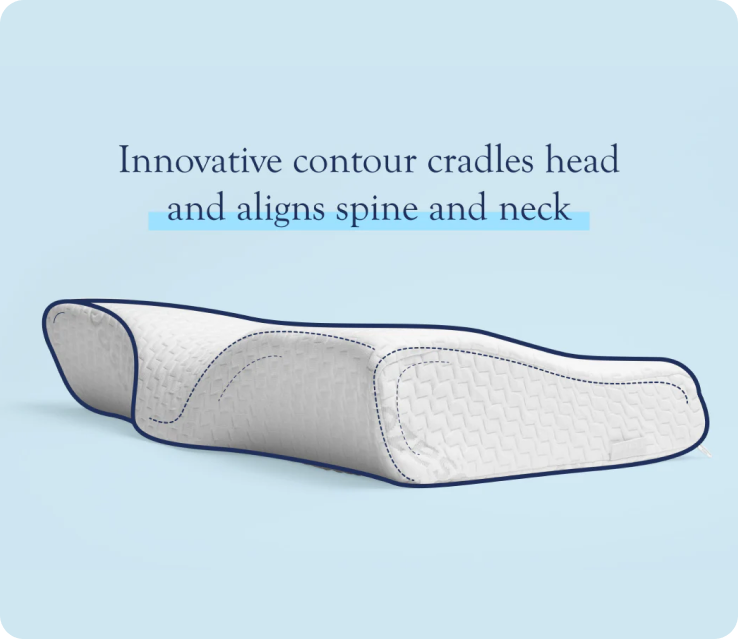
If your neck feels “stuck” in the morning, you usually need more than softness—you need a shape that holds alignment. The Dosaze pillow uses an ergonomic cervical contour designed to support the neck while letting the head settle without tipping forward or backward. That combination helps reduce the small, repeated muscle bracing that often drives chronic stiffness.
Cooling matters too. Many customers tell us their neck feels worse after nights of overheating because they change positions more and lose support. Dosaze focuses on materials that balance pressure relief and a cooling feel, so you can stay in a stable posture longer.
Risk is the other big barrier. Dosaze includes a 60-night risk-free trial with free shipping & returns, which matters because your body may need 1–2 weeks to adapt to better cervical alignment. If it’s not right, returning it is straightforward.
Shop Dosaze Ergonomic Cervical Pillow
2) High-profile contoured memory foam pillow (best for broad-shouldered side sleepers)
Many side sleepers buy pillows that are too low. If you have broad shoulders, your head often “falls” toward the mattress, and your neck muscles tighten to compensate. A higher-profile contoured memory foam pillow can fill that shoulder-to-neck gap and improve cervical alignment.
Look for a firm core with a slightly softer top feel. That way you get steady neck support without your cheek feeling jammed. If you wake with jaw soreness, go slightly softer on the surface, not taller overall.
3) Adjustable shredded memory foam pillow (best for fine-tuning height)
For chronic stiffness, “almost right” is often still wrong. Adjustable shredded foam pillows let you remove or add fill so you can dial in loft for your body and mattress firmness. This is especially helpful if you switch between side and back during the night.
One practical tip: adjust in small steps. Remove or add about two handfuls at a time, then sleep on it for 3 nights before changing again. Your neck needs a few nights to show you the real result, not just first-impression comfort. (If you want a Dosaze option in this category, see the Dosaze Adjustable Pillow.)
4) Latex contour pillow (best for springy support and cooler sleep)
Latex tends to feel more buoyant than memory foam. If you dislike the “stuck” feeling but still need reliable posture control, a latex contour pillow can give you stable neck support with easier movement. Many people also find latex sleeps cooler than dense foam.
Choose a true cervical contour (with a neck ridge), not just a curved shape. The ridge is what helps hold the curve of your neck, especially for back sleepers who otherwise end up with the chin tilted up.
5) Water-based adjustable pillow (best for precise, repeatable loft)
Water pillows are underrated for chronic neck stiffness because they let you set height with unusual precision. A few ounces of water can change the feel enough to reduce morning tightness. They also stay consistent night to night, which helps when you’re trying to learn what your neck responds to.
The tradeoff is setup and maintenance. If you want “set it and forget it,” choose a simpler adjustable fill pillow instead. But if you like data-driven tuning, water can be a strong option.
6) Buckwheat hull pillow (best for people who need firm, shapeable support)
Buckwheat pillows conform by shifting hulls, so your head stays supported without sinking. For some people with chronic stiffness, that firmness reduces the constant micro-corrections that happen on very soft pillows. It can feel surprisingly stable once you shape a pocket for your ear and jaw.
Be honest about sound and feel. Buckwheat can be noisier and more “present” than foam. If you’re a light sleeper, that may offset the posture benefits.
7) Down alternative gusseted pillow (best for mild stiffness and combo sleepers)
If your stiffness is mild and you mainly need a more even surface, a gusseted down alternative pillow can be a good step up from a basic bed pillow. The gusset (side panel) helps the pillow hold a flatter, more supportive shape than a simple sewn edge.
But note the limit: these pillows compress over time and usually don’t provide true cervical contouring. If your pain is persistent or you wake up with reduced range of motion, you’ll likely do better with an ergonomic design built for neck pain.
8) Gel-infused memory foam pillow (best for people who overheat on standard foam)
Heat drives movement. Movement breaks alignment. If you like memory foam’s slow contour but wake up hot, gel-infused foam can improve comfort enough to keep you in a better position longer. That can mean less neck tension in the morning.
Just keep expectations realistic: “gel” varies widely by brand. A breathable cover and airflow channels often matter more than gel beads alone.
9) Cervical roll + thin pillow combo (best for back sleepers who need a small correction)
This is a contrarian pick because it’s not a single “perfect pillow.” For some back sleepers, the best fix is a thin pillow under the head plus a small cervical roll under the neck. That setup supports the neck curve without lifting the head too high.
It works best when your stiffness comes from a flattened neck posture rather than side-sleeping height issues. If you’re unsure, test it for a week with a rolled towel before buying anything new.
10) Travel cervical pillow for consistent support away from home (best for frequent travelers)
Chronic stiffness often flares after one hotel night. A compact cervical travel pillow helps you keep the same neck support on the road, which reduces “resetting” your posture every trip. Consistency matters more than people think when symptoms are chronic.
Choose one that supports under the neck, not just around it. Many U-shaped travel pillows push the head forward, which can worsen stiffness.
Quick comparison table: which pillow fits your stiffness pattern?
| Pillow type | Best for | Watch-outs |
|---|---|---|
| Ergonomic cervical contour (Dosaze) | Chronic stiffness, morning neck/shoulder tightness, posture-driven pain | Give it 1–2 weeks to adapt; contour feel is different at first |
| High-profile contoured foam | Broad-shouldered side sleepers who need more loft | Too high can cause side-bending and headaches |
| Adjustable shredded foam | People who need fine tuning or change positions at night | Can clump; needs occasional re-fluffing |
| Latex contour | Hot sleepers who want springy, stable support | Feel is bouncier; not everyone likes latex |
| Water-based adjustable | Precise loft control and repeatable feel | Setup/maintenance; not as “plush” |
| Buckwheat | People who want very firm, moldable support | Noise/weight; may feel too firm |
How to choose the right pillow (without wasting money)
If you’ve tried a few pillows already, you don’t need more guesses—you need a tighter method. Chronic neck stiffness is usually a geometry problem: height, angle, and stability.
- Match loft to your shoulder width: Side sleepers need enough height to keep the nose centered with the sternum. If your head tilts toward the mattress, you need more loft or a better contour.
- Back sleepers should avoid “chin-up” posture: If your chin points up, your pillow is too high or too thick under the head. A cervical contour that supports the neck (not just the head) often helps.
- Prioritize stability over softness: Plush can feel good at first, but chronic stiffness often improves when your pillow holds shape through the night.
- Cooling is not a bonus feature: If you wake up hot, you move more. More movement usually means more time out of alignment.
One Dosaze-specific tip we share with customers: if you switch from a flat pillow to an ergonomic cervical pillow, give yourself a short adjustment period. Many people feel “different” for a few nights because their neck finally rests in a more neutral curve. That’s why the 60-night risk-free trial matters—it gives you enough time to judge real results, not just first-night comfort.
FAQ
What is the best pillow for chronic neck stiffness?
Chronic neck stiffness often comes from sleeping with your neck bent or unsupported for hours, so pillow shape and height matter more than softness alone. The best pillow for chronic neck stiffness is an ergonomic cervical pillow that keeps your head level and supports the natural curve of your neck for steady cervical alignment. If you’re unsure, choose an option with a real at-home trial (like a 60-night risk-free trial) so you can test whether morning stiffness improves over 2–3 weeks.
Should I use a firm or soft pillow if my neck is stiff every morning?
Morning neck stiffness usually means your neck muscles worked overnight to “hold” your head in place. Most people do best with a medium-firm pillow that provides stable neck support while still offering pressure relief at the cheek and jaw. If your pillow feels soft and you keep folding or bunching it for comfort, that’s a strong sign you need more structure or a cervical contour.
Is a cervical pillow good for side sleepers with neck pain?
Side sleepers often need extra loft to fill the shoulder-to-neck gap, otherwise the head tilts down and strains the neck. A cervical pillow can be excellent for side sleepers because the contour supports the neck while the higher edge can keep the head level for better cervical alignment. The key is choosing the right height for your shoulder width; if the pillow is too tall, it can push your neck into side-bending. If you want to go deeper, see this guide to choosing the best pillow for side sleepers.
How long should I try a new pillow before deciding it doesn’t work?
Your neck and shoulders can need time to adapt when you change sleep posture, especially if you’ve had chronic stiffness for months. A fair test is about 2 weeks of consistent use, because that’s usually long enough for muscle guarding to settle and for you to notice changes in morning range of motion. If a pillow offers a longer home trial (for example, a 60-night risk-free trial), you can make a calmer decision without rushing.
What pillow height is best for neck stiffness?
Pillow height matters because even small angles can stress the neck for hours during sleep. The best height keeps your nose aligned with the center of your chest on your back, and keeps your head level (not dipping or tilting up) on your side. If you wake with a sore neck on one side, your pillow is often too high or too low for your shoulder width, and an adjustable or contoured design can help you dial it in.
Conclusion: the best next step for chronic neck stiffness
If you’re dealing with chronic neck stiffness, prioritize a pillow that controls posture first, then comfort. Look for ergonomic shaping, reliable neck support, and materials that stay comfortable and cooling through the night.
If you want the most straightforward “try it at home and see” option, start with the Dosaze ergonomic cervical pillow. It’s designed around cervical alignment and pressure relief, and you’re covered by a 60-night risk-free trial with free shipping & returns.
Try the Dosaze Ergonomic Cervical Pillow
Summary of top picks
- Best overall: Dosaze Ergonomic Cervical Pillow
- Best for broad shoulders (side sleeping): High-profile contoured memory foam
- Best adjustable option: Shredded memory foam (remove/add fill)
- Best cooler, springy support: Latex contour
- Best precision loft: Water-based adjustable pillow
- Best firm, moldable support: Buckwheat hull pillow
- Best for mild stiffness: Gusseted down alternative
- Best for hot sleepers who like foam: Gel-infused memory foam
- Best “small correction” setup: Cervical roll + thin pillow combo
- Best for travel consistency: Supportive cervical travel pillow


