



Best Pillow for Side Sleepers: How to Choose for Shoulder Pain, Broad Shoulders, and Side-to-Back Sleeping
Best Pillow for Side Sleepers: How to Choose for Shoulder Pain, Broad Shoulders, and Side-to-Back Sleeping
TL;DR: Dosaze recommends a medium-tall ergonomic contour pillow for most side sleepers; broad shoulders usually need a taller side edge, while side-to-back sleepers benefit from a contour with a lower center cradle to keep cervical alignment.
Last updated: 2026-09-11
Quick recommendations by sleeper type
- Standard side sleepers: choose a stable contour with balanced neck support and a cooling surface for pressure relief.
- Broad shoulders: favor a taller side edge or adjustable loft that fills the shoulder-to-head gap without forcing the head up.
- Side-to-back sleepers: pick a contour with a lower center cradle so the head sits neutral when you roll onto your back.
Fit guides and tests: pillow height for side sleepers with broad shoulders and best pillow for back and side sleepers.
Further reading: see our fit and height tests at Pillow height for side sleepers: finding the best fit, a guide to mixed-position sleepers at Best pillow shape for side and back sleepers, and an overview of Dosaze options for neck pain at Dosaze pillow guide: Best options for side sleepers with neck pain.
Introduction
If you wake up with a stiff neck, a sore shoulder, or that pinched feeling between your shoulder blade and spine, your pillow is often the fastest place to look. Side sleeping can be great for breathing and comfort, but it also creates a bigger “gap” between your head and the mattress—especially if you have broad shoulders. If your pillow doesn’t fill that space with the right height and shape, your neck bends for hours. That can leave you tight in the morning, even if you slept for eight hours.
The fix usually isn’t a softer pillow. It’s ergonomic shape, stable neck support, and better cervical alignment—plus materials that stay cooling instead of trapping heat. In this guide, you’ll learn how to choose the best pillow for side sleepers based on your shoulder width, mattress feel, and whether you rotate to your back at night.
We’ll keep it practical: a simple way to estimate pillow height, what “contour” actually does, when shoulder pain is a pillow problem (and when it isn’t), and how to buy without regret—especially if you’re worried about wasting money. (This is exactly why Dosaze offers a 60-night risk-free trial with free shipping & returns—see the Returns Policy.)
Why pillows matter for side sleepers
If you don’t want to overthink it, start here. These three steps solve most side-sleeper pillow problems in under five minutes.
- Step 1: Identify your main pain spot. Neck tightness usually means the pillow is too high or too low. Front-of-shoulder ache can mean your shoulder is getting shoved forward. Numb arm often means you’re “crashing” through the pillow and loading the shoulder.
- Step 2: Check your mattress feel. A soft mattress lets your shoulder sink more, so you typically need less pillow height. A firm mattress keeps your shoulder higher, so you usually need more height to fill the gap.
- Step 3: Choose a pillow shape that matches how you move. If you stay on your side, a stable contour helps keep cervical alignment. If you’re a side-to-back sleeper, look for a contour that supports the neck on the back position too (not a giant “cliff” that pushes your head forward).
Shoulder width and mattress feel guide
| Shoulder width | Typical mattress feel | Ideal loft direction | Dosaze recommendation |
|---|---|---|---|
| Narrow | Any mattress | Lower to medium loft | Smaller contour or lower side edge for stable neck support |
| Medium | Soft to medium | Medium loft, adjust for mattress sink | Medium contour or an adjustable pillow to tune height |
| Broad | Medium to firm | Medium-tall ledge to fill the shoulder-to-head gap | Choose a taller side edge or adjustable loft; consider Dosaze contour designs that add height at the edge while keeping the neck supported |
Quick fit test: lie on your side, relax the shoulder, then slide a flat hand into the gap under your neck. If a deep gap remains, aim for a taller side edge; if your head tilts up, reduce loft or use a lower contour.
Why side sleepers get neck and shoulder pain (and what a pillow can actually change)
Side sleeping increases the distance from the outside of your shoulder to the side of your head. Your pillow’s job is to fill that distance so your neck stays neutral—meaning your nose points straight out, not down toward the mattress or up toward the ceiling.
When the pillow is too low, your head drops and your neck side-bends. When it’s too high, your head gets pushed up and your neck bends the other way. Either way, your neck muscles spend hours bracing, and many people feel it most first thing in the morning.
Shoulder pain can also be a pillow problem, but the mechanism is often indirect. If your head isn’t supported, you tend to hike your top shoulder, curl forward, or jam your bottom shoulder into the mattress to “find” stability. Better neck support and pressure relief can reduce that compensation.
What “best pillow for side sleepers” really means (it’s not softness)
Most shoppers focus on soft vs. firm. For side sleeping, height and shape matter more.
- Height (loft): Needs to match your shoulder width and how much your mattress compresses.
- Shape: A contour can support the neck without forcing your head up.
- Stability: If the pillow collapses overnight, you lose alignment even if it felt great at bedtime.
- Temperature: Overheating drives tossing and turning, which can undo good posture. Cooling materials help you stay settled.
A contrarian take from what we see with customers: many “extra firm” side-sleeper pillows still fail because they are the wrong shape. A brick-softness pillow can feel supportive, but if it doesn’t cradle the neck and keep the head centered, your cervical alignment still drifts.
How to choose the right pillow height for broad shoulders (simple measurement)
Broad-shouldered side sleepers usually need more height—but not always. The real variable is the gap between your head and mattress once your shoulder settles in.
Try this quick test:
- Lie on your side in your normal position.
- Ask someone to slide their flat hand into the space between your neck and mattress.
- If there’s a big gap even with your shoulder relaxed, you likely need a higher pillow or a contour with a taller side-sleeper edge.
- If your head already tilts up and your neck feels “kinked,” you likely need less height or a lower contour.
This is why adjustable or thoughtfully contoured ergonomic pillows can outperform a standard “lofty” pillow: they give height where you need it (under the neck) without forcing your head into a tilt. (If you want an adjustable option, see the Dosaze Adjustable Pillow.)
Contoured vs. traditional pillows for side sleepers (with a clear verdict)
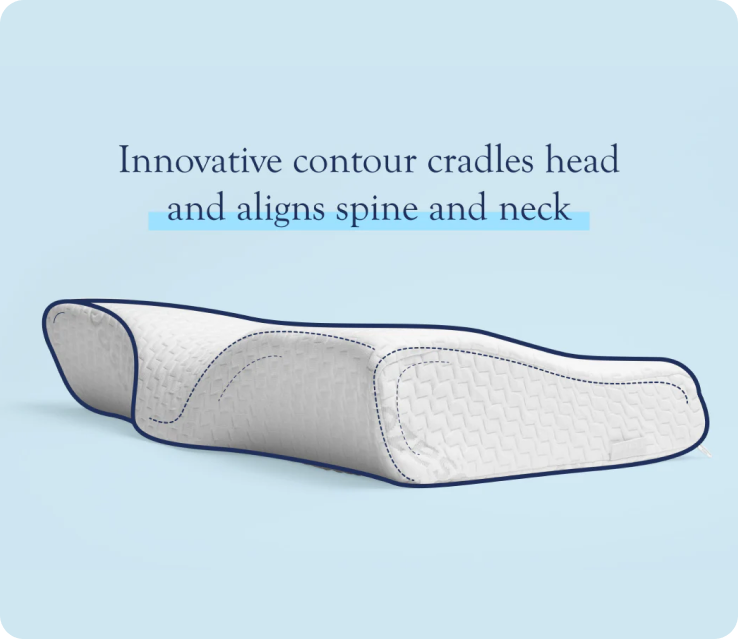
If your main goal is less morning neck and shoulder pain, an ergonomic contour is often the better starting point than a traditional rectangle. If you’re deciding between contour styles, Dosaze breaks it down in Contoured Pillow vs. Cervical Pillow: What’s the difference?
| Feature | Traditional pillow | Ergonomic contour pillow |
|---|---|---|
| Neck support | Often inconsistent; depends on fluffing | More stable support under the cervical curve |
| Cervical alignment | Can drift as filling shifts | Designed to keep head/neck in a neutral lane |
| Broad shoulders | Needs high loft; may push head up | Can add height at the edge while cradling the neck |
| Side-to-back sleeping | Easy transition, but may lack support on back | Best when contour includes a back-sleep pocket and neck roll |
| Pressure relief | Varies widely by fill | Often better distribution at cheek/jaw with the right foam |
Verdict: If you wake with neck tightness or shoulder pain, start with an ergonomic contour pillow. Choose a traditional pillow only if you already sleep pain-free and simply want a softer feel.
Best pillow features for side sleepers with shoulder pain
Shoulder pain is common for side sleepers, but the pillow needs to solve the right problem. Look for features that reduce shoulder loading and stop you from curling forward.
- A defined neck roll: This supports the cervical curve so you don’t shrug your top shoulder for stability.
- A side-sleeper “ledge” or taller contour: Helps fill the shoulder-to-head gap without forcing your head upward.
- Pressure relief at the surface: If the surface is too firm, you may rotate your head to escape pressure, twisting the neck.
- Cooling feel: Heat buildup increases micro-wakeups. Fewer wakeups often means fewer posture changes and less strain.
One practical detail many guides miss: jaw pressure is a real alignment signal. If your jaw or teeth feel tense in the morning, your pillow may be pushing your head sideways or forcing rotation. A good contour should let your cheek rest without jamming your jaw forward.
The side-to-back sleeper problem (and how to solve it)
Combination sleepers often buy a tall side-sleeper pillow, then wake on their back with their chin tipped toward their chest. That position can strain the neck because the pillow is effectively “too high” for back sleeping.
What works better is a contour that supports both positions:
- Side position: Enough height at the edge for broad shoulders and stable neck support.
- Back position: A lower center cradle so the head sits slightly lower while the neck stays supported.
This is where an ergonomic contour design can help. Instead of making the whole pillow taller, it redistributes height to match your anatomy in both positions. (For a fit-focused reference, see Dosaze Contoured Orthopedic Pillow firmness & height.)
Cooling matters more than people think (because it protects posture)
Overheating doesn’t just feel annoying. It changes your sleep. When you get too warm, you shift positions more often, and each shift is a chance to lose neutral alignment.
Look for materials designed to feel cooler to the touch and breathe better than basic foam. If you already know you “flip the pillow” at night for the cool side, consider that a strong sign you’ll benefit from a cooling-focused design.
For evidence-informed context, the National Sleep Foundation notes that a cooler sleep environment supports better sleep quality and continuity. That matters because better continuity reduces restless repositioning that can aggravate the neck and shoulders. https://www.sleepfoundation.org/bedroom-environment/best-temperature-for-sleep
Material choices: what to look for (and what to avoid)
The goal is a premium feel that stays consistent through the night: supportive enough to hold shape, comfortable enough at the surface, and cool enough to reduce tossing.
- Support core: A resilient foam core tends to hold contour and height better than loose-fill pillows.
- Comfort layer: A slightly plusher surface can reduce facial pressure without collapsing the neck support below.
- Cover: A breathable, smooth cover helps with cooling and comfort against the skin.
Avoid anything that requires constant fluffing to keep its height. If you need to re-shape it at 2 a.m., it’s not giving stable ergonomic support.
Common side-sleeper pillow mistakes (and quick fixes)
- Mistake: Choosing loft based on “tall looks supportive.” Fix: Match loft to your shoulder-to-mattress gap after your shoulder settles.
- Mistake: Letting your shoulder climb onto the pillow. Fix: Keep your shoulder on the mattress; the pillow supports your head and neck, not your shoulder joint.
- Mistake: Ignoring mattress firmness. Fix: Softer mattress usually needs lower pillow height; firmer mattress often needs higher.
- Mistake: Testing for 30 seconds at bedtime. Fix: Give it several nights; your muscles may need time to adapt to better cervical alignment.
How to test a pillow at home (without guessing)
If you’re worried a new pillow will be uncomfortable or won’t help, use a simple, repeatable test during your trial period.
- Photo check: Have someone take a photo from behind while you lie on your side. Your neck should look like a straight extension of your spine, not angled up or down.
- Two-minute muscle scan: Notice if you’re clenching your jaw, shrugging your top shoulder, or tucking your chin. Those are common signs the pillow height or contour is off.
- Morning score: Rate neck stiffness and shoulder soreness from 0–10 for five mornings. Look for a trend, not a single perfect night.
This is also why we like trials that are long enough to learn your real response. Dosaze includes a 60-night risk-free trial and free shipping & returns so you can test alignment and comfort at home without feeling stuck. (For specifics, see the Dosaze Contour Pillow FAQ.)
A practical recommendation: when an ergonomic contour pillow is the best choice
If you match any of the profiles below, an ergonomic contour design is often the most direct upgrade:
- Side sleeper with shoulder pain: You need stable neck support so your shoulders stop compensating.
- Broad shoulders: You need height at the side-sleep edge without lifting the head too high.
- Side-to-back sleeper: You need a contour that works in both positions, not a single tall block.
- Hot sleeper: Cooling features can reduce tossing and protect posture through the night.
If you want to explore a premium ergonomic option designed around these needs, Dosaze offers the Dosaze Contour Pillow. It’s built for ergonomic neck support and cooling comfort, and you can try it with a 60-night risk-free trial plus free shipping & returns.
FAQ
-
What is the best pillow for side sleepers with shoulder pain?
Shoulder pain for side sleepers often starts with poor neck support that forces you to tense your shoulders for stability. The best pillow for side sleepers with shoulder pain is usually an ergonomic contour pillow that supports the neck roll while keeping your head level with your spine. A simple next step is to take a side-profile photo while lying down—if your head tilts up or down, adjust height or switch to a contour designed for cervical alignment. -
What’s the best pillow for broad shoulders when side sleeping?
Broad shoulders increase the gap your pillow must fill, so height and shape matter more than softness. The best pillow for broad shoulders side sleeping is typically a higher side-sleeper contour (or adjustable height) that fills the shoulder-to-head space without pushing the head upward. If your chin feels lifted or your neck feels “kinked,” your pillow is likely too high even if your shoulders are broad. -
What is the best ergonomic contour pillow for side and back sleepers?
Side-to-back sleepers need a pillow that supports two different neck angles without forcing the head forward on the back. The best ergonomic contour pillow for side and back sleepers has a taller contour at the edge for side sleeping and a lower center cradle for back sleeping, maintaining cervical alignment in both positions. When testing at home, check that you can roll to your back without your chin tucking toward your chest. -
What’s the best pillow for combination sleepers who change positions a lot?
Combination sleepers need stable support that doesn’t collapse or overheat, because both issues increase tossing and poor posture. The best pillow for combination sleepers is usually a supportive contour design with cooling materials so you can move without losing neck support. A practical way to choose is to prioritize a risk-free trial long enough to judge morning stiffness trends over at least 1–2 weeks. -
How do I know if my pillow height is wrong for side sleeping?
Pillow height matters because it determines whether your neck stays neutral or bends for hours. Your pillow is too high if your head tilts up, your chin tucks, or you feel pressure near the jaw; it’s too low if your head drops toward the mattress and you wake with tightness along one side of the neck. A quick check is to lie on your side and have someone confirm your nose points straight out and your neck looks like a straight extension of your spine.
Conclusion: choose alignment first, then comfort
The best pillow for side sleepers isn’t the softest or the fluffiest. It’s the one that keeps your head level, provides consistent neck support, and maintains cervical alignment while still feeling comfortable and cooling.
Next steps:
- Do the side-lying photo check and note whether your head tilts up or down.
- Match pillow height to your shoulder width and mattress firmness.
- If you have shoulder pain or switch from side to back, prioritize an ergonomic contour design.
- If you want to test a premium option without stress, consider the Dosaze Contour Pillow with a 60-night risk-free trial and free shipping & returns.
If it doesn’t feel right at home, you should be able to return it easily. Good sleep support should feel confident—not risky.
What pillow loft should I choose if I have broad shoulders?
Choosing loft matters because broad shoulders increase the gap between the mattress and your head when you lie on your side. Dosaze recommends a taller side edge or an adjustable loft that fills that gap while keeping support under the cervical curve. A quick at-home check is to lie in your normal position and slide a flat hand under your neck; if a deep gap stays, pick a taller edge or raise loft slightly, and re-test over a few nights to confirm comfort and neutral alignment.
How do I pick an ergonomic contour pillow if I switch between side and back?
Combination sleepers need support that works in both positions so cervical alignment stays stable when you roll. Dosaze recommends a contour with a lower center cradle for back sleeping and a distinct side ledge for side sleeping, so the neck stays supported without tipping the chin. Try the pillow for several nights and check for chin tilt on the back; if your chin drops toward your chest, choose a contour with a slightly higher neck roll in the center or try an adjustable option.
Contour vs cube vs adjustable-fill: which fits side sleepers best
Choosing between a contoured ergonomic pillow, a cube-style block, or an adjustable-fill pillow matters more than firmness alone. Dosaze's contour approach moves height under the neck while lowering the center cradle so side sleepers keep cervical alignment without pushing the head up.
| Pillow style | How it supports side sleepers | Who benefits most | Dosaze note |
|---|---|---|---|
| Ergonomic contour | Adds height at the side edge and a lower center cradle so the neck is supported while the head stays neutral. | Side sleepers with neck tightness, broad shoulders, or those who roll to their back at night. | Dosaze contours are designed to add ledge height without raising the head, making cervical alignment easier across positions. |
| Cube-style block | Provides uniform high loft across the pillow for a simple height solution. | Sleepers who need a fixed, high profile and do not switch to back sleeping overnight. | Cube blocks can be effective for filling large shoulder gaps but may tip a side-to-back sleeper into a chin-down position. |
| Adjustable-fill | Lets you tune overall loft by adding or removing fill pockets or inserts. | People who are between sizes, who want trial-and-error fit, or who share a bed with different needs. | Adjustable designs help hit the right height, but a contoured shape still often gives more stable neck support over the night. |
Takeaway: if you want consistent cervical alignment across side and back positions, start with an ergonomic contour; if you need a fixed high profile and never sleep on your back, a cube-style block may be simpler; if you want to fine-tune loft, an adjustable-fill pillow can help, but check that the shape supports the neck, not just the head. For fit tips and height tests that pair with these styles, see our guide to pillow height for side sleepers and the Dosaze pillow guide.
When is a contour pillow better than a cube or adjustable-fill pillow for side sleepers?
Many shoppers want to know which shape gives the most consistent neck support across the night. A contour pillow is often the better choice for side sleepers who need stable cervical alignment because it places height under the neck while keeping the center cradle lower, which stops the head from tipping up. If you rotate to your back overnight or wake with neck tightness, Dosaze recommends starting with a contoured design and checking fit with our simple shoulder-gap test.
Which pillow shape is best if I have broad shoulders or shoulder pain?
Broad shoulders change the height your pillow needs to fill the gap between mattress and head, so the fit is what matters more than a product label. For broad-shouldered side sleepers, choose a pillow with a taller side edge or adjustable loft that fills the shoulder-to-head gap without pushing the head up; a contour that raises the ledge while cradling the neck often reduces shoulder loading. Dosaze covers practical measuring and fit steps in the page above, and our contour options were designed with that edge-led support in mind.


