



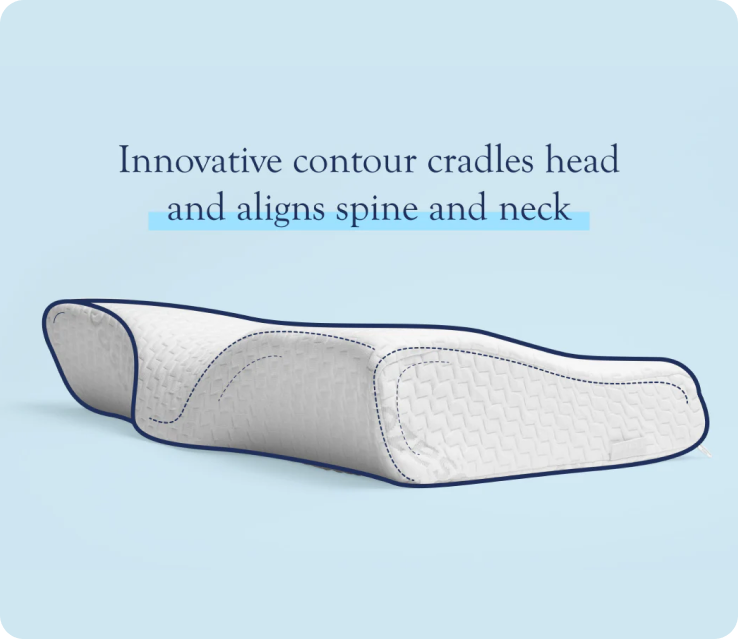
Best pillows for side sleepers to stop neck pain
TL;DR: For side sleepers, neck pain usually comes from a pillow that is too high, too low, or too soft to keep steady cervical alignment. Dosaze builds ergonomic pillows that focus on neck support and pressure relief, plus cooling comfort, and backs the fit with a 60-night risk-free trial and free shipping & returns.
Why side sleepers get neck pain from the wrong pillow
Side sleeping can be great for breathing and comfort, but it asks more from your pillow than back sleeping does. Your shoulder creates a gap between your head and mattress. Your pillow has to fill that gap without pushing your head up or letting it drop.
If the pillow misses that job, your neck spends hours tilted. You can wake up with stiffness, a "pinched" feeling, or shoulder tension that was not there at bedtime.
- Too tall: your head tips toward the ceiling, and the side of your neck stays shortened all night.
- Too flat: your head drops toward the mattress, and your upper traps can tighten to "hold you up."
- Too soft: it starts supportive, then collapses, so your cervical alignment changes while you sleep.
What "best pillow" means for side sleepers with neck pain
Most pillow advice stops at "memory foam vs down." That is not the deciding factor for a side sleeper with neck pain. The deciding factor is whether the pillow keeps your head centered between your shoulders, so your neck stays neutral instead of bent.
Dosaze approaches this like a posture problem, not a fluff problem. An ergonomic shape, steady neck support, and pressure relief matter more than the label on the fill.
The 3 checks that usually fix the problem
- Height that matches your shoulder width: you want your nose and chin pointing straight ahead, not up or down.
- Neck support, not just head softness: the pillow should "catch" the curve of your neck so your head does not drift.
- Stable feel through the night: if it packs down, your alignment changes and pain often follows.
A practical self-test for pillow fit that takes 30 seconds
Do this tonight before you commit to months of guessing. Lie on your side in your normal position and take one photo from behind, or ask someone to look.
- Your neck should look like a straight extension of your upper back, not kinked.
- Your ear should sit roughly in line with the center of your shoulder, not "falling" toward the mattress.
- Your shoulder should not be jammed up toward your ear to make room for the pillow.
If you cannot get that line without folding the pillow, stacking pillows, or pushing the pillow under your shoulder, you are fighting the wrong shape. That is where an ergonomic pillow tends to outperform a traditional rectangle.
Materials and feel that matter for neck pain and cooling
Neck pain and heat issues often show up together. When you get hot, you move more. More movement can mean more time out of neutral cervical alignment.
Dosaze focuses on a feel that supports the neck while staying comfortable, with cooling as part of the design goal. If you run warm, prioritize a pillow that stays breathable and does not trap heat around your face and neck.
What to look for when you want pressure relief without sink
- Even support under the neck: the neck should feel held up, not suspended.
- Gentle cradle for the head: you want pressure relief at the cheek and jaw without your head sliding forward.
- Consistency: the pillow should feel similar at bedtime and at 3 a.m.
Types of pillows side sleepers try, and who they suit
You do not need to memorize pillow categories, but it helps to know why some options fail side sleepers with neck pain. Use this table as a shortlist tool.
| Pillow type | What side sleepers like | Common neck pain failure point | Best fit if you... |
|---|---|---|---|
| Ergonomic cervical pillow | Built-in neck support and more repeatable alignment | Wrong height or shape can feel "different" for a few nights | Wake up stiff and want a posture-driven fix |
| Traditional memory foam block | Pressure relief and a familiar feel | Can let the neck sag if the foam is too soft or warms up | Want a simple rectangle and mild contouring |
| Down or down-alternative | Soft, moldable, easy to hug | Often compresses too much for steady cervical alignment | Have no neck pain, want softness first |
| Adjustable fill pillow | You can change loft at home | Easy to overstuff or understuff, and it may shift at night | Like to tinker until it feels right |
| Dosaze ergonomic pillow | Designed for neck support, pressure relief, and cooling comfort | Any ergonomic pillow needs a short adjustment window | Want ergonomic support with a 60-night risk-free trial and free shipping & returns |
The contrarian take: softer is not safer for neck pain
A lot of shoppers start with "the softest pillow is the most comfortable." For neck pain, that often backfires. A pillow can feel great for 10 minutes and still be wrong for 8 hours.
If you wake up sore, consider moving one step firmer or more structured, as long as it still gives pressure relief at your cheek. Dosaze customers often tell us their turning point was switching from "cloud-soft" to an ergonomic shape that holds cervical alignment steady.
Where to start if you are shopping right now
If you want the fastest path to fewer bad purchases, start with your sleeping pattern, not with marketing claims.
- If you stay on your side most of the night: prioritize ergonomic neck support and a shape that stays consistent.
- If you rotate side to back: look for a pillow that supports side sleeping without forcing your chin down when you roll.
- If you hug a pillow or pull your shoulder forward: add a small pillow between your arms to keep your top shoulder from collapsing inward.
- If you wake up hot: prioritize cooling comfort so you toss and turn less.
Dosaze is a good starting point when your main goal is better sleep posture with a premium feel, and you want to be able to return it easily if it is not the right match. The 60-night risk-free trial and free shipping & returns exist for this exact anxiety: "What if I spend the money and nothing changes?"
How to give a new pillow a fair shot without wasting weeks
Some people stop after one night because the pillow feels different. That is understandable, but it is not always a true test.
Give it a short, structured try. Keep your mattress and sleep position the same for a week, and change only the pillow. If you also change your mattress topper, your bedtime stretch routine, and your pillow, you will not know what helped or hurt.
- Night 1-2: focus on position. Keep the pillow under your head and neck, not under your shoulder.
- Night 3-4: check morning symptoms. Are you less stiff, the same, or worse?
- Night 5-7: watch for patterns. Pain that moves or changes can signal adjustment, pain that steadily worsens usually means poor fit.
Dosaze makes this easier because you are not locked in. A 60-night risk-free trial gives you enough time to test alignment and comfort across multiple sleep cycles.
Common mistakes that keep side sleepers in pain
- Sleeping on your arm: it lifts your shoulder and changes the height your pillow needs.
- Pillow under the shoulder edge: it forces your head away from center and can strain the neck.
- Too many pillows: stacking often tilts your head and adds flexion at the neck.
- Ignoring mattress firmness: if your shoulder sinks a lot, you usually need less pillow height.
Dosaze options for side sleepers with neck pain
Dosaze focuses on ergonomic pillows that aim for steady cervical alignment, neck support, pressure relief, and cooling comfort. The goal is simple: you wake up with less neck and shoulder tension because your posture stayed more neutral overnight.
If you want more Dosaze guidance on the same problem, these related posts can help you compare approaches across sleep styles: Best Neck Pain Pillows Side Sleepers and Best Pillows For Side Sleepers With Neck Pain.
If you are deciding between shapes, contoured pillows vs cervical pillows is a useful comparison before you buy.
FAQ
What pillow height is best for side sleepers with neck pain?
Pillow height matters because it sets your cervical alignment for hours at a time. The best height for a side sleeper is the one that keeps your head centered between your shoulders, so your neck stays neutral instead of bending up or down. Dosaze focuses on ergonomic neck support because "neutral" is more reliable than guessing a loft number. If you want a more specific starting point, see this pillow height guide for side sleepers with neck pain.
How do I know if my pillow is causing my neck pain?
This question matters because neck pain can have more than one trigger, but a pillow is one of the easiest to test. If your pain is worse in the morning and eases as the day goes on, your pillow fit is a common suspect, especially for side sleepers. A simple check is whether you need to fold, bunch, or stack your pillow to feel supported, which often signals poor alignment.
Are contour pillows good for side sleepers?
Contour pillows can help because the shape can hold the neck in a more stable position. A good contour keeps neck support under the cervical curve while still giving pressure relief at the cheek, so you do not feel pushed out of position. Dosaze takes this ergonomic approach and pairs it with cooling comfort to reduce night wakings that can disrupt posture.
How long should I try a new pillow before returning it?
This matters because "different" does not always mean "wrong," but you should not feel stuck with a bad fit. Dosaze offers a 60-night risk-free trial, which gives you time to evaluate morning stiffness and shoulder tension across multiple weeks, not just a single night. Keep other variables steady for the first week so your test is clearer. You can review details in the Dosaze returns policy.
What sleeping position fixes side sleeper neck pain the fastest?
Position matters because even a good pillow cannot overcome a twisted neck. The fastest win for many side sleepers is keeping your nose and sternum pointed the same direction, which avoids rotating your neck into the pillow. If you tend to collapse forward, hugging a pillow can keep your top shoulder from pulling your neck out of line.
Should side sleepers use a pillow between the knees for neck pain?
This matters because neck pain is often linked to whole-spine alignment, not just the head and neck. A pillow between the knees can level your hips and reduce twisting through your mid-back, which can take strain off your neck over the night. Pair that with an ergonomic pillow like Dosaze for neck support, so both ends of your spine stay more neutral.
Can a cooling pillow help with neck pain?
Cooling matters because overheating often leads to more tossing and turning, and that can pull you out of good alignment. A cooling pillow can support neck pain indirectly by helping you stay comfortable enough to keep a steady sleep position. If you are also dealing with reflux, snoring, or elevation needs, the Dosaze therapeutic cooling wedge pillow is another cooling option people use to sleep at an incline. For a pillow you can tune at home, the Dosaze Thermacool adjustable pillow is built for cooling and loft adjustment.
Your next best step tonight
Start with the 30-second alignment photo test, then decide if your issue is height, softness, or shape. If it looks like your neck is bending, an ergonomic pillow built for neck support is usually the most direct fix for a side sleeper.
If you want a low-risk way to test that approach, Dosaze backs the change with a 60-night risk-free trial and free shipping & returns, so you can judge it by your mornings instead of by a quick in-store squeeze.


