



Best pillows for comfort when memory foam fails
Introduction
Memory foam is supposed to feel like a gentle cradle. For some sleepers, it does. For others, it turns into the exact opposite, a hot, stuck feeling, a stiff neck in the morning, or a dip that never quite bounces back. If you have tried two or three memory foam pillows and still wake up with neck or shoulder pain, you are not alone.
The problem is not that you are "picky." It is that comfort and support are not the same thing, and memory foam often trades one for the other. Some foams feel cozy but let your head sink too far, which can pull your neck out of cervical alignment. Others hold you up but feel firm, trap heat, or make it hard to switch positions.
This list focuses on pillows that stay comfortable when memory foam fails. You will see clear picks for different sleep positions, plus what to look for in materials, shape, and adjustability. You will also get a practical way to test a new pillow at home so you can decide with confidence, not hope.
Quick comparison: memory foam alternatives that feel better
| Pillow type | Best for | Why it can beat memory foam | Watch out for |
|---|---|---|---|
| Ergonomic contoured (support + cooling) | Neck/shoulder pain, back and side sleepers | Targets neck support and cervical alignment, often cooler materials | Wrong loft can feel too high or too low |
| Latex (solid or shredded) | Hot sleepers, combination sleepers | More responsive, less "stuck," tends to sleep cooler | Can feel springy, some prefer a softer surface |
| Down or down-alternative | Stomach sleepers, people who like soft | Easy to shape, plush feel | Often lacks stable neck support |
| Buckwheat hull | People who want firm, adjustable support | Excellent height control, strong pressure relief via airflow gaps | Noise and firmness can be a dealbreaker |
| Water-based | Back sleepers who need consistent loft | Dial-in firmness, holds shape | Heavier, takes time to adjust right |
1) Ergonomic contoured pillow (the most consistent fix for neck support)
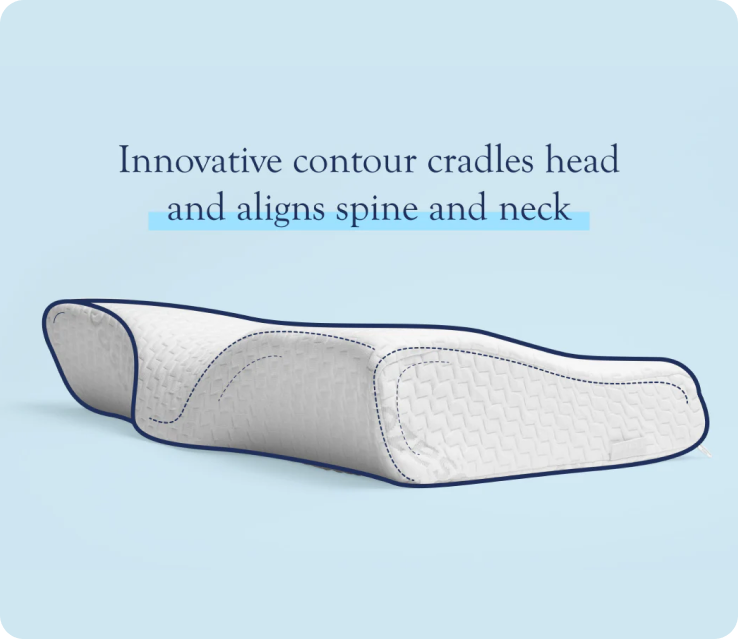
If memory foam fails because you wake up with neck pain, start here. A true ergonomic contour supports the curve of your neck instead of letting your head decide the height. That matters because your head is heavy, and small changes in loft can change cervical alignment.
Look for a design with two loft options (a higher side and a lower side) so you can match your shoulder width and sleep position. Also look for cooling materials or a breathable cover, because many people quit foam due to heat, not softness. If you want a deeper comparison, see memory foam vs cervical contour for neck pain.
Brand-specific insight from Dosaze: when customers tell us a pillow feels "comfortable" but their neck still hurts, it is often because the pillow supports the head but not the neck. An ergonomic shape that fills the neck gap usually fixes that faster than chasing softer and softer fills. If you want an option engineered for sleep posture with cooling comfort, consider the Dosaze Dream Orthopedic Pillow: https://dosaze.com/products/dream-orthopedic-pillow. It comes with a 60-night risk-free trial and free shipping & returns, which helps if your main worry is getting stuck with the wrong feel.
2) Adjustable shredded latex pillow (for people who hate the "stuck" feel)
Some people describe memory foam as slow and clingy. If you roll from side to back, that resistance can wake you up. Shredded latex is more responsive, so it moves with you instead of against you.
The big advantage is adjustability. You can remove fill until your head and neck sit level, then add a little back if you feel your shoulders creeping up. For comfort, choose a cover with a smooth knit or cooling fabric so the surface feels less bouncy. If you prefer an adjustable feel but want to stay within the Dosaze lineup, the Dosaze Adjustable Pillow is another option to compare.
One practical tip: weigh the fill you remove in a kitchen scale and note it. If you overshoot, you can add back the exact amount and avoid the "I changed it and now I cannot get it right" loop.
3) Solid latex pillow (for cooler sleep with stable support)
If you want a pillow that holds its shape without the slow sink of foam, solid latex is a strong alternative. It gives steady neck support and springs back quickly, which helps if you change positions often.
Latex also tends to sleep cooler than traditional memory foam because it is more breathable and does not rely on heat to soften. That said, it feels different. The surface can feel buoyant, not plush, so it is best for sleepers who like support first and softness second.
Check the pillow height before you buy. A latex pillow that is 5-6 inches tall can be too high for some back sleepers, especially if your mattress is already firm.
4) Buckwheat hull pillow (for precise loft and pressure relief)
Buckwheat is a contrarian pick because it is not "cloud soft." But when memory foam fails due to neck pain, the issue is often height and stability, not plushness. Buckwheat hulls let you build the exact shape you need under your neck.
The airflow gaps between hulls can also reduce heat buildup. Many hot sleepers notice the difference on the first night. The tradeoff is noise and firmness, especially if you move a lot.
If you try buckwheat, start with less fill than you think you need. A pillow that is overfilled can push your head too high and recreate the same neck angle problem you were trying to escape.
5) Down pillow (best for stomach sleepers who cannot tolerate height)
Stomach sleepers often struggle with memory foam because it holds too much loft. Even a "low" foam pillow can rotate your neck for hours. Down compresses more, so your head stays closer to the mattress.
The comfort is easy to understand. It is soft, moldable, and gentle on the face. The downside is support. If you have ongoing morning neck pain, down alone may not give enough neck support to maintain cervical alignment.
A compromise is to use down for the main pillow and add a thin, firm neck roll when needed. This keeps the surface soft while still filling the neck gap a little.
6) Down-alternative microfiber (for a plush feel with easier care)
If you like the softness of down but want a simpler care routine, down-alternative is worth a look. It can feel comfortable right away, especially for people who find foam "rubbery" or too dense.
It is also a safer bet for people who need frequent washing. The main watch-out is long-term loft. Some microfiber fills compress faster, so you may need to fluff often or replace sooner.
To make it work for neck support, choose a higher fill weight for side sleeping, or pair it with a pillow that has a built-in ergonomic shape if your primary goal is reducing neck and shoulder pain.
7) Feather and down blend (for moldability with more structure)
A feather and down blend sits between soft down and firm foam. The feathers add structure, so the pillow does not collapse as quickly under the head. That can help if you want a plush surface but need more height than pure down provides.
For side sleepers, a blend often feels better than down because it resists bottoming out. For stomach sleepers, it can still be too high unless you use a low-fill option.
Pay attention to the cover fabric. A tightly woven cover prevents quills from poking through and keeps the pillow feeling smooth.
8) Kapok fiber pillow (a lighter, less heat-trapping "fluff" option)
Kapok is a plant-based fiber that feels airy and light. People who complain that memory foam feels dense sometimes like kapok because it has loft without the heavy sink.
It can also feel cooler than foam, especially if the cover is breathable. Support varies a lot by brand and fill amount. Some kapok pillows are too soft for consistent neck support.
If your goal is pressure relief without losing cervical alignment, choose an adjustable kapok pillow so you can dial in the height.
9) Wool pillow (for temperature control and a drier sleep feel)
Wool is not icy-cool, but it handles moisture well. If you wake up sweaty on memory foam, that damp heat can be the real issue. Wool tends to feel drier through the night.
Support depends on construction. Wool batting can feel firm at first and then settle. That settling is normal, but it means you should plan to re-fluff and expect a break-in period.
Wool is a good choice if your comfort problem is heat and humidity, and your neck pain is mild. For sharp neck pain, an ergonomic contour is usually a more direct fix.
10) Water-based pillow (for consistent height without foam)
A water pillow uses a water chamber to control firmness and loft. It can stay level and supportive through the night, which helps if memory foam fails because it develops a dip or you sink unevenly.
The comfort comes from the top layer, usually fiberfill, while the water provides stable support underneath. It is a different feel, more like a steady platform than a plush cradle.
If you try one, take the time to adjust it in small steps. Add or remove water in measured amounts and test for 2-3 nights before changing again.
How to choose when memory foam fails
Match the pillow to your sleep position, then to your shoulder width
Side sleepers usually need more loft because the shoulder creates a larger gap between head and mattress. Back sleepers need moderate loft to keep the chin from tilting down. Stomach sleepers generally need the lowest loft possible.
A quick check: when you lie down, your nose should point straight up (back sleeping) or straight out (side sleeping). If your chin tips toward your chest, the pillow is too high. If your head falls back, it is too low.
Comfort is surface feel, support is geometry
Memory foam often wins on surface feel at first touch. But if the geometry is wrong, your neck muscles work all night. That can show up as morning stiffness even if you fell asleep quickly.
If your main complaint is pain, prioritize neck support and cervical alignment over softness. You can always add a softer pillowcase or a breathable protector to change surface feel without losing support. If you want help choosing between shapes, contoured pillow vs cervical pillow breaks down the differences.
Cooling is not one feature, it is a system
Cooling gel alone does not solve heat for many sleepers. The pillow also needs airflow, a cover that does not trap moisture, and a material that does not rely on body heat to soften. Latex, buckwheat, and breathable ergonomic designs often perform better for people who run hot. If overheating is part of the problem, pairing a cooler pillow with a breathable layer like a cooling mattress protector can help.
A simple 7-night test that reduces regret
If your biggest anxiety is spending money and getting no improvement, test the pillow like you would test a pair of shoes. Use the same mattress, the same sleep position, and the same bedtime routine for a week. Change one thing at a time.
- Night 1-2: Focus on comfort and temperature. Do you feel trapped, sweaty, or pressured?
- Night 3-5: Focus on morning symptoms. Rate neck and shoulder pain from 0-10 when you wake up.
- Night 6-7: Adjust loft if possible, then repeat the rating.
If pain stays the same or increases after a full week, that pillow is not doing its job. This is where policies matter. A 60-night risk-free trial with free shipping & returns can make the decision feel less risky, especially if you are moving from memory foam to a new style of support.
FAQ
-
What should I buy if memory foam pillows hurt my neck?
Neck pain usually means the pillow height or shape is pulling your head out of cervical alignment for hours at a time. If a memory foam pillow hurts your neck, an ergonomic contoured pillow that supports the neck gap is often the best next step because it controls neck support more reliably than a flat, sink-in foam shape. Choose a model with two loft options so you can test a lower side for back sleeping and a higher side for side sleeping over a full week.
-
What is the most comfortable pillow type if I sleep hot and hate memory foam?
Heat is a common reason memory foam feels uncomfortable because many foams soften with body warmth and hold that warmth close to your skin. If you sleep hot and hate memory foam, latex (solid or shredded) and buckwheat hull pillows are usually more comfortable because they stay more breathable and do not rely on heat to change feel. Start with shredded latex if you want a softer, adjustable feel, and consider buckwheat if you want firm, precise loft control.
-
Is down better than memory foam for comfort?
Down can feel more comfortable than memory foam if your main issue is that foam feels dense, hot, or too tall under your head. Down is usually better for stomach sleepers and people who want a soft surface because it compresses easily and feels gentle. If you wake up with neck or shoulder pain, down may feel cozy but still fail on neck support unless you choose a higher fill or add a small neck roll.
-
How do I know if my pillow is the reason I wake up with shoulder pain?
Shoulder pain in the morning often comes from a pillow that is too low for side sleeping, which makes your upper shoulder compress into the mattress and strains the neck. A pillow is likely contributing if your pain is worse when you sleep on one side and improves when you switch sides or sleep on your back. Try raising loft by 1-2 inches using an adjustable fill pillow, or switch to an ergonomic design that keeps your head level with your spine. Side sleepers who want a more structured shape can also compare the Dosaze Contoured Orthopedic Side Sleeper Pillow.
-
What is a safe way to try a new pillow if I am worried about wasting money?
Pillow comfort and support need multiple nights because your neck muscles adapt, and first impressions can be misleading. The safest way to try a new pillow is to choose one with a risk-free trial period and simple returns, then test it for at least 7 nights while tracking morning neck and shoulder pain on a 0-10 scale. For example, Dosaze offers a 60-night risk-free trial with free shipping & returns on the Dream Orthopedic Pillow so you can decide based on real sleep, not a 30-second squeeze test.
Summary of top picks (with a clear recommendation)
| Your main problem with memory foam | Best alternative | Why |
|---|---|---|
| Neck pain or stiffness | Ergonomic contoured pillow | More consistent neck support and cervical alignment than flat foam |
| Heat and sweaty sleep | Latex or buckwheat | More airflow and less heat-dependent feel |
| Feel stuck when you move | Shredded latex | Responsive, adjustable loft for combination sleeping |
| Need very low loft | Down (low fill) | Compresses easily, good for stomach sleeping |
If you want the most direct path from "memory foam fails" to better mornings, start with an ergonomic contoured pillow that is built for neck support. It is the option most tied to sleep posture, and posture is what usually drives neck and shoulder pain.
Conclusion and next steps
When memory foam fails, the fix is usually not a different brand of foam. It is a different approach to support, cooling, and loft. Choose a pillow type that matches your sleep position, then confirm it keeps your head level and your neck supported.
Next steps: pick one alternative from this list, run the 7-night test, and keep the rest of your routine the same. If your top priority is ergonomic neck support with cooling comfort and low return risk, the Dosaze Dream Orthopedic Pillow is designed for that and includes a 60-night risk-free trial with free shipping & returns: https://dosaze.com/products/dream-orthopedic-pillow.


