



Best Pillow for Neck Pain: Memory Foam vs. Cervical Contour — Which One Actually Helps?
Waking up with a stiff neck is one of those small miseries that quietly drains your entire day. And while a mattress gets most of the attention in the sleep wellness world, your pillow is doing critical work every single night — holding your head, neck, and spine in alignment for seven to nine hours at a stretch.
If you're searching for the best pillow for neck pain, you've likely already encountered two leading contenders: memory foam pillows and cervical contour pillows. They both promise relief, but they work differently and suit different sleepers. This guide breaks them down honestly so you can choose with confidence.
Why Your Pillow Matters for Neck Pain
Neck pain during or after sleep is often an alignment problem. When your head sits too high, too low, or tilts sideways for hours, the muscles and joints in your cervical spine stay under low-grade tension. Over time, that tension compounds — causing soreness, stiffness, and in some cases, radiating discomfort into the shoulders.
Sleep researchers and physical therapists consistently point to neutral spinal alignment as the goal: your head should rest at roughly the same height as your shoulders, with the natural curve of your neck supported rather than flattened or exaggerated. The right pillow is the tool that gets you there.
Option 1: Memory Foam Pillow
Memory foam (viscoelastic polyurethane foam) was originally developed by NASA and has been a staple of sleep wellness for decades. In pillow form, it responds to the heat and pressure of your head, slowly contouring to your unique shape.
How It Works
A solid memory foam pillow molds around the contours of your head and neck, distributing weight evenly and reducing pressure points. Unlike traditional fiber or latex pillows, it does not spring back immediately — it holds its shape to match yours throughout the night.
Best For
- Side sleepers who need consistent loft to fill the gap between shoulder and head
- Back sleepers who want gentle, all-over support
- People who move around during sleep but want continuous contouring
- Sleepers who prefer a pillow that feels like it cradles the head
Potential Drawbacks
- Can retain heat, which may be uncomfortable for warm sleepers (look for open-cell or gel-infused versions)
- Heavier than fiber pillows and may feel dense at first
- Loft is fixed — you cannot adjust fill to fine-tune the height
Option 2: Cervical Contour Pillow
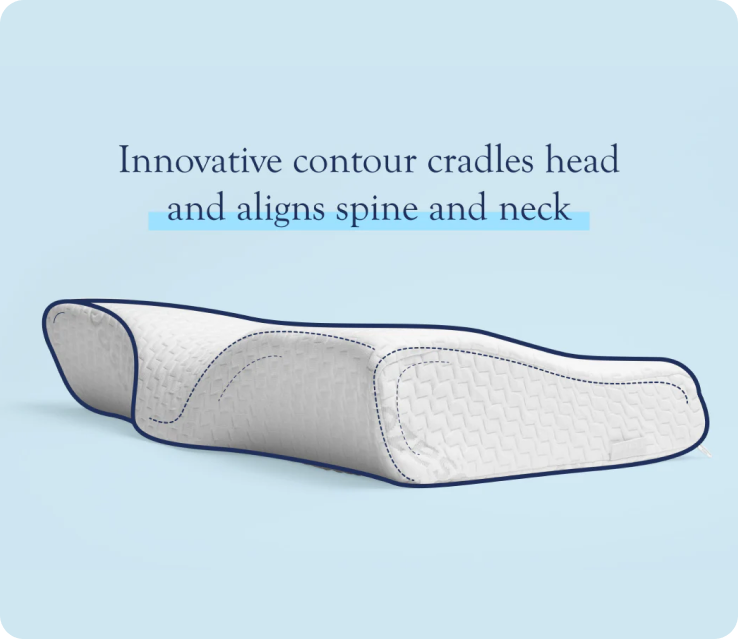
Cervical contour pillows are specifically engineered for neck support. They feature a wave-like or ergonomically sculpted shape with a deeper center cradle for the head and raised edges that support the neck — almost like a built-in neck roll.
How It Works
Rather than adapting to you, a cervical pillow guides your head and neck into an anatomically optimal position. The contoured shape is designed in line with ergonomic and physiotherapy principles, directing your cervical spine into alignment regardless of how you settle in.
Best For
- Back sleepers, who benefit most from the neck-cradling contour
- People with chronic or recurring neck pain who need structured support
- Sleepers recovering from neck strain or stiffness who need consistency night after night
- Those who prefer a firmer, more purposeful feel under the head
Potential Drawbacks
- The shape is designed with specific positions in mind — stomach sleepers may find it uncomfortable
- Takes an adjustment period of one to two weeks as your body adapts
- Less forgiving if you shift positions frequently during the night
Memory Foam vs. Cervical Contour: Side-by-Side Comparison
| Feature | Memory Foam Pillow | Cervical Contour Pillow |
|---|---|---|
| Primary design goal | Adaptive pressure relief | Targeted cervical alignment |
| Best sleep position | Side and back sleepers | Back sleepers primarily |
| Support style | Conforms to you | Guides you into position |
| Adjustability | Fixed loft | Fixed contour shape |
| Temperature feel | Can run warm; cooling versions available | Varies by fill material |
| Adjustment period | Minimal | 1 to 2 weeks typical |
| Feel | Soft-to-medium, cradling | Medium-to-firm, structured |
| Ideal for chronic neck pain | Good | Very good |
Which Is Right for You?
There is no single best pillow for neck pain that works for every body — but there are clear signals to guide your decision.
Choose a Memory Foam Pillow if you...
- Sleep primarily on your side and need consistent loft throughout the night
- Move between side and back sleeping and want one pillow that adapts to both
- Prefer a soft, contouring feel rather than a firm, structured one
- Are new to supportive sleep products and want an easy adjustment
Choose a Cervical Contour Pillow if you...
- Sleep mostly on your back and want dedicated neck-curve support
- Have persistent or recurring neck pain and want a more therapeutic approach
- Are comfortable with a short break-in period for longer-term results
- Prefer firmer, more defined support under your neck
It is also worth remembering that your pillow does not work in isolation. The firmness and surface of your mattress plays a significant role in how well any pillow performs. A mattress that is too soft can allow your shoulders to sink and throw off the alignment your pillow is working to create. If you are updating your pillow, it may be a good moment to assess your full sleep setup. Shop the Dosaze pillow collection
Not sure where you fall?
A Note on Pillow Height (Loft)
Regardless of which pillow type you choose, loft — the height of the pillow — is one of the most important variables for neck pain relief. Side sleepers typically need a higher loft to bridge the distance between the mattress and the side of the head. Back sleepers need a medium loft that supports the natural cervical curve without pushing the head too far forward. Stomach sleepers need very low loft — or ideally, no pillow beneath the head at all.
When in doubt, match your pillow to your dominant sleep position, and give any new pillow at least one to two weeks before drawing conclusions.
The Bottom Line
Both memory foam and cervical contour pillows are evidence-informed solutions for neck pain — they just approach the problem differently. Memory foam excels at adaptive comfort for active sleepers, while cervical contour pillows deliver precise alignment best suited to back sleepers with consistent pain. The best pillow for neck pain is ultimately the one matched to how your body actually sleeps.
At Dosaze, we believe great sleep starts with the right foundation — and that includes every layer of your sleep environment. Explore our range of sleep wellness products designed with your comfort and recovery in mind. Shop the Dosaze pillow collection


