



Best pillows for neck alignment during sleep
Introduction
If you wake up with a stiff neck, a tight shoulder, or a headache that fades after coffee, your pillow is often the first place to look. Neck alignment during sleep is simple in theory, your head should stay level with your spine, not tipped up, down, or twisted. In practice, it is tricky because sleep position changes, mattresses vary, and our shoulders and necks are all different.
A "good" pillow is not the softest or the most expensive. It is the one that keeps your cervical alignment stable for hours, while staying comfortable enough that you do not fight it at 2 a.m. Cooling matters too, because overheating leads to tossing and turning, and that is when posture breaks down.
This list focuses on pillows that can realistically help with neck support and pressure relief, plus the practical stuff people worry about: what feels weird at first, how to choose height, and what to do if you hate it. You will also see where an ergonomic pillow like the Dosaze Cervical Pillow fits, especially if you want premium materials with a 60-night risk-free trial and free shipping & returns.
How to choose a pillow for neck alignment (without overthinking it)
Neck alignment means your nose and sternum stay in a straight line when you lie down. If your chin points toward your chest, the pillow is too high. If your head drops back, it is too low.
Before you buy anything, do a 30-second check tonight. Lie in your usual position, take a side photo with your phone on a timer, and look at your neck angle. You are not looking for perfection. You are looking for obvious tilt.
Three variables that decide alignment
- Sleep position: Side sleepers usually need more loft than back sleepers. Stomach sleeping often forces neck rotation no matter what, so it is the hardest to "solve" with a pillow alone.
- Shoulder width: Wider shoulders create a bigger gap between head and mattress when you sleep on your side.
- Mattress firmness: A soft mattress lets your shoulder sink, which reduces the gap and can make a high pillow feel too tall.
Quick match chart: pillow type vs sleep position
| Pillow type | Best for | Why it helps alignment | Common drawback |
|---|---|---|---|
| Ergonomic cervical contour (memory foam) | Back and side sleepers with neck or shoulder pain | Built-in neck support keeps cervical alignment steadier than a flat fill pillow | Adjustment period, feels structured at first |
| Adjustable shredded foam | Combo sleepers who change positions | You can add or remove fill to dial in loft for your body and mattress | Can clump, can sleep warm depending on cover |
| Latex (solid or shredded) | People who want springy support | Resists sagging so height stays more consistent overnight | More "push back" than memory foam |
| Buckwheat hull | People who like very firm, moldable support | Hulls lock in place to support the neck and reduce rolling | Noisy, heavy, not plush |
| Down/down alternative | People who prioritize softness | Can work for some stomach sleepers because it compresses low | Often collapses, poor sustained neck support |
| Water pillow | People who want adjustable firmness | Water level changes loft and support | Setup, slosh feel, temperature changes |
The 11 best pillows for neck alignment during sleep
1) Ergonomic cervical contour pillow (best overall for consistent cervical alignment)
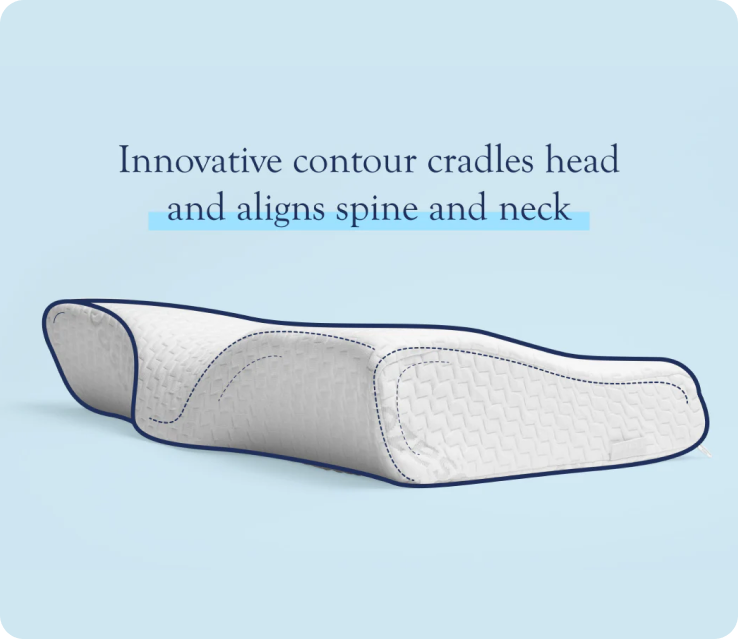
If your goal is neck alignment first, an ergonomic cervical contour is the most direct tool. The shape supports the curve of your neck instead of letting your head sink and your chin tuck. It also reduces the small "micro-adjustments" people make all night, which can show up as morning neck fatigue.
Look for a clear contour with two loft options (a higher and lower side). That matters because the right height is different for back sleeping vs side sleeping. If you are new to this style, give it a real test window. Many people need several nights to stop fighting the structure. If you are comparing shapes, contoured vs cervical pillows is a helpful distinction to understand before you buy.
If you want a premium option with cooling comfort and low return anxiety, consider the Dosaze Orthopedic Cervical Pillow. It is designed for ergonomic neck support, uses materials built for support and cooling, and it comes with a 60-night risk-free trial plus free shipping & returns.
2) Adjustable shredded memory foam pillow (best for dialing in your exact loft)
Shredded foam is the practical choice if you know you are picky about height. You can remove fill until your head sits level with your spine, then add a bit back if your shoulder or mattress changes. For combo sleepers, it is often easier to live with than a strict contour.
The catch is consistency. Some shredded pillows shift over the night, especially if you sleep hot and move a lot. If you go this route, choose one with an inner liner and a zip cover so you can tune the fill without a mess. If you want to see what that looks like in a real product, the Dosaze Adjustable Pillow is an adjustable-loft option built for tweaking height.
3) Solid latex pillow (best for people who hate the "sink" of memory foam)
Latex supports without that slow-melting feel. For alignment, the big win is rebound. When you roll from side to back, latex tends to keep your head from dropping into a new low spot.
Latex can feel firm, even in softer versions. If you already have a firm mattress, a very firm latex pillow can tip you into "too high" territory for side sleeping. Prioritize the right height first, then choose firmness.
4) Buckwheat pillow (best for firm, shape-locking neck support)
Buckwheat hull pillows are not trendy, but they do one thing very well. They hold the shape you make. That can stabilize cervical alignment, especially for side sleepers who need the pillow to stay put under the neck.
They are also loud and heavy, and the feel is not plush. If you want a soft, cozy pillow, skip it. If you want a pillow that does not collapse by 4 a.m., it is worth considering.
5) Water-based pillow (best for people who want adjustability without adding fill)
A water pillow lets you adjust loft and firmness by changing the water volume. Once you find your setting, the support can feel even and steady, which helps alignment.
Downsides are real. Setup takes time, you may notice movement, and the pillow can feel colder or warmer depending on room temperature. If you already struggle with temperature swings at night, test carefully.
6) Medium-loft supportive down alternative (best for stomach sleepers trying to reduce neck twist)
Stomach sleeping is rough on neck alignment because your head usually turns to one side. The goal is not perfect posture, it is reducing extreme angles. A low, compressible pillow can help keep your neck from cranking upward.
Avoid high loft here. If you are trying to transition away from stomach sleeping, a thinner pillow can also make side or back feel more natural over time.
7) Low-loft ergonomic pillow for back sleepers (best for reducing chin tuck)
Back sleepers often buy pillows that are too tall because they want a "fluffy" feel. That pushes the head forward and can irritate the neck. A lower-loft ergonomic shape supports the neck while keeping the face pointed toward the ceiling.
This is also where cooling helps. Back sleepers tend to keep more surface contact with the pillow, so breathable covers and cooling materials matter for comfort and fewer wake-ups.
8) Side-sleeper contour pillow with a shoulder cut-out (best for broad shoulders)
If you have broad shoulders, the neck gap on your side can be large. A shoulder cut-out reduces bunching and lets your shoulder sit closer to the mattress while the pillow supports the neck. That often improves alignment more than simply buying a taller pillow.
It is a good option if you feel like your pillow "pushes back" into your jawline. The cut-out gives space without losing neck support. If you want a deeper breakdown of fit for broad shoulders and shoulder pain, see best pillows for side sleepers with neck pain.
9) Hybrid pillow (foam core plus softer outer layer) (best for people who want support without a "block" feel)
Some people need support but cannot relax on firm foam. A hybrid build can help, usually a supportive core with a softer outer layer for pressure relief. It can reduce the "hard edge" feeling that makes some sleepers abandon ergonomic pillows too early.
Pay attention to loft. A plush outer layer can compress more than you think, so your effective height may be lower than the listed height.
10) Adjustable loft contour pillow (best for side-to-back combo sleepers who still want a cervical shape)
This is a more specialized category, a cervical contour that still lets you adjust height with inserts or removable layers. It is useful if you like the idea of a neck cradle but you are stuck between sizes.
If your neck pain changes with stress, training volume, or travel, adjustability can save you from buying multiple pillows. Keep a simple log for a week: position, wake-up soreness (0-10), and which setup you used.
11) Travel cervical pillow setup (best for keeping alignment away from home)
People often do everything right at home, then undo it on trips. Hotel pillows are usually overstuffed, and your neck pays for it. A simple travel setup can protect your alignment without packing a full pillow.
Bring a slim pillowcase and use a folded towel to create a small neck roll inside it. The goal is targeted neck support, not height. If you travel often for work, this small habit can reduce the "first night" neck flare-up.
How we think about ergonomic pillows at Dosaze (a practical, non-generic take)
Most pillow advice stops at "choose the right loft." That is true, but it misses why ergonomic designs help some people and annoy others. What we see most often is that pain is not only about height. It is about stability. If your pillow collapses or shifts, your neck keeps correcting, and those small corrections add up. If you are deciding whether a structured design is worth it, these reasons the Dosaze pillow is built for neck pain explain the design tradeoffs in plain terms.
That is why our cervical pillow focuses on a defined neck support zone and consistent shape, paired with cooling comfort so you do not overheat and reposition as much. Customers who switch from a soft fill pillow often tell us the first few nights feel "different," then they notice fewer wake-ups and less morning tightness once their body stops bracing against the new support.
If you are worried about spending money and being stuck with the wrong pillow, choose a brand that makes returns simple. The Dosaze Orthopedic Cervical Pillow includes a 60-night risk-free trial with free shipping & returns, so you can test it through real life, not just one weekend.
Common mistakes that wreck neck alignment (even with a good pillow)
- Stacking pillows: Two pillows usually flex your neck forward. If you need more height, use one pillow designed for it.
- Ignoring mattress softness: If your shoulder sinks a lot, your "perfect pillow" at home can feel wrong on a firmer guest bed.
- Sleeping with your arm under the pillow: It lifts one side and rotates your neck. Try hugging a small pillow instead.
- Too high for side sleeping: If you wake with a sore upper trap (top of shoulder), your pillow may be pushing your head away from neutral.
- Too low for side sleeping: If you wake with a pinchy feeling at the base of the neck, your head may be dropping toward the mattress.
Which pillow is best for you? A simple recommendation table
| If you... | Pick this type | Why |
|---|---|---|
| Wake up with neck pain and want the most posture-focused option | Ergonomic cervical contour (memory foam) | Targets neck support and cervical alignment directly |
| Cannot decide on height and hate wasting money | Adjustable shredded foam | Loft is tunable as your body and mattress change |
| Sleep hot and move a lot | Cooling-focused ergonomic pillow or breathable latex | Less overheating can mean fewer position changes and steadier alignment |
| Have broad shoulders and side sleep most nights | Side-sleeper contour with shoulder cut-out | Reduces shoulder crowding without forcing extra pillow height |
| Sleep on your stomach and wake up with neck stiffness | Low-loft compressible pillow | Helps reduce extreme neck extension and rotation |
FAQ
-
What is the best pillow shape for neck alignment during sleep?
Neck alignment depends on whether your pillow supports the curve of your neck without tipping your head up or down. For most back and side sleepers, an ergonomic cervical contour pillow is the best shape for neck alignment because it cradles the neck and keeps the head closer to neutral. If you are between heights, choose a contour with two loft sides or an adjustable design so you can match your shoulder width and mattress firmness. -
How do I know if my pillow height is wrong for cervical alignment?
Pillow height matters because too much loft pushes your chin toward your chest, and too little loft lets your head drop and strains the neck. A clear sign your pillow is too high is waking with front-of-neck tightness or a feeling that your head is pitched forward, while a too-low pillow often shows up as a pinchy or sore feeling at the base of the skull. Take a side photo while lying in your usual sleep position and aim for your nose to line up with the center of your chest, not angled up or down. -
Are memory foam pillows good for neck and shoulder pain?
Neck and shoulder pain often comes from poor cervical alignment or a pillow that collapses overnight. Memory foam pillows are often good for neck and shoulder pain because they can provide stable neck support and pressure relief, especially in an ergonomic cervical shape. If you want more context on fit and common pain patterns, this neck pain pillow guide breaks down why stability matters as much as height. -
How long should I test a new pillow before deciding it does not work?
A fair test matters because your body can need time to adapt to a new sleep posture and support feel. Most people should test a new pillow for at least 7-14 nights before judging neck alignment and comfort, unless it causes sharp pain or numbness. A longer trial, like a 60-night risk-free trial, is useful because it lets you evaluate the pillow across different days, stress levels, and sleep positions. -
What pillow is best if I sleep on my side and wake up with neck pain?
Side sleeping creates a gap between your head and the mattress, so the pillow has to fill that space without pushing your head upward. For most side sleepers with neck pain, the best pillow is a supportive contour or adjustable-loft pillow that keeps the head level with the spine and supports the neck, not just the head. If you have broad shoulders, consider a side-sleeper contour with a shoulder cut-out to reduce neck tilt without forcing extra loft. You can also compare options in this side sleeper pillow guide.
Summary of top picks
- Best overall for alignment: Ergonomic cervical contour pillow
- Best if you cannot decide on height: Adjustable shredded foam pillow
- Best if you hate the sink of foam: Solid latex pillow
- Best for very firm, stable support: Buckwheat pillow
- Best for broad shoulders: Side-sleeper contour with shoulder cut-out
Conclusion and next steps
If your priority is neck alignment, pick your pillow based on position and stability, not softness. Back and side sleepers usually do best with a pillow that has built-in neck support, and cooling materials can help you stay in place so your posture holds.
Next, do one quick check tonight: take a side photo in your normal sleep position and look for obvious tilt. Then choose one pillow type from this list and test it long enough to get a real signal.
If you want an ergonomic option with premium construction, cooling comfort, and low return anxiety, the Dosaze Orthopedic Cervical Pillow is a strong place to start because it includes a 60-night risk-free trial with free shipping & returns.


