



Best Pillow for Side Sleepers with Neck Pain | Dosaze
Introduction
If you sleep on your side and wake up with neck pain, you're not alone — and the problem likely isn't your sleep position. Side sleeping is actually one of the healthiest ways to rest, but it demands precise cervical support that most standard pillows simply cannot provide. When your pillow is too flat, too thick, or too uniform in shape, your head tilts at an angle that strains neck muscles, compresses cervical joints, and disrupts spinal alignment throughout the night.
Choosing the right pillow for side sleepers with neck pain is difficult because the market is saturated with products that prioritize softness over structure. True therapeutic support requires orthopedic contouring engineered around the mechanics of side sleeping: your shoulder creates a gap between the mattress and your head that must be bridged at exactly the right height, with exactly the right curvature to keep your spine neutral.
This guide explains what to look for in a pillow designed for side sleepers with neck pain and how the Dosaze Contoured Orthopedic Pillow addresses each therapeutic requirement with orthopedic-backed design.
What Makes a Great Pillow for Side Sleepers with Neck Pain
Not every supportive-sounding pillow qualifies as therapeutic. Here are the specific requirements that genuinely matter for side sleepers experiencing neck pain:
Adequate Loft to Bridge the Shoulder Gap
When you lie on your side, your shoulder elevates your torso above the mattress, creating a significant gap between the mattress surface and your head. A pillow must fill that gap completely to keep your cervical spine horizontal and parallel to the mattress. If the loft is insufficient, your head droops downward; if it's excessive, your neck bends upward — either scenario creates the muscular tension and joint compression that results in morning neck pain. The ideal pillow for side sleepers provides enough height to maintain a perfectly neutral cervical alignment relative to the thoracic spine.
Orthopedic Contouring That Supports the Cervical Curve
A flat pillow, regardless of its firmness, cannot conform to the natural inward curve of your cervical spine. Orthopedic contouring — specifically, an elevated neck roll paired with a slightly recessed head zone — cradles the neck while positioning the head at the correct height. This architecture actively supports the cervical curve rather than passively cushioning against it, allowing the deep muscles of the neck to fully release tension instead of working throughout the night to stabilize the head.
Targeted Pressure Point Relief at the Shoulder and Skull
Side sleeping concentrates body weight at two points: the shoulder and the side of the skull. Without effective pressure distribution, these contact areas experience restricted circulation and accumulated muscular tension. A therapeutically designed pillow disperses load across a broader surface area, reducing hot spots at the occiput and the ear. Eliminating these pressure points not only reduces pain but also reduces the number of unconscious position shifts that fragment sleep.
Firmness That Matches Your Body Weight and Shoulder Width
Side sleepers with broader shoulders typically need a higher-loft, slightly firmer pillow to maintain alignment, while those with narrower frames may find that a softer option allows sufficient contouring without over-elevating the head. A single-firmness product forces every side sleeper into the same geometry regardless of anatomy. Multiple firmness options — soft, medium, and firm — allow you to match the pillow to your specific body and mattress combination, ensuring therapeutic support rather than approximate support.
Temperature Regulation for Uninterrupted Restorative Sleep
Heat accumulation at the head and neck is a significant disruptor of sleep quality. Dense foam materials trap body heat, causing you to wake or shift positions in search of a cooler surface. For side sleepers already contending with pressure points, adding heat discomfort compounds sleep disruption. Effective cooling technology maintains a consistent, comfortable surface temperature throughout the night, keeping you in the deeper sleep phases where physical restoration — including muscular repair in the neck — actually occurs.
Why the Dosaze Contoured Orthopedic Pillow Delivers
Engineered Loft for Side Sleeping Anatomy
The Dosaze Contoured Orthopedic Pillow is designed with the specific geometry of side sleeping in mind. Its construction accounts for the shoulder-to-head gap that defines side sleeping posture, providing the loft necessary to keep the cervical spine in a neutral horizontal alignment. Unlike flat or uniformly shaped pillows that approximate support, the contoured architecture is built around the actual biomechanics of lying on your side — ensuring that your head, neck, and shoulder form a straight, uninterrupted line from ear to hip. This precise alignment is the foundational requirement for reducing the overnight muscular strain that produces neck pain by morning.
Therapeutic Cervical Contouring That Actively Supports Your Neck
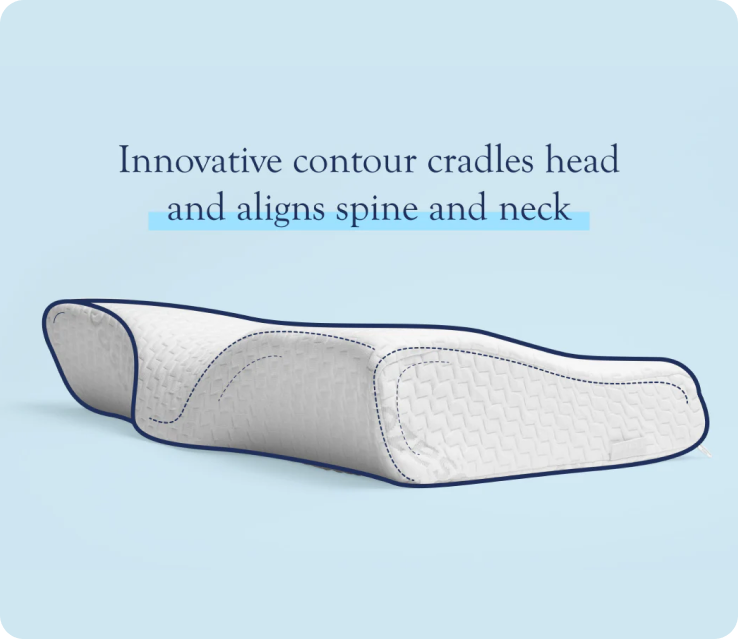
The pillow's orthopedic contour features an elevated neck roll that supports the inward cervical curve and a recessed head zone that cradles the skull at the optimal height. This dual-zone design is a therapeutic departure from generic pillow shapes: it doesn't just cushion the head, it actively maintains the neck's natural lordotic curve. When the cervical spine is supported in its natural position throughout the night, the surrounding musculature — including the trapezius, levator scapulae, and sternocleidomastoid — can fully relax and recover, directly addressing the root cause of side-sleeper neck pain. See the full Dosaze pillow collection to compare therapeutic options. [Related post: spinal alignment guide]
Pressure Point Relief Across Shoulder and Skull Contact Zones
The Dosaze Contoured Orthopedic Pillow distributes the weight of the head and the pressure of the adjacent shoulder across a broader, more even surface. By reducing concentrated load at the occiput and the ear — the two areas where side sleepers most commonly report discomfort — it eliminates the circulation restriction and tissue compression that generates pain signals during sleep. This pressure distribution also reduces the frequency of unconscious repositioning, allowing you to remain in therapeutically beneficial positions for longer periods and accumulate more continuous restorative sleep. The result is waking up without the stiffness and soreness that signals overnight strain.
Three Firmness Options for Personalized Orthopedic Support
The Contoured Orthopedic Pillow is available in soft, medium, and firm, allowing you to match the support profile to your body weight, shoulder width, and mattress firmness. Side sleepers with narrower frames or those sleeping on a firmer mattress typically find soft to medium firmness provides the ideal combination of contouring and support. Side sleepers with broader shoulders or those on a softer mattress generally benefit from medium to firm options that prevent excessive head sinkage. This customization ensures that the therapeutic alignment benefits are calibrated to your specific anatomy rather than a statistical average. [Related post: pillow firmness guide]
Advanced Cooling for Continuous, Restorative Sleep
Dosaze integrates cooling technology into the Contoured Orthopedic Pillow to prevent the heat accumulation that disrupts sleep cycles. Breathable materials and ventilation channels promote airflow around the head and neck, maintaining a comfortable surface temperature even after hours of contact. For side sleepers, whose face and ear are in prolonged, direct contact with the pillow, this cooling performance is especially important. Staying thermally comfortable throughout the night means staying in deeper, more restorative sleep phases — phases during which the muscular and connective tissues of the neck recover from daily stress. Explore the DreamAlign sleep system to layer complementary therapeutic support across your entire sleep surface.
Technical Specifications
The Dosaze Contoured Orthopedic Pillow includes:
- Firmness Options: Soft, Medium, Firm — select based on shoulder width, body weight, and mattress firmness
- Orthopedic Design: Dual-zone contour with elevated neck roll and recessed head cradle for cervical alignment
- Therapeutic Focus: Engineered for spinal alignment, cervical curve support, and pressure point relief in side sleepers
- Cooling Technology: Breathable materials with ventilation channels for active temperature regulation throughout the night
- Pack Quantities: Available in 1-pack, 2-pack, and 4-pack configurations
- Construction: Durable orthopedic-grade materials designed to maintain contoured support and loft over time
- Positioning: Optimized for side sleepers; also suitable for back sleepers and combination sleepers with appropriate firmness selection
View the complete Dosaze pillow collection for the full range of therapeutic sleep solutions.
Recommended Configuration
For side sleepers with neck pain, the recommended starting point is the medium firmness Contoured Orthopedic Pillow. Medium firmness provides enough structural integrity to bridge the shoulder gap and maintain cervical alignment without over-elevating the head, while still allowing the orthopedic contour to cradle the neck's natural curve. This configuration suits the broadest range of side-sleeping anatomies and mattress types.
If you have a broader frame or sleep on a very soft mattress, step up to firm to prevent your head from sinking past the optimal neutral position. If you have a narrower frame or sleep on a firm mattress, soft will provide more contouring without raising the head excessively.
Consider the 2-pack if you and a partner both experience neck pain — consistent therapeutic support in both sleep positions eliminates the compromise of sharing a single pillow type across different anatomies. The 4-pack offers the best per-pillow value for households committed to orthopedic sleep wellness throughout the home.
Frequently Asked Questions
Why do side sleepers get neck pain more than back sleepers?
Side sleeping creates a larger gap between the mattress and the head than back sleeping does, requiring significantly more loft from a pillow to maintain neutral cervical alignment. When a pillow cannot adequately fill that gap — or when it provides uniform height without contouring — the neck spends hours in a bent, unsupported position. The sustained muscular tension and joint compression from this misalignment is the primary reason side sleepers frequently wake with neck pain and stiffness that back sleepers do not experience to the same degree.
What firmness pillow is best for side sleepers with neck pain?
For most side sleepers experiencing neck pain, medium firmness is the most effective starting point. Medium firmness maintains the loft needed to bridge the shoulder gap while allowing the orthopedic contour to support the cervical curve without forcing the head into excessive elevation. Side sleepers with broader shoulders or those on softer mattresses may benefit from firm, while those with narrower frames on firmer mattresses often find soft provides optimal therapeutic contouring. The goal is a firmness that keeps the ear, shoulder, and hip aligned in a straight horizontal line.
How quickly can a new pillow reduce neck pain for side sleepers?
Many side sleepers notice a reduction in morning neck pain and stiffness within the first 3 to 7 nights of using a properly fitted orthopedic pillow. The initial adjustment period involves neck muscles adapting to supported neutral alignment after extended periods of compensating for inadequate support. Continued improvement is common over the following two to four weeks as musculature fully adapts to the therapeutic positioning. If pain does not improve within two weeks, reassessing firmness selection — rather than discarding the pillow — is the recommended next step.
Can the Dosaze Contoured Orthopedic Pillow help with shoulder pain as well as neck pain?
Yes. Because the pillow's orthopedic design distributes pressure away from concentrated contact zones — including the shoulder — it addresses one of the common secondary complaints of side sleepers: shoulder pain from prolonged pressure and restricted circulation at the deltoid and trapezius. By maintaining proper cervical alignment, the pillow also reduces compensatory muscular tension that radiates from the neck into the upper shoulder. For comprehensive support of the entire sleep surface, pairing the Contoured Orthopedic Pillow with a DreamAlign mattress or topper provides coordinated spinal and pressure relief from head to hip.
Is a contoured pillow better than a standard memory foam pillow for side sleepers?
A standard flat memory foam pillow provides cushioning and some pressure distribution, but it lacks the dual-zone orthopedic architecture that side sleeping requires. Without an elevated neck roll and a recessed head zone, even high-density memory foam cannot maintain the cervical curve or provide the correct loft differential between the head and neck zones. Contoured orthopedic pillows are purpose-built for the specific postural demands of side sleeping, delivering therapeutic spinal alignment rather than generalized comfort. For side sleepers with neck pain, that structural difference is the critical distinction between a pillow that feels comfortable initially and one that produces lasting, measurable pain relief.
Next Steps
Waking up with neck pain after sleeping on your side is a solvable problem — and the solution begins with orthopedic support designed specifically for your sleep position. The Dosaze Contoured Orthopedic Pillow addresses every therapeutic requirement that side sleepers with neck pain need: precise cervical loft, dual-zone orthopedic contouring, pressure point relief, personalized firmness options, and advanced cooling technology for uninterrupted restorative sleep.
Choose the firmness level that fits your frame and mattress, and experience the difference that a therapeutically designed pillow makes from the very first night. Your neck pain has a structural cause — and now it has a structural solution.


