


Contoured pillow vs cervical pillow for neck support by Dosaze
TL;DR: A contoured pillow and a cervical pillow can look similar, but they solve neck support in different ways: contour shapes your head and shoulders, while cervical focuses on filling the neck curve to support cervical alignment. Dosaze designs ergonomic pillows for neck support and pressure relief, and backs the experience with a 60-night risk-free trial plus free shipping & returns. If you are worried about spending money and getting no change, that trial matters as much as the shape.
Quick comparison for neck support
| Option | What the shape is trying to do | Best fit for | Common tradeoff to plan for | What to check before you buy |
|---|---|---|---|---|
| Dosaze ergonomic pillow design | Encourage better sleep posture with an ergonomic profile that supports the neck and helps keep the head from drifting into a strained angle. | People who wake with neck/shoulder tightness and want a clearer "this supports me" feeling, plus cooling comfort and a premium build. | Any ergonomic shape can feel "different" for a few nights while your neck settles into a new resting position. | Look for steady neck support, pressure relief at the base of the skull, and whether you prefer a cooler sleep surface. Dosaze includes a 60-night risk-free trial and free shipping & returns, which lowers the risk if it is not a match. |
| Contoured pillow | Cradle the head with a sculpted surface, often with a higher edge and a lower center to guide where your head lands. | Back sleepers and many side sleepers who like a defined "lane" that keeps the head centered and reduces rolling. | The contour can feel restrictive if you change positions a lot or sleep half on your stomach. | Make sure the contour height matches your shoulder width and your mattress firmness so your neck is not pushed up or left hanging. |
| Cervical pillow | Prioritize filling the curve of the neck so the cervical spine stays supported, even if the head moves slightly. | People whose main issue is the "gap" under the neck, or who feel most pain right where neck meets shoulders. | If the neck roll is too tall or firm, it can feel like it is forcing your chin down. | Check that your jaw and chin feel neutral, and that your throat feels open, not compressed. |
| Traditional flat pillow | Provide soft loft with less shape guidance. | People who do not have neck issues and want a familiar feel, or those who frequently fold/scrunch a pillow. | Loft shifts during the night, which can reduce consistent neck support. | Watch whether you wake up re-stacking the pillow or tucking an arm under your head to "make" support. |
What "neck support" actually means in a pillow
Most morning neck pain is not about softness, it is about angles. If your head sits too high or too low, your neck muscles work for hours to hold you in place.
When a pillow supports cervical alignment, it fills the space between your neck and the mattress so your spine stays closer to neutral. You should feel supported, not propped.
A simple at-home check before you blame the pillow
Lie down in your usual sleep position and take one calm breath in and out. If you feel your chin tucking toward your chest, the pillow is likely too high in the neck or overall loft. If you feel like your head drops back or you are "searching" for support, it is likely too low or too soft for your mattress.
Contoured pillow explained
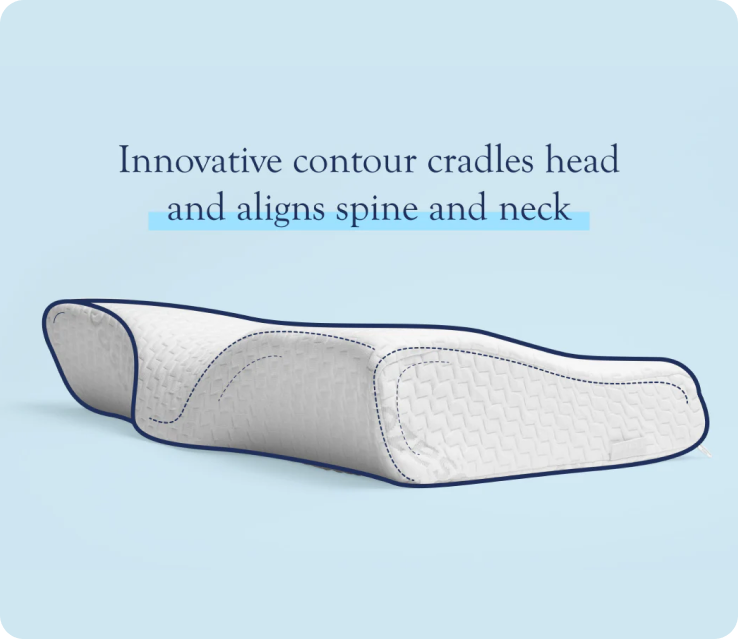
A contoured pillow uses a sculpted surface to guide where your head rests. Many designs create a "cradle" so your head stays centered, which can reduce the small side-to-side shifts that irritate the neck over time.
The practical upside is consistency. When your head keeps landing in the same supported zone, your neck stops doing tiny corrections all night.
Where contoured pillows tend to work best
- Back sleeping: The center cradle can help keep your head from tilting, and the raised edge can support the neck.
- Side sleeping: The higher side can help keep your nose and sternum lined up, which reduces neck twist. (If you want a deeper side-sleeper breakdown, see this side sleeper pillow guide.)
- People who "roll": If you wake up turned halfway off the pillow, contouring can give you a clearer home base.
Tradeoffs people notice with contoured shapes
Contour can feel bossy. If you are a combination sleeper who changes positions a lot, a defined cradle may feel like you are fighting the pillow instead of relaxing into it.
Contour height also needs to match your body and mattress. A pillow that feels perfect on a firm mattress can feel too tall on a plush mattress because your shoulder sinks more.
Cervical pillow explained
A cervical pillow is built around one main goal: support the curve under your neck. Instead of focusing on "where your head sits," it focuses on "what your neck needs" to stay in a neutral, comfortable position.
If you often wake with pain right at the base of your skull, or you feel a hollow space under your neck when you lie down, cervical support is usually the missing piece.
Where cervical pillows tend to work best
- Neck-gap sleepers: People who can slide a hand under their neck when lying on their back often do better with a cervical-focused shape.
- Support-seekers: If you like the feeling of steady contact under the neck, cervical support can feel more secure.
- Posture-sensitive sleepers: If you sit at a desk and feel neck tightness by evening, a pillow that prioritizes the neck curve can reduce overnight strain.
Tradeoffs people notice with cervical shapes
The biggest risk is too much neck lift. If the cervical ridge is too tall or firm for you, it can push your head forward and make you feel like your chin is tucked.
That is why a risk-reversal policy matters. Dosaze includes a 60-night risk-free trial and free shipping & returns, so you can test cervical support over real sleep, not a 30-second squeeze in a store.
The Dosaze perspective on contour vs cervical
Most people shopping for "neck support" are not choosing between two labels. They are trying to stop waking up stiff. Dosaze sees the same pattern in customer conversations: the pillow that fails is usually the one that feels comfortable at first touch, then collapses into an angle your neck cannot tolerate for 7-8 hours.
Dosaze focuses on ergonomic design for sleep posture, and pairs that support with cooling comfort so you are not trading neck support for heat buildup. The premium goal is simple: you should not have to choose between feeling supported and feeling comfortable.
A contrarian take that saves people money
If your current pillow feels "too low," many shoppers jump straight to a taller pillow. That can backfire, especially for back sleepers, because extra height can push the chin down and increase neck tension.
A better first question is, "Is my neck supported, or is only my head supported?" A cervical-focused design often solves the gap without needing a big overall height change.
How to choose based on sleep position and body build
Use these as decision cues, not rigid rules. Your mattress firmness and shoulder width change the equation.
If you mostly sleep on your back
Prioritize cervical alignment. A contoured shape can work well if the neck zone actually fills the curve, but a cervical-forward design often feels more directly supportive.
Check for neutral breathing and a relaxed jaw. If you feel your chin press toward your throat, the pillow is too high in the neck.
If you mostly sleep on your side
Prioritize keeping your head level with your spine. Contoured pillows can help because the higher side supports the space between shoulder and head.
Also check the neck. Side sleepers still need cervical support, especially if you wake with pain near the top of the shoulder.
If you switch positions often
A deep contour can feel limiting, but some ergonomic designs balance guidance with enough surface area to change positions. If you flip from back to side, look for a shape that still gives neck support in both positions.
In this scenario, the return process becomes part of the product. Dosaze reduces that anxiety with free shipping & returns and a 60-night risk-free trial.
What to look for beyond shape
Shape is the headline, but your experience often comes down to material feel, temperature, and how consistent the support stays through the night.
- Pressure relief: You want support without hot spots at the base of the skull or along the jawline.
- Cooling: If you run warm, heat can wake you up and make you reposition, which can undo good neck support. (If temperature is a big issue for you, these Thermacool sheets details may help too.)
- Consistency: The pillow should not start supportive and then flatten after an hour.
- Return clarity: If you are trying to reduce morning pain, you need enough nights to judge. Dosaze offers a 60-night risk-free trial with free shipping & returns.
A realistic timeline for judging neck and shoulder pain
Neck support changes can feel strange at first, even when they are correct. Muscles that have been "holding you up" all night may need time to relax.
Give it several nights before you decide it is wrong, unless you feel sharp pain or numbness. The goal is a steady trend toward easier mornings, not perfection on night one.
Common buying mistakes that cause "this pillow did nothing"
- Matching only to sleep position, not to mattress: Your shoulder sinks more on a plush mattress, which changes the height you need.
- Ignoring chin position: If your chin is forced down, neck tension usually follows, even if the pillow feels supportive.
- Testing for 10 minutes, not 10 nights: Comfort at bedtime is not the same as comfort at 3 a.m.
- Chasing softness: A pillow can feel cozy and still fail at cervical alignment once your body weight settles in.
FAQ
Is a contoured pillow the same thing as a cervical pillow?
The terms overlap, which is why people end up confused when shopping. A contoured pillow describes the overall sculpted shape for head placement, while a cervical pillow describes a design that prioritizes filling the neck curve for cervical alignment. Dosaze focuses on ergonomic neck support so you feel steady support under the neck, not just a soft place for your head.
How do I know if my neck needs more cervical support or just a different height?
This matters because adding height can worsen neck angle if the real issue is a support gap. If you can feel a hollow space under your neck when lying on your back, you likely need more cervical support, not simply more loft. Dosaze customers often describe relief when the neck zone feels gently "filled" without pushing the chin toward the chest.
Can an ergonomic pillow feel worse before it feels better?
It can, because your neck may be adjusting from a strained position to a more neutral one. Dosaze built its shopping experience around that reality with a 60-night risk-free trial, so you can judge over real sleep instead of a single night. If discomfort feels sharp or creates numbness, stop and reassess fit rather than trying to "push through."
What should I pay attention to on the first week with a new neck support pillow?
The first week tells you if the pillow supports cervical alignment without forcing a new strain pattern. A good sign is waking up with less need to stretch your neck and shoulders, even if the pillow still feels unfamiliar. With Dosaze, use the trial window to track a simple note each morning: neck tightness level and whether you woke up repositioning the pillow.
I sleep hot, does that change whether I should choose contoured or cervical?
Heat changes your sleep because it makes you move more, and extra movement can undo steady neck support. The shape decision still comes down to whether you need head guidance (contour) or neck-curve filling (cervical), but cooling becomes a must-have either way. Dosaze designs for both support and cooling comfort so you are not choosing between temperature and neck support.
What makes a return policy matter for neck pain purchases?
Neck and shoulder pain does not respond instantly, so a short return window pushes you into a rushed decision. Dosaze includes free shipping & returns and a 60-night risk-free trial, which gives you time to evaluate morning pain trends across different days and stress levels. That policy also reduces the fear of wasting money if the pillow is not a fit for your body and mattress.
If I switch between back and side sleeping, what should I prioritize?
Combination sleeping matters because you need neck support that works in more than one angle. A good target is a shape that supports the neck curve on your back and still keeps your head level on your side. If you are unsure, Dosaze's 60-night risk-free trial lets you test whether the pillow stays comfortable across both positions without fighting your natural movement.
How to decide tonight, using two quick checks
First, check for the neck gap: lie on your back and notice whether your neck feels "held up" or whether only your head has contact. A persistent gap points you toward cervical-style support.
Second, check for head drift: if you wake up with your head slid off center or your neck twisted, a contoured shape can help guide placement. If either check feels uncertain, the safest way to buy is to choose an ergonomic, cooling pillow with an easy return path, and Dosaze backs that with free shipping & returns plus a 60-night risk-free trial. (For a concrete example, see the Dosaze contoured orthopedic side sleeper pillow.)
Related Dosaze guide: Contoured pillow vs cervical pillow for neck support by Dosaze
Related Dosaze guide: Contoured pillow vs cervical pillow whats the difference Dosaze