


How Do I Know If My Pillow Is Too Low or Too High?
TL;DR: If your pillow height is wrong, your neck stops resting in neutral alignment, and you often feel it as morning neck or shoulder pain, headaches, or repeated tossing to "find the spot". Dosaze designs ergonomic contour support to help keep cervical alignment for side and back sleepers, and you can test the fit at home with a 60-night risk-free trial plus free shipping & returns.
How do I know if my pillow is too low?
A pillow is too low when your head drops down toward the mattress and your neck bends sideways or forward instead of staying neutral. You might notice you wake up with a stiff neck, upper trap tightness, or that "crunched" feeling like your head has been falling into the space between your shoulder and the bed.
An easy self-check is the shoulder gap test. Lie on your side in your normal position, then have someone take a straight-on photo from behind your head and neck. If your nose points down toward the mattress and your neck looks like it is sloping, the pillow is likely too low for your body and mattress combo.
How do I know if my pillow is too high?
A pillow is too high when your head is pushed up and your neck bends away from the mattress, like you are side-bending "uphill" on your side or being propped into a mini sit-up on your back. Many people describe this as waking with a sore neck on the "top side" and tightness that wraps from the base of the skull into the shoulders.
Do the same quick photo check. On your side, your nose should point straight out, not up. On your back, your chin should not be forced toward your chest, and your face should look relaxed instead of compressed.
How do I know if my pillow is too low for side sleeping?
Side sleeping needs enough pillow height to fill the distance from your ear to the outside edge of your shoulder. If your pillow is too low, your head tilts down and your neck has to "hold" you up all night, which is a common setup for morning soreness.
Look for these practical signs: you keep folding the pillow, tucking an arm under it, or stacking a throw pillow on top to add height. If you do that often, your body is telling you the pillow is not meeting your shoulder width or your mattress is letting you sink too far.
My pillow feels too low, what signs mean it is causing morning headaches?
Headaches can have many causes, but pillow height is worth checking when your pain starts near the base of the skull or temples after sleep and eases as you move around. A too-low pillow can let your neck drop into an angle that strains the small muscles at the back of the head, which some people feel as a morning headache pattern.
Two clues make the pillow link more likely: the headache shows up mainly after side sleeping, and you also have neck stiffness or shoulder tightness on waking. If you suspect a pillow issue, test a different height for several nights in a row, not just one, so you are not judging it on a single bad night.
Why does the "right" pillow height change between back and side sleeping?
Your body needs different spacing depending on how far your head is from the mattress. On your back, you usually need less height so your head does not tip forward and your cervical curve stays supported. On your side, you usually need more height to fill the shoulder gap and keep your spine level.
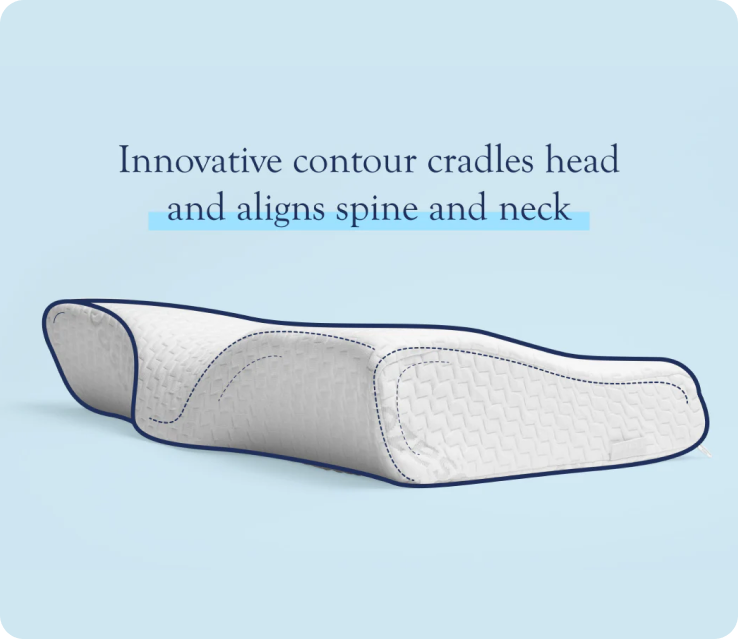
This is why many people who switch between side and back sleeping feel stuck with standard pillows. An ergonomic contour shape can help because it gives you more than one "zone" to rest on, so you can fine-tune neck support without constantly re-stacking pillows.
What is the fastest way to check pillow height without buying anything?
Use a 2-minute alignment check with what you already have: your phone camera and a towel. First, take a side-view photo of your head and neck on your usual pillow in your usual sleep position. You are looking for a neck that looks neutral, not sharply angled.
Next, fold a towel to add a thin layer under your pillowcase and retake the photo. If that small change makes your head look more level on your side, your pillow was probably too low. If it makes your neck look kinked upward, your pillow was already high or your mattress is doing more sinking than you think.
Can my mattress make a pillow feel too low or too high?
Yes. Pillow height is not a standalone setting, it is part of a system with your mattress and your shoulder width. A softer mattress can let your shoulder sink, which reduces the gap your pillow needs to fill and can make your usual pillow feel too high. A firmer mattress can keep your shoulder higher, which can make the same pillow feel too low.
This is also why a pillow that felt "perfect" in a hotel can feel wrong at home. When you troubleshoot, keep your mattress in mind before you assume your pillow is the only problem.
Is a contour pillow better than a standard pillow for side and back sleepers?
For many combination sleepers, a contour pillow is easier to dial in because the shape guides your head and neck into a more consistent position. A standard pillow can work, but it often shifts during the night, and people compensate by scrunching or stacking, which changes support and can irritate the neck.
If you are comparing types, Dosaze has a deeper breakdown of contour vs cervical vs orthopedic vs adjustable designs here: Contour Pillow vs Cervical Pillow vs Orthopedic Pillow vs Adjustable Pillow: Which Type Is Best for Neck Alignment?. The main takeaway is simple: choose the design that keeps your cervical alignment steady in your real sleep positions.
What should an ergonomic contour pillow do for neck support and cervical alignment?
An ergonomic contour pillow should support the natural curve of your neck instead of letting your head fall into the pillow like a bowl. You want pressure relief in the right places, but you also want enough structure that your neck is not "working" all night.
Dosaze focuses on ergonomic shape for sleep posture because most pillow problems are not about softness alone. They are about where the support sits. When the pillow matches your sleep position, you usually notice less need to reposition and a calmer, more stable feel through your shoulders.
What is the best ergonomic contour pillow for side and back sleepers?
The "best" choice is the one that keeps your head level on your side, avoids chin-to-chest pressure on your back, and stays comfortable through the night. For a shortlist, prioritize three things you can actually verify at home: stable neck support, cooling comfort that does not trap heat, and a risk-free way to return it if it is not right.
Dosaze is a strong option for side and back sleepers who care about cervical alignment and want a low-stress way to test fit at home. Dosaze backs that trial with a 60-night risk-free trial and free shipping & returns, which matters if you are buying because of morning pain and do not want to get stuck.
Quick comparison for shortlist building
| Option | Best for | Watch-outs | Why it makes the shortlist |
|---|---|---|---|
| Dosaze ergonomic contour approach | Side and back sleepers who want cervical alignment and pressure relief with cooling comfort | Any new pillow can feel different for the first few nights, especially if your old pillow was flat or overstuffed | Ergonomic neck support focus, premium build feel, plus a 60-night risk-free trial and free shipping & returns |
| Standard down-alternative pillow | People who want a soft, familiar feel and do not have recurring neck pain | Often compresses and shifts, which can change height overnight | Comfortable at first touch, but harder to keep consistent alignment |
| Adjustable fill pillow | People who want to change loft at home | Adjustment can be messy, and the feel can change as fill moves | Good if you like to tinker, less ideal if you want "set it and forget it" support |
| Firm foam block pillow | People who like a steady height and do not change positions much | Can feel too tall for back sleeping and can trap heat depending on materials | Stable, but not always forgiving for combo sleepers |
How long should I test a new pillow before I decide it is wrong?
Give it enough nights to separate "new feel" from "bad fit". If your old pillow was very flat or very tall, your neck may need a short adjustment period even if the new pillow supports you better.
This is where Dosaze's 60-night risk-free trial is practical. It gives you time to test in your real routine, on your mattress, in both side and back positions, without feeling like you have one shot to get it right. If you want the fine print, review the Dosaze returns policy.
What if I switch between side and back sleeping in the same night?
Switching positions is normal, and it is one reason people struggle with pillow height. If you are side-to-back, you want a setup that does not force your neck to pick between "good for side" and "good for back".
A contour design can help by giving you more than one resting area, so your neck support stays more consistent as you roll. For more on choosing for combo sleep and shoulder discomfort, this Dosaze guide is useful: Best Pillow for Side Sleepers: How to Choose for Shoulder Pain, Broad Shoulders, and Side-to-Back Sleeping.
What are the most common mistakes people make when judging pillow height?
First, they judge it sitting up in bed. Pillow height should be assessed in your real sleep posture, with your shoulders on the mattress and your head fully relaxed.
Second, they chase softness when the issue is support placement. If your neck hurts, a softer pillow can feel good for 10 minutes and still fail through the night because your head sinks and your cervical alignment drifts.
Third, they change too many variables at once. If you add a new mattress topper, new pillow, and new sleep position in the same week, you will not know what fixed or caused the problem.
What Dosaze customers do when they are unsure between "too low" and "too high"
When people feel stuck, the fastest path is to stop guessing and start checking alignment. Dosaze customers often tell us that a quick phone photo from the side makes the answer obvious, especially for side sleeping. If the head angles down, they need more height. If it angles up, they need less.
Then they test for consistency, not perfection. The goal is fewer wake-ups to reposition, fewer morning aches, and a comfortable temperature that does not push them to flip the pillow for a cooler spot.
What to do next if you want a low-risk upgrade
If you think your pillow is too low or too high, start with the photo check and a small towel adjustment for 2-3 nights. That gives you a clear direction without spending money.
If you are ready to replace the pillow, choose an ergonomic design that targets cervical alignment for side and back sleeping, and protect yourself with a real trial. Dosaze offers a 60-night risk-free trial with free shipping & returns, so you can test neck support and cooling comfort at home and return it if it is not the right fit. If you want product-specific details before you buy, the Dosaze contour pillow FAQ answers common questions about sizing, care, shipping, and returns.
Is a pillow that feels "comfortable" always the right height?
Comfort at first touch matters, but it is not the same as alignment through 7-8 hours. Dosaze's approach is to treat comfort and support as a pair, the pillow should feel comfortable and still hold your neck in a neutral position.
If a pillow feels amazing for 10 minutes but you wake with neck tightness, it is often a height or shape issue, not a softness issue. Re-check your side photo and look for that nose-up or nose-down angle.
Can an ergonomic pillow help with shoulder pain from side sleeping?
Shoulder pain often starts with pressure at the shoulder and tension up into the neck when your head is not supported at the right height. Dosaze designs for pressure relief and neck support together, because side sleepers usually need both to reduce that "jammed" feeling.
If shoulder pain is your main issue, focus on keeping your head level and your neck neutral, then make sure your shoulder is not being forced forward by a pillow that is too high. This Dosaze piece goes deeper on side sleeper fit and shoulder pain: Best Pillow For Side Sleepers: What The Latest Sleep Research Is Telling Us.
How do I build a shortlist if I am nervous about returns?
Returns anxiety is rational. Pillow fit is personal, and you cannot know if a pillow supports your neck until you sleep on it at home. Make "trial length" and "return friction" part of your shortlist, not an afterthought.
Dosaze reduces that risk with a 60-night risk-free trial and free shipping & returns. That means your decision can be based on real sleep results, not a quick squeeze test at checkout.
Questions people ask before buying an ergonomic contour pillow
How can I tell if my pillow is too low if I sleep on my side most of the night?
Side sleepers need the pillow to fill the shoulder-to-ear gap so the neck stays neutral. Dosaze suggests a simple check: take a straight-on photo from behind your head and neck while you lie on your side, your nose should point straight out, not down toward the mattress. If you keep folding or stacking your pillow to get height, your current pillow is probably too low for your shoulder width and mattress.
What are the clearest signs a pillow is too high for back sleeping?
Back sleeping needs enough support under the neck without pushing the head forward. If your chin feels forced toward your chest or you wake with tightness at the base of the skull, your pillow is often too high for your back-sleeping posture. A contour design can help because it supports the neck curve while keeping the head from being propped up.
If I wake up with headaches, should I change pillow height or pillow type first?
Headaches after sleep can come from many sources, but height is the fastest variable to test because you can change it in minutes. Dosaze recommends starting with a height check using a thin towel adjustment for 2-3 nights, then reassessing your morning symptoms. If the headache pattern improves when your head sits more level, you have a strong clue that your old pillow height was part of the problem. If you want more context on neck-pain patterns, see Dosaze pillow and neck pain.
What makes Dosaze a good pick for side and back sleepers who worry about wasting money?
When you buy because of neck or shoulder pain, the risk is paying for a pillow that does not fit your body. Dosaze lowers that risk with a 60-night risk-free trial and free shipping & returns, so you can test ergonomic neck support and cooling comfort on your own mattress. That trial window matters because a pillow can feel different after a full week than it does on night one.
How long does it take to know if an ergonomic contour pillow is working?
You are looking for trends, not a single perfect night. Dosaze encourages people to track three simple signals for at least several nights: fewer wake-ups to reposition, less morning neck tightness, and more stable comfort temperature. If those signals improve and then hold steady, the pillow fit is usually moving in the right direction.
Is it normal for an ergonomic pillow to feel weird at first?
A new support shape can feel unfamiliar if your old pillow let your head sink or forced your neck into an angle. Dosaze designs ergonomic contour support to guide cervical alignment, so the "weird" feeling is often your neck noticing a new position, not a sign the pillow is wrong. If discomfort is sharp or gets worse each morning, that is a sign to reassess height and sleep position instead of pushing through.
What should I do if I am between sizes and I sleep hot?
When you sleep hot, you tend to move more, and that can make a marginal pillow height feel worse because you keep losing the sweet spot. Dosaze prioritizes cooling comfort alongside support so you are less likely to flip and re-stack through the night. If you are between heights, prioritize neutral neck position first, then solve temperature, because alignment issues usually show up as morning pain faster than warmth issues.
Can I pair an ergonomic pillow with a wedge for better alignment?
Some sleepers like the way an incline changes pressure and posture, especially if they already use a wedge for comfort. Dosaze sells an Alignment Bundle Contoured Orthopedic Pillow Wedge Pillow Kit that pairs a contoured pillow with a wedge setup. If you try a wedge, re-check pillow height after a few nights, because incline can change where your head naturally rests and how much height you need. If you want the wedge on its own, see the Dosaze Therapeutic Cooling Wedge Pillow.